Kirjojen hintavertailu – 12 859 818 kirjaa ja 27 kauppaa
Kirjailija
David Damrosch
Kirjat ja teokset yhdessä paikassa: 16 kirjaa, julkaisuja vuosilta 1995–2022, suosituimpiin kuuluu The Longman Anthology of British Literature: The Victorian Age, Volume 2b. Vertaile teosten hintoja ja tarkista saatavuus suomalaisista kirjakaupoista.
From a leading figure in comparative literature, a major new survey of the field that points the way forward for a discipline undergoing rapid changesLiterary studies are being transformed today by the expansive and disruptive forces of globalization. More works than ever circulate worldwide in English and in translation, and even national traditions are increasingly seen in transnational terms. To encompass this expanding literary universe, scholars and teachers need to increase their linguistic and cultural resources, rethink their methods and training, and reconceive the place of literature and criticism in the world. In Comparing the Literatures, David Damrosch integrates comparative, postcolonial, and world-literary perspectives to offer a comprehensive overview of comparative studies and its prospects in a time of great upheaval and great opportunity. Comparing the Literatures looks both at institutional forces and at key episodes in the life and work of comparatists who have struggled to define and redefine the terms of literary analysis over the past two centuries, from Johann Gottfried Herder and Germaine de Staël to Edward Said, Gayatri Spivak, Franco Moretti, and Emily Apter. With literary examples ranging from Ovid and Kalidasa to James Joyce, Yoko Tawada, and the internet artists Young-Hae Chang Heavy Industries, Damrosch shows how the main strands of comparison—philology, literary theory, colonial and postcolonial studies, and the study of world literature—have long been intertwined. A deeper understanding of comparative literature's achievements, persistent contradictions, and even failures can help comparatists in literature and other fields develop creative responses to today's most important questions and debates. Amid a multitude of challenges and new possibilities for comparative literature, Comparing the Literatures provides an important road map for the discipline's revitalization.
A transporting and illuminating voyage around the globe, through classic and modern literary works that are in conversation with one another and with the world around them *Featured in the Chicago Tribune's Great 2021 Fall Book Preview * One of Smithsonian Magazine's Ten Best Books About Travel of 2021* Inspired by Jules Verne's hero Phileas Fogg, David Damrosch, chair of Harvard University's department of comparative literature and founder of Harvard's Institute for World Literature, set out to counter a pandemic's restrictions on travel by exploring eighty exceptional books from around the globe. Following a literary itinerary from London to Venice, Tehran and points beyond, and via authors from Woolf and Dante to Nobel Prize-winners Orhan Pamuk, Wole Soyinka, Mo Yan, and Olga Tokarczuk, he explores how these works have shaped our idea of the world, and the ways in which the world bleeds into literature. To chart the expansive landscape of world literature today, Damrosch explores how writers live in two very different worlds: the world of their personal experience and the world of books that have enabled great writers to give shape and meaning to their lives. In his literary cartography, Damrosch includes compelling contemporary works as well as perennial classics, hard-bitten crime fiction as well as haunting works of fantasy, and the formative tales that introduce us as children to the world we're entering. Taken together, these eighty titles offer us fresh perspective on enduring problems, from the social consequences of epidemics to the rising inequality that Thomas More designed Utopia to combat, as well as the patriarchal structures within and against which many of these books' heroines have to struggle--from the work of Murasaki Shikibu a millennium ago to Margaret Atwood today. Around the World in 80 Books is a global invitation to look beyond ourselves and our surroundings, and to see our world and its literature in new ways.
From a leading figure in comparative literature, a major new survey of the field that points the way forward for a discipline undergoing rapid changesLiterary studies are being transformed today by the expansive and disruptive forces of globalization. More works than ever circulate worldwide in English and in translation, and even national traditions are increasingly seen in transnational terms. To encompass this expanding literary universe, scholars and teachers need to increase their linguistic and cultural resources, rethink their methods and training, and reconceive the place of literature and criticism in the world. In Comparing the Literatures, David Damrosch integrates comparative, postcolonial, and world-literary perspectives to offer a comprehensive overview of comparative studies and its prospects in a time of great upheaval and great opportunity. Comparing the Literatures looks both at institutional forces and at key episodes in the life and work of comparatists who have struggled to define and redefine the terms of literary analysis over the past two centuries, from Johann Gottfried Herder and Germaine de Staël to Edward Said, Gayatri Spivak, Franco Moretti, and Emily Apter. With literary examples ranging from Ovid and Kalidasa to James Joyce, Yoko Tawada, and the internet artists Young-Hae Chang Heavy Industries, Damrosch shows how the main strands of comparison—philology, literary theory, colonial and postcolonial studies, and the study of world literature—have long been intertwined. A deeper understanding of comparative literature's achievements, persistent contradictions, and even failures can help comparatists in literature and other fields develop creative responses to today's most important questions and debates. Amid a multitude of challenges and new possibilities for comparative literature, Comparing the Literatures provides an important road map for the discipline's revitalization.
The new edition of this highly popular guide, How to Read World Literature, addresses the unique challenges and joys faced when approaching the literature of other cultures and eras. Fully revised to address important developments in World Literature, and generously expanded with new material, this second edition covers a wide variety of genres – from lyric and epic poetry to drama and prose fiction – and discusses how each form has been used in different eras and cultures. An ideal introduction for those new to the study of World Literature, as well as beginners to ancient and foreign literature, this book offers a variety of "modes of entry" to reading these texts. The author, a leading authority in the field, draws on years of teaching experience to provide readers with ways of thinking creatively and systematically about key issues, such as reading across time and cultures, reading works in translation, emerging global perspectives, postcolonialism, orality and literacy, and more. Accessible and enlightening, offers readers the tools to navigate works as varied as Homer, Sophocles, Kalidasa, Du Fu, Dante, Murasaki, Moliere, Kafka, Wole Soyinka, and Derek WalcottFully revised and expanded to reflect the changing face of the study of World Literature, especially in the English-speaking worldNow includes more major authors featured in the undergraduate World Literature syllabus covered within a fuller critical contextFeatures an entirely new chapter on the relationship between World Literature and postcolonial literature How to Read World Literature, Second Edition is an excellent text for undergraduate and postgraduate courses in World Literature. It is also a fascinating and informative read for all readers with an interest in foreign and ancient literature and the history of civilization.
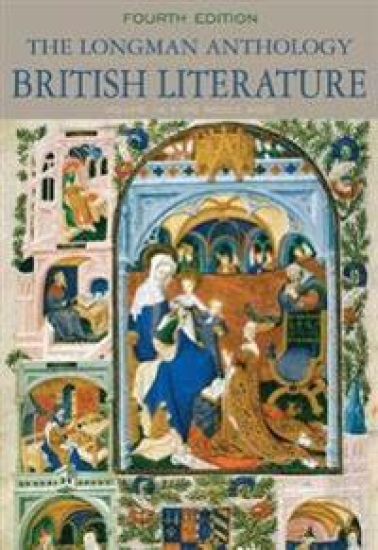
The Longman Anthology of British Literature is the most comprehensive and thoughtfully arranged text in the field, offering a rich selection of compelling British authors through the ages. With its first edition, The Longman Anthology of British Literature created a new paradigm for anthologies. Responding to major shifts in literary studies over the past thirty years, it was the first collection to pay sustained attention to the contexts within which literature is produced, even as it broadened the scope of that literature to embrace the full cultural diversity of the British Isles. Within its pages, canonical authors mingle with newly visible writers; English accents are heard next to Anglo-Norman, Welsh, Gaelic, and Scottish ones; female and male voices are set in dialogue; literature from the British Isles is integrated with post-colonial writing; and major works are illumined by clusters of shorter texts that bring literary, social, and historical issues vividly to life. The Fifth Edition builds on the pioneering features of the previous four editions, expanding the strong core of frequently taught works while continuing to lead the way in responding to the shifting interests of the discipline.
Comic in tone and serious in intent, this book gives a vivid portrait of academic life in the nineties. With campus populations and critical perspectives changing rapidly, academic debate needs to look beyond the old ideal of common purposes and communal agreement. How can we learn from people we won't end up agreeing with? This question is explored by four very different scholars, who meet and argue at a series of comparative literature conferences: David Damrosch, liberal humanist and organizer of the group; Vic Addams, an independent scholar of aesthetic leanings (and author of The Utility of Futility); Marsha Doddvic, a feminist film theorist; and the Israeli semiotician Dov Midrash. Throughout the 1990s, in four cities, they meet and debate the problems of disciplinary definition and survival, the relation of literary theory to society, the politics of cultural studies, and the virtues and vices of autobiographical criticism. As their partly antagonistic, increasingly serious, surprisingly fond, and always funny relationship develops, Damrosch seeks common ground with his friends despite the fundamental differences among them. Can a self-parodying deconstructionist and a Proust aficionado appreciate and improve each other's work? Can a wealthy, windsurfing medievalist and a champion of Chicana lesbian memoir find friendship? Hilarious exchanges and comic moments, as well as cameo appearances by well-known theorists, will entertain all literary-minded readers. Academic insiders will also be reminded of the foibles and quirks of their own disciplines and departments. At the same time, this exploration of the uses and abuses of literary and cultural criticism offers a running commentary on identity politics and poses serious questions about the state and future of the academy.
Responding to major shifts in literary studies over the past thirty years, The Longman Anthology of British LIterature was the first collection to pay sustained attention to the contexts within which literature is produced, even as it broadened the scope of that literature to embrace the full cultural diversity of the British Isles. Within its pages, canonical authors mingle with newly visible writers; English accents are heard next to Anglo-Norman, Welsh, Gaelic, and Scottish ones; female and male voices are set in dialogue; literature from the British Isles is integrated with post-colonial writing; and major works are illumined by clusters of shorter texts that bring literary, social, and historical issues vividly to life. Volume 2B focuses on the literature of the Victorian Age.
The Fourth Edition of The Longman Anthology of British Literature continues its tradition of presenting works in the historical context in which they were written. This fresh approach includes writers from the British Isles, underrepresented female authors, "Perspectives" sectionsthatshed light on the period as a whole and link with immediately surrounding works to help illuminate a theme, "And Its Time" clusters that illuminate a specific cultural moment or a debate to which an author is responding, and "Responses" in which later authors respond to one or more texts from earlier works. New to Volume 1A is the inclusion of new Penguin Classics translations of Beowulf by Michael Alexander and Sir Gawain and theGreen Knight by Brian Stone and the major classic work The Tain.
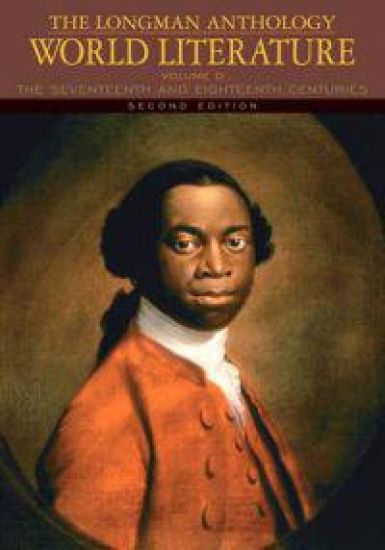
The Longman Anthology of World Literature, Volume D offers a fresh and highly teachable presentation of the varieties of world literature from the 17th and 18th centuries.
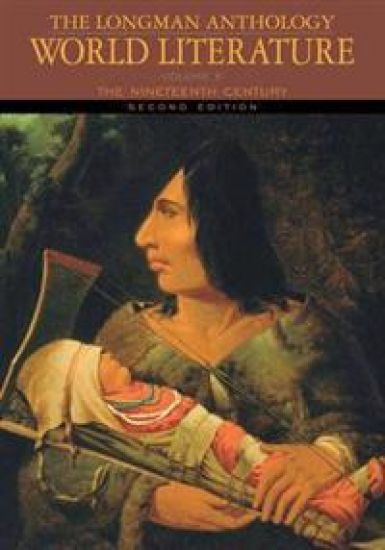
The Longman Anthology of World Literature, Volume E offers a fresh and highly teachable presentation of the varieties of world literature from the 19th century.
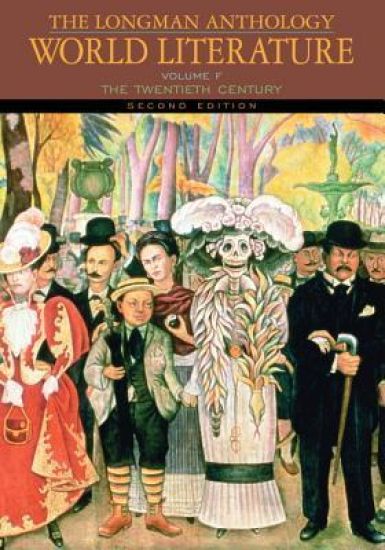
The Longman Anthology of World Literature, Volume F offers a fresh and highly teachable presentation of the varieties of world literature from the 20th century. The editors of the anthology have sought to find economical ways to place texts within their cultural contexts, and have selected and grouped our materials in ways intended to foster connections and conversations across the anthology, between eras as well as regions. The anthology includes epic, lyric poetry, drama, and prose narrative, with many works in their entirety. Classic major authors are presented together with more recently recovered voices as the editors seek to suggest something of the full literary dialogue of each region and period. Engaging introductions, scholarly annotations, regional maps, pronunciation guides, and illustrations provide a supportive editorial setting. An accompanying Instructor's Manual written by the editors offers practical suggestions for the classroom.
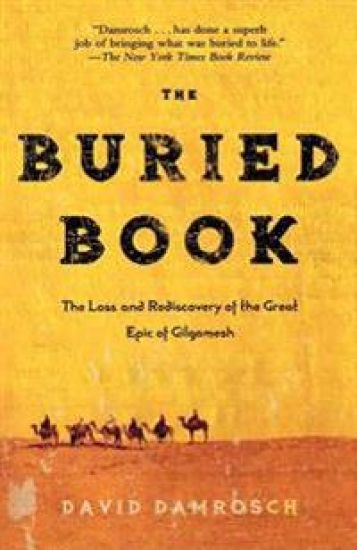
A critical study of the ancient Babylonian epic of Gilgamesh describes its composition around 1200 B. C., its loss in 600 B. C. during the destruction of the library of King Ashurbanipal, its rediscovery and deciphering in the nineteenth century, and the fast-paced story itself of a great Middle Eastern hero and his exploits. Reprint. 30,000 first printing.
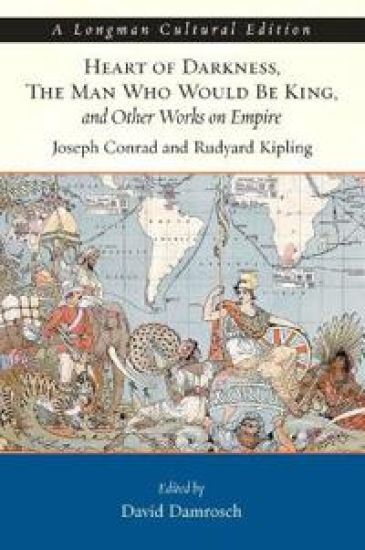
From Longman's Cultural Editions series, Heart of Darkness, The Man Who Would Be King, and Other Works on Empire shows the literary and historical context within which—and against which—both Conrad and Kipling wrote their masterpieces. These works have deeply influenced later writings that deal with the ambitions, complexities, and failures of imperial projects of cultural influence and political control. English, American, South Asian, and African authors from Saul Bellow to Salman Rushdie have worked with and against the models pioneered by Conrad and Kipling in the late Victorian era; their revolutionary impact is illuminated in this text.
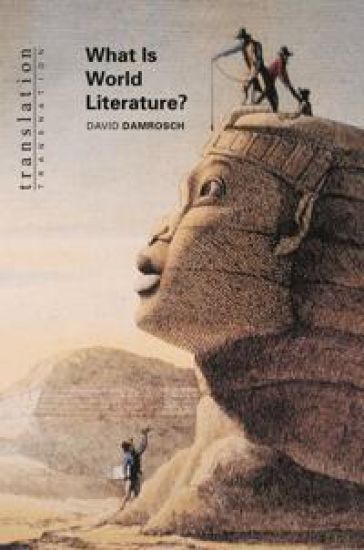
World literature was long defined in North America as an established canon of European masterpieces, but an emerging global perspective has challenged both this European focus and the very category of "the masterpiece." The first book to look broadly at the contemporary scope and purposes of world literature, What Is World Literature? probes the uses and abuses of world literature in a rapidly changing world. In case studies ranging from the Sumerians to the Aztecs and from medieval mysticism to postmodern metafiction, David Damrosch looks at the ways works change as they move from national to global contexts. Presenting world literature not as a canon of texts but as a mode of circulation and of reading, Damrosch argues that world literature is work that gains in translation. When it is effectively presented, a work of world literature moves into an elliptical space created between the source and receiving cultures, shaped by both but circumscribed by neither alone. Established classics and new discoveries alike participate in this mode of circulation, but they can be seriously mishandled in the process. From the rediscovered Epic of Gilgamesh in the nineteenth century to Rigoberta Menchu's writing today, foreign works have often been distorted by the immediate needs of their own editors and translators. Eloquently written, argued largely by example, and replete with insightful close readings, this book is both an essay in definition and a series of cautionary tales.
Never before have so many scholars produced so much work--and never before have they seemed to have so little to say to one another, or to the public at large. This is the dilemma of the modern university, which today sets the pattern for virtually all scholarship. In his eloquent book, David Damrosch offers a lucid, often troubling assessment of the state of scholarship in our academic institutions, a look at how these institutions acquired their present complexion, and a proposal for reforms that can promote scholarly communication and so, perhaps, broader, more relevant scholarship. "We Scholars" explores an academic culture in which disciplines are vigorously isolated and then further divided into specialized fields, making for a heady mix of scholarly alienation and disciplinary territorialism, a wealth of specialized inquiry and a poverty of general discussion. This pattern, however, is not necessary and immutable; rather, it stems from decisions made a century ago, when the American university assumed its modern form. Damrosch traces the political and economic assumptions behind these decisions and reveals their persisting effects on academic structures despite dramatic changes in the larger society. "We Scholars" makes a compelling case for a scholarly community more reflective of and attuned to today's needs. The author's call for cooperation as the basis for intellectual endeavor, both within and outside the academy, will resonate for anyone concerned with the present complexities and future possibilities of academic work.