Kirjojen hintavertailu – 12 903 725 kirjaa ja 27 kauppaa

Kirjailija

David Davies

Kirjat ja teokset yhdessä paikassa: 35 kirjaa, julkaisuja vuosilta 1996–2026, suosituimpiin kuuluu The Regulation of Gender Stereotypes in Advertising. Vertaile teosten hintoja ja tarkista saatavuus suomalaisista kirjakaupoista.

35 kirjaa

Kirjojen julkaisuvuodet: 1996–2026.

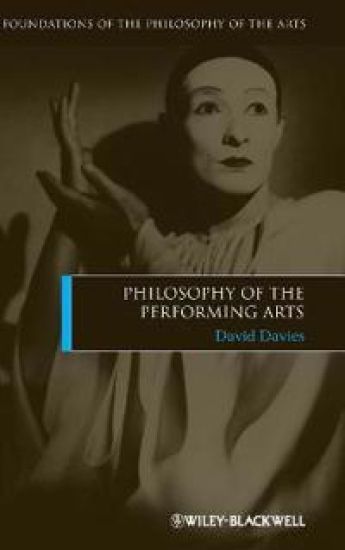
Philosophy of the Performing Arts

Philosophy of the Performing Arts

David Davies

Wiley-Blackwell (an imprint of John Wiley Sons Ltd)
2011
sidottu
PHILOSOPHY OF THE PERFORMING ARTS “David Davies’s Philosophy of the Performing Arts is long-awaited. Not since Paul Thom’s For an Audience has a book in the Anglo-American philosophical tradition focused so clearly, exclusively, informatively, and fairly on all the performing arts. I will use this book in my classes.” James Hamilton, Kansas State University, author of The Art of Theater “In this outstanding philosophical study, David Davies subjects the different, conflicting literatures characterizing works, performances, and their relationships to critical review en route to developing his own integrated theory. Covering classical music to jazz, Shakespeare to Brecht, dance to performance art, this is essential reading for anyone interested in the performing arts.” Stephen Davies, University of Auckland, author of The Philosophy of Art Philosophical inquiry concerning the performing arts has tended to focus on music – specifically classical music – which is assumed to provide a model for understanding the performing arts as a whole. This book engages with this belief and critically explores how the “classical paradigm” might be extended to other musical genres, to theater, and to dance. Taking in key components of artistic performance – improvisation, rehearsal, the role of the audience, the embodied nature of the artistic performer – the book examines similarities and differences between the performing art forms and presents the key philosophical issues that they bring into play. These reflections are then applied to the disputed issue of those contemporary artworks usually classified as “performance art.” Assuming no prior knowledge of the subject matter, this book provides an accessible, yet sophisticated, introduction to the field and a comprehensive framework for thinking about the performing arts.
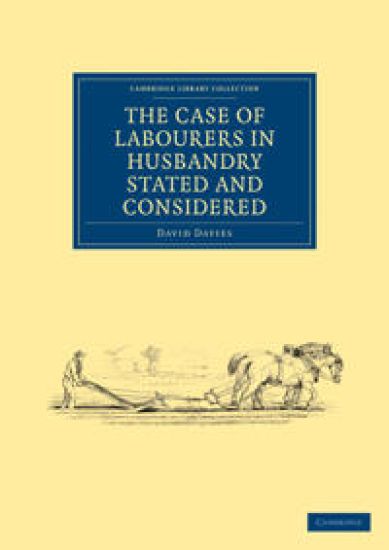
The Case of Labourers in Husbandry Stated and Considered

The Case of Labourers in Husbandry Stated and Considered

David Davies

Cambridge University Press
2010
pokkari
David Davies (1742–1819) was an English clergyman and social commentator, best remembered for this survey of the lives of rural agricultural labourers. Davies was ordained in 1782 and became the rector of Barkham parish, where he remained incumbent until his death. This volume, first published in 1795, contains Davies' discussion of the living conditions of agricultural labourers in England. Davies discusses in detail the causes of the poverty of labourers, linking the high prices of goods with poverty, and proposes measures to relieve the labourers, including linking their daily wage to the price of bread. Davies' observations also demonstrate the failings of the contemporary Poor Laws. Originally focusing on the annual expenditure of labourers in Davies' own parish, this volume was expanded to include accounts of expenditure from elsewhere in Britain. This meticulously researched volume provides valuable evidence for the increase in rural poverty in the late eighteenth century.
Aesthetics and Literature

Aesthetics and Literature

David Davies

Continuum International Publishing Group Ltd.
2007
sidottu
The Continuum Aesthetics series looks at the aesthetic questions and issues raised by all major art forms. Stimulating, engaging and highly readable, the series offers food for thought not only for students of aesthetics, but also for anyone with an interest in philosophy and the arts. Aesthetics and Literature places philosophical aesthetics at the heart of thinking about literature. The book takes concrete examples from the traditional and contemporary literary arts and uses them to introduce all the central philosophical issues in literature. David Davies considers, with stimulating insight and great clarity, the nature of literature and fiction, artistic uses of language, and the nature of fictional characters. He goes on to explore our emotional responses to literature, the cognitive value and ethical values of literature and the accountability of the literary arts. The book offers a clear, non-technical analysis of each key issue, its broader significance and the principal positions that philosophers have taken on it. Davies presents the relevant philosophical background in a manner that is accessible to philosophy studentsand lay readers alike. Anyone interested in the philosophy of literature will find this book a rich source of ideas, insight and information. Combining a clear and engaging style with a sophisticated treatment of a fascinating subject, Aesthetics and Literature is a valuable contribution to contemporary aesthetics.
Aesthetics and Literature

Aesthetics and Literature

David Davies

Continuum International Publishing Group Ltd.
2007
nidottu
"The Continuum Aesthetics" series looks at the aesthetic questions and issues raised by all major art forms. Stimulating, engaging and highly readable, the series offers food for thought not only for students of aesthetics, but also for anyone with an interest in philosophy and the arts. "Aesthetics and Literature" places philosophical aesthetics at the heart of thinking about literature. The book takes concrete examples from the traditional and contemporary literary arts and uses them to introduce all the central philosophical issues in literature. David Davies considers, with stimulating insight and great clarity, the nature of literature and fiction, artistic uses of language, and the nature of fictional characters. He goes on to explore our emotional responses to literature, the cognitive value and ethical values of literature and the accountability of the literary arts. The book offers a clear, non-technical analysis of each key issue, its broader significance and the principal positions that philosophers have taken on it. Davies presents the relevant philosophical background in a manner that is accessible to philosophy students and lay readers alike. Anyone interested in the philosophy of literature will find this book a rich source of ideas, insight and information. Combining a clear and engaging style with a sophisticated treatment of a fascinating subject, "Aesthetics and Literature" is a valuable contribution to contemporary aesthetics.
Managing Financial Information

Managing Financial Information

David Davies

Chartered Institute of Personnel Development
2005
nidottu
Managing Financial Information examines a subject that managers fear and resent but that lies at the heart of every organisation. Beginning with an explanation of how the finance department fits into the business as a whole, the book goes on to take the reader carefully through the construction of a balance sheet, the trading and loss account, the cash statement and the manufacturing account, explaining the different roles of each. The language of financial information can often seem arcane. Managing Financial Information explains such vital terms as profit and loss, added value and cost benefit analysis, and includes a large selection of straightforward exercises and examples to give a backbone to your understanding. Reading this book will enable the reader to confidently interpret and use: management ratios; costing concepts and techniques, including absorption costing, standard costing and marginal costing; cash flow; cash budgets and master budgets. Readable and direct, Managing Financial Informationis the best introduction to the business of understanding finance today. With an introduction by the late Professor Ian Beardwell, former IPD Vice President of Membership and Education.
Hope and Heartbreak

Hope and Heartbreak

David Davies

University of Wales Press
2005
sidottu
"Hope and Heartbreak" is the first in a two-volume social history of modern Wales which will revise 'general' histories of Wales through an engagement with the particularity of everyday life.
Velázquez in Seville

Velázquez in Seville

David Davies; Enriqueta Harris

Yale University Press
1996
sidottu
Diego Velázquez (1599-1660), considered by many to be the greatest of Spain's great painters, spent his crucial formative years in Seville, learning his craft and producing many early masterpieces. When he departed from his native city as a young man of 24, Velázquez's accomplishments were already impressive: he left to assume the position of Court Painter to Philip IV of Spain in Madrid. In this beautifully illustrated book, an international team of art scholars explores the importance of Seville for Velázquez. Discussions range across many topics, including Velázquez's education and training, Sevillian culture and Catholic theology, picaresque literature, and Velázquez's subject matter—portraiture, sacred subjects, and the bodegones (kitchen and tavern scenes with prominent still life) in which Velázquez developed his distinctive naturalistic style. The Seville of Velázquez's youth was the chief Spanish port of trade with the New World and a major religious center that witnessed the passionate controversy over the mystery of the Immaculate Conception, a subject depicted in an early Velázquez painting. Other surviving paintings from the artist's Sevillian years include his first dated painting, Old Woman Cooking Eggs (1618), and his famous masterpiece Water-seller of Seville. This book serves as the catalogue for a major exhibition on Velázquez's early work to be held at the National Gallery of Scotland in Edinburgh, August 8 through October 20, 1996. The exhibit also includes a selection of influential works by Velázquez's important contemporaries, such as the sculptor Montañes and painters Alonso Cano and Ribalta. Distributed by Yale University Press for National Galleries of Scotland