Kirjojen hintavertailu – 12 859 829 kirjaa ja 27 kauppaa

Kirjailija

David Depew

Kirjat ja teokset yhdessä paikassa: 6 kirjaa, julkaisuja vuosilta 1995–2019, suosituimpiin kuuluu Pragmatism. Vertaile teosten hintoja ja tarkista saatavuus suomalaisista kirjakaupoista.

6 kirjaa

Kirjojen julkaisuvuodet: 1995–2019.

Darwinism, Democracy, and Race

Darwinism, Democracy, and Race

John Jackson; David Depew

Routledge
2019
nidottu
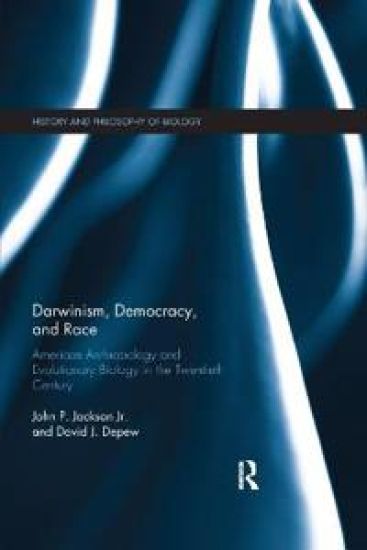
Darwinism, Democracy, and Race examines the development and defence of an argument that arose at the boundary between anthropology and evolutionary biology in twentieth-century America. In its fully articulated form, this argument simultaneously discredited scientific racism and defended free human agency in Darwinian terms. The volume is timely because it gives readers a key to assessing contemporary debates about the biology of race. By working across disciplinary lines, the book’s focal figures--the anthropologist Franz Boas, the cultural anthropologist Alfred Kroeber, the geneticist Theodosius Dobzhansky, and the physical anthropologist Sherwood Washburn--found increasingly persuasive ways of cutting between genetic determinist and social constructionist views of race by grounding Boas’s racially egalitarian, culturally relativistic, and democratically pluralistic ethic in a distinctive version of the genetic theory of natural selection. Collaborators in making and defending this argument included Ashley Montagu, Stephen Jay Gould, and Richard Lewontin. Darwinism, Democracy, and Race will appeal to advanced undergraduates, graduate students, and academics interested in subjects including Philosophy, Critical Race Theory, Sociology of Race, History of Biology and Anthropology, and Rhetoric of Science.

Darwinism, Democracy, and Race

Darwinism, Democracy, and Race

John Jackson; David Depew

Routledge
2017
sidottu
Darwinism, Democracy, and Race examines the development and defence of an argument that arose at the boundary between anthropology and evolutionary biology in twentieth-century America. In its fully articulated form, this argument simultaneously discredited scientific racism and defended free human agency in Darwinian terms. The volume is timely because it gives readers a key to assessing contemporary debates about the biology of race. By working across disciplinary lines, the book’s focal figures--the anthropologist Franz Boas, the cultural anthropologist Alfred Kroeber, the geneticist Theodosius Dobzhansky, and the physical anthropologist Sherwood Washburn--found increasingly persuasive ways of cutting between genetic determinist and social constructionist views of race by grounding Boas’s racially egalitarian, culturally relativistic, and democratically pluralistic ethic in a distinctive version of the genetic theory of natural selection. Collaborators in making and defending this argument included Ashley Montagu, Stephen Jay Gould, and Richard Lewontin. Darwinism, Democracy, and Race will appeal to advanced undergraduates, graduate students, and academics interested in subjects including Philosophy, Critical Race Theory, Sociology of Race, History of Biology and Anthropology, and Rhetoric of Science.

The Philosophy of Biology

The Philosophy of Biology

Marjorie Grene; David Depew

Cambridge University Press
2004
pokkari
Is life different from the non-living? If so, how? And how, in that case, does biology as the study of living things differ from other sciences? These questions are traced through an exploration of episodes in the history of biology and philosophy. The book begins with Aristotle, then moves on to Descartes, comparing his position with that of Harvey. In the eighteenth century the authors consider Buffon and Kant. In the nineteenth century the authors examine the Cuvier-Geoffroy debate, pre-Darwinian geology and natural theology, Darwin and the transition from Darwin to the revival of Mendelism. Two chapters deal with the evolutionary synthesis and such questions as the species problem, the reducibility or otherwise of biology to physics and chemistry, and the problem of biological explanation in terms of function and teleology. The final chapters reflect on the implications of the philosophy of biology for philosophy of science in general.
The Philosophy of Biology

The Philosophy of Biology

Marjorie Grene; David Depew

Cambridge University Press
2004
sidottu
Is life different from the non-living? If so, how? And how, in that case, does biology as the study of living things differ from other sciences? These questions are traced through an exploration of episodes in the history of biology and philosophy. The book begins with Aristotle, then moves on to Descartes, comparing his position with that of Harvey. In the eighteenth century the authors consider Buffon and Kant. In the nineteenth century the authors examine the Cuvier-Geoffroy debate, pre-Darwinian geology and natural theology, Darwin and the transition from Darwin to the revival of Mendelism. Two chapters deal with the evolutionary synthesis and such questions as the species problem, the reducibility or otherwise of biology to physics and chemistry, and the problem of biological explanation in terms of function and teleology. The final chapters reflect on the implications of the philosophy of biology for philosophy of science in general.
Pragmatism

Pragmatism

David Depew; Robert Hollinger

Praeger Publishers Inc
1999
nidottu
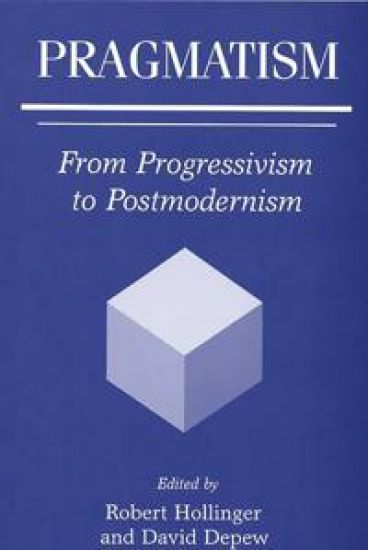
American pragmatism can be best understood against the background of 20th-century American culture and politics. The essays in this volume, by philosophers, cultural critics, and historians, explore the development of pragmatism in this context. The emphasis in this volume is on the interrelations between the philosophical or foundational issues raised by pragmatism as a philosophical movement, and the cultural, political, and educational programs that have been associated with pragmatism from James, Dewey, and Mead to Rorty and Cornel West. The book is divided into three parts, reflecting the periods of Progressivism, Positivism, and Postmodernism. The contributors explore the ways in which pragmatist writings have been appropriated or misappropriated in the literature and practice of Progressive reformers, positivist academics, end-of-ideology liberals, and postmodernists.
Pragmatism

Pragmatism

David Depew; Robert Hollinger

Praeger Publishers Inc
1995
sidottu
American pragmatism can be best understood against the background of 20th-century American culture and politics. The essays in this volume, by philosophers, cultural critics, and historians, explore the development of pragmatism in this context. The emphasis in this volume is on the interrelations between the philosophical or foundational issues raised by pragmatism as a philosophical movement, and the cultural, political, and educational programs that have been associated with pragmatism from James, Dewey, and Mead to Rorty and Cornel West. The book is divided into three parts, reflecting the periods of Progressivism, Positivism, and Postmodernism. The contributors explore the ways in which pragmatist writings have been appropriated or misappropriated in the literature and practice of Progressive reformers, positivist academics, end-of-ideology liberals, and postmodernists.