Kirjojen hintavertailu – 12 859 828 kirjaa ja 27 kauppaa

Kirjailija

David Der-wei Wang

Kirjat ja teokset yhdessä paikassa: 8 kirjaa, julkaisuja vuosilta 1992–2020, suosituimpiin kuuluu The Lyrical in Epic Time. Vertaile teosten hintoja ja tarkista saatavuus suomalaisista kirjakaupoista.

Nimi esiintyy myös muodoissa: David Der–wei Wang

8 kirjaa

Kirjojen julkaisuvuodet: 1992–2020.

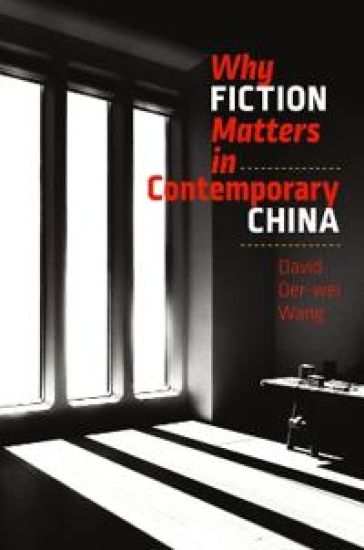
Why Fiction Matters in Contemporary China

Why Fiction Matters in Contemporary China

David Der–wei Wang

Brandeis University Press
2020
nidottu
Contemporary discussions of China tend to focus on politics and economics, giving Chinese culture little if any attention. Why Fiction Matters in Contemporary China offers a corrective, revealing the crucial role that fiction plays in helping contemporary Chinese citizens understand themselves and their nation. Where history fails to address the consequences of man-made and natural atrocities, David Der-Wei Wang argues, fiction arises to bear witness to the immemorial and unforeseeable. Beginning by examining President Xi Jinping’s call in 2013 to “tell the good China story,” Wang illuminates how contemporary Chinese cultural politics have taken a “fictional turn,” which can trace its genealogy to early modern times. He does so by addressing a series of discourses by critics within China, including Liang Qichao, Lu Xun, and Shen Congwen, as well as critics from the West such as Arendt, Benjamin, and Deleuze. Wang highlights the variety and vitality of fictional works from China as well as the larger Sinophone world, ranging from science fiction to political allegory, erotic escapade to utopia and dystopia. The result is an insightful account of contemporary China, one that affords countless new insights and avenues for understanding.
Why Fiction Matters in Contemporary China

Why Fiction Matters in Contemporary China

David Der–wei Wang

Brandeis University Press
2020
sidottu
Contemporary discussions of China tend to focus on politics and economics, giving Chinese culture little if any attention. Why Fiction Matters in Contemporary China offers a corrective, revealing the crucial role that fiction plays in helping contemporary Chinese citizens understand themselves and their nation. Where history fails to address the consequences of man-made and natural atrocities, David Der-Wei Wang argues, fiction arises to bear witness to the immemorial and unforeseeable. Beginning by examining President Xi Jinping’s call in 2013 to “tell the good China story,” Wang illuminates how contemporary Chinese cultural politics have taken a “fictional turn,” which can trace its genealogy to early modern times. He does so by addressing a series of discourses by critics within China, including Liang Qichao, Lu Xun, and Shen Congwen, as well as critics from the West such as Arendt, Benjamin, and Deleuze. Wang highlights the variety and vitality of fictional works from China as well as the larger Sinophone world, ranging from science fiction to political allegory, erotic escapade to utopia and dystopia. The result is an insightful account of contemporary China, one that affords countless new insights and avenues for understanding.
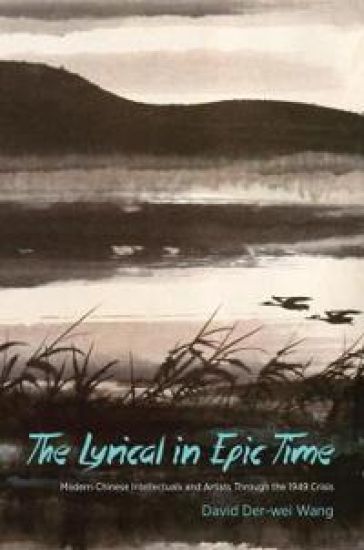
The Lyrical in Epic Time

The Lyrical in Epic Time

David Der-wei Wang

Columbia University Press
2015
sidottu
In this book, David Der-wei Wang uses the lyrical to rethink the dynamics of Chinese modernity. Although the form may seem unusual for representing China's social and political crises in the mid-twentieth century, Wang contends that national cataclysm and mass movements intensified Chinese lyricism in extraordinary ways. Wang calls attention to the form's vigor and variety at an unlikely juncture in Chinese history and the precarious consequences it brought about: betrayal, self-abjuration, suicide, and silence. Despite their divergent backgrounds and commitments, the writers, artists, and intellectuals discussed in this book all took lyricism as a way to explore selfhood in relation to solidarity, the role of the artist in history, and the potential for poetry to illuminate crisis. They experimented with poetry, fiction, film, intellectual treatise, political manifesto, painting, calligraphy, and music. Western critics, Wang shows, also used lyricism to critique their perilous, epic time. He reads Martin Heidegger, Theodor Adorno, Cleanth Brooks, and Paul de Man, among others, to complete his portrait. The Chinese case only further intensifies the permeable nature of lyrical discourse, forcing us to reengage with the dominant role of revolution and enlightenment in shaping Chinese-and global-modernity. Wang's remarkable survey reestablishes Chinese lyricism's deep roots in its own native traditions, along with Western influences, and realizes the relevance of such a lyrical calling of the past century to our time.
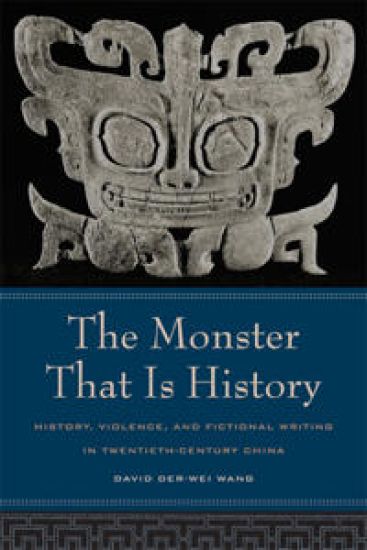
The Monster That Is History

The Monster That Is History

David Der-Wei Wang

University of California Press
2004
pokkari
In ancient China a monster called Taowu was known for both its vicious nature and its power to see the past and the future. Over the centuries Taowu underwent many incarnations until it became identifiable with history itself. Since the seventeenth century, fictive accounts of history have accommodated themselves to the monstrous nature of Taowu. Moving effortlessly across the entire twentieth-century literary landscape, David Der-wei Wang delineates the many meanings of Chinese violence and its literary manifestations. Taking into account the campaigns of violence and brutality that have rocked generations of Chinese - often in the name of enlightenment, rationality, and utopian plenitude - this book places its arguments along two related axes: history and representation, modernity and monstrosity. Wang considers modern Chinese history as a complex of geopolitical, ethnic, gendered, and personal articulations of bygone and ongoing events. His discussion ranges from the politics of decapitation to the poetics of suicide, and from the typology of hunger and starvation to the technology of crime and punishment.
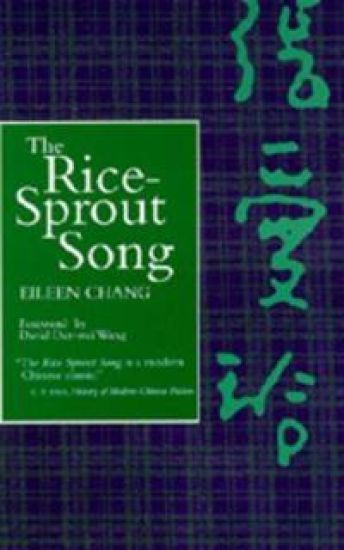
The Rice Sprout Song

The Rice Sprout Song

Eileen Chang; David Der-Wei Wang

University of California Press
1998
pokkari

Halvin toimitettuna 39,70 €

The first of Eileen Chang's novels to be written in English, The Rice-Sprout Song portrays the horror and absurdity that the land-reform movement brings to a southern village in China during the early 1950s. Contrary to the hopes of the peasants in this story, the redistribution of land does not mean an end to hunger. Man-made and natural disasters bring about the threat of famine, while China's involvement in the Korean War further deepens the peasants' misery. Chang's chilling depiction of the peasants' desperate attempts to survive both the impending famine and government abuse makes for spellbinding reading. Her critique of communism rewrites the land-reform discourse at the same time it lays bare the volatile relations between politics and literature.
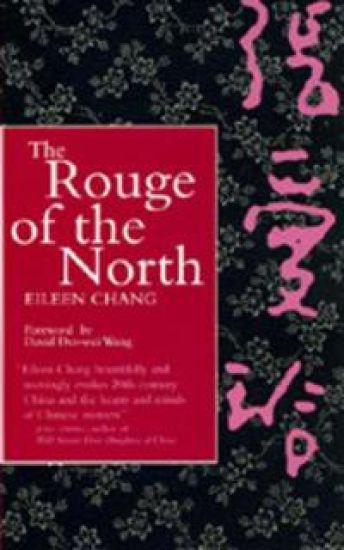
The Rouge of the North

The Rouge of the North

Eileen Chang; David Der-Wei Wang

University of California Press
1998
pokkari
The Rouge of the North is the story of Yindi, a beautiful young bride who marries the blind, bedridden son of a rich and noble family. Captive to household ritual, to the strategies and contempt of her sisters-in-law, and to the exacting dictates of her husband's mother, Yindi is pressed beneath the weight of an existence that offers no hope of change. Dramatic events in the outside world fail to make their way into this insular society. Chang's brilliant portrayal of the slow suffocation of passion, moral strength, and physical vitality--together with her masterful evocation of the sights, smells, and sounds of daily existence--make The Rouge of the North a remarkable chronicle of a vanished way of life.
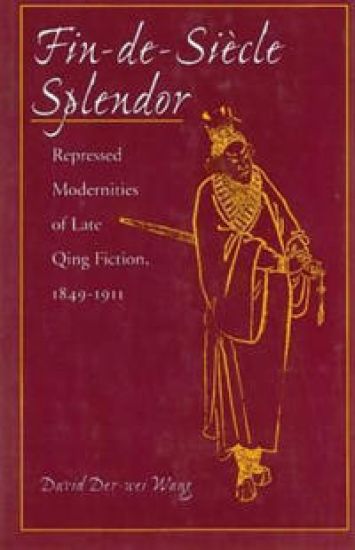
Fin-de-Siècle Splendor

Fin-de-Siècle Splendor

David Der-Wei Wang

Stanford University Press
1997
sidottu
The reigning view of literary historians has been that the May Fourth movement of 1919 marks the division between the traditional and the modern in Chinese literature. This book argues that signs of reform and innovation can be discerned long before May Fourth, and that as China entered the arena of modern, international history in the late Qing, it was already developing its own complex matrix of incipient modernities. It demonstrates that late Qing fiction nurtured a creative, innovative poetics, one that was spurned by the reformers of the May Fourth generation in favor of Western-style realism. The author recognizes that a full account of modern Chinese fiction needs to ask why so many genres, styles, themes, and figures found in late imperial fiction were repressed by "modern" Chinese literary discourse. He focuses on four genres of late Qing fiction that have been either rudely dismissed in pejorative terms or simply ignored: depravity romances, court-case and chivalric cycles, grotesque exposés, and scientific fantasies. The author shows that in spite of the realist orthodoxy that has dominated Chinese literature since the May Fourth movement, these unwelcome genres have continually found their way back into mainstream discourse, their influence being increasingly evident in recent decades. This first comprehensive study of late Qing fiction discusses more than sixty works, at least half of which have rarely or never been dealt with by Western or Chinese scholars. Richly informed by contemporary literary theory, this book constitutes a polemical rethinking of the nature of Chinese literary and cultural modernity.
Fictional Realism in Twentieth-Century China

Fictional Realism in Twentieth-Century China

David Der-Wei Wang

Columbia University Press
1992
sidottu
David Wang's knowledge of modern Chinese literature and his readings provide reinterpretation of the three major Chinese novelists after Lu Xun, traditionally ranked as the dominant voice and influence in the genre of Chinese fictional realism. Wang offers a detailed exegesis of the writers' major works, arguing that Mao Dun, Lao She and Shen Congwen give rise to the polyphonic development of Chinese realism that Lu Xun primarily set into motion.