

Kirjailija
David Dickinson
Kirjat ja teokset yhdessä paikassa: 27 kirjaa, julkaisuja vuosilta 1934–2026, suosituimpiin kuuluu Death of a Pilgrim. Vertaile teosten hintoja ja tarkista saatavuus suomalaisista kirjakaupoista.
27 kirjaa
Kirjojen julkaisuvuodet: 1934–2026.
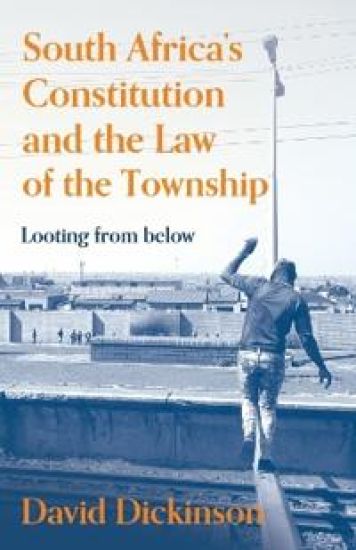
South Africa’s Constitution and the Law of the Township
David Dickinson
James Currey
2025
sidottu
Halvin toimitettuna 113,40 €
How are residents of South Africa's townships responding to socio-economic inequality and a pervasive sense that the country's democratic transition has not delivered on its constitutional promises of social justice? Based on extensive fieldwork, this book challenges beliefs that the agency of township residents is limited to waiting for handouts or demanding delivery from the state, showing how they are instead assisting themselves by taking advantage of the opportunities, menyetla, available. In the kasi, or urban townships, where almost half of the urban population lives, there is limited state-enforced order; while the lex constitutional may be the law of the land, the lex lokasi governs day-to-day life in the township. The book opens with a description of life in townships and the interconnected crises facing the country before examining commonly practiced township menyetla to illustrate how the lex lokasi operates: stealing electricity, informal charges to access the Social Relief of Distress grant, fare evasion on the Metrorail, the illicit sale of alcohol during COVID-19 prohibition, medical aid scams, and looting. Exploring how this looting from below protects those looting from above, it provides a different perspective to the view that state capture is the primary cause of the country's current entropic trajectory and that the application of the much-vaunted constitution can bring South Africa back on track.
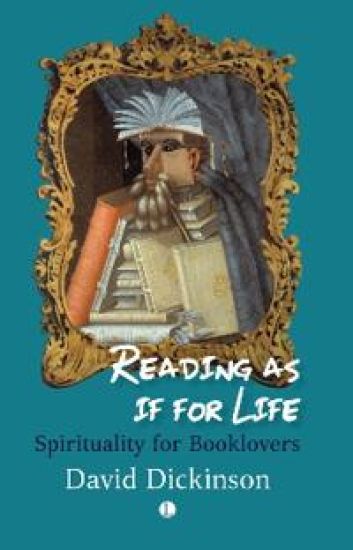
Creaking open the pages of a heavy hardback, or bending the spine of a poetry book over your knee on the train; squinting over curled-up pages by the light of a candle, or scribbling notes in the margins in the corner of a sprawling library. There are many who read as if for life; many for whom, as David Dickinson explores, reading does not just feed the mind but also the soul. Reading as if for Life takes us beyond the spirituality of sacred texts, and into the spiritual possibilities of 'secular' literature: the opportunity to find or empty oneself, the chance to engage in silent conversation with an absent other, the appreciation of beauty and art, the possibility of enlightenment. From Augustine of Hippo to Thomas Hardy, Iris Murdoch, the poetry of R. S. Thomas, Duffy and Donne, and many other literary works, David Dickinson explores how writers throughout the centuries have understood and experienced their own spirituality of reading. For Dickinson, these myriad journeys all bring us closer to an encounter with God, dreaming ourselves into a world beyond. This book invites its readers to see reading as a valuable spiritual exercise.
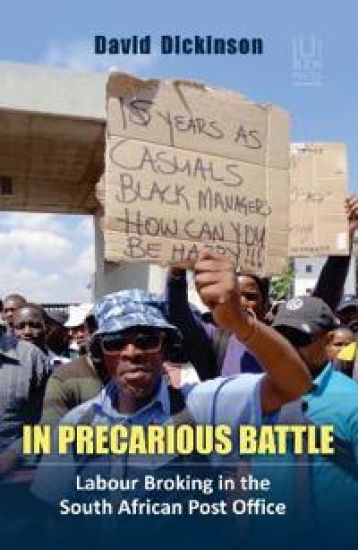
In Precarious Battle tells how labour broking was defeated in the South African Post Office (SAPO). Labour broking has become synonymous with worker exploitation. By 2011, a third of SAPO's workforce was employed through labour brokers. These 'casuals' worked alongside permanent employees, some for over a decade, but for a quarter of the salary. David Dickinson shares the story of how labour broking provided cheap and compliant labour, and how the use of labour brokers in SAPO divided the workplace and the workforce. He charts the attempts of casuals to organise within the law and how their efforts were defeated at every turn. He describes the increasing ferocity of the wildcat strikes that followed and explains how eventually 294 casuals, the Mabarete, fought their own battle and ended labour broking. This book reflects on how labour broking created misery for those trapped in precarious employment, how the Constitution failed casual workers and how the South African industrial relations system is unravelling.
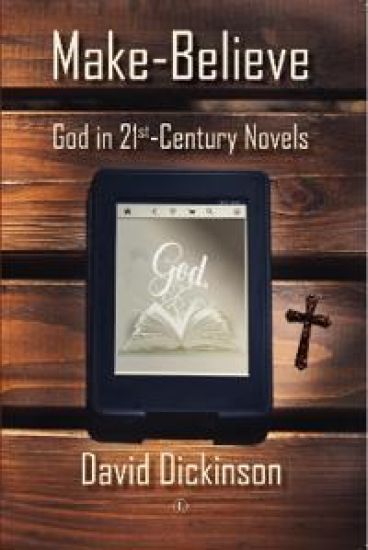
"I will tell you a story that will make you believe in God." No story can guarantee being able to do this. Yet novelists can tell stories that make us think about what we believe about God and why. Despite repeated predictions of the death of the novel, thousands of works of fiction are published and read in Britain each year. Although Western society is less religiously observant than it was, many 21st-century novelists persist in pursuing theological, religious and spiritual themes. Make-Believe seeks to explain why. With chapters offering analyses of novels from several genres - so-called literary fiction, historical fiction, science fiction, fantasy and dystopia - David Dickinson discusses a wide spectrum of novelists. Authors who are avowedly atheistic and authors who have a vested interest in perpetuating biblical stories are both featured. Well-known writers such as Rushdie, McEwan, McCarthy and Martell rub shoulders with some you may be meeting for the first time. Appealing to literature students and people who simply enjoy reading, whether Christian or not, this study of God in novels invites us to open our minds and allow aspects of our culture to shape our understanding of God and to change our ways of talking about the divine.

Mycroft Holmes & The Adventure of the Silver Birches
David Dickinson
Independently Published
2019
nidottu
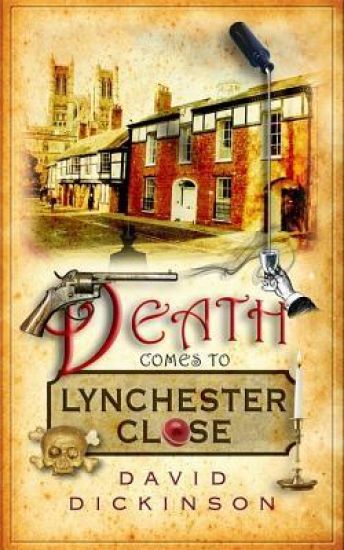
Lord Francis Powerscourt is visited at home in London by the Bishop of Lynchester who wants his advice about the suspect for the death of an aged parishioner. Powerscourt advises that discretion rather than accusation is the best way forward, but this is just the start of his association with the diocese of Lynchester. The death of the parishioner has left available a property in the cathedral close which traditionally the church rents out to a suitable tenant. Four worthy candidates are nominated . . . and then one of them, the retail king of the south of England, is found dead in the house, poisoned by strychnine. So once again Powerscourt is summoned by the bishop as this time there is no doubt of foul play. But there are many suspects from which to choose - there are the other candidates who want to live in that very desirable property . . . or could it be more complex than that? Very soon Powerscourt uncovers a trail of greed, deception and death which goes straight to the heart of the cathedral itself.
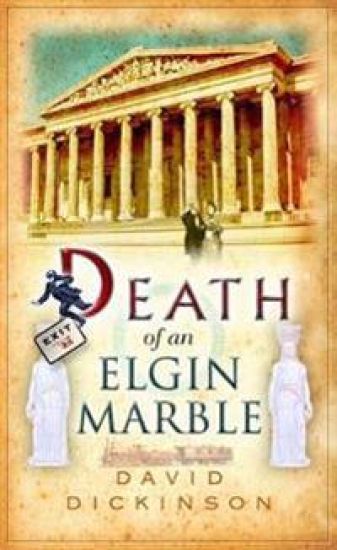
The British Museum in Bloomsbury is home to one of the Caryatids, a statue of a maiden that acted as one of the six columns in a temple which stood on the Acropolis in ancient Athens. Lord Elgin had brought her to London in the nineteenth century, and even though now she was over 2,300 years old, she was still rather beautiful - and desirable. Which is why Lord Francis Powerscourt finds himself summoned by the British Museum to attend a most urgent matter. The Caryatid has been stolen and an inferior copy left in her place. Powerscourt agrees to handle the case discreetly - but then comes the first death: an employee of the British Museum is pushed under a rush hour train before he and the police can question him. What had he known about the statue's disappearance? And who would want such a priceless object? Powerscourt and his friend Johnny Fitzgerald undertake a mission that takes them deep into the heart of London's Greek community and the upper echelons of English society to uncover the bizarre truth of the vanishing lady...
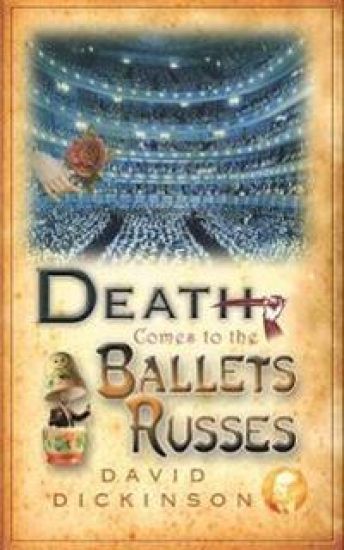
London, 1912, and the famed Ballet Russes have come to London to perform. Anticipation is high, for Diaghilev’s troupe is renowned throughout Europe. At the end of their famed performance of Thamar at the Royal Opera House, the Georgian queen stabs her prince to death and throws him into the river. But life mirrors art when the prince is found truly dead, stabbed through the heart in the orchestra pit below stage. But the corpse is not the dancer in the programme. It is his understudy. Powerscourt is summoned to investigate. But who was the intended victim – the understudy, or the star of the Ballets Russes? And the Ballet Russes are not the only Russian visitors in London this season. Lenin, Europe’s most dangerous revolutionary, has sent some bank robbery money to be changed into pounds. There are stolen jewels from St Petersburg to be sold. And there are other darker forces abroad too and Powerscourt has to look death in the face before he can solve the mystery of Death at the Ballet Russes
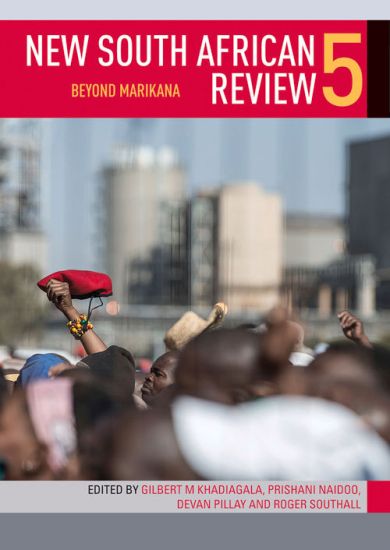
New South African Review 5
Naidoo Prishani; Nieftagodien Noor; Paret Marcel; Pillay Devan; Samantha Ashman; Harvey Ross; Crispen Chinguno; Turton Anthony; Southall Roger; Pierre Vos; Samantha Waterhouse; Ivor Sarakinsky; Marks Monique; David Bruce; David Dickinson; Khadiagala Gilbert M.; Garth le Pere; Smith Karen; Rod Alence
Wits University Press
2015
nidottu
This fifth volume in the New South African Review series takes as its starting point the shock wave emanating from the events at Marikana on 16 August 2012 and how it has reverberated throughout politics and society. some of the chapters in the volume refer directly to Marikana. In others, the influence of that fateful day is pervasive if not direct. Marikana has, for instance, made us look differently at the police and at how order is imposed on society. Monique Marks and David Bruce write that the massacre `has come to hold a central place in the analysis of policing, and broader political events since 2012 …’. The chapters highlight a range of current concerns – political, economic and social. David Dickinson’s chapter looks at the life of the poor in a township from within. in contrast, the chapter on foreign policy by Garth le Pere analyses south Africa’s approach to international relations in the Mandela, Mbeki and Zuma eras. Anthony turton’s account, `When gold mining ends’ is a chilling forecast of an impending environmental catastrophe. Both Devan Pillay and noor nieftagodien focus attention on the left and, in different ways, ascribe its rise to a new politics in the wake of Marikana. The essays in Beyond Marikana present a range of topics and perspectives of interest to general readers, but the book will also be a useful work of reference for students and researchers.
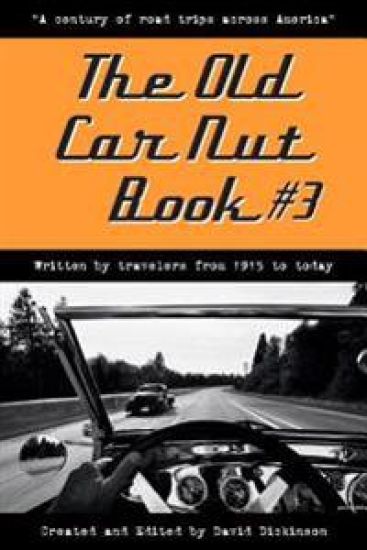
The Old Car Nut Book #3: "A century of road trips across America"
David Dickinson
David D Dickinson
2015
nidottu
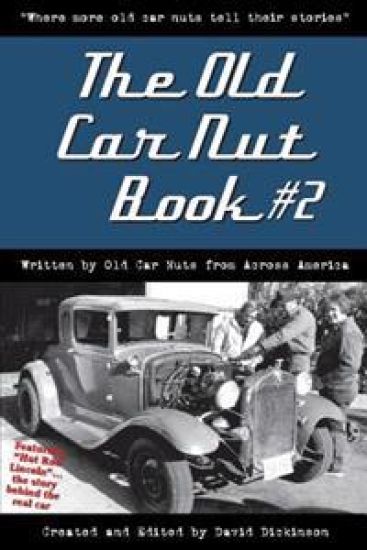
The Old Car Nut Book #2: "Where more old car nuts tell their stories"
David Dickinson
David D Dickinson
2014
nidottu
Book Two in The Old Car Nut Book series provides more stories from old car guys and gals from across America. You will read about the personal exploits of people that love the classics, muscle cars, and hot rods and the varied reasons for that enduring love. Relive their experiences, both good and bad, and read about the amazing effect that the cars have on people from all walks of life. The old cars seem to bind Americans together and provide a way to connect with others that they may never get a chance to know otherwise Caution: Like book one, once you pick this book up, it will be difficult to put down and you will want to reread the stories over and over, sharing with the people that make your experience in the world of old cars worthwhile. Reviews for book one in The Old Car Nut Book series: "What a fun book. Everyone has a car story. This book pulls a few of them out. It is one of those books you don't want to end. If I had my way, there would be at least 20 volumes. "Reading the stories in this book is like pulling up a lawn chair in group of old car nuts at a car show and listening to their stories. These stories are written by the people who actually lived the experiences." Excerpts from The Old Car Nut Book #2 I watched as the two of them got in the car and pulled away. A right turn at the end of the block would take her straight to the grocery store, and a left would take her to Gratiot and the cruise. After a long pause, her left turn signal came on. I smiled. The doctor was in. I hoped the ride led to a happier time, and much needed healing. Excerpt from The Psychiatrist with a Black Convertible Top by Tom Glide News traveled fast. One weekend before the show, Rich got a call from Joe Bailon inviting him to his home for a BBQ. Joe said that he had heard about our get together and he and Gene Winfield wanted to talk to Rich about it. Excerpt from The History of West Coast Kustoms and How Paso Came About by Penny Pichette The car spent the next 42 years in one barn or another until I retired in 2010. I rented a trailer and winched the car out of the barn it had spent the last dozen years in and hauled it home. I changed the oil in the engine, transmission, and rear end. Then, I bought a new battery, 4 spark plugs, and 5 gallons of gas. After I took the Tillotson carb apart and sprayed carb cleaner all over it, I put it back together with the same gaskets. It started up as if it had been running the previous week. Excerpt from Model A in the Barn by Dale Erickson It had Lakes Pipes, flipper hub caps, and white tuck and roll interior. In script, painted on each "B" pillar, was "Mood Indigo". I couldn't remember ever seeing the car on the street, but the whole package made a really lasting impression. I think that was the first custom car I had ever seen. Excerpt from Mowing Lawns and Model Cars by Steve Merryman
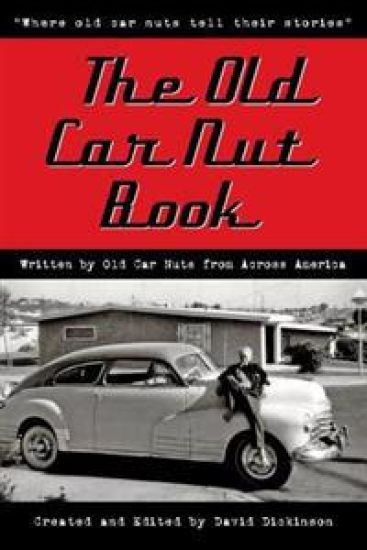
The Old Car Nut Book: "Where old car nuts tell their stories"
David Dickinson
David D Dickinson
2013
nidottu
Halvin toimitettuna 21,30 €
The Old Car Nut Book was designed with the idea that EVERYONE in the old car hobby has a story or two to tell. These are stories from regular Old Car Nuts from across America. Contributors range from people like the average Joe at a car show to collectors and restorers that are very well known and respected in their local communities. The stories in this book tell about the contributor's experiences from the time that cars first caught their eye up to their latest project and reveal the people and events that made an impact on them. You'll laugh and you'll cry. You'll step right into the past with each story told. Excerpts from The Old Car Nut BookMy wife said, "You paid how much for what? What are you, president of the Stupid Club?" I guess I have yet to learn my lesson. Maybe my dad was right Excerpt from Lessons in Stupidity by Gary M. Hughes She had heard me coming from a block away and watched with amusement as I tried to extract myself from the Pantera. As I clumsily attempted to exit the car, my foot caught on the seat and I almost landed on my keister in front of the whole neighborhood Vicki chuckled and said, wryly, "Any cool factor you may have by owning that car will immediately be obliterated when they see you trying to get out of it " Excerpt from Pandora by Chris Kimball I put my foot to the floor and unleashed its full explosive power. It kicked the car into a hard fishtail to the right, which is exactly what I wanted. I held my foot to the floor while looking out the right side of the windshield. I could kinda hear my passenger screaming something, but didn't care. I slammed it into second gear and the force caused the rubber dash pad that covered the entire length of the dash to fly off into John's lap. Fishtailing to the left now, the screaming was getting much louder but I still couldn't make it out clearly. I slammed it into third, revving between gears enough to go sideways one more time before shifting to fourth and coasting. Excerpt from A Ride To Remember by Jim MuchenfuhsI'd slide behind the huge steering wheel, peer out the tiny windows, and dream that I was driving it. Of course, in my dreams it was pristine, rather than the rusting hulk sitting in the briars on two flat tires that it really was. Someday, I'm gonna have one of these, I'd tell myself. Excerpt from Good Job Kid by Tom Glide Resigning myself to saying goodbye, I bent and gave her a final kiss on the hood and walked away. I was so upset that I forgot to even take any pictures. Walking away, I didn't look back and I've never seen her again, but I keep going back to the New England Summer Nationals every year. Excerpt from Telltale Skirts by Domenic TringaliI raced with some of the biggest names in Stock Car Racing, like Ralph Earnhart, Gale Yarborough, David Pearson, and Lee Petty. I remember a young Dale Earnhart hanging around with all of us drivers at the track when he was just a little boy. Excerpt from Go Karting in the Fast Lane by Captain Jack McClure Again, he revved his engine to demonstrate the deep throaty sound of the old glass pack mufflers as he rocked back and forth in his seat, anxiety about to get the best of him. I was sure he was going to jump the light early. I revved back. Excerpt from The Race That Never Happened by David DickinsonHe was awe struck, to say the least, and didn't speak for a few minutes. He was just taking it all in. This was an extremely "special" moment for us both and one I will carry for with me forever. Excerpt from"Bonneville Bob" by Ron Shincke
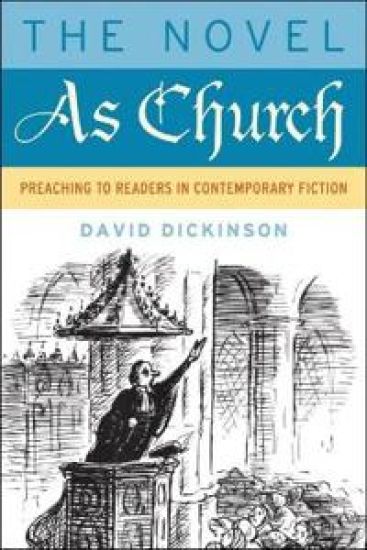
Reading the likes of Updike, Dickens, and Faulkner with a preacher's eye, David Dickinson offers an instructive examination of the role of the sermon as a literary element and, most strikingly, of literature as a modern sermon. Popular perceptions of religion, religious authority, and the practice of preaching have changed significantly during the past century, so much so, Dickinson argues, that fiction writers have a surprising and unique ability to preach to readers through their own fictionalized sermons and the characters who deliver them. The Novel as Church analyzes the context and intent behind these messages, uncovers the dissonance between ""novel"" and traditional preaching, and illuminates how readers' attitudes toward preaching (and those who preach) may be influenced--or not--by the sermon writers themselves.
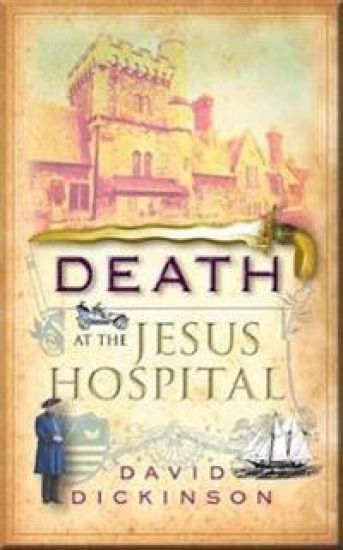
The first man murdered was Abel Meredith, a resident at the Jesus Hospital Almshouse near London. The second victim, Roderick Gill, was burser at the Allison's school in Norfolk. Victim number three, Sir Rufus Walcott, was slain in his own hall by the Thames. All had their throats cut. And all had strange markings on their chests, carved there by the murderer but which neither doctor nor coroner could identify. Lord Francis Powerscourt, brought in to solve this case of triple murder, had no shortage of suspects or suspicions. Meredith had shadowy links with the civil service. Gill, a man who seduced women at church during Harvest Festival or the Christmas carol service, had been threatened by angry husbands and disinherited sons while Sir Rufus had wiped fifteen years out of his own past history. And all had ties to Sir Peregrine Fishbourne, Prime Warden of the Guild of Silkworkers, who had visited all three men shortly before their untimely deaths. Yet on one question Powerscourt never wavered, and he knew that only when he had solved the mystery of the strange markings on the victims' bodies would he then be able to solve the mystery of the death at the Jesus Hospital. Praise for David Dickinson:'Splendid entertainment' Publishers Weekly'A leisurely period whodunit with Dickinson's customary historical tidbits and patches of local color, swathed in an appealing Victorian narrative' Kirkus Reviews'Detective fiction in the grand style' James Naughtie'A cracking yarn, beguilingly real from start to finish' Peter Snow
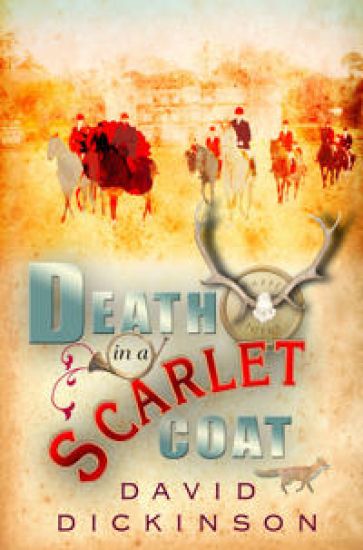
Master of the Hunt, the fifteenth Earl of Candlesby, has come to lead his riders once again. But this time he comes as a corpse, wrapped in blankets across his horse, a corner of his scarlet coat visible in the morning mist. Only three people see the body. One dies. Another vanishes. Now only one man knows how he was killed. Powerscourt is summoned to investigate murder in a crumbling house where the paper is peeling off the walls and the stuffed owls each only have one leg. The estate is virtually bankrupt as Powerscourt uncovers a world of jealousy, revenge and hatred, where the sons are as dissolute and dangerous as the father. The fifteenth earl had left a trail of duels, theft and adultery across the flatlands of Lincolnshire. It takes another death and a deadly chase under the crumbling estate before Powerscourt unlocks the secret of death in a scarlet coat. Praise for David Dickinson:'Splendid entertainment' Publishers Weekly'Detective fiction in the grand style' James Naughtie'Beguilingly real from start to finish... you have to pinch yourself to remind you that it is fiction - or is it?' Peter Snow'Dickinson's customary historical tidbits and patches of local colour swathed in... appealing Victorian narrative' Kirkus Reviews
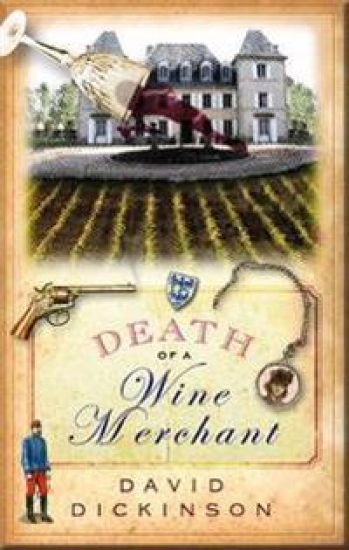
An unwelcome guest - Death - gatecrashes a society wedding and Lord Francis Powerscourt is summoned by his barrister friend, Charles Augustus Pugh, to investigate this most singular case of murder in the Fens. The dead man is Randolph Colville, successful wine merchant and father of the groom. The murderer would appear to be his brother Cosmo, found in the same room with a gun in his hand. But is this simply a modern-day version of Cain and Abel, or is there more to it than that? Cosmo isn't speaking and time is running out for him for he has an appointment with the gallows in two weeks. Francis has to act fast and sets out to discover all he can about the dead man - and his brother. Cosmo's silence is bothering him for it can only be for two reasons; either he is protecting a woman - or a family scandal. His investigations take him to the vineyards and towns of Burgundy, where he uncovers evidence of serious malpractise in the Colville wine trade, bitter rivalry with a London-based competitor and a disgruntled ex-employee bent on revenge. But there is another secret - more terrible and shocking than anything gone on before - which finally reveals the motive for the untimely death of a wine merchant. Praise for David Dickinson:'Splendid entertainment' Publishers Weekly'A leisurely period whodunit with Dickinson's customary historical tidbits and patches of local color, swathed in an appealing Victorian narrative' Kirkus Reviews'Detective fiction in the grand style' James Naughtie'A cracking yarn, beguilingly real from start to finish' Peter Snow
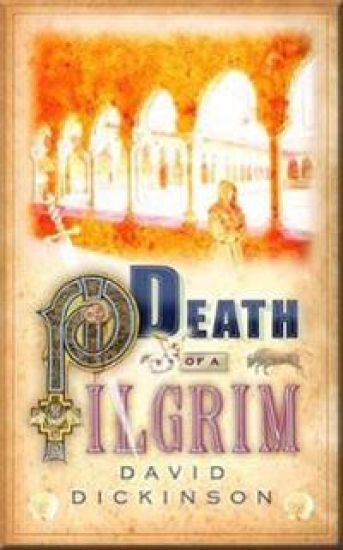
1905. A young man called James Delaney is dying in a New York hospital. The doctors and the nuns cannot save him. When his life is spared his tycoon father takes it as a miracle and organizes a family pilgrimage to the resting place of the boy's name saint, Saint James the Greater in Santiago de Compostela in Spain, the greatest pilgrimage site of the Middle Ages. The first modern-day pilgrim is killed in Le Puy en Velay in Southern France and Powerscourt is summoned to investigate. The pilgrims' progress across the holy sites is punctuated by further bizarre deaths. After his own life is put in terrible danger Powerscourt finally solves the murders on the day of the Bull Run at Pamplona in Southern Spain where young men race down the cobbled streets pursued by the bulls. The careless are gored to death, but it is up to Powerscourt to beware of the horns and other hidden dangers to finally resolve the Deaths of the Pilgrims.

Changing the Course of AIDS is an in-depth evaluation of a new and exciting way to create the kind of much-needed behavioral change that could affect the course of the global health crisis of HIV/AIDS. This case study from the South African HIV/AIDS epidemic demonstrates that regular workers serving as peer educators can be as—or even more—effective agents of behavioral change than experts who lecture about the facts and so-called appropriate health care behavior. After spending six years researching the response of large South African companies to the epidemic that is decimating their workforce as well as South African communities, David Dickinson describes the promise of this grassroots intervention—workers educating one another in the workplace and community—and the limitations of traditional top-down strategies. Dickinson's book takes us right into the South African workplace to show how effective and yet enormously complex peer education really is. We see what it means when workers directly tackle the kinds of sexual, gender, religious, ethnic, and broader social and political taboos that make behavior change so difficult, particularly when that behavior involves sex and sexuality. Dickinson's findings show that people who are not officially health care experts or even health care workers can be skilled and effective educators. In this book we see why peer education has so much to offer societies grappling with the HIV/AIDS epidemic and why those interested in changing behaviors to ameliorate other health problems like obesity, alcoholism, and substance abuse have so much to learn from the South African example.
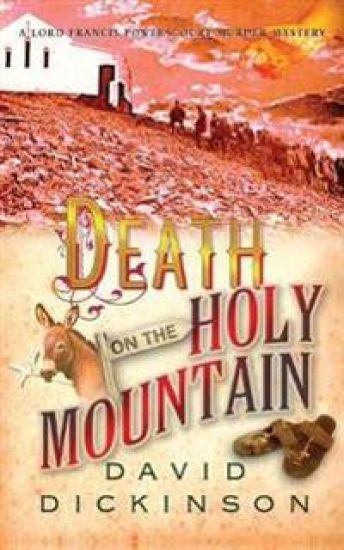
The year is 1905 and Powerscourt is sent to Ireland to investigate a series of art thefts from stately houses. Motive troubles Powerscourt; were these robberies merely for gain? A number of Old Masters had been left untouched and the ones taken were all ancient family portraits of the aristocratic Protestant gentry. Are these thefts political? Then, astonishingly, some of the portraits begin to return - but with altered faces; the aristocrats' being replaced by those from the estates and towns beyond the gates. Truly an elaborate joke, but then real people begin to disappear - and not long after the first body is found in the chapel at the top of Croagh Patrick, Ireland's Holy Mountain on the very day 10,000 people make the great pilgrimage to the summit. More follow, and as Powerscourt makes his way towards the killer his own life comes under threat, while his patriotism, and his devotion to Ireland is called into question on his journey towards the truth.