Kirjojen hintavertailu – 12 859 818 kirjaa ja 27 kauppaa

Kirjailija

David E. James

Kirjat ja teokset yhdessä paikassa: 10 kirjaa, julkaisuja vuosilta 1978–2020, suosituimpiin kuuluu Dryland Management: Economic Case Studies. Vertaile teosten hintoja ja tarkista saatavuus suomalaisista kirjakaupoista.

Nimi esiintyy myös muodoissa: David E James

10 kirjaa

Kirjojen julkaisuvuodet: 1978–2020.

Dryland Management: Economic Case Studies

Dryland Management: Economic Case Studies

John A. Dixon; David E. James; Paul B. Sherman

Earthscan Ltd
2009
sidottu
Drylands are a sizeable part of the world's potentially arable land. They vary from the hyper-arid regions of the classic deserts of Africa and Asia to the more common semi-arid and sub-humid areas that support extensive agricultural systems dependent on rainfall or irrigation. Following their successful and innovative work The Economics of Dryland Management the editors have assembled twenty case studies from nine countries in the continents of Africa, Asia, North America and Australia. They help to explore more fully the costs of land degradation and illustrate the economics of reclamation, rehabilitation and prevention. The cases in this book present a rich, varied and readable survey of a wide range of drylands and their resources. Originally published in 19990
Power Misses II

Power Misses II

David E. James

John Libbey Co Ltd
2020
pokkari
Like David James' earlier collection of essays, Power Misses: Essays Across (Un)Popular Culture (1996), the present volume, Power Misses II: Cinema, Asian and Modern is concerned with popular cultural activity that propose alternatives and opposition to capitalist media. Now with a wider frame of reference, it moves globally from west to east, beginning with films made during the Korean Democracy Movement, and then turning to socialist realism in China and Taiwan, and to Asian American film and poetry in Los Angeles. Several other avant-garde film movements in L. A. created communities resistant to the culture industries centered there, as did elements in the classic New York avant-garde, here instanced in the work of Ken Jacobs and Andy Warhol. The final chapter concerns little-known films about communal agriculture in the Nottinghamshire village of Laxton, the only one where the medieval open-field system never suffered enclosure. This survival of the commons anticipated resistance to the extreme and catastrophic forms of privatization, monetization, and theft of the public commonweal in the advanced form of capitalism we know as neoliberalism.
The Cultural Practice of Immigrant Filmmaking

The Cultural Practice of Immigrant Filmmaking

Lars Gustaf Andersson; John Sundholm; David E. James

Intellect Books
2019
sidottu
This book will be released as Open Access. Based on a research project funded by the Swedish Research Council, this book examines 40 years of post-war independent immigrant filmmaking in Sweden. John Sundholm and Lars Gustaf Andersson consider the creativity that lies in the state of exile, offering analyses of over 50 rarely seen immigrant films that would otherwise remain invisible and unarchived. They shed light on the complex web of personal, economic, and cultural circumstances that surround migrant filmmaking, discuss associations that became important sites of self-organization for exiled filmmakers, and explore the cultural practice of minor immigrant cinema archiving. The Cultural Practice of Immigrant Filmmaking applies film theory to immigrant filmmaking in a transnational context, exploring how immigrant filmmakers use film to find a place in a new cultural situation.
Rock 'N' Film

Rock 'N' Film

David E. James

Oxford University Press Inc
2017
nidottu
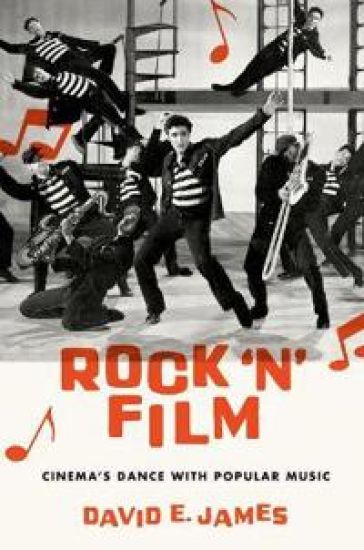
For two decades after the mid-1950s, biracial popular music played a fundamental role in progressive social movements on both sides of the Atlantic. Balancing rock's capacity for utopian popular cultural empowerment with its usefulness for the capitalist media industries, Rock 'N' Film explores how the music's contradictory potentials were reproduced in various kinds of cinema, including major studio productions, minor studios' exploitation projects,independent documentaries, and the avant-garde. These include Rock Around the Clock and other 1950s jukebox musicals; the films Elvis made before being drafted, especially King Creole, as well as the formulaic comedies in which Hollywood abused his genius in the 1960s; early documentaries such as The T. A. M. I. Show that presented James Brown and the Rolling Stones as the core of a black-white, US-UK cultural commonality; A Hard Day's Night that marked the British Invasion; Dont Look Back, Monterey Pop,Woodstock, and other Direct Cinema documentaries about the music of the counterculture; and avant-garde films about the Rolling Stones by Jean-Luc Godard, Kenneth Anger, and Robert Frank. After the turn of the decade, notably Gimme Shelter, in which the Stones appeared to be complicit in the Hells Angels' murder of a young black man, 1960s' music-and films about it-reverted to separate black and white traditions based respectively on soul and country. These produced blaxploitation and Lady Sings the Blues on the one hand, and bigoted representations of Southern culture in Nashville on the other. Ending with the deaths of their stars, both films impliedthat rock 'n' roll had died or even, as David Bowie proclaimed, that it had committed suicide. But in his documentary about Bowie, Ziggy Stardust and the Spiders from Mars, D. A. Pennebaker triumphantly re-affirmed the community of musicians and fans in glam rock. In analyzing this history, David E. James adapts the methodology of histories of the classic film musical to show how the rock 'n' roll film both displaced and recreated it.
Rock 'N' Film

Rock 'N' Film

David E. James

Oxford University Press Inc
2016
sidottu
Rock 'N' Film presents a cultural history of films about US and British rock music during the period when biracial popular music was fundamental to progressive social movements on both sides of the Atlantic. Considering the music's capacity for utopian popular cultural empowerment and its usefulness for the capitalist media industries, Rock 'N' Film explores how its contradictory potentials were reproduced in various kinds of cinema, including major studio productions, minor studios' exploitation projects, independent documentaries, and avant-garde works. These include Rock Around the Clock (Fred F. Sears, 1956) and other 1950s jukebox musicals; Elvis's King Creole (Michael Curtiz, 1958) and other important films he made before being drafted as well as the formulaic musical comedies in which Hollywood abused his genius in the 1960s; early documentaries such as The T. A. M. I. Show (Steve Binder, 1964) that presented James Brown and the Rolling Stones as core of a black-white, US-UK cultural commonality; A Hard Day's Night (Richard Lester, 1964) that precipitated the British Invasion, Dont Look Back (1967), Monterey Pop (1968), and other Direct Cinema documentaries about the music of the counterculture by D. A. Pennebaker; Woodstock (1970); avant-garde documentaries about the Rolling Stones by Jean-Luc Godard, Kenneth Anger, Robert Frank, and others. After the turn of the decade, notably Gimme Shelter (1970) in which Charlotte Zwerin edited David and Albert Maysles's footage of the Altamont free concert so as to portray the Stone's complicity in the Hells Angels' murder of a young man, the 60s' utopian biracial music—and films about it—reverted to separate black and white traditions based respectively on soul and country. These produced Blaxploitation and Lady Sings the Blues (Sidney J. Furie, 1972) on the one hand, and bigoted representations of the Southern culture in Nashville (Robert Altman, 1975) on the other. Both these last two films ended with the deaths of their stars, and it seemed that rock 'n' roll had died or even, as David Bowie proclaimed, that it had committed suicide. But in another documentary about Bowie's concert, Ziggy Stardust and the Spiders from Mars (1973), D. A. Pennebaker triumphantly re-affirmed the community of musicians and fans in glam rock. In analyzing this history, David James adapts the methodology of histories of the classic musical to rock 'n' roll to show how the rock 'n' roll film both displaced and recreated the film musical.

Dryland Management: Economic Case Studies

Dryland Management: Economic Case Studies

John A. Dixon; David E. James; Paul B. Sherman

Routledge
2013
nidottu
Drylands are a sizeable part of the world's potentially arable land. They vary from the hyper-arid regions of the classic deserts of Africa and Asia to the more common semi-arid and sub-humid areas that support extensive agricultural systems dependent on rainfall or irrigation. Following their successful and innovative work The Economics of Dryland Management the editors have assembled twenty case studies from nine countries in the continents of Africa, Asia, North America and Australia. They help to explore more fully the costs of land degradation and illustrate the economics of reclamation, rehabilitation and prevention. The cases in this book present a rich, varied and readable survey of a wide range of drylands and their resources. Originally published in 19990
Economics of Dryland Management

Economics of Dryland Management

John A. Dixon; David E. James; Paul B. Sherman

Earthscan Ltd
2009
sidottu
We have always had land in which the agricultural productivity is limited because there is not enough moisture. Systems of farming and burning often degrade dryland further until it is desert. Today, however, the problem is becoming much more serious. Over 20 per cent of the world's population lives in dryland areas, and unless action is taken drylands will increase dramatically. This book focuses on the people who live and .farm in the drylands, their use of land resources and the economic returns from their decisions. In a clear and thorough economic appraisal, the authors show how it is still possible to arrest the problem. Originally published in 1989
The Most Typical Avant-Garde

The Most Typical Avant-Garde

David E. James

University of California Press
2005
pokkari
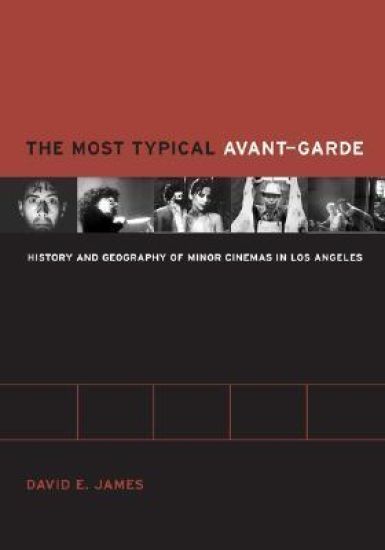
Los Angeles has nourished a dazzling array of independent cinemas: avant-garde and art cinema, ethnic and industrial films, pornography, documentaries, and many other far-flung corners of film culture. This glorious panoramic history of film production outside the commercial studio system reconfigures Los Angeles, rather than New York, as the true center of avant-garde cinema in the United States. As he brilliantly delineates the cultural perimeter of the film business from the earliest days of cinema to the contemporary scene, David James argues that avant-garde and minority filmmaking in Los Angeles has in fact been the prototypical attempt to create emancipatory and progressive culture. Drawing from urban history and geography, local news reporting, and a wide range of film criticism, James gives astute analyzes of scores of films - many of which are to found only in archives. He also looks at some of the most innovative moments in Hollywood, revealing the full extent of the cross-fertilization the occurred between the studio system and films created outside it. Throughout, he demonstrates that Los Angeles has been in the aesthetic and social vanguard in all cinematic periods - from the Socialist cinemas of the early teens and 1930s; to the personal cinemas of psychic self-investigation in the 1940s; to attempts in the 1960s to revitalize the industry with the counterculture's utopian visions; and to the 1970s, when African Americans, Asian Americans, Latinos, women, gays, and lesbians worked to create cinemas of their own. James takes us up to the 1990s and beyond to explore new forms of art cinema that are now transforming the representation of Southern California's geography.
Power Misses

Power Misses

David E James

Verso Books
1996
nidottu
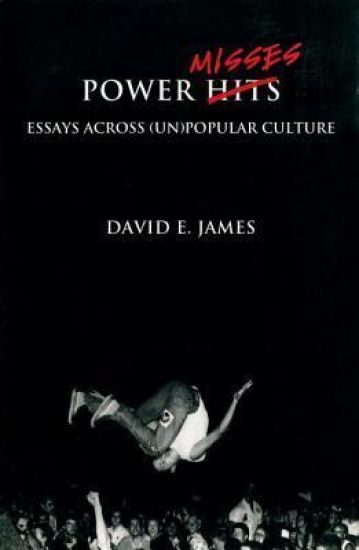
Mass culture: pro or con? From the time of Adorno and Horkheimer's seminal essay on "the culture industry," cultural studies has stood in the shadow of the Frankfurt School's critique of mass culture and its model of popular vs. elite culture, whatever the merits of either. Looking at culture as something people do rather than buy, Power Misses challenges the prevailing wisdom in cultural studies today. David James insists that popular resistance to domination by the culture industry must intervene at the point of production rather than consumption. In its most resolute instances, from the poetry of William Blake to the British Miners' Campaign Tape Project, alternative culture has fused with radical politics. Authoritatively mapping the terrain of cultural resistance under capitalism, James examines the material contradictions and the utopian potentials articulated in John Berger's fiction, Dada, rock music, the films of Andy Warhol and Jonas Mekas, and the poetry of punk. Following in the steps of Brecht and Benjamin, James explores the myriad ways in which culture is saturated by the commodity form, while at the same time giving rise to numerous forms of popular resistance to the culture industry's dominance.