Kirjailija
David Elliott
Kirjat ja teokset yhdessä paikassa: 77 kirjaa, julkaisuja vuosilta 2003–2026, suosituimpiin kuuluu Forever. Vertaile teosten hintoja ja tarkista saatavuus suomalaisista kirjakaupoista.
77 kirjaa
Kirjojen julkaisuvuodet: 2003–2026.
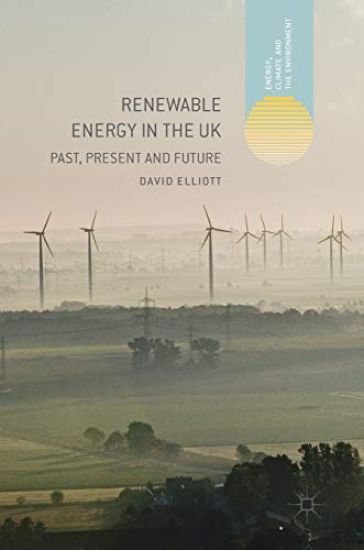
? This book offers a detailed account of how renewable energy has moved from the margins to the mainstream in the UK, and of the battles that have been fought to achieve this, trawling through the often troubled history of government involvement. The book examines how renewables became what now seem likely to be the dominant energy sources of the future. Renewable energy technologies, using solar and wind power and other natural energy sources, are now supplying around 30% of UK electricity and appear set to continue expanding to supply around 50% within the next decade. Although the emphasis of the book is on the UK, developments there are compared with those in other countries to provide an overall assessment of the relevance of the UK experience. Chapters explore why the UK still lags behind many other countries in deploying renewables, in part, it is argued, due to its continued reliance on nuclear power. The book ends with a discussion on what sort of changes may be expected over the coming years. The author does not assume a single answer, but invites readers to consider the possibilities.
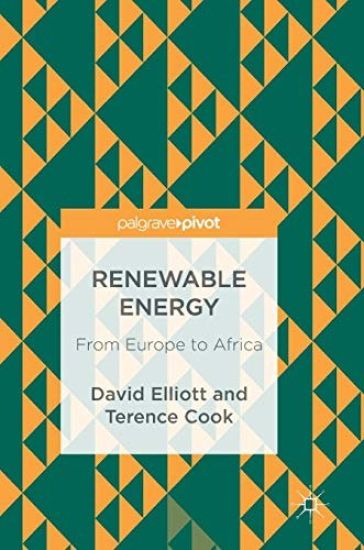
Significant progress has been made by industrial countries to reduce emissions from the use of fossil fuels, but as the economies of the less-developed regions of the world begin to expand, they too will face similar challenges. This book looks at energy transitions being made in developing countries, focusing on the adoption of renewable energy systems in Africa, for example under the UN Sustainable Energy for All programme, but also by the EU in the Former Soviet countries of Eastern and Central Europe. It draws on experience from involvement with programmes in the EU and Africa and will be of great interest to academics, policy makers and practitioners in the development aid and renewable energy policy fields.
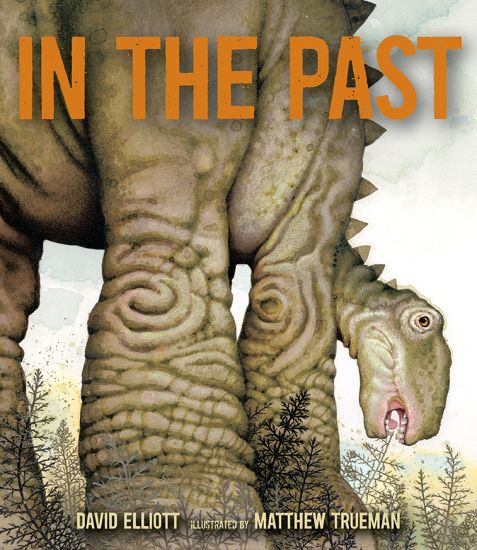
In the Past: From Trilobites to Dinosaurs to Mammoths in More Than 500 Million Years
David Elliott
Candlewick Press (MA)
2018
sidottu
David Elliott's third book of poetry, Through the Silence, gives the reader a meditative, tranquil experience rarely seen in poetry today. Rising through traditional haiku, non-traditional haiku, haiku-esque longer forms, and lyrical poems, Elliott's voice, grounded in precise peceptions, resonates within the reader and rises toward a quiet intensity upon each reading. The poems' many subjects and concerns range from the natural world to family, friendship, travel, language, and poetry itself. This book must be lived and experienced by all who seek meaning through the silence.
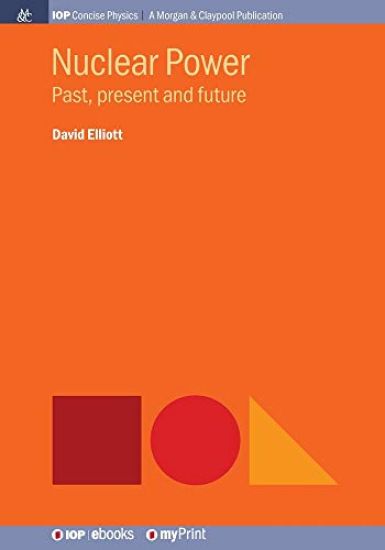
This book looks at the early history of nuclear power, at what happened next, and at its longer-term prospects. The main question is: can nuclear power overcome the problems that have emerged? It was once touted as the ultimate energy source, freeing mankind from reliance on dirty, expensive fossil energy. Sixty years on, nuclear only supplies around 11.5% of global energy and is being challenged by cheaper energy options. While the costs of renewable sources, like wind and solar, are falling rapidly, nuclear costs have remained stubbornly high. Its development has also been slowed by a range of other problems, including a spate of major accidents, security concerns and the as yet unresolved issue of what to do with the wastes that it produces. In response, a new generation of nuclear reactors is being developed, many of them actually revised versions of the ideas first looked at in the earlier phase. Will this new generation of reactors bring nuclear energy to the forefront of energy production in the future?
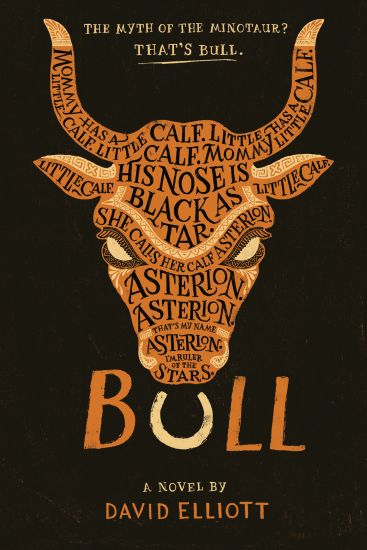
Minos thought he could Pull a fast one On me, Poseidon! God of the Sea! But I'm the last one On whom you Should try such a thing. The nerve of that guy. The balls. The audacity. I am the ocean! I got capacity! Depths! Darkness! Delphic power! So his sweet little plan Went big-time sour And his wife had a son Born with horns and a muzzle Who ended up In an underground puzzle. What is it with you mortals? You just can't seem to learn: If you play with fire, babies, You're gonna get burned. Much like Lin-Manuel Miranda did in Hamilton, the New York Times best-selling author David Elliott turns a classic 1 on its head in form and approach, updating the timeless story of Theseus and the Minotaur for a new generation. A rough, rowdy, and darkly comedic young adult retelling in verse, Bull will have readers reevaluating one of mythology's most infamous monsters.
Artistic Citizenship
David Elliott; Silverman Marissa; Wayne Bowman
Oxford University Press Inc
2016
nidottu
Halvin toimitettuna 76,10 €
This first-of-its-kind compendium unites perspectives from artists, scholars, arts educators, policymakers and activists to investigate the complex system of values surrounding artistic-educational endeavors. Addressing a range of artistic domains, ranging from music and dance, to visual arts and storytelling, contributors offer an exploration and criticism of the conventions that govern our interactions with these practices. Artistic Citizenship focuses the responsibilities, and functions of amateur as well as professional artists in society, and introduces a novel set of ethics that are conventionally dismissed in discourses on the topic. The authors address the questions: How does the concept of citizenship relate to the arts? What socio-cultural, political, and ethical "goods" can artistic engagements create for people worldwide? Do particular artistic endeavors have distinctive potentials for nurturing artistic citizenship? What are the most effective strategies in the arts to institute change and/or resist local, national, and world problems? What responsibilities do artists and consumers of art have in order to facilitate the relationship between the arts and citizenship? How can artistic activities contribute to the eradication of various 'ism's? A substantial accompanying website features video clips of arts-in-action, videotaped interviews with scholars and practitioners in a variety of global sites, a blog, and supplementary resources about existing and emerging initiatives. Thoroughly researched and engagingly written, Artistic Citizenship is an essential text for artists, scholars, policy makers, educators, and students.
Artistic Citizenship
David Elliott; Silverman Marissa; Wayne Bowman
Oxford University Press Inc
2016
sidottu
This first-of-its-kind compendium unites perspectives from artists, scholars, arts educators, policymakers and activists to investigate the complex system of values surrounding artistic-educational endeavors. Addressing a range of artistic domains, ranging from music and dance, to visual arts and storytelling, contributors offer an exploration and criticism of the conventions that govern our interactions with these practices. Artistic Citizenship focuses the responsibilities, and functions of amateur as well as professional artists in society, and introduces a novel set of ethics that are conventionally dismissed in discourses on the topic. The authors address the questions: How does the concept of citizenship relate to the arts? What socio-cultural, political, and ethical "goods" can artistic engagements create for people worldwide? Do particular artistic endeavors have distinctive potentials for nurturing artistic citizenship? What are the most effective strategies in the arts to institute change and/or resist local, national, and world problems? What responsibilities do artists and consumers of art have in order to facilitate the relationship between the arts and citizenship? How can artistic activities contribute to the eradication of various 'ism's? A substantial accompanying website features video clips of arts-in-action, videotaped interviews with scholars and practitioners in a variety of global sites, a blog, and supplementary resources about existing and emerging initiatives. Thoroughly researched and engagingly written, Artistic Citizenship is an essential text for artists, scholars, policy makers, educators, and students.
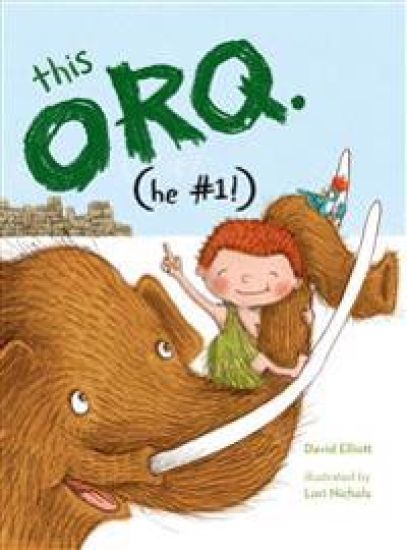
Cave boy Orq is back in his third book, as exuberant as ever. He's convinced that he's #1--able to throw far, climb high, and run fast--until talented Torq and his pet giant sloth, Slomo, move into the cave next door. Torq throws farther, climbs higher, and runs faster. Suddenly everyone seems to think that Torq and Slomo are #1! How can Orq and Woma earn back their place in the cave community? When Torq is showing off and a crisis happens, Orq and Woma use their scientific ingenuity to invent ...wheels! They roll Torq safely home and roll themselves into history. A celebration of inventiveness, this book will comfort any child who has lost in a friendly (or not-so-friendly) competition.
Kiasman kokoelmanäyttely - Kiasma's collection exhibition
Eija Aarnio; David Elliott; Saara Hacklin; Esa Kirkkopelto; Arja Miller
KIASMA
2016
sidottu
Kiasman kokoelmanäyttely 22.4.2016-29.1.2017Taide voi koskettaa monin tavoin. Teokset haastavat katsojan tulemaan lähemmäs ja kokemaan ne muutenkin kuin näkemällä. Taide tunkeutuu sisään paitsi silmistä, myös korvista, sormenpäistä, nenästäkin sanalla sanoen, se tulee iholle. Artikkelien kirjoittajina Eija Aarnio, David Elliott, Saara Hacklin, Esa Kirkkopelto, Arja Miller. Toim. Saara Hacklin. Koko 22 x 22 cm, 135 sivua. Kirjassa on kaksikielinen: suomi ja englanti
Molecular Biology of RNA
David Elliott; Michael Ladomery
Oxford University Press
2015
nidottu
Halvin toimitettuna 90,40 €
RNA plays a central, and until recently, somewhat underestimated role in the genetics underlying all forms of life on earth. This versatile molecule not only plays a crucial part in the synthesis of proteins from a DNA template, but is also intrinsically involved in the regulation of gene expression, and can even act as a catalyst in the form of a ribozyme. This latter property has led to the hypothesis that RNA - rather than DNA - could have played an essential part in the origin of life itself. This landmark text provides a systematic overview of the exciting and rapidly moving field of RNA biology. Key pioneering experiments, which provided the underlying evidence for what we now know, are described throughout, while the relevance of the subject to human disease is highlighted via frequent boxes. For the second edition of Molecular Biology of RNA, more introductory material has been incorporated at the beginning of the text, to aid students studying the subject for the first time. Throughout the text, new material has been included - particularly in relation to RNA binding domains, non-coding RNAs, and the connection between RNA biology and epigenetics. Finally, a new closing chapter discusses how exciting new technologies are being used to explore current topical areas of research.
What will replace fossil fuel? Is there a way forward using renewable energy sources while avoiding nuclear power? This book argues that nuclear is unlikely to have much of a role in future, and shows that the pro- and anti-nuclear debate has absorbed too much time and energy over the years. This has been to the detriment of a more relevant, interesting and increasingly urgent debate over what sort of renewable/efficiency mix we need. This book engages in that debate, exploring the implications of shifting to greener, cleaner energy sources. Importantly, David Elliott argues there is no one green future. There is a range of possible options of various types and scales: we need to choose amongst them. This book offers an overview of the technical, economic and environmental issues to help scholars, professionals and policy makers involved in discussing those options.
This companion to This Orq. (He Cave Boy.) pits Orq and Woma against a couple of stone-age bullies. Dorq is big, strong, and mean ...and his pet, Caba, is even worse. But when Caba smashes a giant egg on Woma, Orq is so incensed he bangs two rocks together over and over, creating a spark. Like all good scientists, Orq recognizes an important discovery when he sees it. As he raises a flaming torch triumphantly, Dorq and Caba flee. Small Orq is the inventor of fire--and is a hero to his beloved Woma. An ode to the power of standing up for oneself, this book is the perfect antidote for any child who has ever felt small.