
Kirjojen hintavertailu – 12 903 725 kirjaa ja 27 kauppaa

Kirjailija

David Englander

Kirjat ja teokset yhdessä paikassa: 2 kirjaa, julkaisuja vuosilta 1990–2015, suosituimpiin kuuluu Culture and Belief in Europe 1450 - 1600. Vertaile teosten hintoja ja tarkista saatavuus suomalaisista kirjakaupoista.

2 kirjaa

Kirjojen julkaisuvuodet: 1990–2015.

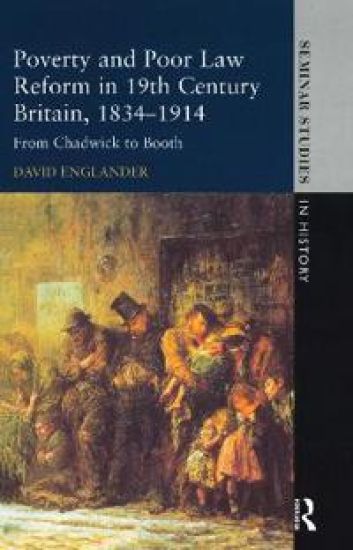
Poverty and Poor Law Reform in Nineteenth-Century Britain, 1834-1914
The Poor Law Amendment Act of 1834 is one of the most important pieces of social legislation ever enacted. Its principles and the workhouse system dominated attitudes to welfare provision for the next 80 years. This new Seminar Study explores the changing ideas to poverty over this period and assesses current debates on Victorian attitudes to the poor. David Englander reviews the old system of poor relief; he considers how the New Poor Law was enacted and received and looks at how it worked in practice. The chapter on the Scottish experience will be particularly welcomed, as will Dr Englander's discussion of the place of the Poor Law within British history.

Culture and Belief in Europe 1450 - 1600

Culture and Belief in Europe 1450 - 1600

David Englander; Diana Norman; Rosemary O'Day; W. R. Owens

Blackwell Publishers
1990
nidottu
This open university reader is a wide-ranging interdisciplinary collection of material from primary sources, illustrating the relationship between cultural change and religious belief in sixteenth-century Europe. It contains more than eighty extracts drawn from a variety of genres including political, religious, philosophical and legal writing, diaries, letters, plays, poems and fiction. Some have never previously been published, others have not been reprinted since their original appearance in the sixteenth century, and a number are translated into modern English for the first time. `Culture and Belief in Europe 1450 - 1600' includes writing from such renowned thinkers as Erasmus, Luther, Machiavelli, and Sir Thomas More, besides that of lesser-known authors. Works of literature also feature extensively, and writings from Cervantes, Rabelais, Edmund Spenser, and Sir Philip Sidney amongst many others are all to be found here. A general introduction describes the anthology's central aim - to explore aspects of the interrelationship between the politics, religion and writing of the period. The book is divided into eight thematic sections. Spelling in the extracts has been sensitively modernized throughout, and the editors provide a headnote and appropriate explanatory annotation for each item.