Kirjojen hintavertailu – 12 903 725 kirjaa ja 27 kauppaa

Kirjailija

David Ewert

Kirjat ja teokset yhdessä paikassa: 6 kirjaa, julkaisuja vuosilta 1990–2017, suosituimpiin kuuluu He Spoke to Them in Parables. Vertaile teosten hintoja ja tarkista saatavuus suomalaisista kirjakaupoista.

6 kirjaa

Kirjojen julkaisuvuodet: 1990–2017.

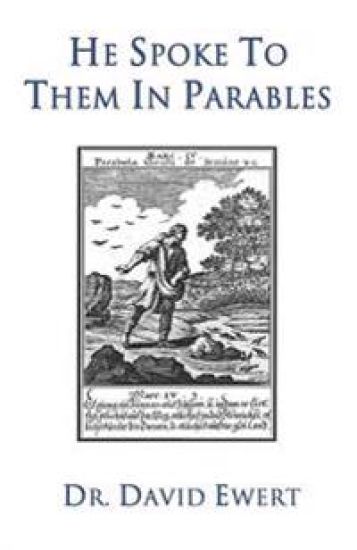
He Spoke to Them in Parables

He Spoke to Them in Parables

Win Wachsmann; David Ewert

Heartbeat Productions Inc.
2017
nidottu
There are few parts of the Bible so familiar to Bible readers as the parables of Jesus. Idioms derived from the parable stories of the Gospels have penetrated the English language. Even non- Christians, who do not read the New Testament parables, speak of being a good Samaritan, of passing by on the other side, of using or burying our talents, of counting the cost, of riotous living, of hiding one's lamp under a bushel, and so forth. All these and many other figures of speech have their origin in the parables of Jesus. Although the parables are well known to Bible readers, it is hard to give a simple definition of a parable. They are, in one sense, extended similes. Many of them begin with the introductory formula: "The kingdom of heaven is like." When a younger child of Christian parents was asked on one occasion, which parts of the Bible she like most, she responded: "the like stories." Parables have sometimes been defined simply as "earthly stories with a heavenly meaning." A. M. Hunter in his book on parables (The Parables Then and Now) characterizes the parables in this rather interesting way: "A parable is one of those stories in the Bible which sounds at first like a pleasant yarn, but keeps something up its sleeve which suddenly pops up and leaves you flat." To be sure, Jesus' parables carry a powerful punch, but we must say a few more things about the meaning of "parable."
Mark's Passion Narrative: Reflections on Christ's Sufferings and Death
The high point of the Christian year is Passion week. The suffering and death of Christ is the focal point in salvation history, and the Passion narratives of our Gospel writers comprise the very heart of the gospel. The gospel is called "the word of the cross" (1 Cor 1:18). In his brief summary of the gospel in his first letter to the Corinthians, the apostle Paul writes, "For I handed on to you as of first importance what I in turn had received: that Christ died for our sins in accordance with the scriptures, and that he was buried, and that he was raised on the third day in accordance with the scriptures (15:3,4). For a religion to mark its beginning with the crucifixion of its founder is exceedingly strange. But for the past two millennia the story of Christ's suffering and death has fascinated people all over the world. From every angle that people might look at the Passion story, it grabs them. In his massive work on The Death of the Messiah (p. viii), Raymond Brown illustrates the centrality and significance of the Passion narrative: Seen from the aesthetic side, there is nothing in the Gospels that has given us such glorious music, or has inspired such magnificent art, as the Passion story. From the literary point of view, this story has even entered our everyday language. People still speak of a "Judas kiss," of selling Christ for 30 pieces of silver, of washing our hands of an embarrassing situation - all found in the Passion story. From the historical standpoint, no event in Christ's public life was seen by so many eye witnesses. From the first century up to the present, churches around the world have recited the Apostles Creed, in which they affirm that Christ "suffered under Pontius Pilate." The death of Christ is an unassailable historical event on which the Christian faith rests. Seen from a theological point of view, the Passion story assures us that through the death of Christ our sins have been atoned for, and that we have been delivered from death and despair through the death of an innocent substitute. That Jesus of Nazareth was crucified under Pontius Pilate can be discovered also from the Roman historian, Tacitus, but that he died for our sins is something only the gospel can tell us. Moreover, the Passion story has always been at the centre of Christian devotion and meditation, and the church loses much, if it overlooks the wonderful opportunity to proclaim the message of the cross, especially at Eastertide. Preaching from narrative material, however, is not always easy, and the following chapters were written, in part, to illustrate how this moving story of Christ's suffering and death can be presented in sermon form. However, these meditations were written also with the Christian reader in mind, who may not have access to some of the rich literature that is available in this area of NT studies. There is some disagreement among scholars over where precisely the Passion narrative begins. Not all would include, as I have, the anointing of Jesus at Bethany and the Last Supper. However, even though the actual sufferings of Christ began in Gethsemane, these accounts are an integral part of the Passion story. We will follow basically the Marcan account of Christ's suffering but weave in some materials from other Gospels to round out the picture. It is our hope and prayer that these studies will serve as a handbook for teachers and preachers as they expound the Passion narrative. However, these reflections on the accounts of Christ's suffering, death and resurrection, may also be of help to serious Bible readers who are interested in a devotional approach to the biblical text. Although I have refrained from injecting bibliographical information into these studies, I am indebted to many scholars who have painstakingly examined Mark's account of our Lord's Passion.

The Holy Spirit in the New Testament

The Holy Spirit in the New Testament

David Ewert; Willard M Swartley

Wipf Stock Publishers
2004
pokkari
In fifteen thorough chapters David Ewert surveys the whole range of New Testament authors to discover what they have to say on the Holy Spirit and what this means for the life of the believer and for the church. To add another book on the Holy Spirit to the great number available is a daunting undertaking, the author admits. One can only hope that by ordering the biblical materials in a new way, familiar truths will shine with new luster. Perhaps by bringing the relevant biblical passages to bear on the life of the church in our day old truths can be seen in a new light. The material is organizzed in three parts: (1) The Promise of the Spirit, considering all the passages of the Gospels that speak of the Holy Spirit; (2) The Coming of the Spirit, dealing with the Pentecostal outpouring of the Spirit in the book of Acts and the continual overflow of the Spirit in the expansion of the church; and (3) The Spirit in the Life of the Believer, studying what the apostles have to say about the Holy Spirit in the epistles. Many have instinctively sensed that the teaching of the New Testament on the Holy Spirit is a key that unlocks many doors, the author notes. Jesus likened the Spirit to the wind, with its mysterious and numinous character. Just as we can hear and feel the blowing of the wind, by God's grace we can experience the presence and the power of the Spirit, if we are willing to get in the path of God's wind.
How to Understand the Bible

How to Understand the Bible

David Ewert

Herald Press (VA)
2000
nidottu
In 13 chapters, David Ewert shares guidelines on studying the Scriptures. We who take the Bible seriously want to understand the texts correctly. We puzzle over differing applications of the Bible in the church. Ewert helps us avoid pitfalls in interpreting the Scriptures. Our experiences shape the pre-understandings we bring to the Bible and may distort our interpretation of it. Many Christians use the Old Testament to support their practices. Ewert shows how God's final revelation in Christ gives us needed light for rightly interpreting. This book explains literary forms, idioms, and figures of speech from ancient cultures so readers can understand their meanings for today. With apt illustrations, it deals with many common questions. Ewert encourages us all to look to the Bible for daily guidance, strength, and hope.
A General Introduction to the Bible
What does the word "Bible" mean? Who wrote the Bible? Has it changed over time? Why are there so many translations? A General Introduction to the Bible answers these questions and more. Without becoming too technical for the average layperson, David Ewert surveys the history, formation, transmission, and translation of the Christian Bible in an informative and captivating way. Topics include:Meaning of "Bible" and the naming of biblical booksTransmission of sacred scripturesThe thousand-year story of the English BibleBible organizationDevelopment of biblical languagesCanon of the testamentsExtracanonical booksEarly versions of the BibleChoosing a translationFeatures include:Photographs of ancient texts, Bible pages, key individuals, and settingsMaps and charts that show the development of languages, textual families, and the relationship of various translations and revisionsSuggested readings and an extensive glossary and indexFrom ancient tablets to modern translations—God's Word to humanity has been profoundly impacting the world for several millennia. And after learning about its fascinating history, your appreciation for the Bible will surely increase even more.