

Kirjailija
David Fairchild
Kirjat ja teokset yhdessä paikassa: 16 kirjaa, julkaisuja vuosilta 2001–2026, suosituimpiin kuuluu Bordeaux Mixture as a Fungicide; Volume no.6. Vertaile teosten hintoja ja tarkista saatavuus suomalaisista kirjakaupoista.
16 kirjaa
Kirjojen julkaisuvuodet: 2001–2026.




Students want the best grades and the best experiences while in college. After college, they want great careers. What they practice in college, they carry with them into their lives, but it's easy for students to not realize that they might be sabotaging their own grades. Jello Freeways: 10 Ways that Students Sabotage their Efforts alternately shares perspectives from both university professor David Fairchild and his former university student Elyse Kunzler about how students can avoid these harmful traits. Likewise, Steering Students off Cliffs: 10 Ways Professors Sabotage Students to Crash and Burn speaks to professors through those same professor and student eyes to help identify ways that teachers may be sabotaging their own students in the classroom and in their lives. Campus Nightmares (vols. 1 & 2) isn't just a helpful tool to improve student performance in the classroom and university setting. It also aims to help improve relationships between teachers and their pupils so that the pedagogical relationship may be more enjoyable for both.

Book of Monsters; Portraits and Biographies of a Few of the Inhabitants of Woodland and Meadow
David Fairchild; Marian Fairchild
ALPHA EDITION
2021
pokkari
The book "" Book of Monsters; Portraits and Biographies of a Few of the Inhabitants of Woodland and Meadow, has been considered important throughout the human history, and so that this work is never forgotten we have made efforts in its preservation by republishing this book in a modern format for present and future generations. This whole book has been reformatted, retyped and designed. These books are not made of scanned copies and hence the text is clear and readable.
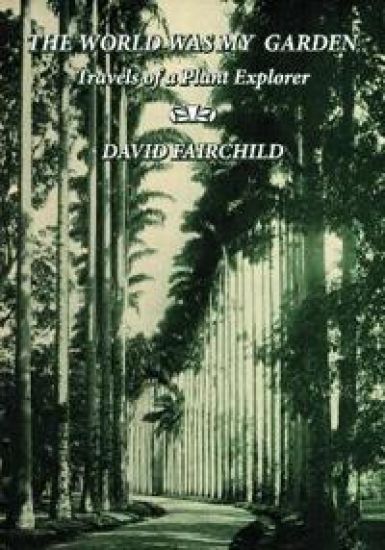
David Fairchild wrote this book to describe his extensive world travels and his work introducing new plant species to the United States. In addition to sharing his legendary tropical botanical expertise, Fairchild provided graphic accounts of native cultures he was able to see before their modernization. He was an accomplished photographer and illustrated the book himself. This is his personal story of his experiences, traveling endlessly, absorbing information about plant life and sending back cuttings to experiment with, investigating plant disease, and so on. His training and experiences in European laboratories and his travels brought him into contact with most of the people in his own field, and this narrative is full of human interest material, and anecdote. Fairchild worked for the USDA in its infancy, was one of the first to investigate microbial causes of plant disease, and traveled the world documenting agricultural practices. He was a humorous and modest man who lead a fascinating life. David Grandison Fairchild (April 7, 1869 - August 6, 1954) was an American botanist and plant explorer. Fairchild was responsible for the introduction of more than 200,000 exotic plants and varieties of established crops into the United States, including soybeans, pistachios, mangos, nectarines, dates, bamboos, and flowering cherries. Certain varieties of wheat, cotton, and rice became especially economically important.


Where's the Blood? 25 Creative Writing Exercise with Motivational Anthology
David Fairchild
Four Doors Publishing
2014
nidottu
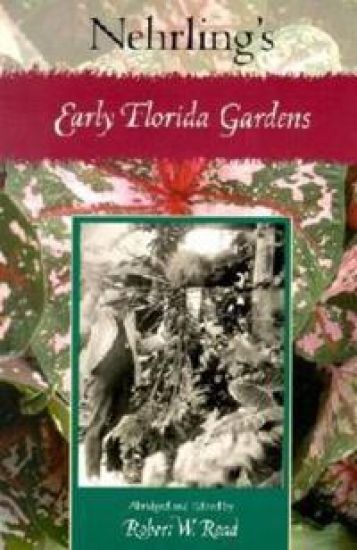
Nehrling's Early Florida Gardens
Henry Nehrling; David Fairchild
University Press of Florida
2001
nidottu
First published in the 1940s as My Garden in Florida, these two newly revised and edited volumes by Henry Nehrling (1853-1929) present a remarkable record of Florida's botanical history and a delightful mixture of observations on the central and south Florida climate and growing conditions. His association with writers, scientists, and travelers presents a window into the gardening community of his era, and his intriguing mixture of subjects furnishes an important source of information for those interested in Florida's social, botanical, and environmental history. A noted authority on tropical and subtropical plant lore, Nehrling wrote with passion in a style rich in detail and free from technical jargon, and his plant descriptions and horticultural information are as valuable today as when first written. In his gardens at Gotha near Orlando and at Naples (now Caribbean Gardens), Nehrling introduced into cultivation and popularized many plant species that have since become common in Florida landscapes. His articles provide invaluable first-hand accounts of the environment in his time, descriptions of natural conditions, and observations of areas no longer undisturbed. More than history, however, these books describe the beautiful tropical and subtropical flora that make Florida the Garden of Eden as we know it today. Nehrling's Early Florida Gardens describes his arrival in Florida, Florida's climate and soils, the planting of his first garden and his mistakes and failures, the flatwoods, the hammocks, epiphytes, bamboos, magnolias, live oaks, Japanese and Chinese evergreens, the camphor tree, conifers, the myrtle family, oleanders, cycads, bromeliads, air plants, orchids, shade trees and flowering trees, fig trees, sacred trees, vines and sweet-scented plants, flowering shrubs, oleasters, annuals, perennials, and bulbs.
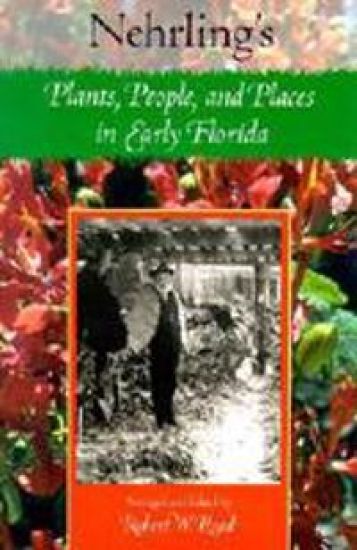
Nehrling's Plants, People and Places in Early Florida
Henry Nehrling; David Fairchild
University Press of Florida
2001
nidottu
This work provides a remarkable record of Florida's botanical history and a mixture of observations on the central and south Florida climate and growing conditions. This work describes oriental trees and shrubs, cacti and succulents, palms, gymnosperms, cycads and Florida native trees and shrubs.