Kirjojen hintavertailu – 12 903 724 kirjaa ja 27 kauppaa

Kirjailija

David Farrington

Kirjat ja teokset yhdessä paikassa: 6 kirjaa, julkaisuja vuosilta 2000–2021, suosituimpiin kuuluu Effects of Parental Incarceration on Children. Vertaile teosten hintoja ja tarkista saatavuus suomalaisista kirjakaupoista.

6 kirjaa

Kirjojen julkaisuvuodet: 2000–2021.

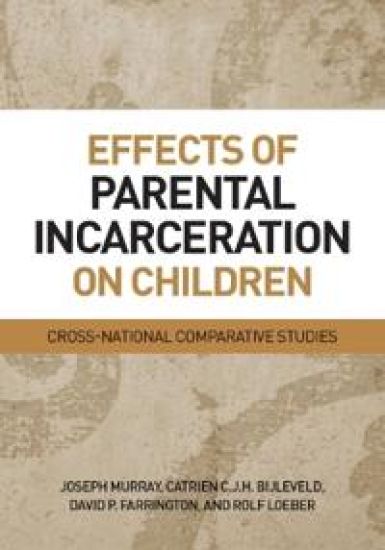
Effects of Parental Incarceration on Children

Effects of Parental Incarceration on Children

Joseph Murray; Catrien C.J.H. Bijleveld; David Farrington; Rolf Loeber

American Psychological Association
2014
sidottu
Children are the hidden victims of the prison boom. Parental incarceration can cause profound emotional and practical difficulties for them as they strive to cope with separation, financial loss, stigma, and highly restrained contact with their loved ones. This book takes a hard look at possible long-lasting effects of parental incarceration on children in the United States, England, Sweden and the Netherlands. Four major studies of some 20,000 children, followed from childhood to adulthood, demonstrate the far-reaching consequences that parental incarceration can have for children in later years. The worst effects occur in social contexts characterized by harsh penal attitudes and restrictive prison practices. These cross-national differences illustrate the need for reforms to better protect this vulnerable population.
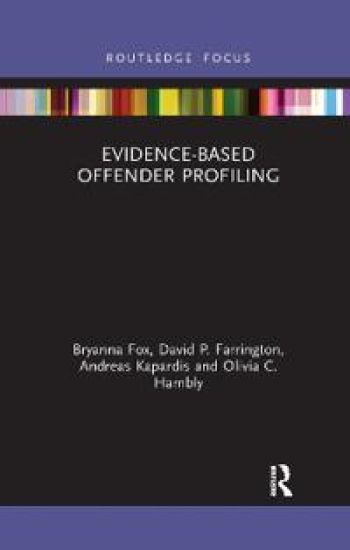
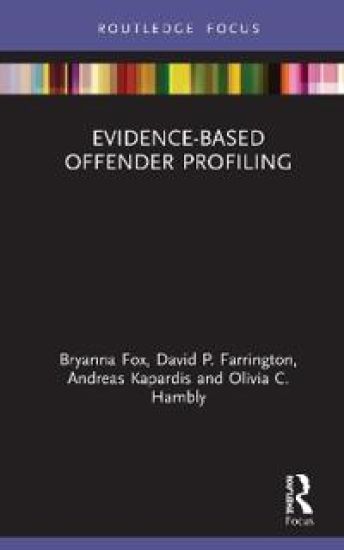
Evidence-Based Offender Profiling

Evidence-Based Offender Profiling

Bryanna Fox; David Farrington; Andreas Kapardis; Olivia Hambly

TAYLOR FRANCIS LTD
2021
nidottu
Offender profiling is an investigative tool used to narrow down the range of potential suspects for a crime by predicting the personality, behavioral, and demographic characteristics that an offender is likely to possess, based upon information collected at the crime scene. While offender profiling has been popularized by TV shows and movies such as Criminal Minds, Silence of the Lambs, and Mindhunter, the real-world impact of offender profiling is largely unknown. This book discusses the history of offender profiling, summarizes research on offender profiling methods, and reviews offender profiling evaluations of accuracy and applied impact. This book also describes a promising new offender profiling methodology called evidence-based offender profiling. This new method relies upon empirical data and scientific methods to develop, evaluate, and replicate offender profiles, thereby increasing offender profiling’s accuracy and utility for active police investigations. It uses prior information about statistical regularities between types of offenders and types of offenses to predict the characteristics of offenders in unsolved cases. A discussion of the future of offender profiling research and implications for law enforcement is also included. This book also explains how practitioners can benefit from the use of empirically tested and validated profiles in their unsolved investigations and how the use, continued research, and evaluation of evidence-based offender profiling can advance the quality, prestige, and utility of the field of offender profiling.
Evidence-Based Offender Profiling

Evidence-Based Offender Profiling

Bryanna Fox; David Farrington; Andreas Kapardis; Olivia Hambly

Routledge
2020
sidottu
Offender profiling is an investigative tool used to narrow down the range of potential suspects for a crime by predicting the personality, behavioral, and demographic characteristics that an offender is likely to possess, based upon information collected at the crime scene. While offender profiling has been popularized by TV shows and movies such as Criminal Minds, Silence of the Lambs, and Mindhunter, the real-world impact of offender profiling is largely unknown. This book discusses the history of offender profiling, summarizes research on offender profiling methods, and reviews offender profiling evaluations of accuracy and applied impact. This book also describes a promising new offender profiling methodology called evidence-based offender profiling. This new method relies upon empirical data and scientific methods to develop, evaluate, and replicate offender profiles, thereby increasing offender profiling’s accuracy and utility for active police investigations. It uses prior information about statistical regularities between types of offenders and types of offenses to predict the characteristics of offenders in unsolved cases. A discussion of the future of offender profiling research and implications for law enforcement is also included. This book also explains how practitioners can benefit from the use of empirically tested and validated profiles in their unsolved investigations and how the use, continued research, and evaluation of evidence-based offender profiling can advance the quality, prestige, and utility of the field of offender profiling.
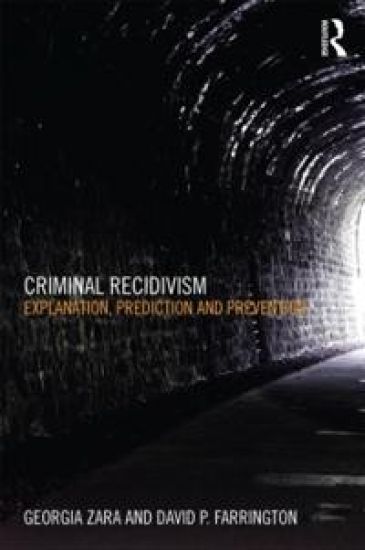
Criminal Recidivism

Criminal Recidivism

Georgia Zara; David Farrington

Willan Publishing
2015
nidottu
Criminal Recidivism intends to fill a gap in the criminological psychology literature by examining the processes underlying persistent criminal careers. This book aims to investigate criminal recidivism, and why, how and for how long an individual continues to commit crimes, whilst also reviewing knowledge about risk assessment and the role of psychopathy (including neurocriminological factors) in encouraging recidivism. It also focuses on the recidivism of sex offenders and on what works in reducing reoffending. At an empirical level, this book attempts to explain criminal persistence and recidivism using longitudinal data from the Cambridge Study in Delinquent Development (CSDD). At a psycho-criminological level it joins together quantitative and qualitative analyses, making its content a practical guide to explain, predict, and intervene to reduce the risk of criminal recidivism. The authors present quantitative analyses of criminal careers, as well as qualitative life histories of chronic offenders, in order to bring home the reality and consequences of a life of crime. The book is aimed not only at advanced students and academics in psychology, criminology, probation studies, social sciences, psychiatry, sociology, political science, and penology, but also at decision makers, policy officials, and practitioners within the realm of crime intervention and prevention, and also at forensic experts, judges and lawyers.
Criminal Recidivism

Criminal Recidivism

Georgia Zara; David Farrington

Willan Publishing
2015
sidottu
Criminal Recidivism intends to fill a gap in the criminological psychology literature by examining the processes underlying persistent criminal careers. This book aims to investigate criminal recidivism, and why, how and for how long an individual continues to commit crimes, whilst also reviewing knowledge about risk assessment and the role of psychopathy (including neurocriminological factors) in encouraging recidivism. It also focuses on the recidivism of sex offenders and on what works in reducing reoffending. At an empirical level, this book attempts to explain criminal persistence and recidivism using longitudinal data from the Cambridge Study in Delinquent Development (CSDD). At a psycho-criminological level it joins together quantitative and qualitative analyses, making its content a practical guide to explain, predict, and intervene to reduce the risk of criminal recidivism. The authors present quantitative analyses of criminal careers, as well as qualitative life histories of chronic offenders, in order to bring home the reality and consequences of a life of crime. The book is aimed not only at advanced students and academics in psychology, criminology, probation studies, social sciences, psychiatry, sociology, political science, and penology, but also at decision makers, policy officials, and practitioners within the realm of crime intervention and prevention, and also at forensic experts, judges and lawyers.
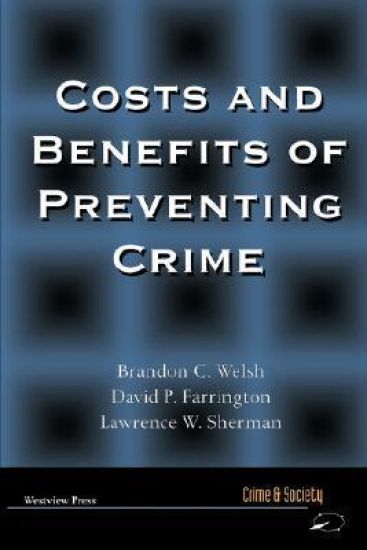
Costs and Benefits of Preventing Crime

Costs and Benefits of Preventing Crime

Brandon Welsh; David Farrington; Lawrence Sherman

Westview Press Inc
2000
pokkari
What are the cost savings from preventing a typical burglary, robbery, assault, or even a criminal career? Who benefits from these savings? How often do the benefits from preventing crime or criminal behaviour exceed the resources spent on preventing or controlling crime? Is it more cost-effective to invest in early childhood programs or juvenile boot camps to reduce criminal offending? These are some of the important questions that face policymakers in crime and justice today. Answering them is no easy task. Nevertheless, it is important to provide answers in order to ensure that the dollars devoted to crime reduction are spent as efficiently as possible. The principle aim of Costs and Benefits of Preventing Crime is to report on and assess the present state of knowledge on the monetary costs and benefits of crime prevention programs. Remarkably, this crucial topic has rarely been studied up to the present time. This book examines key methodological issues, reports on the most up-to-date research findings, discusses international policy perspectives, and presents an agenda for future research and policy development on the economic analysis of crime prevention. Throughout, it addresses the important question of how governments should be allocating scarce resources to make crime prevention policy and practice more effective and to produce the greatest economic benefits to society. The book brings together research and perspectives from across North America, Europe, and Australia.