Kirjojen hintavertailu – 12 903 725 kirjaa ja 27 kauppaa

Kirjailija

David Field

Kirjat ja teokset yhdessä paikassa: 61 kirjaa, julkaisuja vuosilta 1999–2026, suosituimpiin kuuluu The Royal Hammer. Vertaile teosten hintoja ja tarkista saatavuus suomalaisista kirjakaupoista.

61 kirjaa

Kirjojen julkaisuvuodet: 1999–2026.

She Died Unshriven: A Constable Thomas Lincraft Mystery
"An entertaining and lively mystery, which delves into the murky world of crime and the justice system in provincial Elizabethan England." Paul Walker, author of State of TreasonNottingham, 1571. Coroner Sir Henry Greville is conducting an inquest, following the discovery of the body of a girl, and he wants a quick and conclusive verdict. The victim is believed to have been promiscuous domestic servant Amy Brindley. The scant evidence implicates her former employer. Constable Thomas Lincraft is not convinced, and begins his own search for the truth, even though he risks being dismissed from his office by doing so. However, Thomas Lincraft is no ordinary Constable. His tenacity and intelligence provide him with a fierce sense of justice - and his deeply held religious beliefs shape his attitude towards the investigation. As the Constable begins to gather evidence and interview fresh witnesses, Lincraft uncovers secrets that others would prefer to keep hidden. But the truth - and murder - will out, leading to a shocking revelation. She Died Unshriven is the first in a series of mysteries featuring Constable Thomas Lincraft. Recommended for fans of CJ Sansom, Rory Clements and S. J. Parris. Author David Field is a retired criminal lawyer who now writes full-time. He is also the author of the contemporary crime series of novels featuring investigator DCI Mike Saxby. The first book in the series is Seventeen Cavendish Place.
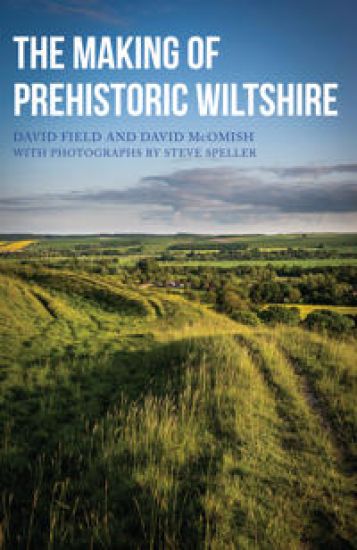
The Making of Prehistoric Wiltshire

The Making of Prehistoric Wiltshire

David Field; Dave McOmish

Amberley Publishing
2017
nidottu
Well known for its World Heritage Sites of Stonehenge and Avebury, the prehistoric monuments of Wiltshire have long provided a focus of attention for archaeologists and visitors alike. Today the Wiltshire sites are perceived as an important focal point in British prehistory. Yet there is much more to the prehistory of Wiltshire than Stonehenge, Avebury and Silbury Hill. The latter sites are of course all here, but so too are the widespread fields and enclosures of the Bronze Age that established a template across the countryside for later generations to follow, and the enormous hillforts of the Iron Age that stand sentinel-like overlooking the chalkland river valleys. Interesting sites abound, particularly on the wide expanses of uncultivated downland, and these provide a remarkable insight into past societies, economy and settlement. Prehistoric impact on the landscape was huge and the archaeology reveals the nature of development and changes across the countryside. This volume provides an up-to-date account of the prehistory of Wiltshire from the earliest evidence for human occupation to the influence on the Romano-British countryside. It outlines the effect of past climate change on the topography and how animals and people established the landscape that we know today. The story is one of exuberant but excessive monument building, of innovation potentially fuelled by competition to impress, and of the struggle to subsist. Proceeds from this book go to the Wiltshire Archaeological & Natural History Society.
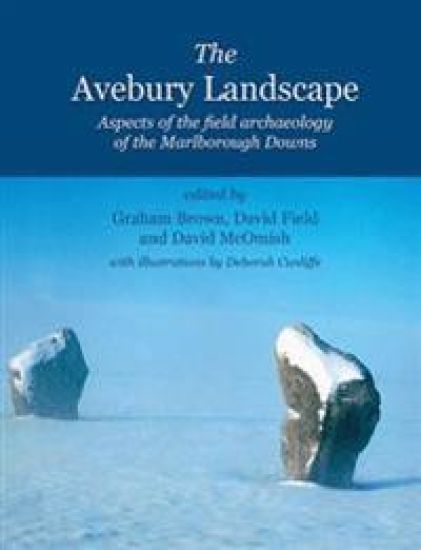
The Avebury Landscape

The Avebury Landscape

Graham Brown; David Field; David McOmish; Deborah Cunliffe

Oxbow Books
2016
nidottu
It is over one hundred years since the publication of the wide ranging archaeological field investigation undertaken on the Marlborough Downs by the Rev A C Smith. His work Guide to the British and Roman Antiquities of the North Wiltshire Downs in a Hundred Square Miles round Abury was originally published in two volumes in 1884 by the Marlborough College Natural History Society, then reprinted and bound into a single volume and published in 1885 by the Wiltshire Archaeological and Natural History Society after half the original print run was destroyed in a fire. As in most works of inventory the volume has certainly stood the test of time and is still one of the basic reference texts for students of the area. Since then, apart from a few notable exceptions, archaeological literature about the area has been largely site-based and there has been little concerning the Marlborough Downs as a whole. In order to try and redress this imbalance, a day conference was organised in April 2002 at the University of Bath, Swindon, where it was possible to acknowledge and mark the ongoing validity of Smith's work and where a number of papers on various aspects of recent research on the Marlborough Downs were presented. The results of the conference are presented in this volume, together with a number of other commissioned contributions from individuals who have undertaken research in the area during the last decade or so. Each essay stands alone, but they are connected by a common theme, that of the land and how it has changed over millennia.
Animals in the Neolithic of Britain and Europe

Animals in the Neolithic of Britain and Europe

Dale Serjeantson; David Field

Oxbow Books
2015
nidottu
The twelve papers in this edited volume originated from the Neolithic Studies Group seminar held at the British Museum on 10th November 2003 on the subject of Animals in the Neolithic. This book includes most of the papers delivered and debated at the meeting and others contributed later. The aim of the book is to cover the range of current approaches to animals in the Neolithic, and to encompass as wide a geographical scope as possible in Europe. In particular, it is attempted to ensure that both wild and domestic animals are discussed and that their social as well as economic roles are given appropriate attention. Umberto Albarella, a discussant at the meeting in 2003, has rounded off the volume with a commentary and discussion on the papers which puts them into the perspective of changing views of animals in the Neolithic of Europe.
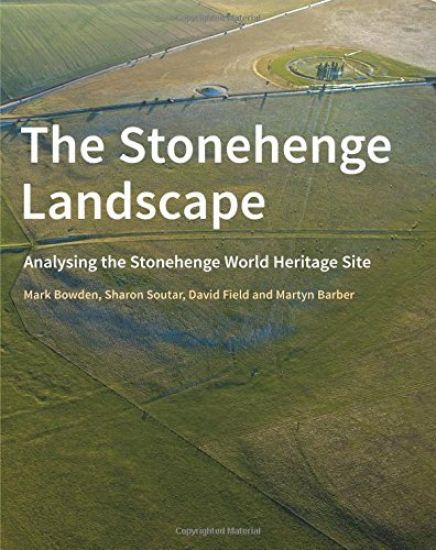
The Stonehenge Landscape

The Stonehenge Landscape

Mark Bowden; Sharon Soutar; David Field; Martyn Barber

Historic England
2015
nidottu
Stonehenge is arguably the greatest prehistoric monument in western Europe; as a World Heritage Site it ranks in significance with such sites as the Acropolis of Athens, the Pyramids of Giza, Great Zimbabwe and Machu Picchu. Stonehenge sits at the heart of a landscape rich in other monuments and remains of the Neolithic period and Bronze Age that are also part of the World Heritage Site. Recent research by English Heritage’s landscape archaeologists within the Stonehenge World Heritage Site has led to the identification of previously unknown sites and, perhaps even more importantly, the re-interpretation of known sites, including Stonehenge itself. This work has been carried out alongside recent and on-going independent research initiatives conducted by a number of academic institutions, involving international co-operation. This book presents the most significant findings of the English Heritage research and shows how it integrates with the results of work undertaken by colleagues in other research bodies. It traces human influence on the landscape from prehistoric times to the very recent past and presents an up-to-date synthesis of the results of recent fieldwork. It will be of value to anyone interested in Stonehenge itself, in megalithic monuments, in the Neolithic period and Bronze Age of Europe and in the historic evolution of chalkland landscapes.
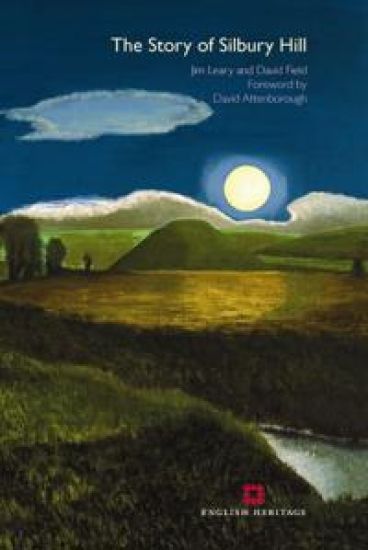
The Story of Silbury Hill

The Story of Silbury Hill

Leary Jim; David Field; David Attenborough

Historic England
2010
nidottu
The Story of Silbury Hill sets out the archaeological story of Silbury: from an early recognition of its importance to antiquarian and archaeological investigations of the hill. For the first time, the results of the recent work are set out in detail, describing early activity on the site, the origins of the monument and the construction techniques used. Numerous new and vivid reconstruction drawings present a unique interpretation of this iconic prehistoric monument. The authors propose a new theory of the construction and thus a new way of interpreting Neolithic monuments.
Use of Land in Central Southern England during the Neolithic and Early Bronze Age
This study approaches the prehistory of Wessex (central southern England) from an inclusive, broad brush point of view. It incorporates the whole of the land, the soils that the geology supports, the climate and drainage pattern and, in particular, it focuses on the less studied part of the area, the coastal zone. It concludes that settlement patterns were little different in Wessex to any other part of Britain, and contrary to existing notions of the importance of downland, were based primarily on the use of river valleys while the coastal plain played a siginificant role. "It shows as well as anything how one tenacious worker, armed with energy, enthusiasm and insight, can overturn a century or more of unwarranted speculation" - Richard Bradley.
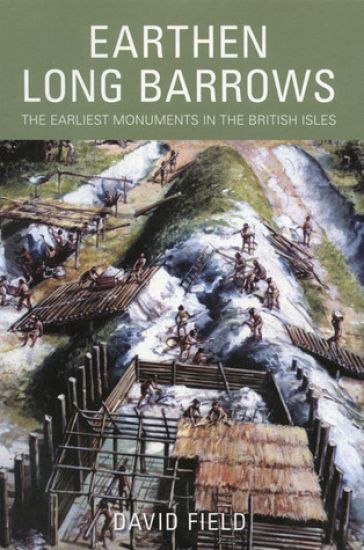
Earthen Long Barrows

Earthen Long Barrows

David Field

The History Press Ltd
2007
nidottu
Describes the origin of the monuments and their construction, including the pits, standing stones and posts found beneath the later mounds, their location within the country side and what this might mean for contemporary society. This work also discusses the nature of platforms, pavements, internal cairns and earthen round mounds.