Kirjojen hintavertailu – 12 903 735 kirjaa ja 27 kauppaa

Kirjailija

David Fraser

Kirjat ja teokset yhdessä paikassa: 36 kirjaa, julkaisuja vuosilta 1965–2026, suosituimpiin kuuluu Grantcraft. Vertaile teosten hintoja ja tarkista saatavuus suomalaisista kirjakaupoista.

36 kirjaa

Kirjojen julkaisuvuodet: 1965–2026.

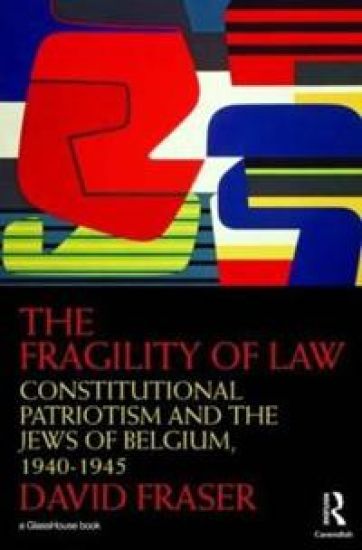
The Fragility of Law

The Fragility of Law

David Fraser

Routledge Cavendish
2012
nidottu
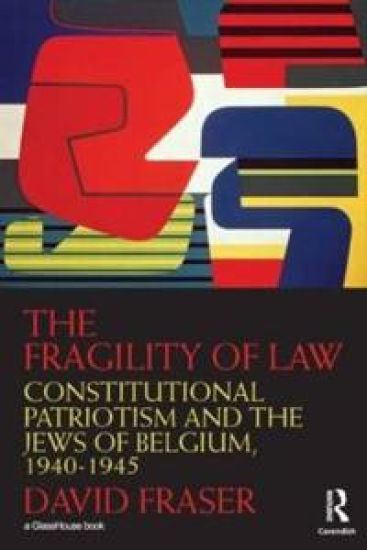
The Fragility of Law examines the ways in which, during the Second World War, the Belgian government and judicial structure became implicated in the identification, exclusion and killing of its Jewish residents, and in the theft - through Aryanization - of Jewish property. David Fraser demonstrates how a series of political and legal compromises meant that the infrastructure for antisemitic persecutions and ultimately the deaths of thousands of Belgian Jews was Belgian. Based on extensive archival research in Belgium, France, the United States and Israel, The Fragility of Law offers the first detailed exploration in English of this intriguing and virtually unexplored episode of Holocaust history. Belgian legal officials did not hesitate to invoke the provisions of international law found in the Hague Convention and those guarantees of individual freedom found in the national Constitution to oppose the demands of the German Occupying Authority. However, they remained largely silent when anti-Jewish persecution was at stake. Indeed, despite the 2007 official report of expert historians on Belgian state collaboration in the persecution of the country’s Jewish population, the mythology of "passive collaboration" which has dominated Belgian historiography and accounts of the Holocaust in that country, must be radically rethought.

Daviborshch's Cart

Daviborshch's Cart

David Fraser

University of Nebraska Press
2011
sidottu
In the spring of 1942, Nazi forces occupying the Ukraine launched a wave of executions targeting the region's remaining Jewish communities. These mass shootings were open, public, and intimate. Although the victims themselves could never testify against their killers, many eyewitnesses could and did identify the perpetrators. Among these communities, three local men from the villages of Serniki, Israylovka, and Gnivan were intimately implicated in such killing operations: Ivan Polyukhovich, a forester in the German-controlled administration; Heinrich Wagner, a Volksdeutscher liaison officer; and Mikolay Berezowsky, a member of the local police force. More than fifty years later, these three men were arrested and brought to trial in Australia for their alleged war crimes. Daviborshch's Cart is more than an account of Holocaust perpetrators who found a safe haven in postwar Australia. It is also the story of the Holocaust in the Ukraine, the War Crimes Act, Nazi policies, and the ways in which future generations translate history into law, archives into proof, and law into justice. Based on a review of previously unexamined historical and legal documents and transcripts, Daviborshch's Cart offers the first critical examination of Australian attempts to bring alleged Nazi criminals to justice.
The Fragility of Law

The Fragility of Law

David Fraser

Routledge Cavendish
2008
sidottu
The Fragility of Law examines the ways in which, during the Second World War, the Belgian government and judicial structure became implicated in the identification, exclusion and killing of its Jewish residents, and in the theft - through Aryanization - of Jewish property. David Fraser demonstrates how a series of political and legal compromises meant that the infrastructure for antisemitic persecutions and ultimately the deaths of thousands of Belgian Jews was Belgian. Based on extensive archival research in Belgium, France, the United States and Israel, The Fragility of Law offers the first detailed exploration in English of this intriguing and virtually unexplored episode of Holocaust history. Belgian legal officials did not hesitate to invoke the provisions of international law found in the Hague Convention and those guarantees of individual freedom found in the national Constitution to oppose the demands of the German Occupying Authority. However, they remained largely silent when anti-Jewish persecution was at stake. Indeed, despite the 2007 official report of expert historians on Belgian state collaboration in the persecution of the country’s Jewish population, the mythology of "passive collaboration" which has dominated Belgian historiography and accounts of the Holocaust in that country, must be radically rethought.

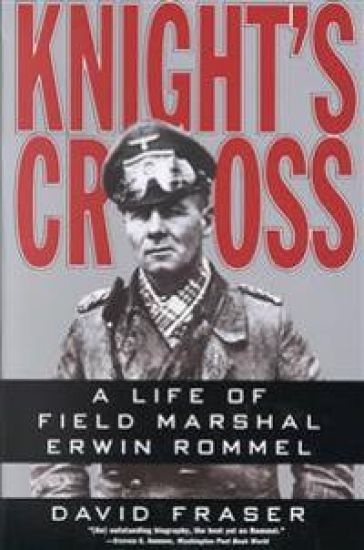
Knightâ??s Cross

Knightâ??s Cross

David Fraser

HARPERCOLLINS PUBLISHERS
2008
pokkari
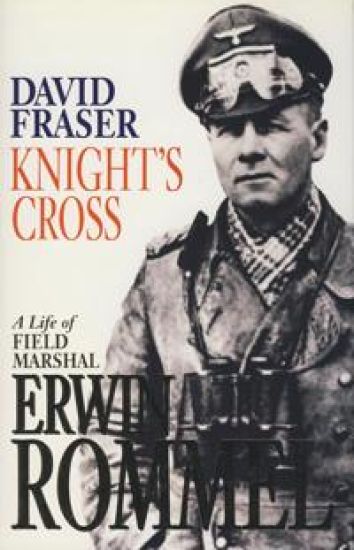
Erwin Rommel was the outstanding Axis field commander of the Second World War, respected, even admired, by his opponents. Here it seemed to the Allies, was a supremely professional soldier: chivalrous, decent, largely untainted by the crimes of the Nazi regime, carrying out his duty with often dazzling success.
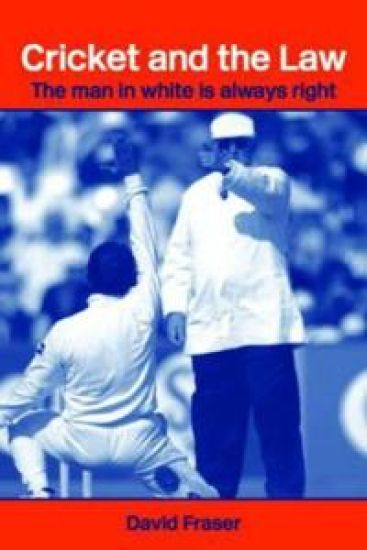
Cricket and the Law

Cricket and the Law

David Fraser

Routledge
2005
nidottu
Cricket, law and the meaning of life ... In a readable, informed and absorbing discussion of cricket’s defining controversies – bodyline, chucking, ball-tampering, sledging, walking and the use of technology, among many others – David Fraser explores the ambiguities of law and social order in cricket. Cricket and the Law charts the interrelationship between cricket and legal theory – between the law of the game and the law of our lives – and demonstrates how cricket’s cultural conventions can escape the confines of the game to carry far broader social meanings. This engaging study will be enjoyed by lawyers, students of culture and cricket lovers everywhere.
Cricket and the Law

Cricket and the Law

David Fraser

Routledge
2004
sidottu
Cricket, law and the meaning of life ... In a readable, informed and absorbing discussion of cricket’s defining controversies – bodyline, chucking, ball-tampering, sledging, walking and the use of technology, among many others – David Fraser explores the ambiguities of law and social order in cricket. Cricket and the Law charts the interrelationship between cricket and legal theory – between the law of the game and the law of our lives – and demonstrates how cricket’s cultural conventions can escape the confines of the game to carry far broader social meanings. This engaging study will be enjoyed by lawyers, students of culture and cricket lovers everywhere.
Knight's Cross: Life of Field Marshal Erwin Rommel, a

Knight's Cross: Life of Field Marshal Erwin Rommel, a

David Fraser

HARPER PERENNIAL
1994
nidottu

Halvin toimitettuna 26,90 €

"A vivid, balanced and frequently enthralling biography of Rommel, the general and the man. It is must reading for every aficionado of modern military history." -San Francisco ChronicleErwin Rommel's instinct for battle and leadership places him among the great commanders of history. In this definitive biography, David Fraser, an acclaimed biographer and distinguished soldier, looks at Rommel's career and shows how wild and superficially undisciplined Rommel's bold style of leadership could be, and how it inspired the men under his command to attack with ferocity and pursue with tenacity--qualities that served him well in his great battles in the North African desert and throughout his entire military career. Fraser also thoroughly explores the question of Rommel's possible involvement in the plot against Hitler and the reason for his forced suicide, even though there was no criminal evidence against him. Revealing his failings as well as his genius, Knight's Cross is a fascinating biography of a soldier whose distinguished career has become a part of history.
Knight’s Cross

Knight’s Cross

David Fraser

HARPERCOLLINS PUBLISHERS
1993
sidottu
In any numbering of the great captains of history, the name Erwin Rommel must stand in the first rank. He was an outstanding field commander of World War II, and the only one respected, as well as feared, by his opponents. This study looks at Rommel's career, showing how inspiringly wild and superficially undisciplined Rommel's style of leadership could be, how he believed in boldness of manoeuvre, ferocity in attack and tenacity in pursuit. These qualities, the hallmarks of his career, he displayed in his great battles in North Africa. The book also discusses Rommel's inevitable entanglement in politics when he realized the Allied invasion was going to succeed. He believed the only way to save Germany was to negotiate a peace settlement so he tried to present Hitler - to whom he had always been devoted and who had always shown him respect - with military realities. The result being he was branded a defeatist and ignored. When he was implicated in a plot to assassinate Hitler he was offered the choice of trial by a People's Court (rigged) or suicide, a state funeral and protection for his family. He chose the latter.