Kirjojen hintavertailu – 12 859 827 kirjaa ja 27 kauppaa
Kirjailija
David G Firth
Kirjat ja teokset yhdessä paikassa: 22 kirjaa, julkaisuja vuosilta 2007–2025, suosituimpiin kuuluu The Form and Function of the Tricolon in the Psalms of Ascents. Vertaile teosten hintoja ja tarkista saatavuus suomalaisista kirjakaupoista.
The Bible is both a divine and a human book. It is the inspired word of God for his people, whether in biblical times or for the church today. It is also a fully human book, written by different people in a variety of cultural settings. Knowledge of biblical language and society is essential if the meaning of the human writer is to be grasped fully. The Apollos Old Testament Commentary aims to take with equal seriousness the divine and human aspects of Scripture. It expounds the books of the Old Testament in a scholarly manner accessible to non-experts and shows the relevance of the Old Testament to modern readers. This commentary begins with an introduction, which gives an overview of the issues of date, authorship, sources and so on, but which also outlines more fully than usual the theology of the Psalms and provides pointers toward its interpretation and contemporary application. The annotated translation of the Hebrew text by the author forms the basis for the subsequent commentary. The form and structure section examines the context of a passage, its use of rhetorical devices, and source and form-critical issues. The comment section is a thorough, detailed exegesis of the historical and theological meaning of the passage. The explanation - the goal of the commentary - offers a full exposition of the theological message within the framework of biblical theology, and a commitment to the inspiration and authority of the Old Testament.
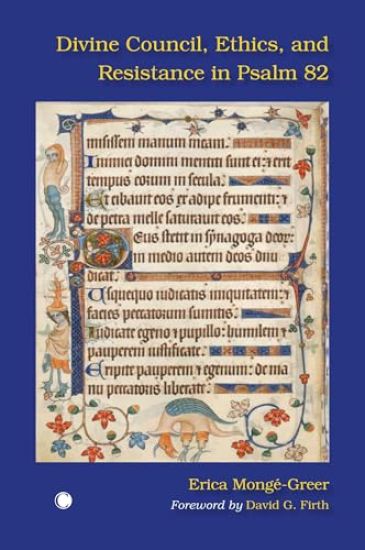
Psalm 82 can often be overlooked as simplistic, confusing, or out of place. With an understanding of ethical liturgy, Monge-Greer illuminates this mythopoeic psalm as a deeply sophisticated, prophetic summons to actively embrace justice for the poor, marginalised, and disenfranchised in our communities. Monge-Greer's interpretation provides a new opportunity for biblical study of this psalm, offering clarity and relevance to this heavily discussed psalm. Divine Council, Ethics, and Resistance in Psalm 82 explores the origins of the Psalm, its use as liturgy in early Israelite cultic practice, and its reception as resistance literature in the Second Temple period. By examining the historical usage of the psalm, Monge-Greer reveals to the reader how Psalm 82 can be used to inform their own lives and actions. Divine Council, Ethics, and Resistance in Psalm 82 is a new approach for biblical scholars, historians, and those seeking justice in the everyday.
Psalm 82 is a mythopoeic psalm that is often overlooked as simplistic, confusing, or just out of place. Across more than a century of scholarship, academics have argued for various interpretations of the first verse, proving only that it is easy to get caught up in the mythical mysteries of the ancient concept of divine council. Approaching Psalm 82 as ethical liturgy, however, reveals a deeply sophisticated, prophetic summons to actively embrace justice for the poor, marginalized, and disenfranchised in one's community. This book explores the origins of Psalm 82, its use as liturgy in early Israelite cultic practice, and its reception as resistance literature in the Second Temple period.
Psalm 82 is a mythopoeic psalm that is often overlooked as simplistic, confusing, or just out of place. Across more than a century of scholarship, academics have argued for various interpretations of the first verse, proving only that it is easy to get caught up in the mythical mysteries of the ancient concept of divine council. Approaching Psalm 82 as ethical liturgy, however, reveals a deeply sophisticated, prophetic summons to actively embrace justice for the poor, marginalized, and disenfranchised in one's community. This book explores the origins of Psalm 82, its use as liturgy in early Israelite cultic practice, and its reception as resistance literature in the Second Temple period.
The book of Esther tells the dramatic story of how the destruction of the Jews was averted through the bravery of Esther, the wisdom of Mordecai, and the unity of the Jewish people. Yet Esther is a rather strange book to find in the Bible. Not only is it set entirely outside of the Promised Land, it also shows no interest in that land. More than that, Esther is the only book in the Bible that definitely does not mention God, and it avoids any obviously religious language. Nevertheless, Esther does have a developed theology. In this BST volume, David Firth explores this paradoxically important book and its implications for our own context, where the reality of God's presence is experienced against a backdrop of God's relative anonymity and seeming absence. Using brilliant satire and subtle scriptural allusions, the book of Esther offers us a model for dealing with a world where Christians are frequently a minority voice. It calls us to courageously engage society and be at the forefront of standing for justice, all while trusting in the God who is always at work. Part of the beloved Bible Speaks Today series, The Message of Esther offers an insightful, readable exposition of the biblical text and thought-provoking discussion of how its meaning relates to contemporary life. Used by students and teachers around the world, The Bible Speaks Today commentaries are ideal for those studying or preaching the Bible and anyone who wants to delve deeper into the text. This edition features lightly updated language and a new interior design.
The Book of Esther is one of two books of the Bible to be set entirely outside of the Promised Land, and the only book which does not mention God at all. In this cogent, readable study, David Firth explores The Message of Esther, to help us better understand this paradoxically important book and its implications for our own contemporary context. With clear insight, he lay out how the reality of God's presence is experienced against a backdrop of God's relative anonymity and seeming absence, and shows us how that speaks into the lives of Christians today. A revised volume in the trusted Bible Speaks Today series of commentaries, The Message of Esther offers an accessible and thought-provoking exposition of Esther’s story, that considers its meaning for both its original audience and for Christians in the twenty-first century. Used by Bible students and teachers around the world, The Bible Speaks Today commentaries are ideal for students and preachers who want to deepen their understanding of Scripture as it was first written as well as its continued relevance today. This beautifully redesigned edition has been sensitively updated to include modern references and use the NIV Bible text. The Message of Esther is perfect for anyone looking for a stimulating, accessible commentary on Esther that will help them apply its lessons to their everyday life.
The book of Joshua tells the action-packed story of Israel's entry into and conquest of Canaan, the promised land. Yet it is often troubling for contemporary Christian readers, perhaps more than any other part of the Old Testament: isn't there too much violence, and isn't this violence inconsistent with the gospel of Jesus? In The Message of Joshua, David G. Firth explores this story as part of God's mission, which goes on to find its ultimate focus in Jesus Christ. He illuminates the meaning that the book of Joshua still has for Christians today. It challenges us, just as it challenges those who have read it down through the ages, to recognize that God not only includes those who join him in his mission, but he also excludes those who choose to set themselves against it. Part of the well-loved The Bible Speaks Today series of commentaries, The Message of Joshua offers a clear, readable exposition of the biblical text and thought-provoking discussion of how its meaning relates to contemporary life. Used by Bible students and teachers around the world, The Bible Speaks Today commentaries are ideal for anyone studying or preaching Scripture and those who want to delve deeper into the text. This beautifully redesigned edition has also been sensitively updated to include modern references and the current NRSV Bible text.
The book of Joshua tells the action-packed story of Israel's entry into and conquest of Canaan, the promised land. Yet it is often troubling for contemporary Christian readers, perhaps more than any other part of the Old Testament – isn't the violence shown inconsistent with the gospel of Jesus? In The Message of Joshua, David G Firth explores this story as part of God's mission, which goes on to find its ultimate focus in Jesus Christ. He illuminates the meaning that the book of Joshua still has for Christians today; it challenges us, just as it challenges those who have read it down through the ages, to recognize that God not only includes those who join him in his mission, he also excludes those who choose to set themselves against it. Part of the loved and trusted The Bible Speaks Today series of commentaries, The Message of Joshua offers an clear, readable exposition of the Biblical text and thought-provoking discussion of how its meaning relates to contemporary life. Used by Bible students and teachers around the world, The Bible Speaks Today commentaries are ideal for anyone studying or preaching Joshua and who want to delve deeper into the text. This beautifully redesigned edition has also been sensitively updated to include modern references and use the NRSV Bible text. The Message of Joshua will help for anyone looking for a commentary on Joshua that makes clear its meaning both in its original context and for Christians in the twenty-first century.
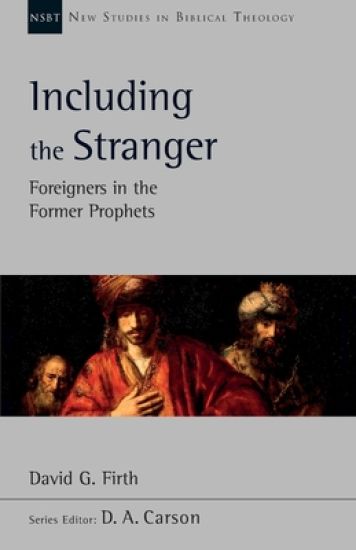
Biblical Foundations Award FinalistThe Old Testament, particularly the Former Prophets (Joshua, Judges, 1-2 Samuel, and 1-2 Kings), has frequently been regarded as having a negative attitude towards foreigners. This has meant that these texts are often employed by those opposed to the Christian faith to attack the Bible--and such views can be echoed by Christians. While the story of David and Goliath is cherished, other episodes are seen to involve "ethnic cleansing" or "massacre" and are avoided. David Firth's contention is that this approach emerges from an established interpretation of the text, but not the text itself. In this New Studies in Biblical Theology volume, he argues that the Former Prophets subvert the exclusivist approach in order to show that the people of God are not defined by ethnicity but rather by their willingness to commit themselves to the purposes of Yahweh. God's purposes are always wider than Israel alone, and Israel must therefore understand themselves as a people who welcome and include the foreigner. Firth addresses contemporary concerns about the ongoing significance of the Old Testament for Christians, and shows how opponents of Christianity have misunderstood the Bible. His reading of the Former Prophets also has significant ethical implications for Christians today as they wrestle with the issues of migration and what it means to be the people of God. Addressing key issues in biblical theology, the works comprising New Studies in Biblical Theology are creative attempts to help Christians better understand their Bibles. The NSBT series is edited by D. A. Carson, aiming to simultaneously instruct and to edify, to interact with current scholarship and to point the way ahead.
The Old Testament, particularly the Former Prophets, has frequently been regarded as having a negative attitude towards foreigners. This has meant that these texts are often employed by those opposed to the Christian faith to attack the Bible; and such views can be echoed by Christians. While the story of David and Goliath is cherished, other episodes are seen to involve 'ethnic cleansing' or 'massacre' and are avoided. David Firth's contention is that this view emerges from an established interpretation of the text, but not the text itself. He argues that the Former Prophets subvert the exclusivist approach in order to show that the people of God are not defined by ethnicity but rather by their willingness to commit themselves to the purposes of Yahweh. God's purposes are always wider than Israel alone, and Israel must therefore understand themselves as a people who welcome and include the foreigner. Firth addresses contemporary concerns about the ongoing significance of the Old Testament for Christians, and shows how opponents of Christianity have misunderstood the Bible. His reading of the Former Prophets also has significant ethical implications for Christians today as they wrestle with the issues of migration and what it means to be the people of God.
The story of the raped and murdered woman of Judges 19 and the civil war and mass marriage that ensue in chapters 20-21 are hardly favorite tales of the Hebrew Bible. The chapters have often been dismissed as little more than an anachronistic epilogue, an awkward amalgamation of earlier stories or a ""text of terror,"" proof of patriarchal oppression. This book argues that, far from being a clumsy collage, Judges 19-21 is a carefully narrated tale that chronicles the descent of a nation into extreme individualism and fragmentation. In dialogue with continental philosopher Luce Irigaray, it will uncover the dynamics of identity formation and how differential constructions of identity of the One and the Other yield patterns of victimization and justification of violence. This literary-philosophical reading will bring out silences and missed possibilities for the subjectivity of women, whilst also shedding light on the victimization of men within the logic of totalitarian identity constructions. The end of Judges therefore offers a theological conclusion to the book as a whole and opens up avenues for thought on theological anthropology, understandings of identity and gender, and a theological commentary on violence. ""Judges 19-21, the story of the Levite's concubine and ensuing civil war, represents a kind of nadir in the Old Testament. Yet its issues of violence (especially against women) and victimization are enduring realities. So how should this material be understood as a sacred text? Isabelle Hamley finds valuable resources in the work of Luce Irigaray for a fresh reading of the biblical text and for a fresh conceptualization of how best to appropriate it in the context of Christian faith. This is an important contribution to contemporary biblical interpretation."" --Walter Moberly, Professor of Theology & Biblical Interpretation, Durham University. ""This powerful, scholarly reading of a very difficult text is written with rigorous argument, yet always with an eye towards the wider implications for how we identify and call out gender-based violence. Hamley makes excellent use of the work of Irigaray on 'othering' to produce a compelling and significant reading of Judges 19-21."" --Jenni Williams, Tutor in Old Testament, Wycliffe Hall, Oxford ""This is a close reading of a text which we can be tempted to overlook because of what it covers--gang rape, murder, forced marriage, and civil war. Reverend Dr. Isabelle Hamley brings the rigor and depth you'd expect from an academic, tackling these chapters head on, along with prophetic insight as she explores the questions Judges 19-21 pose for us today. I wholeheartedly commend this work not just as an important contribution to the study of the Old Testament, but as an encouragement to all of us to discover what the whole of the Bible has to tell us about who we are and how we live."" --Justin Welby, Archbishop of Canterbury Isabelle M. Hamley is currently Chaplain to the Archbishop of Canterbury, having previously held posts at St John's College Nottingham and the University of Nottingham.
This volume surveys recent developments in the study of Old Testament wisdom; discusses issues that have arisen in Proverbs, Job and Ecclesiastes; examines the Song of Songs, Ruth and some Psalms as wisdom texts; and explores wisdom and biblical theology, the concept of retribution, and the issue of divine absence.
In Persia in the fifth century BC, the Jews were threatened with genocide. The book of Esther describes how this crisis was averted through the bravery of Esther, the wisdom of Mordecai and the unity of the Jewish people. However, Esther is a rather strange book to find in the Bible. It is set entirely outside the Promised Land, and shows no interest in it. Furthermore, it is the only book in the Bible that definitely does not mention God, and it avoids any obviously religious language. Nevertheless, the book does have a developed theology. David Firth brings this out as he engages insightfully with the narrative. He shows how it invites us to reflect on what it is to know God within this world, where the miraculous is rare and yet in which the faithful continue to experience the reality of God's presence. This is of particular importance for those living out their faith within post-Christendom. God’s saving purpose in Christ is richer than Esther imagines; but Esther asks us how we continue to see God's work this side of the cross of Christ, and what our own part is within the ongoing story of his deliverance.