Kirjojen hintavertailu – 12 903 725 kirjaa ja 27 kauppaa

Kirjailija

David Gerwin

Kirjat ja teokset yhdessä paikassa: 5 kirjaa, julkaisuja vuosilta 2010–2016, suosituimpiin kuuluu Policy, Professionalization, Privatization, and Performance Assessment. Vertaile teosten hintoja ja tarkista saatavuus suomalaisista kirjakaupoista.

5 kirjaa

Kirjojen julkaisuvuodet: 2010–2016.

Policy, Professionalization, Privatization, and Performance Assessment

Policy, Professionalization, Privatization, and Performance Assessment

Theresa J. Gurl; Limarys Caraballo; Leslee Grey; John H. Gunn; David Gerwin; Héfer Bembenutty

Springer International Publishing AG
2016
nidottu
This volume reviews the background of mandated teacher performance assessment with an emphasis on policy, privatization, and professionalization. The authors discuss the potential impact of mandated teacher performance assessments on teacher education in the content areas of mathematics, English, and social studies. The perspectives and empirical research examined in this conceptual analysis illustrate the various ways in which the Stanford Center for Assessment, Learning, and Equity (SCALE) Teacher Performance Assessment (edTPA) promises to restructure teacher education in the United States. The authors consider both the affordances and the constraints that teacher performance assessments offer for teacher preparation programs, and conclude by discussing the implications of the intersections among policy, privatization, professionalization, and performance assessments of teachers, as well as the relationship between performance assessments and teacher education. The impact of the edTPA on the development of signature pedagogies in teacher education is also discussed.

Teaching U.S. History as Mystery

Teaching U.S. History as Mystery

David Gerwin; Jack Zevin

Routledge
2010
sidottu
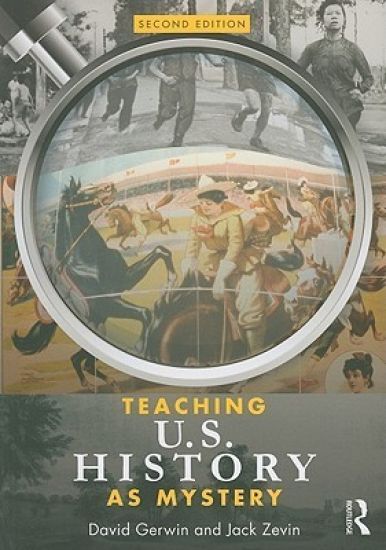
Presenting U. S. history as contested interpretations of compelling problems, this text offers a clear set of principles and strategies, together with case studies and "Mystery Packets" of documentary materials from key periods in American history, that teachers can use with their students to promote and sustain problem-finding and problem-solving in history and social studies classrooms. Structured to encourage new attitudes toward history as hands-on inquiry, conflicting interpretation, and myriad uncertainties, the whole point is to create a user-friendly way of teaching history "as it really is" - with all its problems, issues, unknowns, and value clashes. Students and teachers are invited to think anew as active participants in learning history rather than as passive sponges soaking up pre-arranged and often misrepresented people and events. New in the Second Edition: New chapters on Moundbuilders, and the Origins of Slavery; expanded Gulf of Tonkin chapter now covering the Vietnam and Iraq wars; teaching tips in this edition draw on years of teacher experience in using mysteries in their classrooms.
Teaching U.S. History as Mystery

Teaching U.S. History as Mystery

David Gerwin; Jack Zevin

Routledge
2010
nidottu
Presenting U. S. history as contested interpretations of compelling problems, this text offers a clear set of principles and strategies, together with case studies and "Mystery Packets" of documentary materials from key periods in American history, that teachers can use with their students to promote and sustain problem-finding and problem-solving in history and social studies classrooms. Structured to encourage new attitudes toward history as hands-on inquiry, conflicting interpretation, and myriad uncertainties, the whole point is to create a user-friendly way of teaching history "as it really is" - with all its problems, issues, unknowns, and value clashes. Students and teachers are invited to think anew as active participants in learning history rather than as passive sponges soaking up pre-arranged and often misrepresented people and events. New in the Second Edition: New chapters on Moundbuilders, and the Origins of Slavery; expanded Gulf of Tonkin chapter now covering the Vietnam and Iraq wars; teaching tips in this edition draw on years of teacher experience in using mysteries in their classrooms.
Teaching World History as Mystery

Teaching World History as Mystery

Jack Zevin; David Gerwin

Routledge
2010
sidottu
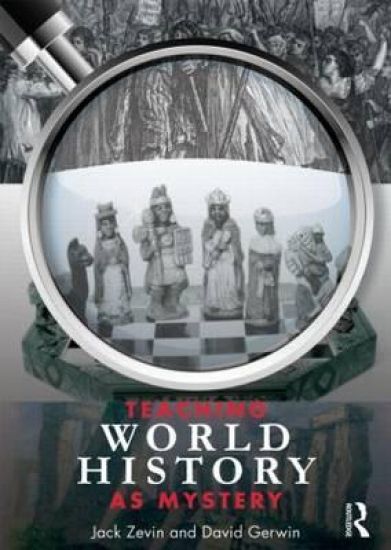
Offering a philosophy, methodology, and examples for history instruction that are active, imaginative, and provocative, this text presents a fully developed pedagogy based on problem-solving methods that promote reasoning and judgment and restore a sense of imagination and participation to classroom learning. It is designed to draw readers into the detective process that characterizes the work of professional historians and social scientists - sharing raw data, defining terms, building interpretations, and testing competing theories. An inquiry framework drives both the pedagogy and the choice of historical materials, with selections favoring the unsolved, controversial, and fragmented rather than the neatly wrapped up analysis of past events. Teaching World History as Mystery: Provides a balanced combination of interestingly arranged historical content, and clearly explained instructional strategies Features case studies of commonly and not so commonly taught topics within a typical world/global history curriculum using combinations of primary and secondary documents Discusses ways of dealing with ethical and moral issues in world history classrooms, drawing students into persisting questions of historical truth, bias, and judgment
Teaching World History as Mystery

Teaching World History as Mystery

Jack Zevin; David Gerwin

Routledge
2010
nidottu
Offering a philosophy, methodology, and examples for history instruction that are active, imaginative, and provocative, this text presents a fully developed pedagogy based on problem-solving methods that promote reasoning and judgment and restore a sense of imagination and participation to classroom learning. It is designed to draw readers into the detective process that characterizes the work of professional historians and social scientists - sharing raw data, defining terms, building interpretations, and testing competing theories. An inquiry framework drives both the pedagogy and the choice of historical materials, with selections favoring the unsolved, controversial, and fragmented rather than the neatly wrapped up analysis of past events. Teaching World History as Mystery: Provides a balanced combination of interestingly arranged historical content, and clearly explained instructional strategies Features case studies of commonly and not so commonly taught topics within a typical world/global history curriculum using combinations of primary and secondary documents Discusses ways of dealing with ethical and moral issues in world history classrooms, drawing students into persisting questions of historical truth, bias, and judgment