Kirjojen hintavertailu – 12 903 735 kirjaa ja 27 kauppaa

Kirjailija

David Glantz

Kirjat ja teokset yhdessä paikassa: 9 kirjaa, julkaisuja vuosilta 1991–2022, suosituimpiin kuuluu Östfronten i färg : unika fotografier från andra världskriget. Vertaile teosten hintoja ja tarkista saatavuus suomalaisista kirjakaupoista.

9 kirjaa

Kirjojen julkaisuvuodet: 1991–2022.

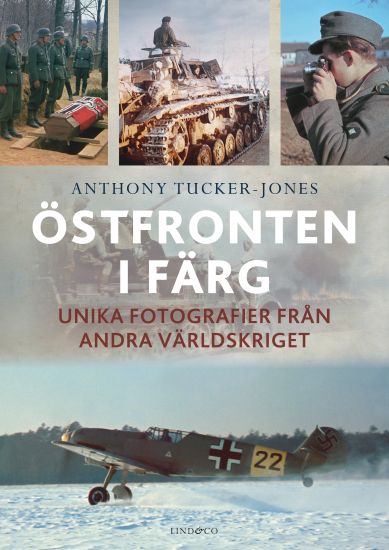
Östfronten i färg : unika fotografier från andra världskriget

Östfronten i färg : unika fotografier från andra världskriget

Anthony Tucker-Jones; Ian Stewart Spring; David Glantz

Lind Co
2022
sidottu
Livet och döden på östfronten skildras här visuellt genom mer än 250 häpnadsväckande färgfoton. Bilderna sätts i sammanhang och förklaras kunnigt av experten Anthony Tucker-Jones. De erbjuder unika och ofta överraskande insikter om krigets brutala verklighet och människorna som hamnade i det. Boken innehåller tre tematiska delar: Den första behandlar markoffensiven, inklusive Hitlers invasion av Sovjetunionen och stridsvagnarna, fordonen, vapnen och infanteriet på både tysk och rysk sida. Den andra delen skildrar luftkriget, med bilder på bombplan och jaktflyg, Luftwaffepersonal och förödelsen som striderna förorsakade. I den tredje delen tas vi med bakom frontlinjerna till krigsfångar, partisaner och sjukvårdare, men får även se soldaternas och de civilas vardagsliv och fritidsaktiviteter vid fronten, liksom den stränga ryska vinterns effekter. Östfronten i färg belyser andra världskrigets historia på ett helt nytt sätt. ANTHONY TUCKER-JONES är militärhistorisk författare och före detta underrättelseofficer. Han har utgivit ett femtiotal böcker, de flesta om andra världskriget. IAN STEWART SPRING driver Pixpast Archive som omfattar över 32 000 bilder från 1936-1946 och anses vara världens största samling av färgfoton från andra världskriget."texten är informativ och för kalenderbitare är den en guldgruva om krigsmaterielens utveckling vad gäller vapen, fordon, transportmedel, uniformspersedlar och t.o.m. kamouflagetekniken. Intressanta bilder och text i en mycket tilltalande svensk språkdräkt av Jan Wibom." Btj, betyg 4/5

Life and Death on the Eastern Front

Life and Death on the Eastern Front

Anthony Tucker-Jones; Ian Spring; David Glantz

GREENHILL BOOKS
2022
sidottu
This incredible visual record of life and death along the Eastern Front features more than 250 images from the the PIXPAST Archive, a collection of more than 32,000 original colour photographs taken between 1936 and 1946\. Collated into three parts and organised thematically, the book begins with images of the ground war, including Hitler's invasion of the Soviet Union and the tanks, vehicles, weaponry and infantry on both sides. Moving into the war in the skies, the images depict aircraft in flight and on the ground, the bombers, fighters, Luftwaffe personnel and the destruction wrought from battle. And finally, the images take us behind the lines, to the prisoners of war, partisans, medics, the daily lives and leisure activities of soldiers and civilians along the front and the impact of the harsh Russian winter. Accompanied by text by renowned author and commentator Anthony Tucker-Jones, these images offer a rare, often surprising insight into the realities of the Second World War and people caught up in it, in vivid colour detail.
The Soviet Strategic Offensive in Manchuria, 1945
This critical examination of the final Soviet strategic offensive operation during World War II seeks to chip away at two generally inaccurate pictures many Westerners have of the war. Specifically, Westerners seem to think that only geography, climate, and sheer numbers negated German military skill and competency on the eastern front, a view that relegates Soviet military accomplishments to oblivion.
The Siege of Leningrad

The Siege of Leningrad

David Glantz

Cassell Military
2004
pokkari
The full story of the most terrible siege in history when over a million people perished, illustrated by pictures recently released from Russian archives. Leningrad (now reverted to its pre-1914 name of St Petersburg) was surrounded by German forces in 1941 and cut off from the rest of Russia. It was besieged for nearly three years, the great city's population suffering terribly in the bitter cold of the Russian winter. Over a million men, women and children died of starvation and hypothermia, but the city fought on and never surrendered. In 1943 the Russian army broke through to link up with the garrison and end the longest, bloodiest siege of the Second World War.
The Soviet Strategic Offensive in Manchuria, 1945
This critical examination of the final Soviet strategic offensive operation during World War II seeks to chip away at two generally inaccurate pictures many Westerners have of the war. Specifically, Westerners seem to think that only geography, climate, and sheer numbers negated German military skill and competency on the eastern front, a view that relegates Soviet military accomplishments to oblivion.
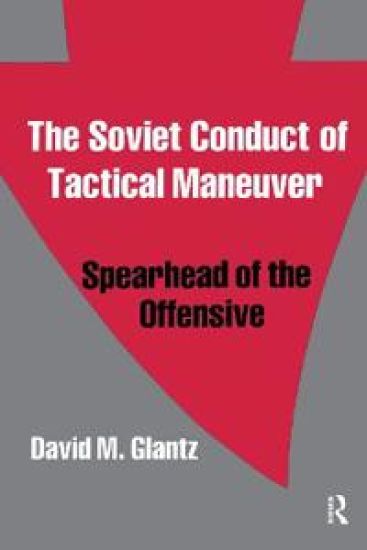
The Soviet Conduct of Tactical Maneuver
First Published in 1991. This book addresses a critical aspect of Soviet maneuver theory that has been almost totally neglected in Western analysis, specifically, Soviet concern for tactical maneuver. Since the 1930s, the Soviets have consistently argued that operational maneuver can be successful only if conducted in conjunction with equally successful tactical maneuver, carried out primarily by forward detach­ments. Forward detachments, the primary tactical maneuver forces tasked with performing critical combat functions, emerged in theory in the 1930s and flourished on the basis of virtually untested concepts until the initial phases of Operation Barbarossa, when the Soviet mobile force structure was destroyed in a matter of weeks. Forward detachments again emerged after the Stalin­ grad Operation in 1943, when the Soviet General Staff required their use to spearhead all operations by mobile forces. After mid-1943, forward detach­ments led the operations of all tank armies and tank and mechanized corps, particularly during exploitation operations. By war's end all forces, mobile and rifle alike, employed forward detachments to lead their operations during the exploitation stage of operations. Forward detachments preempted enemy defenses and collectively formed a coordinated network of forward mobile units which provided coherence to the vast array of advancing Soviet mobile and rifle forces. In the late 1960s, the forward detachment received renewed attention as a critical element which could assist in the conduct of operational maneuver. Today, the Soviets believe that forward detachment operations are the key to conducting successful operations on a battlefield increasingly threatened by deadly high-precision weaponry. Tailored, flexible, battalion-size forward detachments, along with their operational counterparts (corps and brigades), may, in fact, be the model upon which the future Soviet force structure will be based. This volume surveys in detail the conceptual and organizational evolution of the forward detachment as the premier Soviet tactical maneuver force. It vividly demonstrates why forward detachments are suited by their versatile nature to be a precursor of future restructured Soviet units in general.
The Soviet Conduct of Tactical Maneuver
First Published in 1991. This book addresses a critical aspect of Soviet maneuver theory that has been almost totally neglected in Western analysis, specifically, Soviet concern for tactical maneuver. Since the 1930s, the Soviets have consistently argued that operational maneuver can be successful only if conducted in conjunction with equally successful tactical maneuver, carried out primarily by forward detach­ments. Forward detachments, the primary tactical maneuver forces tasked with performing critical combat functions, emerged in theory in the 1930s and flourished on the basis of virtually untested concepts until the initial phases of Operation Barbarossa, when the Soviet mobile force structure was destroyed in a matter of weeks. Forward detachments again emerged after the Stalin­ grad Operation in 1943, when the Soviet General Staff required their use to spearhead all operations by mobile forces. After mid-1943, forward detach­ments led the operations of all tank armies and tank and mechanized corps, particularly during exploitation operations. By war's end all forces, mobile and rifle alike, employed forward detachments to lead their operations during the exploitation stage of operations. Forward detachments preempted enemy defenses and collectively formed a coordinated network of forward mobile units which provided coherence to the vast array of advancing Soviet mobile and rifle forces. In the late 1960s, the forward detachment received renewed attention as a critical element which could assist in the conduct of operational maneuver. Today, the Soviets believe that forward detachment operations are the key to conducting successful operations on a battlefield increasingly threatened by deadly high-precision weaponry. Tailored, flexible, battalion-size forward detachments, along with their operational counterparts (corps and brigades), may, in fact, be the model upon which the future Soviet force structure will be based. This volume surveys in detail the conceptual and organizational evolution of the forward detachment as the premier Soviet tactical maneuver force. It vividly demonstrates why forward detachments are suited by their versatile nature to be a precursor of future restructured Soviet units in general.