Kirjojen hintavertailu – 12 903 724 kirjaa ja 27 kauppaa

Kirjailija

David Grcki

Kirjat ja teokset yhdessä paikassa: 4 kirjaa, julkaisuja vuosilta 2024–2026, suosituimpiin kuuluu Lacan for Criminologists. Vertaile teosten hintoja ja tarkista saatavuus suomalaisista kirjakaupoista.

4 kirjaa

Kirjojen julkaisuvuodet: 2024–2026.

Lacan for Criminologists

Lacan for Criminologists

Rafe McGregor; David Grcki; Ema Lalic

TAYLOR FRANCIS LTD
2026
sidottu
This book provides a clear and concise introduction to the work of French cultural icon Jacques Lacan (1901-1981) for criminologists, sociologists, and social theorists. The authors approach Lacan as a structuralist rather than a psychoanalyst or psychiatrist, exploring his perspective on the relationships among being, agency, meaning, and structure; his construction of subjectivity; and his register theory, constituted by the Real, the Imaginary, and the Symbolic. The book begins with an analysis and evaluation of the only substantive criminological deployment of Lacan’s philosophy to date, in the ultra-realist framework developed by Steve Hall, Simon Winlow, and Thomas Raymen. The strengths of this framework suggest that Lacan’s work has even more relevance to crime and harm in the digital age than it did in the 20th century. Lacan for Criminologists picks up where ultra-realism leaves off, engaging directly with Lacan’s Écrits and seminars to demonstrate their value to a critical criminology that is theory-led, evidence-based, and zemiologically-focused. This book will be fascinating reading for cultural, critical, and ultra-realist criminologists, as well as students and scholars of sociology, cultural studies, and social theory.

Lacan for Criminologists

Lacan for Criminologists

Rafe McGregor; David Grcki; Ema Lalic

TAYLOR FRANCIS LTD
2026
nidottu
This book provides a clear and concise introduction to the work of French cultural icon Jacques Lacan (1901-1981) for criminologists, sociologists, and social theorists. The authors approach Lacan as a structuralist rather than a psychoanalyst or psychiatrist, exploring his perspective on the relationships among being, agency, meaning, and structure; his construction of subjectivity; and his register theory, constituted by the Real, the Imaginary, and the Symbolic. The book begins with an analysis and evaluation of the only substantive criminological deployment of Lacan’s philosophy to date, in the ultra-realist framework developed by Steve Hall, Simon Winlow, and Thomas Raymen. The strengths of this framework suggest that Lacan’s work has even more relevance to crime and harm in the digital age than it did in the 20th century. Lacan for Criminologists picks up where ultra-realism leaves off, engaging directly with Lacan’s Écrits and seminars to demonstrate their value to a critical criminology that is theory-led, evidence-based, and zemiologically-focused. This book will be fascinating reading for cultural, critical, and ultra-realist criminologists, as well as students and scholars of sociology, cultural studies, and social theory.
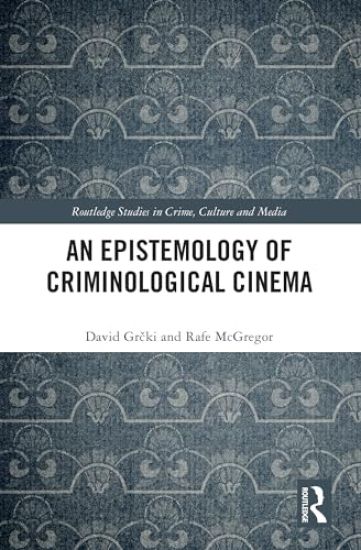
An Epistemology of Criminological Cinema

An Epistemology of Criminological Cinema

David Grcki; Rafe McGregor

TAYLOR FRANCIS LTD
2025
nidottu
Standing at the intersection of criminology and philosophy, this book demonstrates the ways in which mythic movies and television series can provide an understanding of actual crimes and social harms. Taking three social problems as its subjects – capitalist political economy, structural injustice, and racism – the book explores the ways in which David Fincher’s Fight Club (1999), HBO’s Game of Thrones (2011–2019), and Jordan Peele’s Us (2019) offer solutions by reconceiving justice in terms of personal and collective transformation, utopian thinking, and the relationship between racism and elitism, respectively. In doing so, the authors set out a theory of understanding the world based on cinematic and televisual works of art and conclude with a template that establishes a methodology for future use. An Epistemology of Criminological Cinema is authoritative and accessible, ideal reading for undergraduate and postgraduate students, criminologists, philosophers, and film, television, and literary critics with an interest in social justice and social harm.
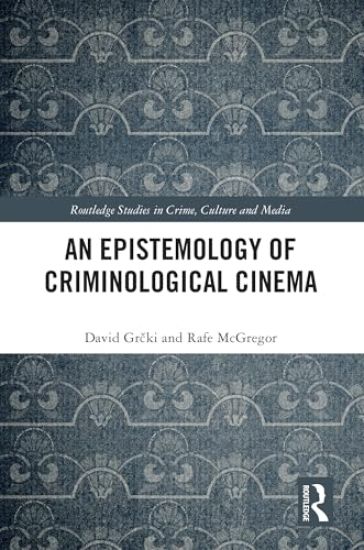
An Epistemology of Criminological Cinema

An Epistemology of Criminological Cinema

David Grcki; Rafe McGregor

TAYLOR FRANCIS LTD
2024
sidottu
Standing at the intersection of criminology and philosophy, this book demonstrates the ways in which mythic movies and television series can provide an understanding of actual crimes and social harms. Taking three social problems as its subjects – capitalist political economy, structural injustice, and racism – the book explores the ways in which David Fincher’s Fight Club (1999), HBO’s Game of Thrones (2011–2019), and Jordan Peele’s Us (2019) offer solutions by reconceiving justice in terms of personal and collective transformation, utopian thinking, and the relationship between racism and elitism, respectively. In doing so, the authors set out a theory of understanding the world based on cinematic and televisual works of art and conclude with a template that establishes a methodology for future use. An Epistemology of Criminological Cinema is authoritative and accessible, ideal reading for undergraduate and postgraduate students, criminologists, philosophers, and film, television, and literary critics with an interest in social justice and social harm.