Kirjojen hintavertailu – 12 903 725 kirjaa ja 27 kauppaa

Kirjailija

David Grene

Kirjat ja teokset yhdessä paikassa: 5 kirjaa, julkaisuja vuosilta 2006–2013, suosituimpiin kuuluu Sophocles I – Antigone, Oedipus the King, Oedipus at Colonus. Vertaile teosten hintoja ja tarkista saatavuus suomalaisista kirjakaupoista.

5 kirjaa

Kirjojen julkaisuvuodet: 2006–2013.

Sophocles I – Antigone, Oedipus the King, Oedipus at Colonus

Sophocles I – Antigone, Oedipus the King, Oedipus at Colonus

Sophocles Sophocles; Mark Griffith; Glenn W. Most; David Grene; Richmond Lattimore

University of Chicago Press
2013
nidottu
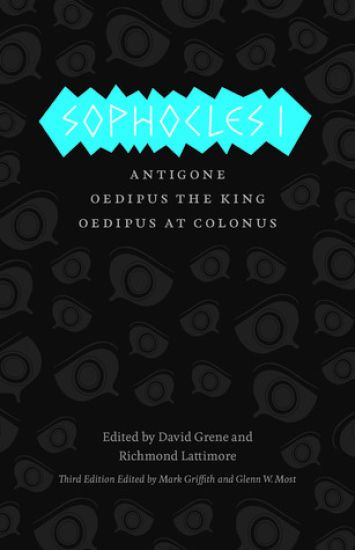
Sixty years ago, the University of Chicago Press undertook a momentous project: a new translation of the Greek tragedies that would be the ultimate resource for teachers, students, and readers. They succeeded. Under the expert management of eminent classicists David Grene and Richmond Lattimore, those translations combined accuracy, poetic immediacy, and clarity of presentation to render the surviving masterpieces of Aeschylus, Sophocles, and Euripides in an English so lively and compelling that they remain the standard translations. Today, Chicago is taking pains to ensure that our Greek tragedies remain the leading English-language versions throughout the twenty-first century. In this highly anticipated third edition, Mark Griffith and Glenn W. Most have carefully updated the translations to bring them even closer to the ancient Greek while retaining the vibrancy for which our English versions are famous. This edition also includes brand-new translations of Euripides' "Medea", "The Children of Heracles", "Andromache", and "Iphigenia among the Taurians", fragments of lost plays by Aeschylus, and the surviving portion of Sophocles' satyr-drama "The Trackers". New introductions for each play offer essential information about its first production, plot, and reception in antiquity and beyond. In addition, each volume includes an introduction to the life and work of its tragedian, as well as notes addressing textual uncertainties and a glossary of names and places mentioned in the plays. In addition to the new content, the volumes have been reorganized both within and between volumes to reflect the most up-to-date scholarship on the order in which the plays were originally written. The result is a set of handsome paperbacks destined to introduce new generations of readers to these foundational works of Western drama, art, and life.
Sophocles I

Sophocles I

Sophocles Sophocles; Mark Griffith; Glenn W. Most; David Grene; Richmond Lattimore

University of Chicago Press
2013
sidottu
Sixty years ago, the University of Chicago Press undertook a momentous project: a new translation of the Greek tragedies that would be the ultimate resource for teachers, students, and readers. They succeeded. Under the expert management of eminent classicists David Grene and Richmond Lattimore, those translations combined accuracy, poetic immediacy, and clarity of presentation to render the surviving masterpieces of Aeschylus, Sophocles, and Euripides in an English so lively and compelling that they remain the standard translations. Today, Chicago is taking pains to ensure that our Greek tragedies remain the leading English-language versions throughout the twenty-first century. In this highly anticipated third edition, Mark Griffith and Glenn W. Most have carefully updated the translations to bring them even closer to the ancient Greek while retaining the vibrancy for which our English versions are famous. This edition also includes brand-new translations of Euripides' "Medea", "The Children of Heracles", "Andromache", and "Iphigenia among the Taurians", fragments of lost plays by Aeschylus, and the surviving portion of Sophocles' satyr-drama "The Trackers". New introductions for each play offer essential information about its first production, plot, and reception in antiquity and beyond. In addition, each volume includes an introduction to the life and work of its tragedian, as well as notes addressing textual uncertainties and a glossary of names and places mentioned in the plays. In addition to the new content, the volumes have been reorganized both within and between volumes to reflect the most up-to-date scholarship on the order in which the plays were originally written. The result is a set of handsome paperbacks destined to introduce new generations of readers to these foundational works of Western drama, art, and life.
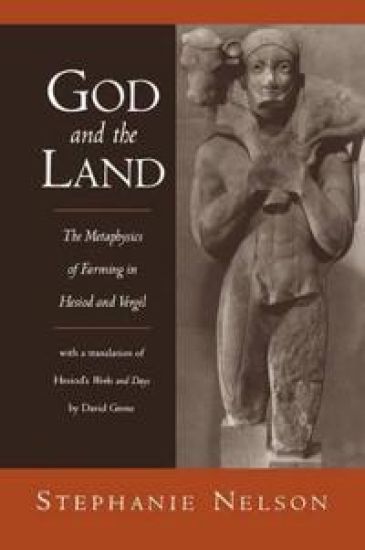
God and the Land

God and the Land

Stephanie Nelson; David Grene

Oxford University Press Inc
2009
nidottu
In this pathbreaking book, which includes a powerful new translation of Hesiod's Works and Days by esteemed translator David Grene, Stephanie Nelson argues that a society's vision of farming contains deep indications about its view of the human place within nature, and our relationship to the divine. She contends that both Hesiod in the Works and Days and Vergil in the Georgics saw farming in this way, and so wrote their poems not only about farming itself, but also about its deeper ethical and religious implications. Hesiod, Nelson argues, saw farming as revealing that man must live by the sweat of his brow, and that good, for human beings, must always be accompanied by hardship. Within this vision justice, competition, cooperation, and the need for labor take their place alongside the uncertainties of the seasons and even of particular lucky and unlucky days to form a meaningful whole within which human life is an integral part. Vergil, Nelson argues, deliberately modeled his poem upon the Works and Days, and did so in order to reveal that his is a very different vision. Hesiod saw the hardship in farming; Vergil sees its violence as well. Farming is for him both our life within nature, and also our battle against her. Against the background of Hesiods poem, which found a single meaning for human life, Vergil thus creates a split vision and suggests that human beings may be radically alienated from both nature and the divine. Nelson argues that both the Georgics and the Works and Days have been misread because scholars have not seen the importance of the connection between the two poems, and because they have not seen that farming is the true concern of both, farming in its deepest and most profoundly unsettling sense.
Of Farming and Classics

Of Farming and Classics

David Grene; Robert B. Pippin

University of Chicago Press
2008
nidottu
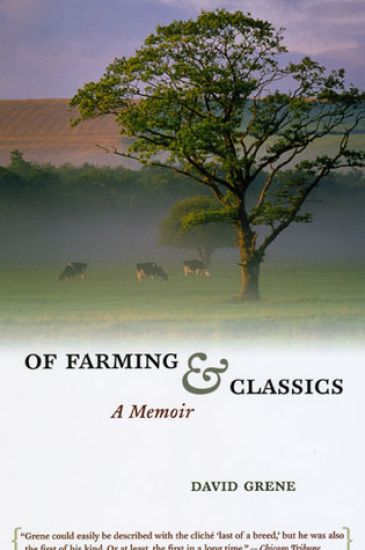
A fiercely independent thinker, colorful storyteller, and spirited teacher, David Grene devoted his life to two things: farming, which he began as a boy in Ireland and continued into old age; and classics, which he taught for several decades that culminated in his translating and editing, with Richmond Lattimore, the "Complete Greek Tragedies". In this charming memoir, which he wrote before his death in 2002 at the age of eighty-nine, Grene weaves together these interests to tell a quirky and absorbing story of the sometimes turbulent and always interesting life he split between the University of Chicago - where he helped found the Committee on Social Thought - and the farm he kept back in Ireland. Grene's form and humor are quite his own, and his brilliant story-telling will enthrall anyone interested in the classics, rural Ireland, or twentieth-century intellectual history, especially as it pertains to the University of Chicago.
Of Farming and Classics

Of Farming and Classics

David Grene; Robert B. Pippin

University of Chicago Press
2006
sidottu
A fiercely independent thinker, colorful storyteller, and spirited teacher, David Grene devoted his life to two things: farming, which he began as a boy in Ireland and continued into old age; and classics, which he taught for several decades that culminated in his translating and editing, with Richmond Lattimore, the "Complete Greek Tragedies". In this charming memoir, which he wrote before his death in 2002 at the age of eighty-nine, Grene weaves together these interests to tell a quirky and absorbing story of the sometimes turbulent and always interesting life he split between the University of Chicago - where he helped found the Committee on Social Thought - and the farm he kept back in Ireland. Grene's form and humor are quite his own, and his brilliant story-telling will enthrall anyone interested in the classics, rural Ireland, or twentieth-century intellectual history, especially as it pertains to the University of Chicago.