Kirjojen hintavertailu – 12 859 828 kirjaa ja 27 kauppaa

Kirjailija

David Grigg

Kirjat ja teokset yhdessä paikassa: 10 kirjaa, julkaisuja vuosilta 1965–2021, suosituimpiin kuuluu NovoPulp Anthology - Volume 2: The Speculative Fiction Anthology. Vertaile teosten hintoja ja tarkista saatavuus suomalaisista kirjakaupoista.

10 kirjaa

Kirjojen julkaisuvuodet: 1965–2021.

The Dynamics of Agricultural Change
First published in 1982. Until the nineteenth-century the history of agriculture was the history of mankind but it has not perhaps received the wide attention that this importance justifies. In this study, the author reviews for the student of agricultural history successive attempts to describe and explain agricultural changes that are not specific to a limited area or a particular time. In a sense The Dynamics of Agricultural Change is a systematic historical geography of agriculture. Some of the models the author explores have been developed within agricultural history; some, drawn from other disciplines, can be applied fruitfully to it. What is the relationship between population growth and agricultural development? Between environmental changes and those in agriculture? What was the effect of the industrial revolution? And has there been an agricultural revolution? This book suggests to university students of economic history, historical geography and agriculture, a number of stimulating ways of interpreting and reinterpreting agricultural history.
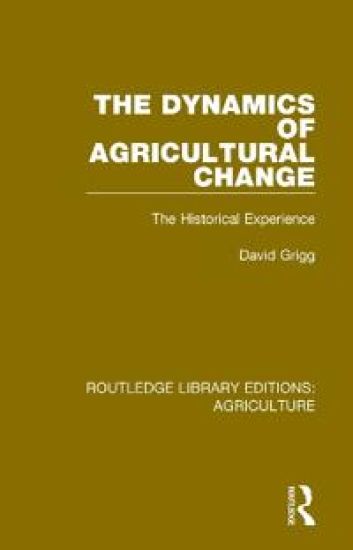
The Dynamics of Agricultural Change
First published in 1982. Until the nineteenth-century the history of agriculture was the history of mankind but it has not perhaps received the wide attention that this importance justifies. In this study, the author reviews for the student of agricultural history successive attempts to describe and explain agricultural changes that are not specific to a limited area or a particular time. In a sense The Dynamics of Agricultural Change is a systematic historical geography of agriculture. Some of the models the author explores have been developed within agricultural history; some, drawn from other disciplines, can be applied fruitfully to it. What is the relationship between population growth and agricultural development? Between environmental changes and those in agriculture? What was the effect of the industrial revolution? And has there been an agricultural revolution? This book suggests to university students of economic history, historical geography and agriculture, a number of stimulating ways of interpreting and reinterpreting agricultural history.

NovoPulp Anthology - Volume 2: The Speculative Fiction Anthology

NovoPulp Anthology - Volume 2: The Speculative Fiction Anthology

B. Morris Allen; M. J. Kobernus; David Grigg

Createspace Independent Publishing Platform
2015
nidottu
NovoPulp: The Speculative Fiction Anthology - Volume 2 (In Black and White) The NovoPulp Anthology is back with it's second volume of speculative fiction, written by and for those who love the genre. Pushing boundaries, asking questions, demanding answers, and even providing some. Bringing back the best of Pulp "NovoPulp is an exciting and promising initiative." - Himmelskibet Magazine "The good old days are back. NovoPulp deserves our attention." - Dr. Edwin Thomasson "An excellent example of what speculative fiction is all about." - Paul Pavlinovich Contents: "Drive Like Lightning..." by B. Morris Allen "Precog Profile" by Niamh Brown "The Dreamer Dreams" by M. J. Kobernus "The Miracle Cure" by David Grigg "The Unseen Side" by Kimberly Unger "Hope" by Daniela Huguet "Dangerously Overqualified" by Russ Bickerstaff "The Final Advice" by Charles Barouch "The Hard Part" by H. David Blalock "It Was Her Dream" by Boyd Miles "The Laughingstock of the Universe" by James Park "Over the River and Back Through Time" by Robert Enders "Watchers" by M. J. Kobernus "... Crash Like Thunder" by B. Morris Allen This is the second NovoPulp anthology to be published by Hermit Studio.
NovoPulp Anthology - Volume 2: The Speculative Fiction Anthology

NovoPulp Anthology - Volume 2: The Speculative Fiction Anthology

B. Morris Allen; M. J. Kobernus; David Grigg

Createspace Independent Publishing Platform
2015
nidottu
NovoPulp: The Speculative Fiction Anthology - Volume 2 (In Color) The NovoPulp Anthology is back with it's second volume of speculative fiction, written by and for those who love the genre. Pushing boundaries, asking questions, demanding answers, and even providing some. Bringing back the best of Pulp "NovoPulp is an exciting and promising initiative." - Himmelskibet Magazine "The good old days are back. NovoPulp deserves our attention." - Dr. Edwin Thomasson "An excellent example of what speculative fiction is all about." - Paul Pavlinovich Contents: "Drive Like Lightning..." by B. Morris Allen "Precog Profile" by Niamh Brown "The Dreamer Dreams" by M. J. Kobernus "The Miracle Cure" by David Grigg "The Unseen Side" by Kimberly Unger "Hope" by Daniela Huguet "Dangerously Overqualified" by Russ Bickerstaff "The Final Advice" by Charles Barouch "The Hard Part" by H. David Blalock "It Was Her Dream" by Boyd Miles "The Laughingstock of the Universe" by James Park "Over the River and Back Through Time" by Robert Enders "Watchers" by M. J. Kobernus "... Crash Like Thunder" by B. Morris Allen This is the second NovoPulp anthology to be published by Hermit Studio.
The Agricultural Revolution in South Lincolnshire

The Agricultural Revolution in South Lincolnshire

David Grigg

Cambridge University Press
2009
pokkari
The new farming methods that so radically changed English agriculture in the eighteenth and early nineteenth centuries were not adopted immediately by all farmers. The rate of improvement was uneven, not only between one farmer and another, but between different farming regions. This book suggests an approach to the problem of regional agricultural change and the factors which determined the different rates of change. Dr Grigg begins by describing the differences between the agricultural regions of South Lincolnshire - that is the two parts of Kesteven and Holland, an area fairly typical of eastern England - at the end of the eighteenth century. These were differences not only of land use and soil type but of landownership and farm size, productivity and location. The diffusion and adoption of new methods in each region is considered against the general economic background of the late eighteenth century and the boom conditions of the period of the Napoleonic Wars. The later part of the book traces the rate of farming improvement in the less favourable price conditions after 1815, and finds a marked contrast between this period and the preceding forty years. The way in which the agricultural geography of the area was changed by the new methods is discussed, and in addition Dr Grigg shows how the conditions of each agricultural region affected farmers' response to the new methods.
An Introduction to Agricultural Geography
Employing nearly half of the world's workforce, agriculture is clearly of great economic and social importance. An incredible variety of methods are used globally; the Western world has the latest scientific and industrial advancements at its disposal, yet in the Thrid World a living is made using tools that have hardly changed in two thousand years. An Introduction to Agricultural Geography provides an extensive guide through this diverse and increaslingly important geographical subject, aiming to show that a wide range of factors explain how agricultural practices differ from place to place. Dealing with the physical environment, economic behaviour and demands, institutional and social influences and the impact of farming upon the environment, the author has produced an important introductory text that is topical, incisive and ultimately essential to reach an understanding of the remarkable diversity of the world's major industry.
An Introduction to Agricultural Geography

An Introduction to Agricultural Geography

David Grigg

TAYLOR FRANCIS LTD
1995
sidottu
Employing nearly half of the world's workforce, agriculture is clearly of great economic and social importance. An incredible variety of methods are used globally; the Western world has the latest scientific and industrial advancements at its disposal, yet in the Thrid World a living is made using tools that have hardly changed in two thousand years. An Introduction to Agricultural Geography provides an extensive guide through this diverse and increaslingly important geographical subject, aiming to show that a wide range of factors explain how agricultural practices differ from place to place. Dealing with the physical environment, economic behaviour and demands, institutional and social influences and the impact of farming upon the environment, the author has produced an important introductory text that is topical, incisive and ultimately essential to reach an understanding of the remarkable diversity of the world's major industry.
The Agricultural Revolution in South Lincolnshire

The Agricultural Revolution in South Lincolnshire

David Grigg

Cambridge University Press
1965
sidottu
The new farming methods that so radically changed English agriculture in the eighteenth and early nineteenth centuries were not adopted immediately by all farmers. The rate of improvement was uneven, not only between one farmer and another, but between different farming regions. This book suggests an approach to the problem of regional agricultural change and the factors which determined the different rates of change. Dr Grigg begins by describing the differences between the agricultural regions of South Lincolnshire - that is the two parts of Kesteven and Holland, an area fairly typical of eastern England - at the end of the eighteenth century. These were differences not only of land use and soil type but of landownership and farm size, productivity and location. The diffusion and adoption of new methods in each region is considered against the general economic background of the late eighteenth century and the boom conditions of the period of the Napoleonic Wars. The later part of the book traces the rate of farming improvement in the less favourable price conditions after 1815, and finds a marked contrast between this period and the preceding forty years. The way in which the agricultural geography of the area was changed by the new methods is discussed, and in addition Dr Grigg shows how the conditions of each agricultural region affected farmers' response to the new methods.