Kirjojen hintavertailu – 12 859 828 kirjaa ja 27 kauppaa

Kirjailija

David H. Mould

Kirjat ja teokset yhdessä paikassa: 6 kirjaa, julkaisuja vuosilta 2009–2020, suosituimpiin kuuluu Postcards from the Borderlands. Vertaile teosten hintoja ja tarkista saatavuus suomalaisista kirjakaupoista.

6 kirjaa

Kirjojen julkaisuvuodet: 2009–2020.

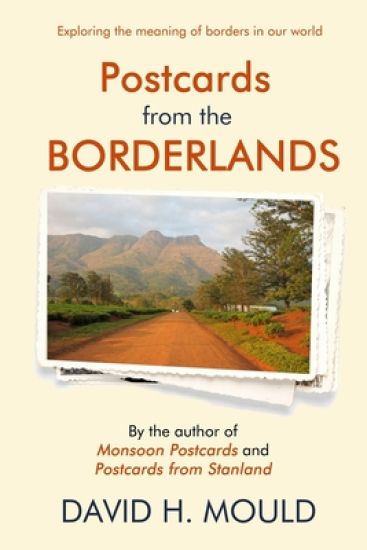
Postcards from the Borderlands

Postcards from the Borderlands

David H. Mould

Open Books Publishing (UK)
2020
nidottu
What are borders? Are they simply political and geographical, marked by posts, walls and fences, or should we think of them more broadly? In his third book on travel, history and culture, college professor, historian and journalist David Mould rambles through a dozen countries in Asia and southern Africa by car, bus, train, shared taxi and ferry, exploring what borders mean to their peoples. Many countries are the artificial creations of colonial powers. Their borders, set by surveys and treaties, took no account of topography or the ethnic groups that were cobbled together. There are also borders within countries, defined by race, ethnicity, or caste. Borders may be physical and economic, even perceptual-the borders of our minds. On his travels, David faces shakedowns by border guards, finds old-time religion in Malawi, revisits the legacy of apartheid in Johannesburg, traverses the rivers of Bangladesh, wanders through the ancient kingdoms of Nepal, explores Malaysia's troubled colonial past, sets off security alarms in Karachi, counts yaks and discovers dinosaurs on the Mongolian steppe, savors the cuisine of Georgia and fulfills a Dr. Zhivago fantasy on the Trans-Siberian Railway.
Monsoon Postcards

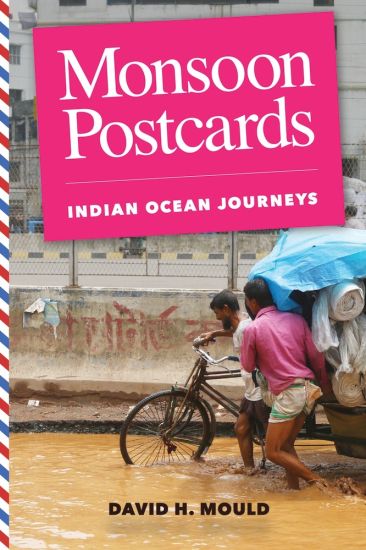
Monsoon Postcards

David H. Mould

Ohio University Press
2019
sidottu
In Monsoon Postcards, journalist David H. Mould, notebook in hand, traverses the Indian Ocean-from Madagascar through India and Bangladesh to Indonesia. It’s an unpredictable journey on battered buses, bush taxis, auto-rickshaws, and crowded ferries. Mould travels from the traffic snarls of Delhi, Dhaka, and Jakarta to the rice paddies and ancestral tombs of Madagascar’s Central Highlands; from the ancient kingdom of Hyderabad to India’s so-called chicken neck-the ethnically diverse and underdeveloped northeast; and from the textile factories and rivers of Bangladesh to the beaches of Bali and the province of Aceh-ground zero for the 2004 tsunami. Along the way, in markets, shops, roadside cafes, and classrooms, he meets journalists, professors, students, aid workers, cab drivers, and other everyday residents to learn how they view their past and future. Much like its predecessor, Mould’s Postcards from Stanland, Monsoon Postcards offers witty and insightful glimpses into countries linked by history, trade, migration, religion, and a colonial legacy. It explores how they confront the challenges of climate change, urban growth, economic development, land, water and natural resources, and national and ethnic identity.
Postcards from Stanland

Postcards from Stanland

David H. Mould

Ohio University Press
2016
pokkari
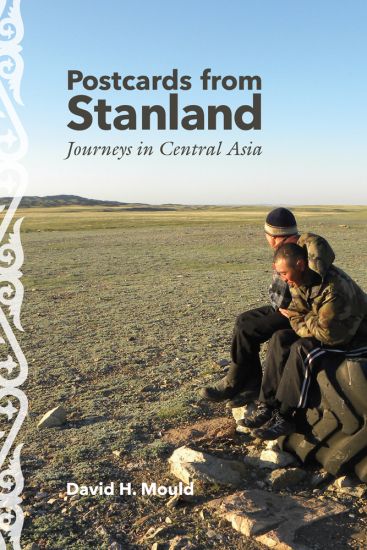
Central Asia has long stood at the crossroads of history. It was the staging ground for the armies of the Mongol Empire, for the nineteenth-century struggle between the Russian and British empires, and for the NATO campaign in Afghanistan. Today, multinationals and nations compete for the oil and gas reserves of the Caspian Sea and for control of the pipelines. Yet “Stanland” is still, to many, a terra incognita, a geographical blank. Beginning in the mid-1990s, academic and journalist David Mould’s career took him to the region on Fulbright Fellowships and contracts as a media trainer and consultant for UNESCO and USAID, among others. In Postcards from Stanland, he takes readers along with him on his encounters with the people, landscapes, and customs of the diverse countries-Kazakhstan, Kyrgyzstan, Tajikistan, and Uzbekistan-he came to love. He talks with teachers, students, politicians, environmental activists, bloggers, cab drivers, merchants, Peace Corps volunteers, and more. Until now, few books for a nonspecialist readership have been written on the region, and while Mould brings his own considerable expertise to bear on his account-for example, he is one of the few scholars to have conducted research on post-Soviet media in the region-the book is above all a tapestry of place and a valuable contribution to our understanding of the post-Soviet world.
Postcards from Stanland

Postcards from Stanland

David H. Mould

Ohio University Press
2016
sidottu
Central Asia has long stood at the crossroads of history. It was the staging ground for the armies of the Mongol Empire, for the nineteenth-century struggle between the Russian and British empires, and for the NATO campaign in Afghanistan. Today, multinationals and nations compete for the oil and gas reserves of the Caspian Sea and for control of the pipelines. Yet “Stanland” is still, to many, a terra incognita, a geographical blank. Beginning in the mid-1990s, academic and journalist David Mould’s career took him to the region on Fulbright Fellowships and contracts as a media trainer and consultant for UNESCO and USAID, among others. In Postcards from Stanland, he takes readers along with him on his encounters with the people, landscapes, and customs of the diverse countries-Kazakhstan, Kyrgyzstan, Tajikistan, and Uzbekistan-he came to love. He talks with teachers, students, politicians, environmental activists, bloggers, cab drivers, merchants, Peace Corps volunteers, and more. Until now, few books for a nonspecialist readership have been written on the region, and while Mould brings his own considerable expertise to bear on his account-for example, he is one of the few scholars to have conducted research on post-Soviet media in the region-the book is above all a tapestry of place and a valuable contribution to our understanding of the post-Soviet world.
Catching Stories

Catching Stories

Donna M. DeBlasio; Charles F. Ganzert; David H. Mould; Stephen H. Paschen; Howard L. Sacks

Swallow Press
2009
sidottu
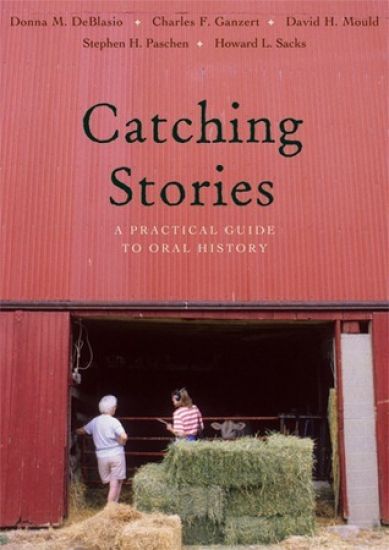
In neighborhoods, schools, community centers, and workplaces, people are using oral history to capture and collect the kinds of stories that the history books and the media tend to overlook: stories of personal struggle and hope, of war and peace, of family and friends, of beliefs, traditions, and values—the stories of our lives. Catching Stories: A Practical Guide to Oral History is a clear and comprehensive introduction for those with little or no experience in planning or undertaking oral history projects. Opening with the key question, "Why do oral history?" the guide outlines the stages of a project from idea to final product—planning and research, the interviewing process, basic technical principles, and audio and video recording techniques. The guide covers interview transcribing, ethical and legal issues, archiving, funding sources, and sharing oral history with audiences. Intended for teachers, students, librarians, local historians, and volunteers as well as individuals, Catching Stories is the place to start for anyone who wants to document the memories and collect the stories of community or family.
Catching Stories

Catching Stories

Donna M. DeBlasio; Charles F. Ganzert; David H. Mould; Stephen H. Paschen; Howard L. Sacks

Swallow Press
2009
pokkari
In neighborhoods, schools, community centers, and workplaces, people are using oral history to capture and collect the kinds of stories that the history books and the media tend to overlook: stories of personal struggle and hope, of war and peace, of family and friends, of beliefs, traditions, and values—the stories of our lives. Catching Stories: A Practical Guide to Oral History is a clear and comprehensive introduction for those with little or no experience in planning or undertaking oral history projects. Opening with the key question, "Why do oral history?" the guide outlines the stages of a project from idea to final product—planning and research, the interviewing process, basic technical principles, and audio and video recording techniques. The guide covers interview transcribing, ethical and legal issues, archiving, funding sources, and sharing oral history with audiences. Intended for teachers, students, librarians, local historians, and volunteers as well as individuals, Catching Stories is the place to start for anyone who wants to document the memories and collect the stories of community or family.