Kirjojen hintavertailu – 12 859 829 kirjaa ja 27 kauppaa

Kirjailija

David H. Weaver

Kirjat ja teokset yhdessä paikassa: 10 kirjaa, julkaisuja vuosilta 1990–2017, suosituimpiin kuuluu The Formation of Campaign Agendas. Vertaile teosten hintoja ja tarkista saatavuus suomalaisista kirjakaupoista.

10 kirjaa

Kirjojen julkaisuvuodet: 1990–2017.

The Formation of Campaign Agendas

The Formation of Campaign Agendas

Holli A. Semetko; Jay G. Blumler; Michael Gurevitch; David H. Weaver; Steve Barkin

Routledge
2011
nidottu
This unusual volume seeks to accomplish three related goals: * to assess the extent and limits of media power in election campaigns * to extend the concept of media agenda-setting to include the contributions of powerful news sources in the process of election agenda formation * to evaluate the impact of national system variables (differences in political and media systems) on the balance of party and media forces in the formation of campaign agendas In the process, it searches for ways of measuring the discretionary power of the media in electoral politics, testing this in terms of the relative ability of journalists and politicians to shape election campaign agendas.

The Formation of Campaign Agendas

The Formation of Campaign Agendas

Holli A. Semetko; Jay G. Blumler; Michael Gurevitch; David H. Weaver; Steve Barkin

Routledge Member of the Taylor and Francis Group
1990
sidottu
This unusual volume seeks to accomplish three related goals: * to assess the extent and limits of media power in election campaigns * to extend the concept of media agenda-setting to include the contributions of powerful news sources in the process of election agenda formation * to evaluate the impact of national system variables (differences in political and media systems) on the balance of party and media forces in the formation of campaign agendas In the process, it searches for ways of measuring the discretionary power of the media in electoral politics, testing this in terms of the relative ability of journalists and politicians to shape election campaign agendas.
The American Journalist in the Digital Age

The American Journalist in the Digital Age

Lars Willnat; David H. Weaver; G. Cleveland Wilhoit

Peter Lang Publishing Inc
2017
sidottu
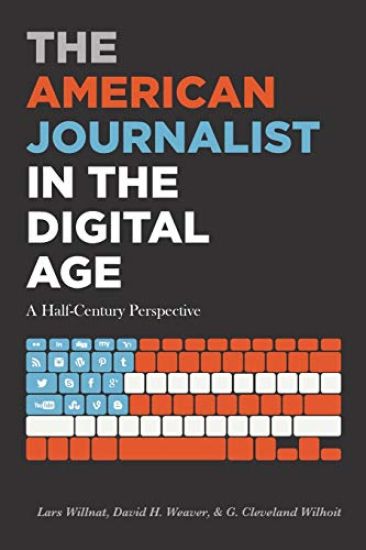
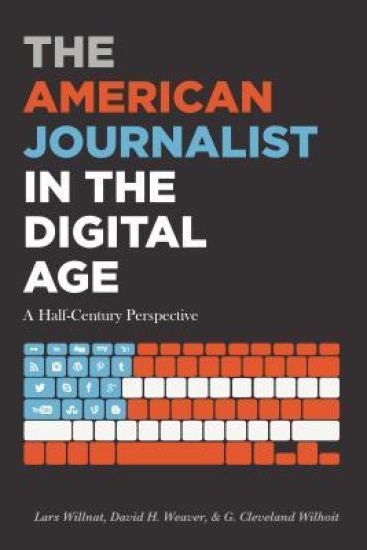
More than a decade has passed since the last comprehensive survey of U. S. journalists was carried out in 2002 by scholars at Indiana University—and the news and the journalists who produce it have undergone dramatic changes and challenges. The American Journalist in the Digital Age is based on interviews with a national probability sample of nearly 1,100 U. S. journalists in the fall of 2013 to document the tremendous changes that have occurred in U. S. journalism in the past decade, many of them due to the rise of new communication technologies and social media. This survey of journalists updates the findings from previous studies and asks new questions about the impact of new technologies and social media in the newsroom, and it includes more nontraditional online journalists than the previous studies.
The American Journalist in the Digital Age

The American Journalist in the Digital Age

Lars Willnat; David H. Weaver; G. Cleveland Wilhoit

Peter Lang Publishing Inc
2017
nidottu
More than a decade has passed since the last comprehensive survey of U. S. journalists was carried out in 2002 by scholars at Indiana University—and the news and the journalists who produce it have undergone dramatic changes and challenges. The American Journalist in the Digital Age is based on interviews with a national probability sample of nearly 1,100 U. S. journalists in the fall of 2013 to document the tremendous changes that have occurred in U. S. journalism in the past decade, many of them due to the rise of new communication technologies and social media. This survey of journalists updates the findings from previous studies and asks new questions about the impact of new technologies and social media in the newsroom, and it includes more nontraditional online journalists than the previous studies.
Videotex Journalism

Videotex Journalism

David H. Weaver

Routledge
2017
nidottu
Originally published in 1983. Videotex technology (the capacity to deliver computer-stored textual information and graphics electronically to the home television screen) was becoming widespread in the 1980s. This book looks at how this affected journalists and other news media and how the flow of news existed in society at the time. Based on observations and interviews with journalists, the book addresses technological, political and economic questions as well as provides a concise description of teletext and viewdata systems in various countries. The findings presented offer a fascinating view of the opinions and actions of journalists working in the 1980s, not only on teletext systems. For example questionnaire results are presented on how journalists saw the role of their job and what actions they felt appropriate, such as hidden cameras and phone taps. These issues of greater Comparisons with news in printed newspapers are also made and the book ends with recommendations for changes in reporting practices, finances and regulation at the time.
Videotex Journalism

Videotex Journalism

David H. Weaver

Routledge
2015
sidottu
Originally published in 1983. Videotex technology (the capacity to deliver computer-stored textual information and graphics electronically to the home television screen) was becoming widespread in the 1980s. This book looks at how this affected journalists and other news media and how the flow of news existed in society at the time. Based on observations and interviews with journalists, the book addresses technological, political and economic questions as well as provides a concise description of teletext and viewdata systems in various countries. The findings presented offer a fascinating view of the opinions and actions of journalists working in the 1980s, not only on teletext systems. For example questionnaire results are presented on how journalists saw the role of their job and what actions they felt appropriate, such as hidden cameras and phone taps. These issues of greater visibility in the 21st Century, make this a fascinating look at the history.
The American Journalist in the 21st Century

The American Journalist in the 21st Century

David H. Weaver; Randal A. Beam; Bonnie J. Brownlee; Paul S. Voakes; G. Cleveland Wilhoit

Routledge Member of the Taylor and Francis Group
2006
sidottu
An authoritative and detailed illustration of the state of journalistic practice in the United States today, The American Journalist in the 21st Century sheds light on the demographic and educational backgrounds, working conditions, and professional and ethical values of print, broadcast, and Internet journalists at the beginning of the 21st century. Providing results from telephone surveys of nearly 1,500 U. S. journalists working in a variety of media outlets, this volume updates the findings published in the earlier report, The American Journalist in the 1990s, and reflects the continued evolution of journalistic practice and professionalism. The scope of material included here is extensive and inclusive, representing numerous facets of journalistic practice and professionalism, and featuring separate analyses for women, minority, and online journalists. Many findings are set in context and compared with previous major studies of U. S. journalists conducted in the 1970s, 80s, and 90s. Serving as a detailed snapshot of current journalistic practice, The American Journalist in the 21st Century offers an intriguing and enlightening profile of professional journalists today, and it will be of great interest and value to working journalists, journalism educators, media managers, journalism students, and others seeking insights into the current state of the journalism profession.
The American Journalist in the 21st Century

The American Journalist in the 21st Century

David H. Weaver; Randal A. Beam; Bonnie J. Brownlee; Paul S. Voakes; G. Cleveland Wilhoit

Routledge Member of the Taylor and Francis Group
2006
nidottu
An authoritative and detailed illustration of the state of journalistic practice in the United States today, The American Journalist in the 21st Century sheds light on the demographic and educational backgrounds, working conditions, and professional and ethical values of print, broadcast, and Internet journalists at the beginning of the 21st century. Providing results from telephone surveys of nearly 1,500 U. S. journalists working in a variety of media outlets, this volume updates the findings published in the earlier report, The American Journalist in the 1990s, and reflects the continued evolution of journalistic practice and professionalism. The scope of material included here is extensive and inclusive, representing numerous facets of journalistic practice and professionalism, and featuring separate analyses for women, minority, and online journalists. Many findings are set in context and compared with previous major studies of U. S. journalists conducted in the 1970s, 80s, and 90s. Serving as a detailed snapshot of current journalistic practice, The American Journalist in the 21st Century offers an intriguing and enlightening profile of professional journalists today, and it will be of great interest and value to working journalists, journalism educators, media managers, journalism students, and others seeking insights into the current state of the journalism profession.
The American Journalist in the 1990s

The American Journalist in the 1990s

David H. Weaver; G. Cleveland Wilhoit

Routledge Member of the Taylor and Francis Group
1996
nidottu
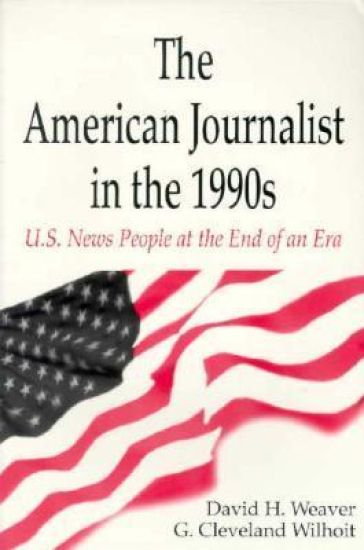
Who are U. S. journalists? What are their backgrounds and educational experiences? Why did they choose journalism as an occupation? What do they think about their work? What are their professional and ethical values? What kinds of work do they consider their best? Do men differ from women on these questions? Do ethnic and racial minorities differ from the majority? Do journalists working for different print and broadcast news media differ? This book uses findings from the most comprehensive and representative study ever done of the demographic and educational backgrounds, working conditions, and professional and ethical values of 1,410 U. S. print and broadcast journalists working in the 1990s to answer these questions, including separate analyses for women and minority news people. It also compares many of these findings with those from the major studies of the early 1970s and 1980s. As such, it should be the standard reference on U. S. journalists for years to come. In addition, this study goes beyond the previous two in adding more open-ended questions to explain and enrich quantitative findings, in the belief that the numbers by themselves are not enough to provide explanations for the patterns that emerge. This book includes more of the journalists' own words to fill this gap, as well as an analysis of samples of their self-selected best work.
The American Journalist in the 1990s

The American Journalist in the 1990s

David H. Weaver; G. Cleveland Wilhoit

Routledge Member of the Taylor and Francis Group
1996
sidottu
Who are U. S. journalists? What are their backgrounds and educational experiences? Why did they choose journalism as an occupation? What do they think about their work? What are their professional and ethical values? What kinds of work do they consider their best? Do men differ from women on these questions? Do ethnic and racial minorities differ from the majority? Do journalists working for different print and broadcast news media differ? This book uses findings from the most comprehensive and representative study ever done of the demographic and educational backgrounds, working conditions, and professional and ethical values of 1,410 U. S. print and broadcast journalists working in the 1990s to answer these questions, including separate analyses for women and minority news people. It also compares many of these findings with those from the major studies of the early 1970s and 1980s. As such, it should be the standard reference on U. S. journalists for years to come. In addition, this study goes beyond the previous two in adding more open-ended questions to explain and enrich quantitative findings, in the belief that the numbers by themselves are not enough to provide explanations for the patterns that emerge. This book includes more of the journalists' own words to fill this gap, as well as an analysis of samples of their self-selected best work.