Kirjailija
David Hancock
Kirjat ja teokset yhdessä paikassa: 26 kirjaa, julkaisuja vuosilta 1975–2020, suosituimpiin kuuluu Kent. Vertaile teosten hintoja ja tarkista saatavuus suomalaisista kirjakaupoista.
26 kirjaa
Kirjojen julkaisuvuodet: 1975–2020.
A new and updated Pathfinder(R) walking guide to Kent featuring 28 circular rambles clearly arranged by length and grade, visiting orchards, fields and churches, and areas from Westerham and Sandwich to Dover and the Isle of Sheppey - with all walks accompanied by GPS waypoints, Ordnance Survey maps and colour photography
Cosplay and the Art of Play
Garry Crawford; David Hancock
Springer Nature Switzerland AG
2020
nidottu
This book is an introduction to cosplay as a subculture and community, built around playful spaces and the everyday practices of crafting costumes, identities, and performances. Drawing on new and original ethnographic data, as well as the innovative use of arts-led research, this book adds to our understanding of a popular, global cultural practice. In turn, this pushes forward our understanding of play, fan practices, subcultures, practice-led research, and uses of urban spaces. Cosplay and the Art of Play offers a significant addition to key contemporary debates on the meaning and uses of popular culture in the 21st century, and will be of importance to students and scholars interested in communities, fandom, identity, leisure, participatory cultures, performance, and play.
Why, since the financial crisis of 2008, has neoliberal capitalism remained seemingly impregnable? Why, when it is shown as no longer capable of delivering on its economic promises does its logic pervade all facets of contemporary life? How has it seduced us? This book examines the seductive appeal of neoliberalism by understanding it as a fundamentally counter-cultural logic. Unlike earlier modes of capitalism, neoliberalism is infused by spirit of rebellion and self-creation, with the idealised neoliberal subject overturning traditional morality whilst creating new modes of being based on risk and excess. Tracing the development of the logic of neoliberalism from its beginnings in the thought of Friedrich Hayek in the wake of the post-war period, through the work of neoconservative writers overcoming and moving beyond what they perceived as the nihilism of both the counter-culture and capitalism of the 1960s and 70s, to its establishment as a new moral order underpinning the economic system from the 1980s onwards, the author argues that it is only through a clear understanding of the seduction of neoliberalism that it can be overcome by reimagining our relationships to work and society.
Cosplay and the Art of Play
Garry Crawford; David Hancock
Springer Nature Switzerland AG
2019
sidottu
This book is an introduction to cosplay as a subculture and community, built around playful spaces and the everyday practices of crafting costumes, identities, and performances. Drawing on new and original ethnographic data, as well as the innovative use of arts-led research, this book adds to our understanding of a popular, global cultural practice. In turn, this pushes forward our understanding of play, fan practices, subcultures, practice-led research, and uses of urban spaces. Cosplay and the Art of Play offers a significant addition to key contemporary debates on the meaning and uses of popular culture in the 21st century, and will be of importance to students and scholars interested in communities, fandom, identity, leisure, participatory cultures, performance, and play.
Why, since the financial crisis of 2008, has neoliberal capitalism remained seemingly impregnable? Why, when it is shown as no longer capable of delivering on its economic promises does its logic pervade all facets of contemporary life? How has it seduced us? This book examines the seductive appeal of neoliberalism by understanding it as a fundamentally counter-cultural logic. Unlike earlier modes of capitalism, neoliberalism is infused by spirit of rebellion and self-creation, with the idealised neoliberal subject overturning traditional morality whilst creating new modes of being based on risk and excess. Tracing the development of the logic of neoliberalism from its beginnings in the thought of Friedrich Hayek in the wake of the post-war period, through the work of neoconservative writers overcoming and moving beyond what they perceived as the nihilism of both the counter-culture and capitalism of the 1960s and 70s, to its establishment as a new moral order underpinning the economic system from the 1980s onwards, the author argues that it is only through a clear understanding of the seduction of neoliberalism that it can be overcome by reimagining our relationships to work and society.
85 incredible walks through Britain’s beautiful landscape. In this boxed collection of walking cards you’ll find a happy mix of routes around Britain’s loveliest towns and countryside. The 70 walking cards are filled with unique half-day circular routes, as well as one and two-day walks. Each card has a different route fully described and illustrated on a large scale, 1:25 000 map and include our highly recommended, nearby charming places to stay. * Inspirational walks on handy, pocket size cards * Year-round walks specially designed for all seasons * Box includes transparent sleeve so if it rains you can pop the walking card into the sleeve to protect it from the elements * Recommended charming places to stay are included with each walking route so you can combine a great walk with a truly memorable overnight stop * A selection of easy half-day walks as well as some more challenging two-day routes * Ideal for visitors and adventurous locals Pocket a card, leave the box on your bookshelf and enjoy a glorious day out on foot.
The general perception amongst most project and risk managers that we can somehow control the future is, says David Hancock, one of the most ill-conceived in risk management. The biggest problem is how to measure risks in terms of their potential likelihood, their possible consequences, their correlation and the public's perception of them. The situation is further complicated by identifying different categories of problem types; Tame problems (straight-forward simple linear causal relationships and can be solved by analytical methods), and 'messes' which have high levels of system complexity and have interrelated or interdependent problems needing to be considered holistically. However, when an overriding social theory or social ethic is not shared the project or risk manager also faces 'wickedness'. Wicked problems are characterised by high levels of behavioural complexity, but what confuses real decision-making is that behavioural and dynamic complexities co-exist and interact in what is known as wicked messes. Tame, Messy and Wicked Risk Leadership will help professionals understand the limitations of the present project and risk management techniques. It introduces the concepts of societal benefit and behavioural risk, and illustrates why project risk has followed a particular path, developing from the basis of engineering, science and mathematics. David Hancock argues for, and offers, complimentary models from the worlds of sociology, philosophy and politics to be added to the risk toolbox, and provides a framework to understand which particular type of problem (tame, messy, wicked or messy and wicked) may confront you and which tools will provide the greatest potential for successful outcomes. Finally he introduces the concept of 'risk leadership' to aid the professional in delivering projects in a world of uncertainty and ambiguity. Anyone who has experienced the pain and blame of projects faced with overruns of time or money, dissatisfied stakeholders or
Dogs of the Shepherds is a book for all those who admire the most valuable of all the working dogs, the pastoral breeds: sheepdogs, cattle dogs and flock protection dogs, the indispensable farmer's servants and companion dogs for thousands of proud dog-owners across the globe. Painstakingly researched and packed with information, this book is not a manual covering training, grooming, nutrition and dog care; it is very much a reflective review of the pastoral dogs' contribution to the working and companion dog scene. It is a searching examination of their past, their performance and their prospects in an increasingly urban society.
Photographing Nudes Prepare yourself The composition.... A brilliant book for new & old photographers, models or people looking at exploring artistic or nude photographic or concept work. In a world of software manipulation programs, technical perfection and megapixel madness, have we forgotten the purpose of shooting? Surely story telling is the key and composition should reign supreme. "Throw away the rule book, your expensive lights and the computer for a while, stop being the same as everyone else and get back to basics. We are all being trained the same way and chasing a perfection that is laced with software manufacturers ideals and protocols. New or old to photography or nude figure work, this is the perfect book to get you started and gives some great examples and hints of what to watch out for. Featuring some of David's stunning work from the Bodyscape Series, the book shows off a number of images synonymous with his refreshing and at times raw style.
This book is about sporting terriers, that much-loved, quintessentially British, quite admirable group of dogs, favoured for centuries by the more humble type of hunter. Sporting Terriers is not a manual covering training, grooming, nutrition and dog care; it is a celebration of terriers' contribution to the sporting scene, an examination of their form, their function and their future in an increasingly urban society.
British gundogs, terriers, hounds and especially sheepdogs are used and held in high regard wherever working dogs are employed, and Border Collie stock from Britain is to be found wherever sheep are worked by 'strong-eyed' dogs. Inevitably, however, some old breeds have disappeared and, regrettably, many more may follow. In this book David Hancock describes the working dogs of Britain down the ages, the extinct and the extant, uncovering the development of the various modern breeds and highlighting the changes which have taken place in their appearance.
Public Drinking in the Early Modern World Vol 1
Thomas E Brennan; B Ann Tlusty; Beat Kumin; David Hancock; Michelle McDonald
Routledge
2011
sidottu
This four-volume reset edition presents a wide-ranging collection of primary sources which uncover the language and behaviour of local and state authorities, of peasants and town-dwellers, and of drinking companions and irate wives.
Public Drinking in the Early Modern World Vol 3
Thomas E Brennan; B Ann Tlusty; Beat Kumin; David Hancock; Michelle McDonald
Routledge
2011
sidottu
This four-volume reset edition presents a wide-ranging collection of primary sources which uncover the language and behaviour of local and state authorities, of peasants and town-dwellers, and of drinking companions and irate wives.
Public Drinking in the Early Modern World Vol 2
Thomas E Brennan; B Ann Tlusty; Beat Kumin; David Hancock; Michelle McDonald
Routledge
2011
sidottu
This four-volume reset edition presents a wide-ranging collection of primary sources which uncover the language and behaviour of local and state authorities, of peasants and town-dwellers, and of drinking companions and irate wives.
Public Drinking in the Early Modern World Vol 4
Thomas E Brennan; B Ann Tlusty; Beat Kumin; David Hancock; Michelle McDonald
Routledge
2011
sidottu
This four-volume reset edition presents a wide-ranging collection of primary sources which uncover the language and behaviour of local and state authorities, of peasants and town-dwellers, and of drinking companions and irate wives.
The general perception amongst most project and risk managers that we can somehow control the future is, says David Hancock, one of the most ill-conceived in risk management. The biggest problem is how to measure risks in terms of their potential likelihood, their possible consequences, their correlation and the public's perception of them. The situation is further complicated by identifying different categories of problem types; Tame problems (straight-forward simple linear causal relationships and can be solved by analytical methods), and 'messes' which have high levels of system complexity and have interrelated or interdependent problems needing to be considered holistically. However, when an overriding social theory or social ethic is not shared the project or risk manager also faces 'wickedness'. Wicked problems are characterised by high levels of behavioural complexity, but what confuses real decision-making is that behavioural and dynamic complexities co-exist and interact in what is known as wicked messes. Tame, Messy and Wicked Risk Leadership will help professionals understand the limitations of the present project and risk management techniques. It introduces the concepts of societal benefit and behavioural risk, and illustrates why project risk has followed a particular path, developing from the basis of engineering, science and mathematics. David Hancock argues for, and offers, complimentary models from the worlds of sociology, philosophy and politics to be added to the risk toolbox, and provides a framework to understand which particular type of problem (tame, messy, wicked or messy and wicked) may confront you and which tools will provide the greatest potential for successful outcomes. Finally he introduces the concept of 'risk leadership' to aid the professional in delivering projects in a world of uncertainty and ambiguity. Anyone who has experienced the pain and blame of projects faced with overruns of time or money, dissatisfied stakeholders or basic failure, will welcome this imaginative reframing of some aspects of risk management. This is a book that has implications for the risk management processes, culture, and outcomes, of large and complex projects of all kinds.

A lavish pictorial reference for the identification, distribution and habitats of all the major mammal species of the Rocky Mountains from British Columbia to Alberta.
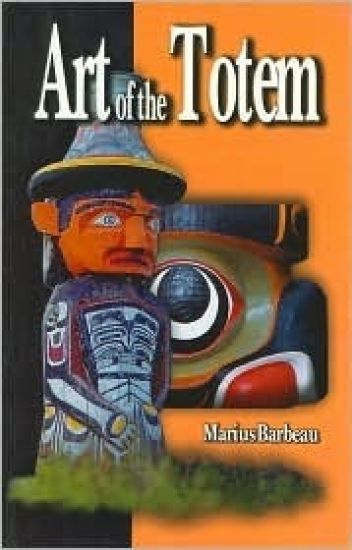
Majestic spires, reminders of the ages past, the carved figures of totem poles pierce the coastal forests. First written as an obscure U. S. government publication in 1932, renowned Canadian anthropologist Marius Barbeau's classic work on the history of the development and significance of Northwest Coast totem pole art is now updated with beautiful colour photographs.
Indian Tribes of the Northwest
David Hancock; Reg Ashwell
HANCOCK HOUSE PUBLISHERS LTD ,CANADA
2006
pokkari
Describes the diverse and colourful Indian nations of the Northwest Coast of North America. This book highlights the rich tapestries of Native cultural beliefs and traditions.
The Tlingit form a distinct ethnic and linguistic group of the Koluschan stock. Koluschan is from the Russian kalyushka, meaning piece of wood (worn in the nether lip). They occupy a compact geographical area along the Pacific coast from about Mount St Elias to the Nass River, and including Sitka and the other adjacent islands of the Alexander Archipelago. The chief tribes are the Chilcat, Stikine and Yakutat. They are essentially a seafaring people and today work in the salmon industries. Prior to the deterioration suffered from contact with the white race they were the foremost traders of the Northwest.