Kirjojen hintavertailu – 12 903 735 kirjaa ja 27 kauppaa

Kirjailija

David Hicks

Kirjat ja teokset yhdessä paikassa: 15 kirjaa, julkaisuja vuosilta 2002–2026, suosituimpiin kuuluu 300 Daily Lightamins. Vertaile teosten hintoja ja tarkista saatavuus suomalaisista kirjakaupoista.

15 kirjaa

Kirjojen julkaisuvuodet: 2002–2026.

Financial Investigation and Financial Intelligence

Financial Investigation and Financial Intelligence

Craig Hughes; David Hicks

TAYLOR FRANCIS LTD
2026
nidottu
This book critically analyses the conceptual understanding of financial investigation and financial intelligence among UK law enforcement authorities and their commentators. The work provides a critical review of financial investigation, including international standards, and how it is perceived and applied by law enforcement agencies. It adopts the position that financial investigation is an evidence-gathering process and not simply related to asset recovery. Here, the concept of “following the money” is superseded by the wider approach of “following the financial footprint” by generalist and specialist investigators and analysts. The book focuses on identifying the financial footprint as a skill set for routine investigation application inclusive of the emerging threat posed by the digital environment, including cryptocurrencies. It assesses the terminology, typologies and structures associated with the subject area at the national and international levels. It also examines the historical trajectory of financial investigation to understand current perceptions of it within law enforcement, among government ministers and policy makers. The book will be of interest to students, academics and policy makers internationally working in the areas of criminal law, criminology and finance.
Financial Investigation and Financial Intelligence

Financial Investigation and Financial Intelligence

Craig Hughes; David Hicks

TAYLOR FRANCIS LTD
2024
sidottu
This book critically analyses the conceptual understanding of financial investigation and financial intelligence among UK law enforcement authorities and their commentators. The work provides a critical review of financial investigation, including international standards, and how it is perceived and applied by law enforcement agencies. It adopts the position that financial investigation is an evidence-gathering process and not simply related to asset recovery. Here, the concept of “following the money” is superseded by the wider approach of “following the financial footprint” by generalist and specialist investigators and analysts. The book focuses on identifying the financial footprint as a skill set for routine investigation application inclusive of the emerging threat posed by the digital environment, including cryptocurrencies. It assesses the terminology, typologies and structures associated with the subject area at the national and international levels. It also examines the historical trajectory of financial investigation to understand current perceptions of it within law enforcement, among government ministers and policy makers. The book will be of interest to students, academics and policy makers internationally working in the areas of criminal law, criminology and finance.
The Magic Ticket

The Magic Ticket

David Hicks

FULCRUM PUBLISHING
2024
pokkari
When his beloved sister dies and his parents are too grief-stricken to attend to him, a little boy must figure out on his own how to process what has happened. When he visits his local library and a kind librarian hands him a “magic ticket,” he finds an unexpected sanctuary in the world of books. Could reading be the gateway to understanding, and coping with, such a devastating loss? David Hicks (author) and Kateri Kramer (illustrator) have created a tender and moving tale of loss, grief, and the healing power of storytelling, “a love letter to story, to books, and to libraries as a space to nourish both mind and heart” (Maria Mayo, Anythink Libraries). Recommended for ages six and seven, and for grown-ups everywhere whose childhoods, like that of the author, were forever changed by the death of a loved one.
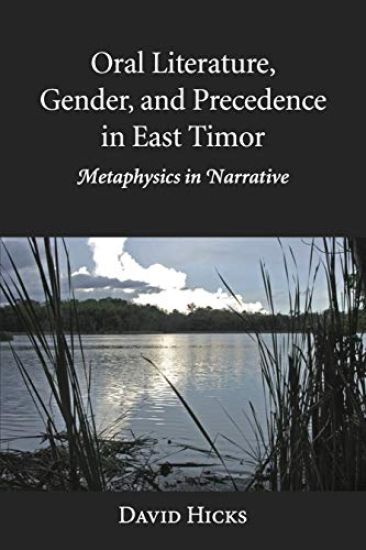
Oral Literature, Gender, and Precedence in East Timor
Decades of war, social upheaval and political change have not lessened the enduring interest of the people of East Timor (Timor-Leste) in their oral traditions, something they share with their neighbors in the eastern islands of Indonesia. Although oral literature continues to occupy a central place in Timorese cultures, new forms of expression are emerging (for instance via published fiction and in social media). Nonetheless, the corpus of Timorese oral narrative largely retains an underlying metaphysical unity. Among others, it continues to express indigenous notions about gender and precedence - two important sociocultural markers that are among the most prominent topics currently under discussion by scholars of the region today. What has yet to be done, however, is to bring Timorese oral narratives into mainstream social science scholarship by subjecting them to a rigorous scholarly analysis. That is the purpose of this masterly study by the veteran Timor scholar, David Hicks. Drawing upon more than a half century of fieldwork and publishing, he discusses the tropes found in and illuminating Timorese metaphysical thought and literature. No other work has discussed these tropes before nor indeed attempted to discern patterns of thought in Timorese narratives. Certainly, the study will be of interest to scholars of literature, social science, structural analysis, Indonesian cultures and philosophy, as well as to those interested in the country's colonial past and in efforts to conserve its natural environment. The book should also appeal to educated citizens of Timor-Leste; here is a work illuminating how future aspirations might be grounded in a common heritage.
Oral Literature, Gender, and Precedence in East Timor
Decades of war, social upheaval and political change have not lessened the enduring interest of the people of East Timor (Timor-Leste) in their oral traditions, something they share with their neighbours in the eastern islands of Indonesia. Although oral literature continues to occupy a central place in Timorese cultures, new forms of expression are emerging (for instance via published fiction and in social media). Nonetheless, the corpus of Timorese oral narrative largely retains an underlying metaphysical unity. Among others, it continues to express indigenous notions about gender and precedence - two important sociocultural markers that are among the most prominent topics currently under discussion by scholars of the region today. What has yet to be done, however, is to bring Timorese oral narratives into mainstream social science scholarship by subjecting them to a rigorous scholarly analysis. That is the purpose of this masterly study by the veteran Timor scholar, David Hicks. Drawing upon more than a half century of fieldwork and publishing, he discusses the tropes found in and illuminating Timorese metaphysical thought and literature. No other work has discussed these tropes before nor indeed attempted to discern patterns of thought in Timorese narratives. Certainly, the study will be of interest to scholars of literature, social science, structural analysis, Indonesian cultures and philosophy, as well as to those interested in the country's colonial past and in efforts to conserve its natural environment. The book should also appeal to educated citizens of Timor-Leste; here is a work illuminating how future aspirations might be grounded in a common heritage.
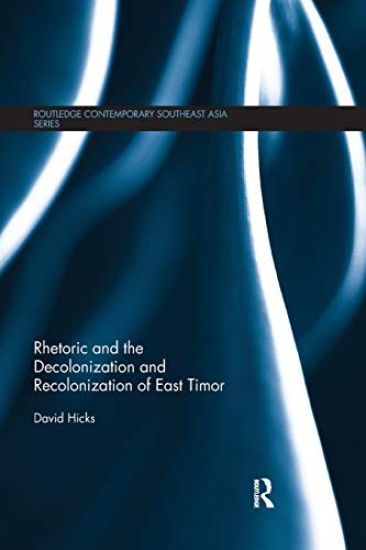
Rhetoric and the Decolonization and Recolonization of East Timor
By the end of the 1960s the process of decolonization had practically run its course in Southeast Asia. One exception, however, was tiny Portuguese Timor, where notions of self-determination and independence had yet to be generated. In 1974, the Carnation Revolution in Portugal brought about the end of fifty years of dictatorship, and halfway around the world, presented a new opportunity to a small, ambitious proportion of the Timorese population, eager to shape the future of their country. This book presents a compelling and original perspective on the critical period of 1974-1975 in the history of East Timor. It describes how the language of politics helped to shape the events that brought about the decolonization of Portuguese Timor, its brief independence as The Democratic Republic of East Timor, and its recolonization by an Asian neighbour. Further, it challenges the idea that this period of history was infused by the spirit of nationalism in which the majority Timorese partook, and which contended with other competing western –isms, including colonialism, communism, neo-colonialism, and fascism. In contrast, the book argues that the Timorese majority had little understanding of any of these alien political abstractions and that the period can be most effectively explained and understood in terms of the contrast between the political culture of Dili, the capital, and the political culture of the rest of the country. In turn, David Hicks highlights how the period of 1974-1975 can offer lessons to government and international policy-makers alike who are trying to bring about a transformation in governance from the traditional to the legal and convert individuals from peasants to citizens. The result of extensive fieldwork and interviews, this book will be of interest to students and scholars of Southeast Asian studies, international relations, post-conflict studies and post-colonial studies.

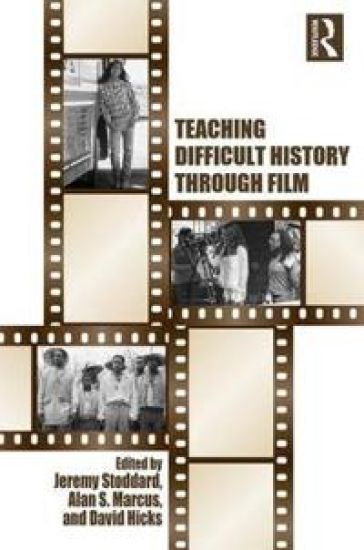
Teaching Difficult History through Film

Teaching Difficult History through Film

Jeremy Stoddard; Alan Marcus; David Hicks

Routledge
2017
nidottu
Teaching Difficult History through Film explores the potential of film to engage young people in controversial or contested histories and how they are represented, ranging from gender and sexuality, to colonialism and slavery. Adding to the education literature of how to teach and learn difficult histories, contributors apply their theoretical and pedagogical expertise and experiences to a variety of historical topics to show the ways that film can create opportunities for challenging conversations in the classroom and attempts to recognize the perspectives of historically marginalized groups. Chapters focus on translating research into practice by applying theoretical frameworks such as critical race theory, auto-ethnography or cultural studies, as well as more practical pedagogical models with film. Each chapter also includes applicable pedagogical considerations, such as how to help students approach difficult topics, model questions or strategies for engaging students, and examples from the authors’ own experiences in teaching with film or in leading students to develop counter-narratives through filmmaking. These discussions of the real considerations facing classroom teachers and professors are sure to appeal to experienced secondary teachers, pre-service teacher education programs, graduate students, and academic audiences within education, history, and film studies. Part and chapter discussion guides, full references of the films included in the book, and resources for teachers are available on the book’s companion website www.teachingdifficulthistory.com.
Teaching Difficult History through Film

Teaching Difficult History through Film

Jeremy Stoddard; Alan Marcus; David Hicks

Routledge
2017
sidottu
Teaching Difficult History through Film explores the potential of film to engage young people in controversial or contested histories and how they are represented, ranging from gender and sexuality, to colonialism and slavery. Adding to the education literature of how to teach and learn difficult histories, contributors apply their theoretical and pedagogical expertise and experiences to a variety of historical topics to show the ways that film can create opportunities for challenging conversations in the classroom and attempts to recognize the perspectives of historically marginalized groups. Chapters focus on translating research into practice by applying theoretical frameworks such as critical race theory, auto-ethnography or cultural studies, as well as more practical pedagogical models with film. Each chapter also includes applicable pedagogical considerations, such as how to help students approach difficult topics, model questions or strategies for engaging students, and examples from the authors’ own experiences in teaching with film or in leading students to develop counter-narratives through filmmaking. These discussions of the real considerations facing classroom teachers and professors are sure to appeal to experienced secondary teachers, pre-service teacher education programs, graduate students, and academic audiences within education, history, and film studies. Part and chapter discussion guides, full references of the films included in the book, and resources for teachers are available on the book’s companion website www.teachingdifficulthistory.com.
White Plains

White Plains

David Hicks

BOWER HOUSE
2017
nidottu
Flynn Hawkins is a graduate assistant at a prestigious university, on his way to greatness and wisdom. But in the aftermath of 9/11, Flynn leaves his unhappy marriage and beloved children, resigns his teaching position and heads west, only to get lost in his guilt and in the mountains of Colorado. When he ends up stuck overnight in a snow drift during a blizzard on the Continental Divide, he realizes he needs to remake himself into the kind of man his children need him to be. With wit and insight, David Hicks turns a compassionate but unblinking eye on what it means to be human--to be lost while putting yourself back together again, to be cowardly while being brave, to fail and fail again on the way to something that might be success.
Lessons for the Future

Lessons for the Future

David Hicks

Routledge
2015
nidottu
Drawing on the latest research in futures studies, this book provides new insights into ways of helping both students and teachers think more critically and creatively about their own future and that of wider society. It acknowledges the crucial role of education in helping young people understand the nature of local and global change and the social and environmental impacts such change will have on their future. Setting out a clear educational rationale for promoting global and futures perspective in education, it provides helpful and stimulating examples of futures-orientated classroom activities. It also includes fascinating research into children's views of the future.
Rhetoric and the Decolonization and Recolonization of East Timor
By the end of the 1960s the process of decolonization had practically run its course in Southeast Asia. One exception, however, was tiny Portuguese Timor, where notions of self-determination and independence had yet to be generated. In 1974, the Carnation Revolution in Portugal brought about the end of fifty years of dictatorship, and halfway around the world, presented a new opportunity to a small, ambitious proportion of the Timorese population, eager to shape the future of their country. This book presents a compelling and original perspective on the critical period of 1974-1975 in the history of East Timor. It describes how the language of politics helped to shape the events that brought about the decolonization of Portuguese Timor, its brief independence as The Democratic Republic of East Timor, and its recolonization by an Asian neighbour. Further, it challenges the idea that this period of history was infused by the spirit of nationalism in which the majority Timorese partook, and which contended with other competing western –isms, including colonialism, communism, neo-colonialism, and fascism. In contrast, the book argues that the Timorese majority had little understanding of any of these alien political abstractions and that the period can be most effectively explained and understood in terms of the contrast between the political culture of Dili, the capital, and the political culture of the rest of the country. In turn, David Hicks highlights how the period of 1974-1975 can offer lessons to government and international policy-makers alike who are trying to bring about a transformation in governance from the traditional to the legal and convert individuals from peasants to citizens. The result of extensive fieldwork and interviews, this book will be of interest to students and scholars of Southeast Asian studies, international relations, post-conflict studies and post-colonial studies.

Lessons for the Future

Lessons for the Future

David Hicks

Routledge
2002
sidottu
Drawing on the latest research in futures studies, this book provides new insights into ways of helping both students and teachers think more critically and creatively about their own future and that of wider society. It acknowledges the crucial role of education in helping young people understand the nature of local and global change and the social and environmental impacts such change will have on their future. Setting out a clear educational rationale for promoting global and futures perspective in education, it provides helpful and stimulating examples of futures-orientated classroom activities. It also includes fascinating research into children's views of the future.