Kirjojen hintavertailu – 12 859 824 kirjaa ja 27 kauppaa
Kirjailija
David Hopkins
Kirjat ja teokset yhdessä paikassa: 57 kirjaa, julkaisuja vuosilta 1986–2026, suosituimpiin kuuluu John Dryden. Vertaile teosten hintoja ja tarkista saatavuus suomalaisista kirjakaupoista.
First Published in 2001. This is the second edition of this school’s improvement handbook of staff development activities by the IQEA (Improving Education for All) project. This book is not about what changes should be introduced into a school but rather about creating the conditions for supporting those changes which schools or individuals believe should be introduced. To be effective at managing change schools and teachers need to modify the internal conditions of the school at the same time as introducing changes in teaching or curriculum. The book therefore provides ideas and materials to help colleagues in school to create such conditions and suggests a strategic approach.
FINALIST SELF HELP Next Generation Indie Book Award 2016 FINALIST SELF HELP USA News Award 2015 We all have a built in weapon system that we rarely use, it's called anxiety. We are taught that anxiety is something to avoid. That emotional experiences such as fear, trepidation, or stress, are contrary to living a happy life. We are also told that in threatening situations, anxiety should be quelled. This is not true. Realize that a key to success in a threatening situation is to use your anxiety to increase your sensory input with information vital to your survival. Understand how to manipulate the anxiety of your aggressor, denying him critical information he will need for success. Whether you are a college student, a martial artist, a parent, or a citizen, you will learn three constants that will help you stay safer and reduce your overall risk of being victimized by aggression. *How your instincts are the key to making the right decisions for the toughest challenges.*Why your anxiety is the link between decision-making and instinct.* How to be completely in the moment, so your will can coordinate your anxieties and your instincts into a highly effective decision-making process. David Hopkins brings together a unique mix of expertise from professions in psychology and psychotherapy, martial arts, security and anti-terror. He will provide a practical, proven and effective system for enhancing any martial arts or self-defense system. Whether facing potential or active threats, either real time or online, you will learn to protect yourself and your family more effectively. You will be given practical exercises for developing these skills and examples from my own experiences in close protection/security, anti-terror, and undercover work using this same system. When you finish with this book, you will be more effective and more successful at facing a physical or mental enemy, no matter how large or small that may be.
10 stories about odd encounters and personal exploration: A young man in search of meaning connects with his dead girlfriend's son. A group of men in Wisconsin start a poetry group while waiting for their favorite bar to be rebuilt. A woman discovers her husband has been hiding a secret. He also wants to rob a bank. A basketball player continually relives the last six seconds of his worst game. An amateur chess player encounters greatness. A girl attempts to leave a small town. But before she goes, she learns the story of one who stayed. These stories span a variety of genres, technical approaches, and perspectives-one story is a parody, another is written entirely as a series of conversations, one story is a family melodrama, another is a contemplation of pro sports and time travel. ""This 10-month project, which turned into a two-year project, represents what I love most about short stories: the opportunity to experiment and play, to expand a condensed world.""
10 stories about odd encounters and personal exploration: A young man in search of meaning connects with his dead girlfriend's son. A group of men in Wisconsin start a poetry group while waiting for their favorite bar to be rebuilt. A woman discovers her husband has been hiding a secret. He also wants to rob a bank. A basketball player continually relives the last six seconds of his worst game. An amateur chess player encounters greatness. A girl attempts to leave a small town. But before she goes, she learns the story of one who stayed.
Technology has invaded our working and recreational lives to an extent that few envisaged 20 or 30 years ago. We'd be fools to avoid the developments in personal, mobile, and wearable technology. Even if we tried we'd still have to deal with other developments and distractions in classroom and learning technology like smart boards, blogs, video, games, students-led learning, virtual learning environments, social media, etc. More than this, however, is how the advances in technology, the economic and physical miniaturisation of computing devices, have impacted education: the students, the teachers, the classrooms, the spaces, the connections, the aspirations, etc.'The Really Useful #EdTechBook' is about experiences, reflections, hopes, passions, expectations, and professionalism of those working with, in, and for the use of technology in education. Not only is it an insight into how, or why, we work with these technologies, it's about how we as learning professionals got to where we are and how we go forward with our own development. In this book respected individuals from different education sectors write about many aspects of learning technology; from Higher Education (Sue Beckingham, Peter Reed, Dr David Walker, Sheila MacNeil, Terese Bird, Wayne Barry, Inge de Waard, and Sharon Flynn), Further Education (Rachel Challen), to Museums (Zak Mensah), workplace learning (Julian Stodd, Julie Wedgwood, and Lesley Price) and primary schools / early years education (Mike McSharry). With a foreword written by Catherine Cronin, from the National University Ireland, Galway, the breadth and depth of the experiences here are second to none. The knowledge these leading learning practitioners, researchers, and professionals, share, under the same cover, is a unique opportunity for you to read about the variety of approaches to learning technology, the different perspectives on the same technology, and how technology is impacting our culture and learning infrastructure, from early-age classrooms to leading research Universities and from museums and workplace learning providers. It is about our passion for our work and our desire to make our work better through our own learning and development. Contributory authors: Catherine Cronin: ForewordDavid Hopkins: IntroductionWayne Barry: "...and what do you do?" Can we explain the unexplainable? Zak Mensah: "Why do we do what we do?" Peter Reed: "The structure and roles of Learning Technologists within Higher Education Institutions"Rachel Challen: "Learning Technologists as agents of change? Blending policy and creativity"Julie Wedgwood: "Developing the skills and knowledge of a Learning Technologist"Dr David Walker and Sheila MacNeill: "Learning Technologist as Digital Pedagogue"Lesley Price: "Times they are a changing ...or not?" Sue Beckingham: "The Blended Professional: Jack-of-all-Trades and Master of Some?" Julian Stodd: "How gadgets help us learn"Terese Bird: "Students Leading the Way in Mobile Learning Innovation"Inge de Waard: "Tech Dandy, or the Art of Leisure Learning"Sharon Flynn: "Learning Technologists: changing the culture or preaching to the converted?" Mike McSharry: "This is your five-minute warning "
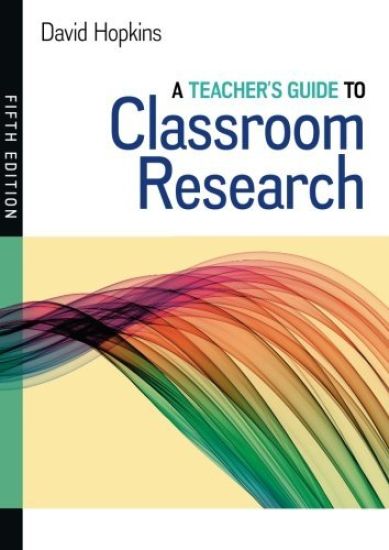
A Teacher's Guide to Classroom Research 5E is a great 'one-stop' guide for trainee or qualified teachers looking to undertake classroom research. Through its friendly, supportive and authoritative approach, A Teacher's Guide to Classroom Research 5E tackles the big issues and questions of education research and offers a clear framework for doing classroom research. The updated fifth edition retains all the features that have made it so popular over the past thirty years - such as a rich range of insightful case studies demonstrating successful classroom research in practice - whilst offering expanded coverage of research methods and techniques. Key features include:How to get started on classroom researchThe principles and methods of classroom research for professional learning Interpreting and analyzing data Reporting classroom researchLinking to teaching and learningWhether you are a trainee teacher undertaking some form of classroom-based research as an essential element of your teacher training course, or a qualified teacher doing research to explore and improve your practice, this classic and seminal text guides and supports you throughout the entire process from initial research idea to final dissemination.
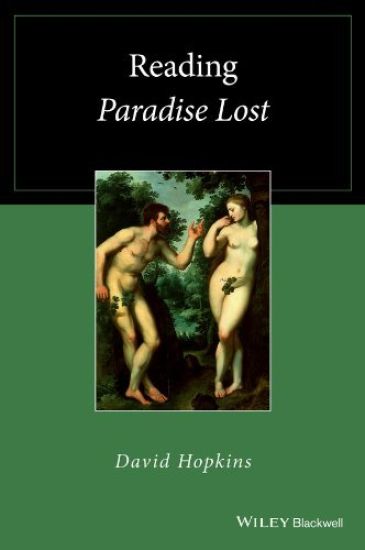
Reading Paradise Lost “This lucid and entirely jargon-free guide to Paradise Lost will help any reader of the poem to find their feet, and to understand what makes it the best poem in the English language. Hopkins has one, and only one, resemblance to Milton’s Satan, which is that he can make intricate seem straight.” Colin Burrow, Oxford University“This is the best introduction to Paradise Lost there is, suitable for the intelligent sixth-former or undergraduate, or the enquiring general reader outside the academy – or indeed anyone who cares about poetry. It is also a joy to read, indeed a real page-turner – and of how many academic books can one say that?” Charles Martindale, Bristol UniversityConcise enough to be assimilated in a single session, this short volume maps the wonders of Milton’s poetic landscape. The book offers an exploration of some of the main narrative and poetic elements of the epic poem – qualities which have compelled and fascinated readers for more than three centuries. The author, a celebrated authority on English poetry of the period, engages with (and attempts to counter) some of the critical arguments that impede readers’ enjoyment of the poem. This volume emphasizes the aesthetic experience of reading Paradise Lost and brings out the pleasure to be derived from one of the great literary achievements of humanity.
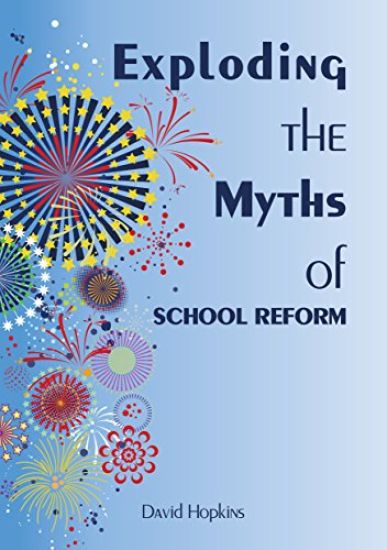
In his latest educational exposé, internationally acclaimed author and scholar, Professor David Hopkins, places established and emerging ideas about effective school and system improvement under scrutiny. Exploding the Myths of School Reform confronts real-world challenges and perspectives from research, policy and practice, and draws on international benchmarking studies to support its objectives and claims. With each of ten chapters addressing a perceptible fallacy--such as the myths that poverty determines performance, that achievement cannot be achieved at scale, that innovation and networking always add value and that it is curriculum rather than learning that counts--this ground-breaking manifesto is set to provoke and persuade.
Reading Paradise Lost “This lucid and entirely jargon-free guide to Paradise Lost will help any reader of the poem to find their feet, and to understand what makes it the best poem in the English language. Hopkins has one, and only one, resemblance to Milton’s Satan, which is that he can make intricate seem straight.” Colin Burrow, Oxford University“This is the best introduction to Paradise Lost there is, suitable for the intelligent sixth-former or undergraduate, or the enquiring general reader outside the academy – or indeed anyone who cares about poetry. It is also a joy to read, indeed a real page-turner – and of how many academic books can one say that?” Charles Martindale, Bristol UniversityConcise enough to be assimilated in a single session, this short volume maps the wonders of Milton’s poetic landscape. The book offers an exploration of some of the main narrative and poetic elements of the epic poem – qualities which have compelled and fascinated readers for more than three centuries. The author, a celebrated authority on English poetry of the period, engages with (and attempts to counter) some of the critical arguments that impede readers’ enjoyment of the poem. This volume emphasizes the aesthetic experience of reading Paradise Lost and brings out the pleasure to be derived from one of the great literary achievements of humanity.
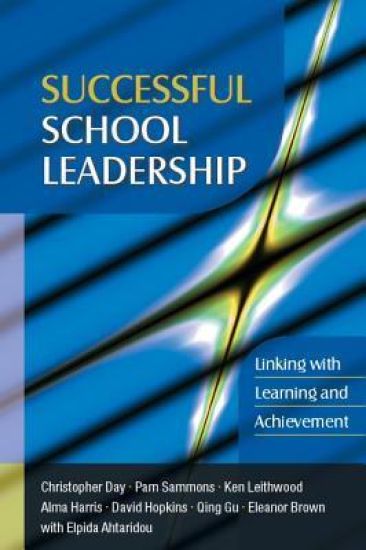
This book is based on the largest and most extensive empirical study of contemporary leadership in primary and secondary schools in England. The results demonstrate that heads of successful schools improve the quality of student learning and achievement through who they are – their values, virtues, dispositions and competencies – as well as their timely use of change and improvement strategies. Successful School Leadership provides a comprehensive analysis of the values and qualities of head teachers. It assesses the strategies they use and how they adapt these to their particular school context in order to ensure positive increases in the learning, well being and achievement of their students. The authors:Identify a basic set of leadership practices resulting from their findings Analyse and describe the leadership values, qualities and behaviours related to different phases in schools’ improvement journeysProvide illustrative case studies of primary and secondary schools that highlight context sensitive strategies Provide a contemporary overview of international research and thinking about successful school leadershipRecognize similar and distinguishing features between schools in different socio-economic groupsThis book is valuable reading for…school leaders and senior teachers, educational policy makers and advisors, as well as anyone involved or interested in education and its leadership.
Conversing with Antiquity collects, in a substantially revised and updated form, studies, by one of the leading scholars in the field, of the reception of the classics by English poets of the seventeenth and eighteenth centuries. A new Introduction locates the book's investigations within the context of current debates between aestheticians and cultural historians about the reception of classical culture. Where some recent studies have regarded English poets' dealings with the classics as acts of 'appropriation', or even 'colonialization', David Hopkins emphasizes the element of dialogic give-and-take in the relationship between these poets and their classical peers. He argues that, rather than simply 'updating' or 'assimilating' the classics to their own cultural norms, poets such as Abraham Cowley, Lucy Hutchinson, Thomas Creech, John Milton, John Dryden, and Alexander Pope engaged in trans-historical conversation with Greek and Roman poets, in which self-discovery and self-transcendence were as important as any simple 'accommodation' of ancient texts to modern tastes.
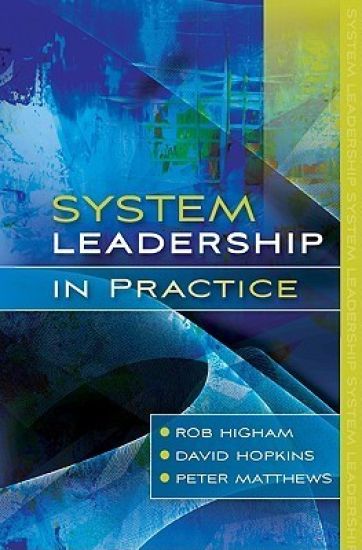
"With all the current interest in system reform and the spread of leadership, System Leadership in Practice is the only book in existence that treats the topic thoroughly and with insight. The authors have written a gem - a book that presents clear conceptual clarity linked to case after case example. They answer the burning question, how can we establish multi-faceted leadership that produces deep and sustained effectiveness." Michael Fullan, Professor Emeritus of the Ontario Institute for Studies in Education at the University of Toronto"Leaders at all levels in schools and elsewhere in the public sector will readily engage with the issues and examples discussed in this book, and through doing so will understand more fully the new professional environment within which they work." Learning and Teaching UpdateSystem leadership is a new, exciting and growing phenomenon in education. It refers to leadership that goes beyond a single school, where leaders work directly for the success and welfare of students in other institutions as well as their own. In this inspirational book, the authors offer you new perspectives, support and guidance – whether you are a school leader, policy-maker or advisor – and show how working collaboratively and leading networks can bring about positive change. They encourage you to innovate, develop rigorous partnerships, take managed risks and deploy resources creatively in order to build sustained improvements in student learning and well-being. This much-needed book provides the first in-depth analysis of a term on the lips of many in the educational world. There is detailed reference to real cases of system leadership in practice, as well as recent legislation and relevant literature. At a time when prescription, bureaucracy and targets remain for many an impediment to the aims of education, school-led system leadership is seen to offer a means for professionals to take more control of educational renewal. This book is indispensable reading for school leaders and senior teachers, educational policy makers and advisors, as well as anyone involved or interested in education and its leadership.
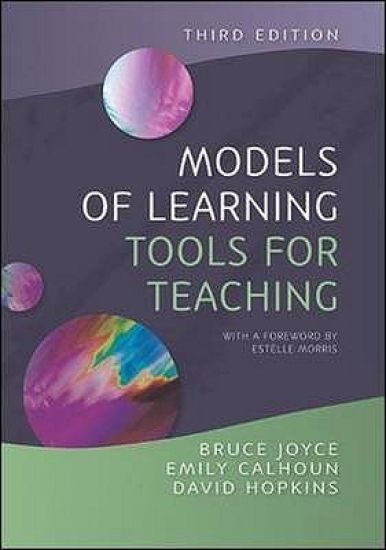
Review of the previous edition: "This powerful book makes many of its points through the use of case studies and examples. Rarely, if ever, has discussion of so wide a variety of approaches to learning been gathered together in a single volume." British Journal of Educational TechnologyThe new edition of this bestselling text provides a comprehensive and accessible introduction to an array of models of teaching and learning. Written in a clear, engaging and accessible style, the authors offer a wide range of teaching strategies that have been developed, polished and studied over the last thirty years. Rather than being formulas to be followed word-for-word, each model draws teachers into the study of how students learn, promoting reflective action research in the classroom. Some of the models have been proven not only to accelerate learning, but also to allow pupils to engage in alternative modes of inquiry, which have been almost impossible to generate through traditional chalk-and-talk teaching. Updated features include: A foreword by Estelle Morris A new chapter on teaching adolescents with disabilities to read A wealth of new scenarios and examples with clear guidelines for implementation A new synectics study New research and illustrations A revised Picture Word Inductive Model Revisions and updates to ten chapters Updated appendix on Peer Coaching Guides Models of Learning, Tools for Teaching is an essential text for trainee teachers, practitioners, advisors, inspectors and teacher educators.
In this provocative and stimulating book, David Hopkins addresses the homosocial structures in Dada and Surrealist art with an eye to their relevance to current artistic and theoretical debate. Bestriding the book is the pivotal figure of the artist Marcel Duchamp, who was at the center of various groups of artistic and literary figures—predominantly male—in Europe and America. And at the heart of the investigation are Duchamp’s relationships with these men, the various interactions of those within the groups, and the impact of this type of male camaraderie on the artworks they produced. Hopkins looks at specific moments in the careers of Duchamp and some of his associates—Francis Picabia, Man Ray, Max Ernst and André Breton—and discusses in detail the reception of Duchamp’s ideas in the post-war period. He goes on to trace the influence of the homosocial nature of Surrealism and Dada on the art world from the 1950s to the work of contemporary male and female artists.