Kirjojen hintavertailu – 12 903 725 kirjaa ja 27 kauppaa

Kirjailija

David Hosaflook

Kirjat ja teokset yhdessä paikassa: 3 kirjaa, julkaisuja vuodelta 2017, suosituimpiin kuuluu The Siege of Shkodra. Vertaile teosten hintoja ja tarkista saatavuus suomalaisista kirjakaupoista.

3 kirjaa

Albania and the Albanians in the Annual Reports of the British and Foreign Bible Society, 1805-1955
This book is a compilation of all the information about the Albanians in the annual reports of the British and Foreign Bible Society (BFBS). The BFBS was established in 1804, at the onset of an era of unprecedented Protestant missionary expansion across the globe. Because the foundational pillar of Protestantism is "Sola Scriptura" (the Bible alone is the final authority for faith and practice), the first objective of Protestant missions was making the Bible available globally. The Bible Society had a limited focus (it would publish the text of the Scriptures alone, without any accompanying notes or comments) but an unlimited vision (it aimed to publish Bibles in every language possible). It was a massive, privately funded, nondenominational Christian organization that asked one essential question when contemplating whether or not to engage with a particular nation: "Do the people there have Bibles in their mother tongue that they can read for themselves?" In its first one hundred years, the British and Foreign Bible Society translated, printed, or distributed Scriptures in an astounding 412 of the world's languages-an average of four new languages per year. Remarkably, the Albanian language became a focus of the BFBS was early as 1816, just twelve years after the BFBS was established. Albanian was approximately the twentieth project the BFBS undertook. When the BFBS entered Albanian history, there was no Albanian Bible or New Testament available to the people. This is almost incredible when considering the many centuries of Roman Catholic and Eastern Orthodox Christian influence in Albanian territories. The publication of an Albanian New Testament in 1827 was a triumph for the Albanian people and became a standard text for foreign linguists studying Albanian, putting the language on the world's linguistic map. Between 1827 and 1908 alone, the British and Foreign Bible Society printed approximately 55,000 copies of the Albanian Scriptures, in both Gheg and Tosk, in twenty-seven unique editions. The society translated and published all the books of the New Testament and several books from the Old Testament. Perhaps more significantly, they took the initiative to distribute the books among the Albanian people, amidst extremely harsh circumstances and the opposition of religious and political leaders. Each year the BFBS printed a detailed annual report about its work all over the world. The information in the reports was intended to be a condensed summary of the Society's work, as reported by its workers. The Albanians were first mentioned in the 1817 report and were mentioned in nearly every successive report until 1955. This resource is a compilation of material, extracted from the annual reports, about Albania and the Albanians, but it also contains information about other nations insofar as such information assists readers to understand the context and progress of the Albanian work in the context of the Ottoman Balkans. Because the BFBS began its work for the Albanian Bible at the beginning of the nineteenth century and continued working intensely until the communist era, its reports are useful as a running historical commentary and chronology of Albanian conditions predating the Albanian National Awakening and extending well beyond Albania's emergence as an independent nation. As demonstrated by the lengthy index in the back of this book, the extracts herein contain information about a wide breadth of topics and will serve historians and linguists as a fascinating reference work. This book's primary value, however, is to readers who wish to understand the long and adventurous story of how the Albanians received and started reading the Bible in their own dialect, and how something so simple became so significant to Albania's national cause.
The Siege of Shkodra

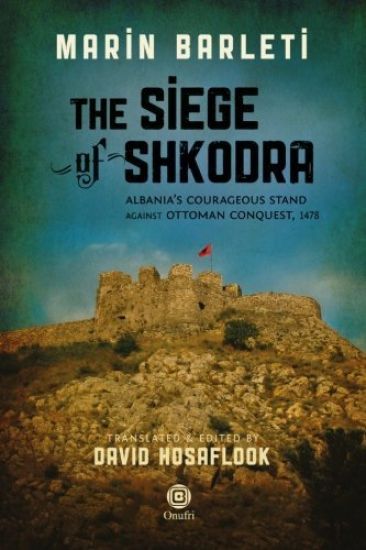
The Siege of Shkodra

David Hosaflook; Ismail Kadare; David Abulafia

Createspace Independent Publishing Platform
2017
nidottu
The first English translation of an eyewitness account of the Ottoman sieges of Shkodra (Albania) in 1474 and 1478-79, written by a besieged Shkodran citizen who fought in the battles and would later become a priest in ItalyThe book is considered both history and literature, written in classical Latin in 1504 for a Western audience concerned about the advance of the Ottomans into the heart of Europe. It is considered by scholars to be a seminal source of history providing significant details about the Balkans, the Ottoman Empire, the Republic of Venice, the Albanians, Sultan Mehmed II "The Conqueror," religious conflict, late-medieval siege tactics, and the development of weaponry. Though the account is history, it unfolds as a gripping story with all the human drama and pathos that accompanies warfare. Inside are rousing speeches, intense battle scenes, passionate prayers, and counsel for future generations. Barleti and his contemporaries considered Shkodra to be the shield of Europe (indeed this was the final great battle before the Ottomans attacked Otronto in 1480). Barleti's work comprises only 50% of the work, as this edition includes supplemental material such a brief foreword by Ismail Kadare, a historical preface by Prof. David Abulafia, the original introduction by Prof. Aleks Buda, "The War of Shkodra" ("Bellum Scodrense") by George Merula, a panegyric to the Venetian Senate by Marin Be ikemi, passages from Ottoman chroniclers about the siege (A. Pashazade, Tursun, Kivami, Idris-i Bidlisi, K. Pashazade), and new maps and historical commentary by translator-editor David Hosaflook. MINI-REVIEWS"If one were to search for a literary creation wholly worthy of the expression 'monumental work, ' it would be hard to find a better example than 'The Siege of Shkodra' by Marin Barleti ... It earned monumentality throughout the centuries ... This is what happens with the great books, the ones that enter the world as grand testimonies. The siege of Shkodra is the final act of a tragedy that would not only alter the face of Albania, but also of all the Balkans and a portion of the continent for nearly six hundred years.-ISMAIL KADARE, renown and revered Albanian author "David Hosaflook has brought vividly back to life an extraordinary chapter from the history of the fifteenth century--a gripping eyewitness account of the Albanian resistance to the advance of the Ottomans into the heart of Europe. Their defense of Shkodra was as heroic and thrilling as the better-known siege of Malta. Barleti's narrative does it full justice, and Hosaflook's translation is both scholarly and highly readable."-ROGER CROWLEY, best-selling author of Mediterranean narrative history such as Empires of the Sea and City of Fortune" "I felt like Howard Carter peering into the tomb of King Tut for the first time when I started reading Hosaflook's masterful new translation of the epic story recounted by Barleti. Beautifully crafted and painstakingly researched, the work fills an important gap and provides unique and compelling new scholarship in the field of Renaissance history."-KIRSTIN DOWNEY, former Washington Post reporter, historical biographer, and author of books such as "The Woman Behind the New Deal: The Life and Legacy of Frances Perkins" and "Isabella: The Warrior Queen." "The Ottoman Empire spread into southeastern Europe, with the banners of Islam looming on the horizon. One of the key moments of this expansion, and a turning point in Albanian history, was the siege of Shkodra in the late fifteenth century. We would know little of the dramatic events were it not for historian Marin Barleti. His account (1504) is a seminal source of Balkan history. The English-speaking reader can now finally savour this gripping tale, in the flowing rendition of David Hosaflook."-ROBERT ELSIE, author and specialist in Albanian studies
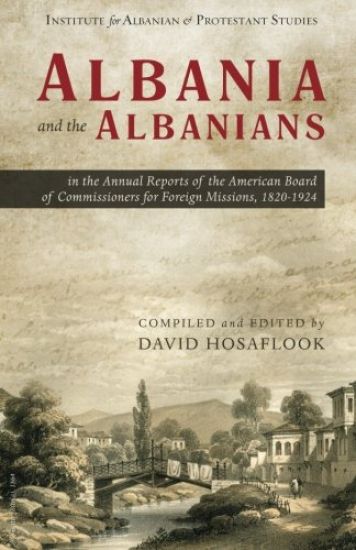
Albania and the Albanians in the Annual Reports of the American Board of Commissioners for Foreign Missions, 1820-1924
The American Board of Commissioners for Foreign Missions was America's first great Protestant missionary society and played a significant role in establishing the Albanian Evangelical Protestant Movement in the late 1800s, a movement with both a religious and educational emphasis. Each year the ABCFM held an annual meeting at a prominent city in America to discuss their progress all over the world. After the meeting they printed a detailed annual report with selected information. The Albanians are first mentioned in these reports, in passing, in 1827. Again they are mentioned in 1852 and again in 1859. From 1872-1924 they are mentioned in nearly every successive report. This resource is a compilation of portions from the ABCFM's annual reports concerning its work with Albanians. The American missionaries' efforts unfolded in the context of great political and social changes in the Ottoman Empire and the Balkans; therefore, this work also contains information about other nations insofar as such information assists readers to understand the evolution of missionary work among the Albanians. As missionaries established their presence in a particular location and began working with a particular nationality, they simultaneously set their sights on new locations and learned about peoples still uninformed about the Gospel. They continually made tours to regions beyond their current locations and issued appeals for more funding and more laborers. Their role model was the Apostle Paul, who had heard a "Macedonian call" (cf. New Testament, Acts 16:9-10) and who continually moved on to new areas-such as Illyricum-where the Gospel was not yet being preached (Romans 15:19-20). With such a mindset, it was only a matter of time before the American Board would discover the Albanian people, begin writing about them, and develop strategies to evangelize them. In 1847 missionary statesman Elias Riggs mentioned the Albanians and lamented that Albanian Christians did not have their own liturgical language and were attending church services in ancient Greek. "This very circumstance," he wrote, "has tended to rouse a feeling of nationality, and a desire to cultivate their own language. The nation feels the want of a language for the expression of religious ideas, of which they can comprehend at least something." The Albanian Protestant movement, through its work in producing Albanian Bibles, Albanian language development, Albanian schools, and Albanian preachers, was perceived as an Albanianizing force that helped Albanians withstand attempts to see its territories fragmented and assimilated. Initially the ABCFM's interest in the Albanian people developed indirectly, under the auspices of its mission stations nearest to Albanian-populated territories. In 1873 the ABCFM sent American missionary families to Monastir (Bitola) and made contact with a young Albanian, Gerasim Kyrias. The missionaries mentored Kyrias and educated him in their schools in Monastir and Samokov, Bulgaria. The ABCFM also educated his brother George in Samokov and his sisters Sevasti and Paraskevi in Constantinople. The Kyrias siblings were not only pioneers of the early Albanian Protestant movement but also pioneers of Albanian education, especially female education. In 1890 Gerasim was ordained as Albania's first Protestant preacher. In 1891 Gerasim and Sevasti went to Kortcha and founded one of the first Albanian schools for girls. That same year Gerasim founded the first Albanian Evangelical Church. A year later an Evangelical Brotherhood was formed, "having as its sole object the development of the Albanian language and the extension of the knowledge of the Gospel." This chronological overview is an important starting point for those seeking to understand the evolution of the American Board in the Ottoman Balkans and its contributions to Albania's language and culture.