Kirjojen hintavertailu – 12 903 735 kirjaa ja 27 kauppaa

Kirjailija

David Hulme

Kirjat ja teokset yhdessä paikassa: 12 kirjaa, julkaisuja vuosilta 1996–2016, suosituimpiin kuuluu Challenging Global Inequality. Vertaile teosten hintoja ja tarkista saatavuus suomalaisista kirjakaupoista.

12 kirjaa

Kirjojen julkaisuvuodet: 1996–2016.

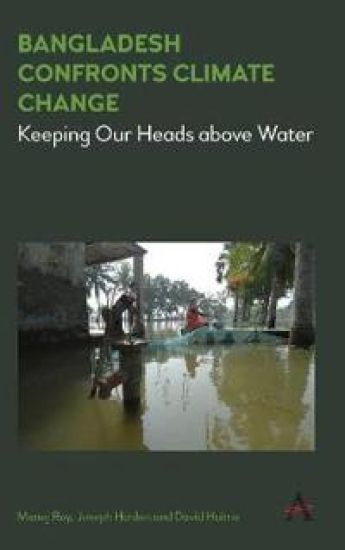
Bangladesh Confronts Climate Change

Bangladesh Confronts Climate Change

Joseph Hanlon; Manoj Roy; David Hulme

Anthem Press
2016
sidottu
Living in a low-lying and densely populated country on the front line of climate change, Bangladeshis are taking a lead in adapting to rising temperatures and campaigning to limit climate change. Global warming will worsen this country's existing environmental problems – causing a rise in sea level, more flooding and stronger, more damaging cyclones. Bangladeshis know what is coming, and how to respond, because they are already effectively combating environmental and social challenges. Cyclone shelters and warning systems have cut the fatality rate dramatically; new varieties of rice have raised nutrition levels; women's education has slowed population growth; land is being raised to respond to sea level rise. Bangladeshis will keep their heads above water, but at huge costs. Will the industrialised countries curb their greenhouse gas emissions and pay for the damage they have already done?
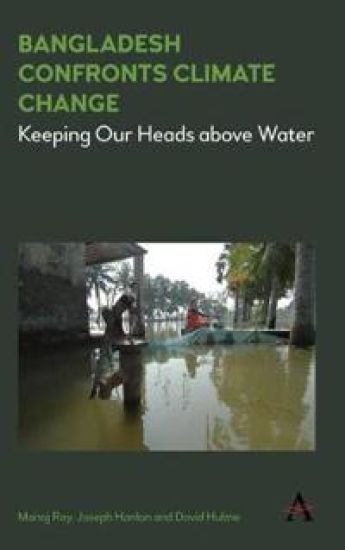
Bangladesh Confronts Climate Change

Bangladesh Confronts Climate Change

Joseph Hanlon; Manoj Roy; David Hulme

Anthem Press
2016
nidottu
Living in a low-lying and densely populated country on the front line of climate change, Bangladeshis are taking a lead in adapting to rising temperatures and campaigning to limit climate change. Global warming will worsen this country's existing environmental problems – causing a rise in sea level, more flooding and stronger, more damaging cyclones. Bangladeshis know what is coming, and how to respond, because they are already effectively combating environmental and social challenges. Cyclone shelters and warning systems have cut the fatality rate dramatically; new varieties of rice have raised nutrition levels; women's education has slowed population growth; land is being raised to respond to sea level rise. Bangladeshis will keep their heads above water, but at huge costs. Will the industrialised countries curb their greenhouse gas emissions and pay for the damage they have already done?
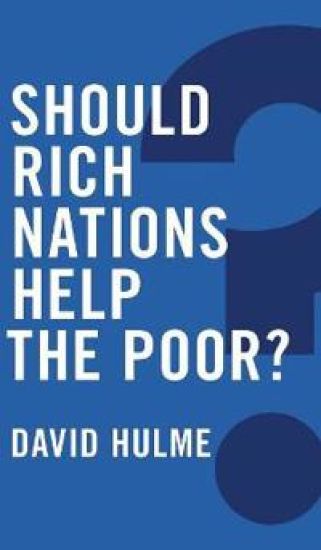
Should Rich Nations Help the Poor?

Should Rich Nations Help the Poor?

David Hulme

Polity Press
2016
nidottu
In the past decade, the developed world has spent almost US$ 2 trillion on foreign aid for poorer countries. Yet 1.2 billion people still live in extreme poverty and around 2.9 billion cannot meet their basic human needs. But should rich nations continue to help the poor? In this short book, leading global poverty analyst David Hulme explains why helping the world’s neediest communities is both the right thing to do and the wise thing to do Ð if rich nations want to take care of their own citizens’ future welfare. The real question is how best to provide this help. The way forward, Hulme argues, is not conventional foreign aid but trade, finance and environmental policy reform. But this must happen alongside a change in international social norms so that we all recognise the collective benefits of a poverty-free world.
Should Rich Nations Help the Poor?

Should Rich Nations Help the Poor?

David Hulme

Polity Press
2016
sidottu
In the past decade, the developed world has spent almost US$ 2 trillion on foreign aid for poorer countries. Yet 1.2 billion people still live in extreme poverty and around 2.9 billion cannot meet their basic human needs. But should rich nations continue to help the poor? In this short book, leading global poverty analyst David Hulme explains why helping the world’s neediest communities is both the right thing to do and the wise thing to do Ð if rich nations want to take care of their own citizens’ future welfare. The real question is how best to provide this help. The way forward, Hulme argues, is not conventional foreign aid but trade, finance and environmental policy reform. But this must happen alongside a change in international social norms so that we all recognise the collective benefits of a poverty-free world.
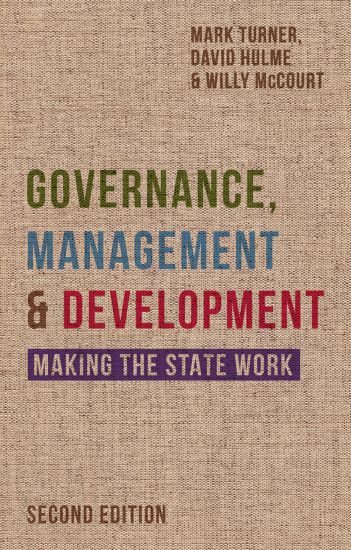
Governance, Management and Development

Governance, Management and Development

David Hulme; Mark Turner; Willy McCourt

Red Globe Press
2015
nidottu
This fully revised edition of the same authors' Governance, Administration and Development is the ideal introduction to public management and the policy process in developing countries. With a new chapter on issues of law and order, it also covers current debates on civil society, aid and intervention, and the relationship of states and markets.
Governance, Management and Development

Governance, Management and Development

David Hulme; Mark Turner; Willy McCourt

Red Globe Press
2015
sidottu
This fully revised edition of the same authors' Governance, Administration and Development is the ideal introduction to public management and the policy process in developing countries. With a new chapter on issues of law and order, it also covers current debates on civil society, aid and intervention, and the relationship of states and markets.
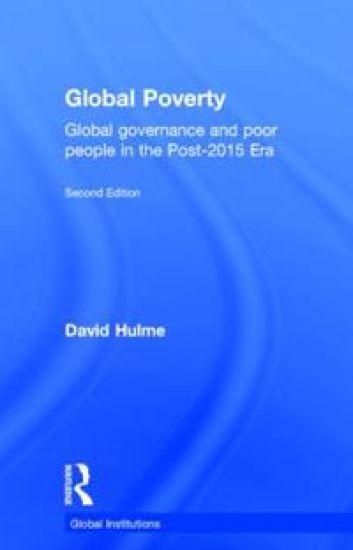
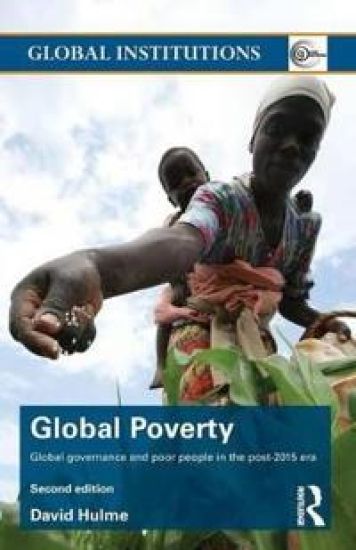
Global Poverty

Global Poverty

David Hulme

Routledge
2015
sidottu
Around 1.4 billion people presently live in extreme poverty, and yet despite this vast scale, the issue of global poverty had a relatively low international profile until the end of the 20th century. In this important new work, Hulme charts the rise of global poverty as a priority global issue, and its subsequent marginalisation as old themes edged it aside (trade policy and peace-making in regions of geo-political importance) and new issues were added (terrorism, global climate change and access to natural resources). Key updates for the new edition:evaluation of the post-2015 Development Agenda and the Rio+20exploration of how Colombia and Brazil are pushing a sustainability agenda as a Southern perspective to challenge the aid focus of OECD post-MDGs interestsexamination and discussion of the gradual shift of power and influence to the BRICs and emerging regional powers (Indonesia, Turkey, South Africa) but the lack of change in global institutionsexploration of Russia’s lack of participation in the development agenda The first book to tackle the issue of global poverty through the lens of global institutions; this fully updated volume provides an important resource for all students and scholars of international relations, development studies and international political economy.
Global Poverty

Global Poverty

David Hulme

Routledge
2015
nidottu
Around 1.4 billion people presently live in extreme poverty, and yet despite this vast scale, the issue of global poverty had a relatively low international profile until the end of the 20th century. In this important new work, Hulme charts the rise of global poverty as a priority global issue, and its subsequent marginalisation as old themes edged it aside (trade policy and peace-making in regions of geo-political importance) and new issues were added (terrorism, global climate change and access to natural resources). Key updates for the new edition:evaluation of the post-2015 Development Agenda and the Rio+20exploration of how Colombia and Brazil are pushing a sustainability agenda as a Southern perspective to challenge the aid focus of OECD post-MDGs interestsexamination and discussion of the gradual shift of power and influence to the BRICs and emerging regional powers (Indonesia, Turkey, South Africa) but the lack of change in global institutionsexploration of Russia’s lack of participation in the development agenda The first book to tackle the issue of global poverty through the lens of global institutions; this fully updated volume provides an important resource for all students and scholars of international relations, development studies and international political economy.
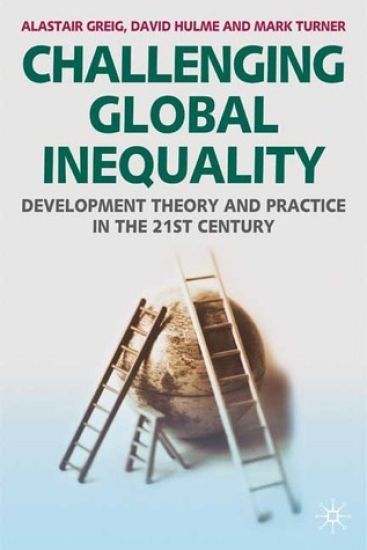
Challenging Global Inequality

Challenging Global Inequality

Alastair Greig; David Hulme; Mark Turner

Red Globe Press
2007
nidottu
This major introductory text written by 3 leading names in the field provides an accessible overview of the challenges faced in overcoming global poverty and inequality in the 21st century. Through an in-depth assessment of development theory and practice, the authors set out to advance two key arguments: the first being the importance of historically contextualizing contemporary developmental problems in order to assess policy proposals; and the second that inequality matters, and how this notion has continually remained a central feature of development debates from colonial times to present day. Ideal for undergraduate students taking development modules as part of political science and international relations degrees, this engaging text proves to be essential reading when exploring the impacts of development on today's international political economy. With each chapter covering inequalities from all different angles, the authors clearly outline the impact of models such as globalization and neoliberalism, as well as offering alternative views on the challenges posed by the UN's Millennium Development Goals. Also available is a companion website with extra features to accompany the text, please take a look by clicking below - https://he.palgrave.com/companion/Greig-Challenging-Global-Inequality/
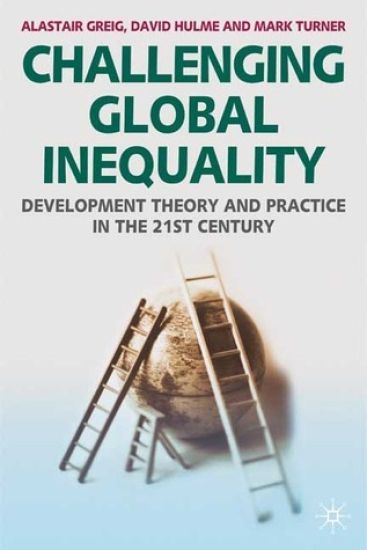
Challenging Global Inequality

Challenging Global Inequality

Alastair Greig; David Hulme; Mark Turner

Red Globe Press
2007
sidottu
This major introductory text written by three leading names in the field provides an accessible overview of the challenges faced in overcoming global poverty and inequality in the twenty-first century. Through an in-depth assessment of development theory and practice, the authors set out to advance two key arguments: the first being the importance of historically contextualizing contemporary developmental problems in order to assess policy proposals; and the second that inequality matters, and how this notion has continually remained a central feature of development debates from colonial times to present day. Ideal for undergraduate students taking development modules as part of Political Science and International Relations degrees, this engaging text proves to be essential reading when exploring the impacts of development on today's international political economy. With each chapter covering inequalities from all different angles, the authors clearly outline the impact of models such as globalization and neoliberalism, as well as offering alternative views on the challenges posed by the UN's Millennium Development Goals. Also available is a companion website with extra features to accompany the text, please take a look by clicking below - https://he.palgrave.com/companion/Greig-Challenging-Global-Inequality/
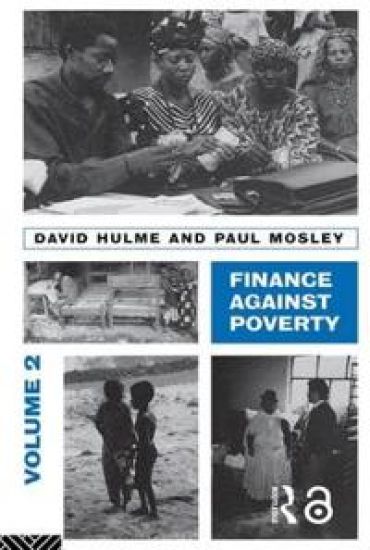
Finance Against Poverty: Volume 2

Finance Against Poverty: Volume 2

David Hulme; Paul Mosley

Routledge
1996
sidottu
Over the last decade, the theory that poverty in the world's poorest regions could be alleviated by providing small loans to micro-entrepreneurs has become increasingly popular. This volume examines the effectiveness of this theory when put into practice. The book presents empirical evidence drawn from comparative experiences in seven developing countries and produces some startling conclusions. This work should be essential reading for all those interested in development, poverty-reduction, social welfare and finance. Volume One provides a detailed analysis of this theory and offers policy recommendations for practitioners in the field.
Finance Against Poverty: Volume 2

Finance Against Poverty: Volume 2

David Hulme; Paul Mosley

Routledge
1996
nidottu
Over the last decade, the theory that poverty in the world's poorest regions could be alleviated by providing small loans to micro-entrepreneurs has become increasingly popular. This volume examines the effectiveness of this theory when put into practice. The book presents empirical evidence drawn from comparative experiences in seven developing countries and produces some startling conclusions. This work should be essential reading for all those interested in development, poverty-reduction, social welfare and finance. Volume One provides a detailed analysis of this theory and offers policy recommendations for practitioners in the field.