
Kirjailija
David I. Kertzer
Kirjat ja teokset yhdessä paikassa: 14 kirjaa, julkaisuja vuosilta 1989–2025, suosituimpiin kuuluu Kidnapping of Edgardo Mortara FTI. Vertaile teosten hintoja ja tarkista saatavuus suomalaisista kirjakaupoista.
Nimi esiintyy myös muodoissa: David I Kertzer
14 kirjaa
Kirjojen julkaisuvuodet: 1989–2025.
Now filmed by Steven Spielberg, starring Mark Rylance as the Pope. The extraordinary story of how the Vatican's imprisonment of a six-year-old Jewish boy helped to bring about the collapse of the popes' worldly power in Italy. Bologna: nightfall, June 1858. A knock sounds at the door of the Jewish merchant Momolo Mortara. Two officers of the Inquisition burst inside and seize Mortara's six-year-old son, Edgardo. As the boy is wrenched from his father's arms, his mother collapses. The reason for his abduction: the boy had been secretly `baptized' by a family servant. According to papal law, the child is therefore a Catholic who can be taken from his family and delivered to a special monastery where his conversion will be completed. With this terrifying scene, prize-winning historian David I. Kertzer begins the true story of how one boy's kidnapping became a pivotal event in the collapse of the Vatican as a secular power. The book evokes the anguish of a modest merchant's family, the rhythms of daily life in a Jewish ghetto, and also explores, through the revolutionary campaigns of Mazzini and Garibaldi and outside leaders like Napoleon III, the emergence of Italy as a modern national state. Moving and informative, The Kidnapping of Edgardo Mortara reads as both a thriller and an authoritative account of a moment that changed Europe forever.

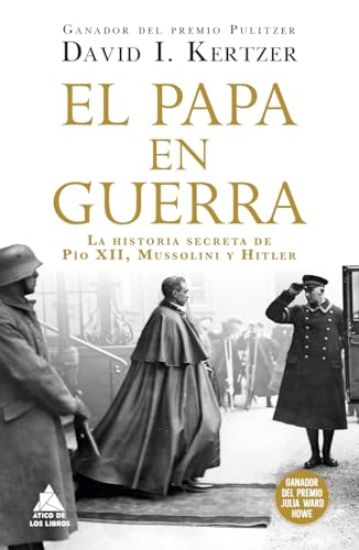
The Pope at War: The Secret History of Pius XII, Mussolini, and Hitler
David I. Kertzer
Random House Trade
2023
nidottu
NEW YORK TIMES BESTSELLER - "The most important book ever written about the Catholic Church and its conduct during World War II."--Daniel Silva "Kertzer brings all of his usual detective and narrative skills to The Pope at War] . . . the most comprehensive account of the Vatican's relations to the Nazi and fascist regimes before and during the war."--The Washington Post"Tolstoyan."--Cynthia Ozick Based on newly opened Vatican archives, a groundbreaking, explosive, and riveting book about Pope Pius XII and his actions during World War II, including how he responded to the Holocaust, by the Pulitzer Prize-winning author of The Pope and Mussolini WINNER OF THE JULIA WARD HOWE AWARD - LONGLISTED FOR THE PEN/JACQUELINE BOGRAD WELD AWARD - A NEW YORKER BEST BOOK OF THE YEAR When Pope Pius XII died in 1958, his papers were sealed in the Vatican Secret Archives, leaving unanswered questions about what he knew and did during World War II. Those questions have only grown and festered, making Pius XII one of the most controversial popes in Church history, especially now as the Vatican prepares to canonize him. In 2020, Pius XII's archives were finally opened, and David I. Kertzer--widely recognized as one of the world's leading Vatican scholars--has been mining this new material ever since, revealing how the pope came to set aside moral leadership in order to preserve his church's power. Based on thousands of never-before-seen documents not only from the Vatican, but from archives in Italy, Germany, France, Britain, and the United States, The Pope at War paints a new, dramatic portrait of what the pope did and did not do as war enveloped the continent and as the Nazis began their systematic mass murder of Europe's Jews. The book clears away the myths and sheer falsehoods surrounding the pope's actions from 1939 to 1945, showing why the pope repeatedly bent to the wills of Hitler and Mussolini. Just as Kertzer's Pulitzer Prize-winning The Pope and Mussolini became the definitive book on Pope Pius XI and the Fascist regime, The Pope at War is destined to become the most influential account of his successor, Pius XII, and his relations with Mussolini and Hitler. Kertzer shows why no full understanding of the course of World War II is complete without knowledge of the dramatic, behind-the-scenes role played by the pope. "This remarkably researched book is replete with revelations that deserve the adjective 'explosive, '" says Kevin Madigan, Winn Professor of Ecclesiastical History at Harvard University. "The Pope at War is a masterpiece."
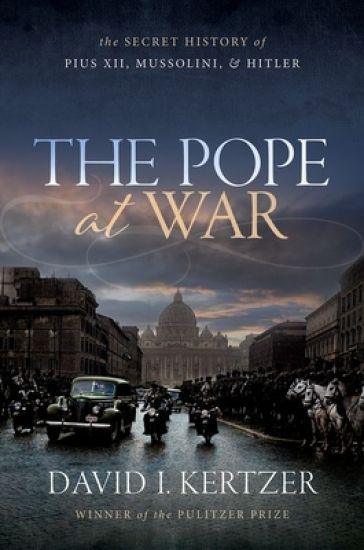
Filled with discoveries, this is the dramatic story of Pope Pius XII's struggle to respond to the Second World War, the Holocaust, and the Nazi domination of Europe. The Pope at War is the third in a trilogy of books about the papacy's response to the rise of Fascism and Nazism. It tells the dramatic story of Pope Pius XII's struggle to respond to the Second World War, the Holocaust, and the ongoing Nazi attempts to exterminate the Jews of Europe. It is the first book dealing with the war to make extensive use of the newly opened Vatican archives for the war years. It is based, as well, on thousands of documents from the Italian, German, French, British, and American archives. Among the many new discoveries brought to light is the discovery that within weeks of becoming pope in 1939, Pius XII entered into secret negotiations with Hitler through Hitler's emissary, a Nazi Prince who was married to the daughter of the King of Italy and who was very close to Hitler. The negotiations were kept so secret that not even the German ambassador to the Holy See was informed of them. The book also offers new insight into the thinking behind Pius XII's decision to maintain good relations with the German government during the war, including keeping the Germans happy while they occupied Rome in 1943-1944. And throughout, David I. Kertzer shows the active role of the Italian Church hierarchy in promoting the Axis war while the pope, who as bishop of Rome was responsible for the Italian hierarchy, offered his silent blessings and cast his public speeches in such a way that both sides could claim support for their cause.
The Italian Executioners
Simon Levis Sullam; David I. Kertzer
Princeton University Press
2020
pokkari
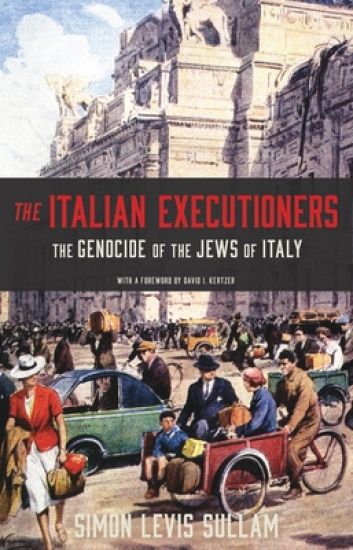
A gripping revisionist history that shows how ordinary Italians played a central role in the genocide of Italian Jews during the Second World WarIn this brief history of Italy's role in the Holocaust, Simon Levis Sullam presents an unforgettable account of how ordinary Italians actively participated in the deportation of Italy's Jews between 1943 and 1945. While most historians have long described Italians as relatively protective of Jews during this time, The Italian Executioners tells a very different story, recounting in vivid detail the shocking events of a period during which Italians set in motion almost half the arrests that sent their Jewish compatriots to Auschwitz. With a historian's rigor and a novelist's gift for scene-setting, Levis Sullam dismantles the seductive myth of the "good Italians" who sheltered Jews from harm. In collaboration with the Nazis, and with different degrees of involvement, the Italians were guilty of genocide.

The Pope Who Would Be King: The Exile of Pius IX and the Emergence of Modern Europe
David I. Kertzer
Random House Publishing Group
2019
nidottu
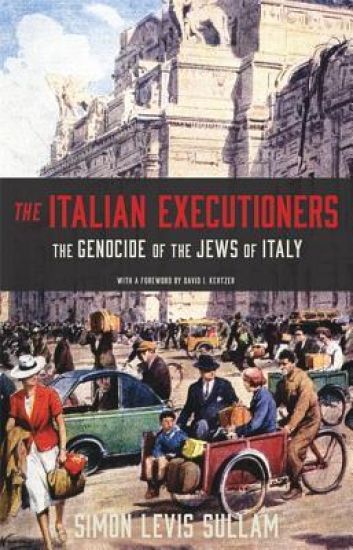
The Italian Executioners
Simon Levis Sullam; David I. Kertzer
PRINCETON UNIVERSITY PRESS
2018
sidottu
A gripping revisionist history that shows how ordinary Italians played a central role in the genocide of Italian Jews during the Second World WarIn this gripping revisionist history of Italy’s role in the Holocaust, Simon Levis Sullam presents an unforgettable account of how ordinary Italians actively participated in the deportation of Italy’s Jews between 1943 and 1945, when Mussolini’s collaborationist republic was under German occupation. While most historians have long described Italians as relatively protective of Jews during this time, The Italian Executioners tells a very different story, recounting in vivid detail the shocking events of a period in which Italians set in motion almost half the arrests that sent their Jewish compatriots to Auschwitz. This brief, beautifully written narrative shines a harsh spotlight on those who turned on their Jewish fellow citizens. These collaborators ranged from petty informers to Fascist intellectuals—and their motives ran from greed to ideology. Drawing insights from Holocaust and genocide studies and combining a historian’s rigor with a novelist’s gift for scene-setting, Levis Sullam takes us into Italian cities large and small, from Florence and Venice to Brescia, showing how events played out in each. Re-creating betrayals and arrests, he draws indelible portraits of victims and perpetrators alike. Along the way, Levis Sullam dismantles the seductive popular myth of italiani brava gente—the “good Italians” who sheltered their Jewish compatriots from harm. The result is an essential correction to a widespread misconception of the Holocaust in Italy. In collaboration with the Nazis, and with different degrees and forms of involvement, the Italians were guilty of genocide.
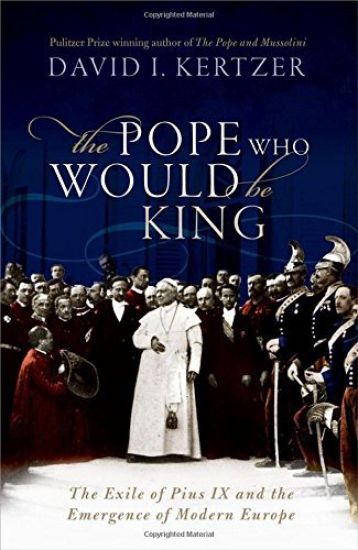
Days after the assassination of his prime minister in the middle of Rome in November 1848, Pope Pius IX found himself a virtual prisoner in his own palace. The wave of revolution that had swept through Europe now seemed poised to put an end to the popes' thousand-year reign over the Papal States, if not indeed to the papacy itself. Disguising himself as a simple parish priest, Pius escaped through a back door. Climbing inside the Bavarian ambassador's carriage, he embarked on a journey into a fateful exile. Only two years earlier Pius's election had triggered a wave of optimism across Italy. After the repressive reign of the dour Pope Gregory XVI, Italians saw the youthful, benevolent new pope as the man who would at last bring the Papal States into modern times and help create a new, unified Italian nation. But Pius found himself caught between a desire to please his subjects and a fear--stoked by the cardinals--that heeding the people's pleas would destroy the church. The resulting drama--with a colorful cast of characters, from Louis Napoleon and his rabble-rousing cousin Charles Bonaparte to Garibaldi, Tocqueville, and Metternich--was rife with treachery, tragedy, and international power politics. David Kertzer is one of the world's foremost experts on the history of Italy and the Vatican, and has a rare ability to bring history vividly to life. With a combination of gripping, cinematic storytelling, and keen historical analysis rooted in an unprecedented richness of archival sources, The Pope Who Would Be King sheds fascinating new light on the end of rule by divine right in the west and the emergence of modern Europe.
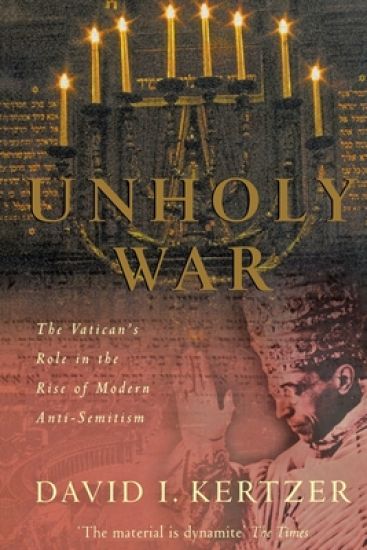
In this powerful investigation, Kertzer argues that the Roman Catholic Church's role in the historical hatred and persecution of Jews in Europe helped make the Holocaust possible. Focusing on the popes, cardinals, bishops, priests and the laity, who were convinced that they were doing God's work, his dispassionate narrative reveals how traditional Catholic forms of dealing with Jews were transformed into modern anti-Semitism. Unholy War strongly contradicts the Vatican's own account of its history. Compellingly written, it sheds light on a remarkable and disturbing story that until now has remained hidden. 'The material is dynamite' THE TIMES 'Riveting' NEW YORK TIMES 'Powerful and shocking' TIMES LITERARY SUPPLEMENT 'Devastating' SCOTSMAN
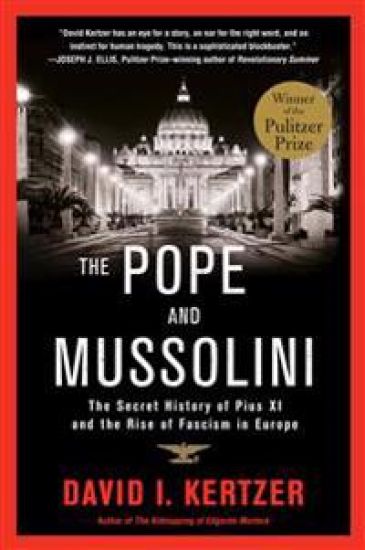
The Pope and Mussolini: The Secret History of Pius XI and the Rise of Fascism in Europe
David I. Kertzer
Random House Trade
2015
nidottu
Halvin toimitettuna 21,50 €
PULITZER PRIZE WINNER - NAMED ONE OF THE BEST BOOKS OF THE YEAR BY SAN FRANCISCO CHRONICLE From National Book Award finalist David I. Kertzer comes the gripping story of Pope Pius XI's secret relations with Italian dictator Benito Mussolini. This groundbreaking work, based on seven years of research in the Vatican and Fascist archives, including reports from Mussolini's spies inside the highest levels of the Church, will forever change our understanding of the Vatican's role in the rise of Fascism in Europe. The Pope and Mussolini tells the story of two men who came to power in 1922, and together changed the course of twentieth-century history. In most respects, they could not have been more different. One was scholarly and devout, the other thuggish and profane. Yet Pius XI and "Il Duce" had many things in common. They shared a distrust of democracy and a visceral hatred of Communism. Both were prone to sudden fits of temper and were fiercely protective of the prerogatives of their office. ("We have many interests to protect," the Pope declared, soon after Mussolini seized control of the government in 1922.) Each relied on the other to consolidate his power and achieve his political goals. In a challenge to the conventional history of this period, in which a heroic Church does battle with the Fascist regime, Kertzer shows how Pius XI played a crucial role in making Mussolini's dictatorship possible and keeping him in power. In exchange for Vatican support, Mussolini restored many of the privileges the Church had lost and gave in to the pope's demands that the police enforce Catholic morality. Yet in the last years of his life--as the Italian dictator grew ever closer to Hitler--the pontiff's faith in this treacherous bargain started to waver. With his health failing, he began to lash out at the Duce and threatened to denounce Mussolini's anti-Semitic racial laws before it was too late. Horrified by the threat to the Church-Fascist alliance, the Vatican's inner circle, including the future Pope Pius XII, struggled to restrain the headstrong pope from destroying a partnership that had served both the Church and the dictator for many years. The Pope and Mussolini brims with memorable portraits of the men who helped enable the reign of Fascism in Italy: Father Pietro Tacchi Venturi, Pius's personal emissary to the dictator, a wily anti-Semite known as Mussolini's Rasputin; Victor Emmanuel III, the king of Italy, an object of widespread derision who lacked the stature--literally and figuratively--to stand up to the domineering Duce; and Cardinal Secretary of State Eugenio Pacelli, whose political skills and ambition made him Mussolini's most powerful ally inside the Vatican, and positioned him to succeed the pontiff as the controversial Pius XII, whose actions during World War II would be subject for debate for decades to come. With the recent opening of the Vatican archives covering Pius XI's papacy, the full story of the Pope's complex relationship with his Fascist partner can finally be told. Vivid, dramatic, with surprises at every turn, The Pope and Mussolini is history writ large and with the lightning hand of truth.
Praise for David Kertzer and Prisoner of the Vatican: "Kertzer once again proves himself a truly compelling historian." -- Andr Aciman "Prisoner of the Vatican reads like exciting fiction. And it has astounding contemporary relevance." -- Alfred Uhry "Kertzer's careful scholarship and lucid writing make the human character of this religious institution quite clear." -- James Carroll "Fascinating." -- Entertainment Weekly "Lively . . . filled with telling anecdotes and colorful descriptions of the various characters involved in the struggle." -- America, the National Catholic Weekly "Riveting and fast-paced . . . history writing at its best." -- Publishers Weekly, starred review " A] rousing tale . . . from a masterful, controversial scholar." -- Kirkus Reviews, starred review "A chilling and timely warning of what happens when religious power becomes synonymous with political power. If you love Italy, if you love Rome, this book is essential reading." -- John Guare "As magically spellbinding as it is enlightening, replete with colorful characters and complex international and ecclesiastical politics and intrigue. Kertzer is a national treasure and his latest book another masterpiece." -- Kevin Madigan, associate professor, Harvard Divinity School "This book is a gift to everyone who welcomes the emergence of buried history, and a boon to anyone who has ever wondered about the origins of the wonderful, tenuously unified place called modern Italy." -- Tracy Kidder David Kertzer's absorbing history presents an astonishing account of the birth of modern Italy and the clandestine politics behind the Vatican's last stand in the battle between church and the newly created Italian state. Drawing on a wealth of secret documents long buried in the Vatican archives, Kertzer reveals a fascinating story of outrageous accusations, mutual denunciations, raucous demonstrations, and secret dealings. When Italy's armies seized the Holy City and claimed it for the Italian capital, Pope Pius IX, outraged, retreated to the Vatican and declared himself a prisoner, calling on foreign powers to force the Italians out of Rome. The action set in motion decades of political intrigues that hinged on such fascinating characters as Garibaldi, King Viktor Emmanuel, Napoleon III, and Chancellor Bismarck. No one who reads this eye-opening book will ever think of Italy, or the Vatican, in quite the same way again. "A gripping account of this little-known story." -- Washington Post "A suspenseful and even captivating read . . . Kertzer illuminates one of history's darker corners." -- Providence Journal "Extraordinary . . . Kertzer describes intrigue, spying, disinformation, and public relations campaigns worthy of any contemporary spy novel." -- Seattle Times David I. Kertzer is author of several illuminating works of history, including The Popes Against the Jews and The Kidnapping of Edgardo Mortara, a National Book Award finalist. A professor of anthropology and Italian studies at Brown University, he lives in Providence, Rhode Island.
The Popes Against the Jews: The Vatican's Role in the Rise of Modern Anti-Semitism
David I. Kertzer
VINTAGE
2002
nidottu
Halvin toimitettuna 23,90 €
In this meticulously researched, unflinching, and reasoned study, National Book Award finalist David I. Kertzer presents shocking revelations about the role played by the Vatican in the development of modern anti-Semitism. Working in long-sealed Vatican archives, Kertzer unearths startling evidence to undermine the Church's argument that it played no direct role in the spread of modern anti-Semitism. In doing so, he challenges the Vatican's recent official statement on the subject, We Remember. Kertzer tells an unsettling story that has stirred up controversy around the world and sheds a much-needed light on the past.
In the wake of the fall of the Berlin wall, and with the Communist regimes of Eastern Europe collapsing, Italian Communist Party (PCI) head Achille Occhetto shocked his party in 1989 by insisting that the PCI jettison its old name and become something new. This dramatic book tells of the ensuing struggle within the PCI, which at the time was Italy's second-largest party and the most powerful Communist party in the West. David I. Kertzer's vivid depiction of the conflict brings to life the tactics that party factions employed and the anguish of party members for whom Communism was the core of their identity. Kertzer also tells a larger story from an anthropologist's perspective: the story of the importance of symbols, myths, and rituals in modern politics. Those who seek dramatic political change, Kertzer contends, must remake history. He recounts how those who succeeded in transforming the PCI into the new Democratic Party of the Left effectively used ritual and manipulated political symbols. Bringing the views of Antonio Gramsci, Pierre Bourdieu, Michel Foucault, and other political thinkers into his discussion, Kertzer explores theoretical issues involving the relation between symbolism and political power, concluding that modern politics is fundamentally a struggle over symbols and the redefinition of history.
Examines the history and purpose of political rituals, discusses examples from Aztec cannibal rites to presidential inauguration, and argues that the use of ritual determines the success of political groups