Kirjojen hintavertailu – 12 859 828 kirjaa ja 27 kauppaa
Kirjailija
David J. Rogers
Kirjat ja teokset yhdessä paikassa: 10 kirjaa, julkaisuja vuosilta 1991–2024, suosituimpiin kuuluu Woody Ornamentals for Deep South Gardens. Vertaile teosten hintoja ja tarkista saatavuus suomalaisista kirjakaupoista.
Have you ever wondered how the wealthy aristocracy got to be so rich? Did it ever occur to you that they are not so different than you, but rather, they know something that you don't know? In Indestructible Wealth, David J. Rogers takes you on a journey of self-discovery. Inside, you will learn how to go from flat-broke to super-rich. It's not magic, it's not hard, and it's not impossible. Follow the steps and, in a short amount of time, you too can have indestructible wealth
This book provides a practical, comprehensive and up-to-date overview of the use of spatial statistics in epidemiology - the study of the incidence and distribution of diseases. Used appropriately, spatial analytical methods in conjunction with GIS and remotely sensed data can provide significant insights into the biological patterns and processes that underlie disease transmission. In turn, these can be used to understand and predict disease prevalence. This user-friendly text brings together the specialised and widely-dispersed literature on spatial analysis to make these methodological tools accessible to epidemiologists for the first time. With its focus is on application rather than theory, Spatial Analysis in Epidemiology includes a wide range of examples taken from both medical (human) and veterinary (animal) disciplines, and describes both infectious diseases and non-infectious conditions. Furthermore, it provides worked examples of methodologies using a single data set from the same disease example throughout, and is structured to follow the logical sequence of description of spatial data, visualisation, exploration, modelling and decision support. This accessible text is aimed at graduate students and researchers dealing with spatial data in the fields of epidemiology (both medical and veterinary), ecology, zoology and parasitology, environmental science, geography and statistics.
This book provides a practical, comprehensive and up-to-date overview of the use of spatial statistics in epidemiology - the study of the incidence and distribution of diseases. Used appropriately, spatial analytical methods in conjunction with GIS and remotely sensed data can provide significant insights into the biological patterns and processes that underlie disease transmission. In turn, these can be used to understand and predict disease prevalence. This user-friendly text brings together the specialised and widely-dispersed literature on spatial analysis to make these methodological tools accessible to epidemiologists for the first time. With its focus is on application rather than theory, Spatial Analysis in Epidemiology includes a wide range of examples taken from both medical (human) and veterinary (animal) disciplines, and describes both infectious diseases and non-infectious conditions. Furthermore, it provides worked examples of methodologies using a single data set from the same disease example throughout, and is structured to follow the logical sequence of description of spatial data, visualisation, exploration, modelling and decision support. This accessible text is aimed at graduate students and researchers dealing with spatial data in the fields of epidemiology (both medical and veterinary), ecology, zoology and parasitology, environmental science, geography and statistics.
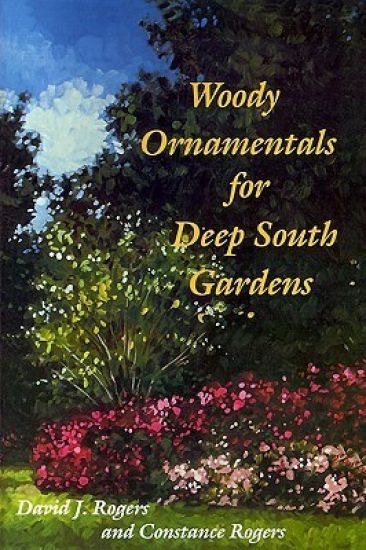
"This book will be extremely useful for gardeners, nurserymen, extension agents, students, and others interested in woody landscape plants of the Deep South. . . . The text contains much information based on first-hand observations of the authors in a personal style that is most attractive. The Table of Horticultural Characteristics and Landscape Planning Aids is a welcome addition."--Dr. Frederick G. Meyer, National Arboretum, Washington, D. C. Woody Ornamentals will take its place alongside the spade and trowel as an indispensable gardening tool for plant lovers in the Deep South. No other book offers such complete information about trees, shrubs, woody vines, and ground covers for USDA Zone 8, an area beginning at the Texas-Mexico border and cutting a wide swath across the Deep South. When David Rogers retired after a life's work in botany and returned to his native Deep South, he discovered that many new cultivated plants and rare species from all over the world had been introduced into the gardens and landscapes. This comprehensive work also identifies the native flora that contribute handsome, hardy plants to residential landscaping, the many subtropical trees and shrubs that do not grow in more northerly gardens, and the fruit-bearing trees such as mandarin orange, sand pear, and new varieties of apple. The plants are listed alphabetically in the book by their generic name. General information about the plants--their appearance, growth and habit, with details about geographic origin, environmental requirements, and special features--appears in easy-to-read prose. For those who designate plants by their common name, an index to the common names references the generic name, and an additional index references the family, genus, and species. Photographs of unusual species and 174 beautiful, detailed line drawings supplement the text. Extensive tables of horticultural characteristics and landscape planning aids provide an overview of each species in the categories of large, medium, and small trees, shrubs, woody vines, and woody ground covers.