Kirjojen hintavertailu – 12 859 819 kirjaa ja 27 kauppaa

Kirjailija

David K. Wiggins

Kirjat ja teokset yhdessä paikassa: 10 kirjaa, julkaisuja vuosilta 1994–2027, suosituimpiin kuuluu Black Mercuries. Vertaile teosten hintoja ja tarkista saatavuus suomalaisista kirjakaupoista.

10 kirjaa

Kirjojen julkaisuvuodet: 1994–2027.

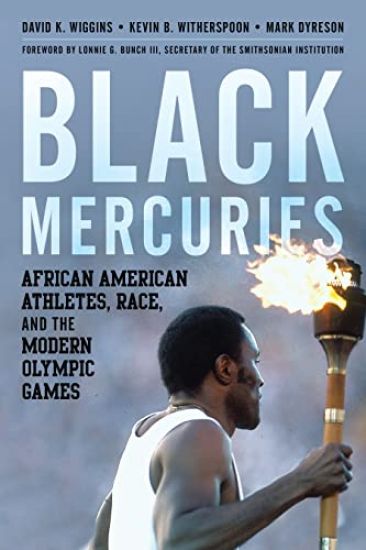
Black Mercuries

Black Mercuries

David K. Wiggins; Kevin B. Witherspoon; Mark Dyreson; Lonnie G. Bunch III

BLOOMSBURY PUBLISHING PLC
2023
sidottu
This book chronicles the struggles and triumphs of African American athletes in the Modern Olympic Games, from 1896 through the 2020 Tokyo Games. It explores the lives and careers of both legendary and little-known Black Olympians as they sought to honor themselves, their race, and their nation on the world stage.
Black Mercuries

Black Mercuries

David K. Wiggins; Witherspoon Kevin B.; Dyreson Mark

Bloomsbury Publishing Plc
2027
Nidottu
“An essential source on African American athletes and Olympic history.”—Booklist, Starred Review, and a Booklist Top 10 Sports Book of 2023 The first book to fully chronicle the struggles and triumphs of African American athletes in the Modern Olympic Summer Games. In the modern Olympic Games, from 1896 through the present, African American athletes have sought to honor themselves, their race, and their nation on the global stage. But even as these incredible athletes have served to promote visions of racial harmony in the supposedly-apolitical Olympic setting, many have also bravely used the Games as a means to bring attention to racial disparities in their country and around the world. In Black Mercuries: African American Athletes, Race, and the Modern Olympic Games, David K. Wiggins, Kevin B. Witherspoon, and Mark Dyreson explore in detail the varied experiences of African American athletes, specifically in the summer games. They examine the lives and careers of such luminaries as Jesse Owens, Rafer Johnson, Wilma Rudolph, Florence Griffith-Joyner, Michael Johnson, and Simone Biles, but also many African American Olympians who have garnered relatively little attention and whose names have largely been lost from historical memory. In recounting the stories of these Black Olympians, Black Mercuries makes clear that their superior athletic skills did not always shield them from the racial tropes and insensitivity spewed by fellow athletes, the media, spectators, and many others. Yet, in part because of the struggles they faced, African American Olympians have been extraordinarily important throughout Olympic history, serving as role models to future Black athletes and often putting their careers on the line to speak out against enduring racial inequality and discriminatory practices in all walks of life.
Ball in My Hands

Ball in My Hands

David K. Wiggins

University of Tennessee Press
2025
nidottu
When David K. Wiggins released his first anthology of previously published essays on race and sport in 1997, African American athletes were receiving more popular interest and scholarly attention. The growth of sport history as an academic discipline, combined with an increased interest in Black life and history, had led to the publication of numerous biographies of African American athletes, studies on Negro League Baseball, and one survey text on the Black athletic experience, to name a few. Almost thirty years later, Wiggins’s second anthology is a comprehensive collection that examines the complex intersection of race, sport, and American culture, discussing the experiences, challenges, and victories of Black athletes throughout the twentieth century. Featuring eleven previously published essays, Ball in My Hands: Black Athletes, Race, and American Culture weaves storytelling and scholarly discussion together in its exploration of well-known figures like Olympic decathlon champion Milt Campbell, professional tennis icon Arthur Ashe, Olympic sprinter Vince Matthews, civil rights activist Harry Edwards, basketball legend Kobe Bryant, and more. In his final essay, Wiggins reflects on his experiences as a White scholar who has spent his forty-year academic career analyzing and writing about experiences of African Americans in sport and the interconnection among race, sport, and American culture. With an original introduction and a foreword from Damion L. Thomas, Museum Curator of Sports at the Smithsonian’s National Museum of African American History and Culture, Ball in My Hands is not simply a collection of biographies on individual athletes or write-ups on athletic institutions—rather, it offers a wide-ranging discussion of the history and meaning of African American sport that will engage not only scholars of African American history and sport history, but educators, sports enthusiasts, and general readers alike.

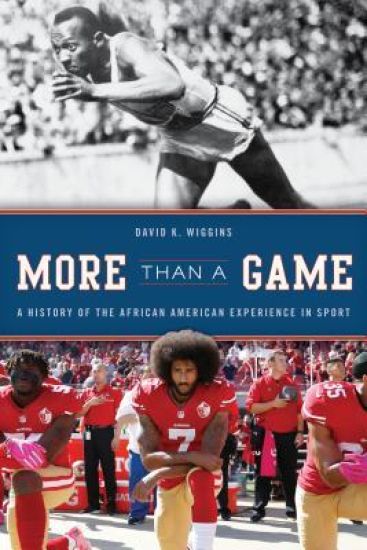
More Than a Game

More Than a Game

David K. Wiggins

Rowman Littlefield
2018
sidottu
More than a Game discusses how African American men and women sought to participate in sport and what that participation meant to them, the African American community, and the United States more generally. Recognizing the complicated history of race in America and how sport can both divide and bring people together, the book chronicles the ways in which African Americans overcame racial discrimination to achieve success in an institution often described as America's only true meritocracy. African Americans have often glorified sport, viewing it as one of the few ways they can achieve a better life. In reality, while some African Americans found fame and fortune in sport, most struggled just to participate – let alone succeed at the highest levels of sport. Thus, the book has two basic themes. It discusses the varied experiences of African Americans in sport and how their participation has both reflected and changed views of race.
Sport in America, Volume II

Sport in America, Volume II

David K. Wiggins

Human Kinetics
2009
sidottu
Sport in America: From Colonial Leisure to Celebrity Figures and Globalization, Volume II, presents 18 thought-provoking essays focusing on the changes and patterns in American sport during six distinct eras over the past 400 years. The selections are entirely different from those in the first volume, discussing diverse topics such as views of sport in the Puritan society of colonial New England, gender roles and the croquet craze of the 1800s, and the Super Bowl's place in contemporary sport. Each of the six parts includes an introduction to the essays, allowing readers to relate them to the cultural changes and influences of the period. Readers will find essays on well-known topics written by established scholars as well as new approaches and views from recent studies. Suitable for use as a stand-alone or supplemental text in undergraduate and graduate sport history courses, Sport in America provides students with opportunities to examine selected sport topics in more depth, realize a greater understanding of sport throughout history, and consider the interrelationships of sport and other societal institutions. Essays are arranged chronologically from the early American period to the present day to provide the proper historical context and offer perspective on changes that have occurred in sport over time. Also, a list of suggested readings provided in each part offers readers the opportunity to expand their thinking on the nature of sport throughout American history. Essays on how Pinehurst Golf Course was created, the interconnection between sport and the World War I military experience, and discussion of sport icons such as Joe Louis, Walter Camp, Jackie Robinson, and Cal Ripken Jr. allow readers to explore sport as a reflection of the changing values and norms of society. Sport in America: From Colonial Leisure to Celebrity Figures and Globalization, Volume II, provides students and scholars with perspectives regarding the role of sport at particular moments in American history and gives them an appreciation for the complex intersections of sport with society and culture.
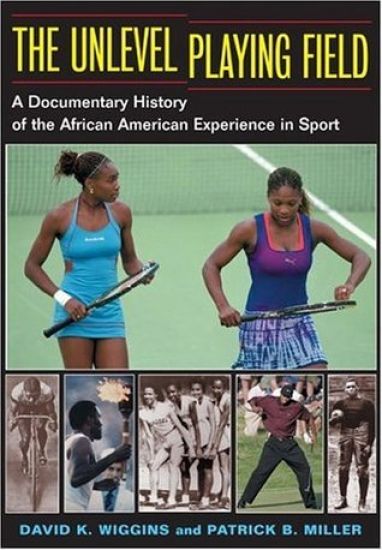
The Unlevel Playing Field

The Unlevel Playing Field

David K. Wiggins; Patrick B. Miller

University of Illinois Press
2005
nidottu
The Unlevel Playing Field offers a rich compendium of more than 100 primary sources that chart the intertwining history of African Americans and sport. Introductions and head-notes provided by David K. Wiggins and Patrick B. Miller place each document in context, shaping an unrivaled narrative. Readers will find dozens of accounts by Frederick Douglass, W. E. B. DuBois, Booker T. Washington, Marcus Garvey, James Weldon Johnson, Richard Wright, A. S. “Doc” Young, Eldredge Cleaver, Nikki Giovanni, John Edgar Wideman, bell hooks, James Baldwin, Roy Wilkins, Henry Louis Gates, Gerald Early, and many others. The documents range from discussions of the color line in organized baseball during the Jim Crow era and portraits of turn-of-the-century figures like the champion sprint cyclist Marshall “Major” Taylor and boxer Jack Johnson. Writers also look at modern-day issues like the participation of black athletes in the 1968 Olympics, the place of African American women in sport, and examine pioneering figures like Jackie Robinson, Muhammad Ali, Althea Gibson, Michael Jordan, Tiger Woods, and Venus and Serena Williams.
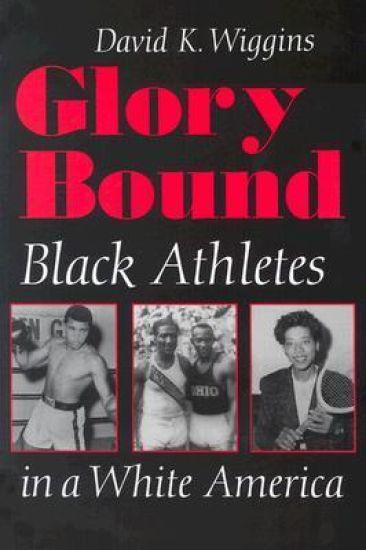
Glory Bound

Glory Bound

David K. Wiggins

Syracuse University Press
1997
nidottu
African-American athletes have experienced a tumultuous relationship with mainstream white America. ""Glory Bound"" brings together 11 essays that explore this complex topic by sports studies scholar David K. Wiggins. In his writings, Wiggins recounts the struggle of black athletes to climb their ""own"" racial mountain - their struggle to fully participate in sport while maintaining their own cultural identity and pride. Wiggins examines other seminal moments that defined and changed the black athlete's role in white America, from the 19th century to the present: the personal crusade of Wendell Smith to promote black participation in organized baseball, the triumph of Jesse Owens at the 1936 Olympics and the proposed boycott of the Games, and the response of America's black press and community. ""Glory Bound"" demonstrates how the civil rights movement changed the face of American athletics and society forever. With the genesis of the black power movement in sport, Wiggins notes a significant shift in black - and white - America's attention to the African-American athlete. In his final and newest essay, he examines the writings of Edwin B. Henderson, the ""father of black sport history"", who wrote the first books on African-American involvement in sport.
Ethnicity and Sport in North American History and Culture

Ethnicity and Sport in North American History and Culture

George Eisen; David K. Wiggins

Praeger Publishers Inc
1995
nidottu
The editors use the unique lens of the history of sports to examine ethnic experiences in North America since 1840. Comprised of 12 original essays and an Introduction, it chronicles sport as a social institution through which various ethnic and racial groups attempted to find the way to social and psychological acceptance and cultural integration. Included are chapters on Native Americans, Irish-Americans, German-Americans, Canadians, African-Americans, Italian-Americans, Hispanics, and several more, showing how their sports participation also provided these communities with some measure of social mobility, self-esteem, and a shared pride.
Ethnicity and Sport in North American History and Culture

Ethnicity and Sport in North American History and Culture

George Eisen; David K. Wiggins

Praeger Publishers Inc
1994
sidottu
The editors use the unique lens of the history of sports to examine ethnic experiences in North America since 1840. Comprised of 12 original essays and an Introduction, it chronicles sport as a social institution through which various ethnic and racial groups attempted to find the way to social and psychological acceptance and cultural integration. Included are chapters on Native Americans, Irish-Americans, German-Americans, Canadians, African-Americans, Italian-Americans, Hispanics, and several more, showing how their sports participation also provided these communities with some measure of social mobility, self-esteem, and a shared pride.