

Kirjailija
David Kaiser
Kirjat ja teokset yhdessä paikassa: 22 kirjaa, julkaisuja vuosilta 2000–2025, suosituimpiin kuuluu Eine Liebeserklärung an das Ötztal. Vertaile teosten hintoja ja tarkista saatavuus suomalaisista kirjakaupoista.
22 kirjaa
Kirjojen julkaisuvuodet: 2000–2025.



Einstein and the Quantum Revolutions
Alain Aspect; David Kaiser
THE UNIVERSITY OF CHICAGO PRESS
2024
sidottu
Halvin toimitettuna 25,30 €
A Nobel laureate offers a brief lesson on physics’ biggest mystery, accessibly explaining the two quantum revolutions that changed our understanding of reality. At the start of the twentieth century, the first quantum revolution upset our vision of the world. New physics offered surprising realities, such as wave-particle duality, and led to major inventions: the transistor, the laser, and today’s computers. Less known is the second quantum revolution, arguably initiated in 1935 during a debate between giants Albert Einstein and Niels Bohr. This revolution is still unfolding. Its revolutionaries—including the author of this short accessible book, Nobel Prize–winning physicist Alain Aspect—explore the notion of entangled particles, able to interact at seemingly impossible distances. Aspect’s research has helped to show how entanglement may both upend existing technologies, like cryptography, and usher in entirely new ones, like quantum computing. Explaining this physics of the future, this work tells a story of how philosophical debates can shape new realities.

A physicist's efforts to understand the enigma that is quantum mechanics. Quantum mechanics is one of the glories of our age. The theory lies at the heart of modern society. Quantum mechanics is one of our most valuable forecasters--a "great predictor." It has immeasurably altered our conception of the natural world. Its philosophical implications are earthshaking. But quantum mechanics steadfastly refuses to speak of many things; it deals in probabilities rather than giving explicit descriptions. It never explains. Einstein, one of its creators, considered the theory incomplete. Even now, many years after the creation of quantum mechanics, physicists continue to argue about it. Astrophysicist George Greenstein has been both fascinated and confused by quantum mechanics for his entire career. In this book, he describes, engagingly and accessibly, his efforts to understand the enigma that is quantum mechanics. The fastest route to the insight into the ultimate nature of reality revealed by quantum mechanics, Greenstein writes, is through Bell's Theorem, which concerns reality at the quantum level; and Bell's 1964 discovery drives Greenstein's quest. Greenstein recounts a scientific odyssey that begins with Einstein, continues with Bell, and culminates with today's push to develop an industry of quantum machines. Along the way, he discusses spin, entanglement, experimental metaphysics, and quantum teleportation, often with easy-to-grasp analogies. We have known for decades that the world of the quantum was strange, but, Greenstein says, not until John Bell came along did we know just how strange.

Plains Indian biographic rock art can be “read” by those knowledgeable in its lexicon. Presented is a lexicon of imagery, conventions, and symbols used by Plains Indians to communicate their warfare and social narratives. The reader is introduced to Plains Indian “warrior” art in all media, biographic art as picture writing is explained, and the lexicon is described, providing a pictographic “dictionary,” and explains conventions and connotations. Finally, it illustrates four key examples of how these narratives are read by the observer. Familiarity with the lexicon will enable interested scholars and laypersons to understand what are otherwise enigmatic rock art drawings found from Calgary, Alberta through ten U. S. states, and into the Mexican state of Coahuila.
The life and work of Freeman Dyson—renowned scientist, visionary, and iconoclast—and his particular way of thinking about deep questions. Freeman Dyson (1923–2020)—renowned scientist, visionary, and iconoclast—helped invent modern physics. Not bound by disciplinary divisions, he went on to explore foundational topics in mathematics, astrophysics, and the origin of life. General readers were introduced to Dyson’s roving mind and heterodox approach in his 1979 book Disturbing the Universe, a poignant autobiographical reflection on life and science. “Well, Doc, You’re In” (the title quotes Richard Feynman’s remark to Dyson at a physics conference) offers a fresh examination of Dyson’s life and work, exploring his particular way of thinking about deep questions that range from the nature of matter to the ultimate fate of the universe. The chapters—written by leading scientists, historians, and science journalists, including some of Dyson’s colleagues—trace Dyson’s formative years, his budding interests and curiosities, and his wide-ranging work across the natural sciences, technology, and public policy. They describe Dyson’s innovations at the intersection of quantum theory and relativity, his novel nuclear reactor design (and his never-realized idea of a spacecraft powered by nuclear weapons), his years at the Institute for Advanced Study, and his foray into cosmology. In the coda, Dyson’s daughter Esther reflects on growing up in the Dyson household. “Well, Doc, You’re In” assesses Dyson’s successes, blind spots, and influence, assembling a portrait of a scientist’s outsized legacy. ContributorsJeremy Bernstein, Robbert Dijkgraaf, Esther Dyson, George Dyson, Ann Finkbeiner, Amanda Gefter, Ashutosh Jogalekar, David Kaiser, Caleb Scharf, William Thomas
A series of engaging essays that explore iconic moments of discovery and debate in physicists' ongoing quest to understand the quantum world. The ideas at the root of quantum theory remain stubbornly, famously bizarre: a solid world reduced to puffs of probability; particles that tunnel through walls; cats suspended in zombielike states, neither alive nor dead; and twinned particles that share entangled fates. For more than a century, physicists have grappled with these conceptual uncertainties while enmeshed in the larger uncertainties of the social and political worlds around them, a time pocked by the rise of fascism, cataclysmic world wars, and a new nuclear age. In Quantum Legacies, David Kaiser introduces readers to iconic episodes in physicists' still-unfolding quest to understand space, time, and matter at their most fundamental. In a series of vibrant essays, Kaiser takes us inside moments of discovery and debate among the great minds of the era-Albert Einstein, Erwin Schroedinger, Stephen Hawking, and many more who have indelibly shaped our understanding of nature-as they have tried to make sense of a messy world. Ranging across space and time, the episodes span the heady 1920s, the dark days of the 1930s, the turbulence of the Cold War, and the peculiar political realities that followed. In those eras as in our own, researchers' ambition has often been to transcend the vagaries of here and now, to contribute lasting insights into how the world works that might reach beyond a given researcher's limited view. In Quantum Legacies, Kaiser unveils the difficult and unsteady work required to forge some shared understanding between individuals and across generations, and in doing so, he illuminates the deep ties between scientific exploration and the human condition.
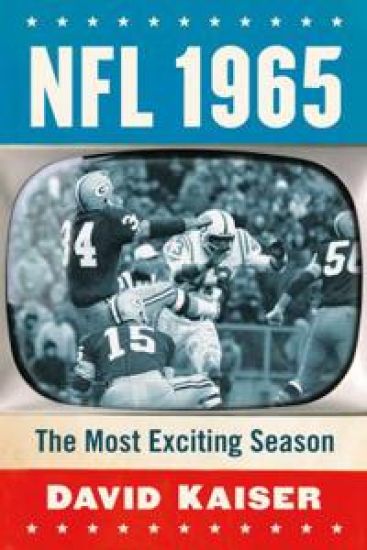
In the mid-1960s, when pro football eclipsed baseball as America's leading spectator sport, the NFL had the most exciting season in its history. The Eastern Conference Cleveland Browns were the champions in 1965 yet most of the action was in the Western Conference, where the reigning Baltimore Colts contended with the formidable Green Bay Packers and Chicago Bears. All three teams played two games apiece against the Detroit Lions, a power earlier in the decade, and the Minnesota Vikings and Los Angeles Rams, who were becoming dominant in the league. In those days the NFL played a wide-open game--long touchdown passes, fumbles and interceptions kept fans on the edges of their seats through seven games each weekend. The league's deep bench included such players as Jim Brown, Johnny Unitas, Tom Matte, Bart Starr, Paul Hornung and Dave Robinson, rookies Gale Sayers and Dick Butkus, and key coaches Don Shula, Vince Lombardi and George Halas. A fantastic final weekend led to a one-game playoff for the right to face the Browns for the championship. Drawing on interviews with surviving players and executives, this book recounts the thrilling drama of the '65 season and places it in the broader context of NFL history.
The ideas at the root of quantum theory remain stubbornly, famously bizarre: a solid world reduced to puffs of probability; particles that tunnel through walls; cats suspended in zombielike states, neither alive nor dead; and twinned particles that share entangled fates. For more than a century, physicists have grappled with these conceptual uncertainties while enmeshed in the larger uncertainties of the social and political worlds around them, a time pocked by the rise of fascism, cataclysmic world wars, and a new nuclear age. In Quantum Legacies, David Kaiser introduces readers to iconic episodes in physicists’ still-unfolding quest to understand space, time, and matter at their most fundamental. In a series of vibrant essays, Kaiser takes us inside moments of discovery and debate among the great minds of the era—Albert Einstein, Erwin Schrödinger, Stephen Hawking, and many more who have indelibly shaped our understanding of nature—as they have tried to make sense of a messy world. Ranging across space and time, the episodes span the heady 1920s, the dark days of the 1930s, the turbulence of the Cold War, and the peculiar political realities that followed. In those eras as in our own, researchers’ ambition has often been to transcend the vagaries of here and now, to contribute lasting insights into how the world works that might reach beyond a given researcher’s limited view. In Quantum Legacies, Kaiser unveils the difficult and unsteady work required to forge some shared understanding between individuals and across generations, and in doing so, he illuminates the deep ties between scientific exploration and the human condition.

"His sober and totally candid memoir is absorbing reading that clearly and personally illuminates the ever more tragic collapse of authentic higher education in America." Arthur Waldron, Lauder Professor of International Relations, The University of Pennsylvania "A Life in History, captures a rare quality these days--the ability to stand for what you believe and base those beliefs on facts, not trendy opinions." Morley Winograd, Senior Fellow, Annenberg USC Center for Communications & Leadership Policy ." . . a probing, sometimes searing, look at the professional life of an intellectual during the past half century. . . . In these reflections, Kaiser offers a personal answer to how to sustain the life of the mind and to ensure a public presence for bold thinking." Anne Rose, Distinguished Professor of History and Religious Studies, Penn State University "insightful and entertaining, and it forces readers to think." Jeremi Suri, Professor, Lyndon B. Johnson School of Public Affairs "This absorbing tale is a window into the inner workings of academia at our nation's premier institutions" James Goldgeier, Professor of International Relations, American University David Kaiser David Kaiser taught history at Harvard, Carnegie Mellon, the Naval War College and Williams College from 1976 through 2012. His nine books include American Tragedy: Kennedy, Johnson, and the Origins of the Vietnam War, and Politics and War: European Conflict from Philip II to Hitler. He lives in Watertown, Massachusetts, and writes the blog historyunfolding.com.
Lectures Of Sidney Coleman On Quantum Field Theory: Foreword By David Kaiser
David Kaiser
World Scientific Publishing Co Pte Ltd
2018
nidottu
'Sidney Coleman was the master teacher of quantum field theory. All of us who knew him became his students and disciples. Sidney’s legendary course remains fresh and bracing, because he chose his topics with a sure feel for the essential, and treated them with elegant economy.'Frank WilczekNobel Laureate in Physics 2004Sidney Coleman was a physicist's physicist. He is largely unknown outside of the theoretical physics community, and known only by reputation to the younger generation. He was an unusually effective teacher, famed for his wit, his insight and his encyclopedic knowledge of the field to which he made many important contributions. There are many first-rate quantum field theory books (the venerable Bjorken and Drell, the more modern Itzykson and Zuber, the now-standard Peskin and Schroeder, and the recent Zee), but the immediacy of Prof. Coleman's approach and his ability to present an argument simply without sacrificing rigor makes his book easy to read and ideal for the student. Part of the motivation in producing this book is to pass on the work of this outstanding physicist to later generations, a record of his teaching that he was too busy to leave himself.
Lectures Of Sidney Coleman On Quantum Field Theory: Foreword By David Kaiser
David Kaiser
World Scientific Publishing
2018
sidottu
'Sidney Coleman was the master teacher of quantum field theory. All of us who knew him became his students and disciples. Sidney’s legendary course remains fresh and bracing, because he chose his topics with a sure feel for the essential, and treated them with elegant economy.'Frank WilczekNobel Laureate in Physics 2004Sidney Coleman was a physicist's physicist. He is largely unknown outside of the theoretical physics community, and known only by reputation to the younger generation. He was an unusually effective teacher, famed for his wit, his insight and his encyclopedic knowledge of the field to which he made many important contributions. There are many first-rate quantum field theory books (the venerable Bjorken and Drell, the more modern Itzykson and Zuber, the now-standard Peskin and Schroeder, and the recent Zee), but the immediacy of Prof. Coleman's approach and his ability to present an argument simply without sacrificing rigor makes his book easy to read and ideal for the student. Part of the motivation in producing this book is to pass on the work of this outstanding physicist to later generations, a record of his teaching that he was too busy to leave himself.
Recent advances in baseball statistical analysis have made it possible to assess the totality of contribution each player makes to team success or failure. Using the metric Wins Above Average (WAA)--the number of wins that the 2016 Red Sox, for example, added because they had Mookie Betts in right field, instead of an average player--the author undertakes a fascinating review of major league baseball from 1901 through 2017. The great teams are analyzed, underscoring why they were successful. The great players of each generation are identified using simple, reliable metrics--from Ty Cobb through Mike Trout, and pitchers from Christy Mathewson to Clayton Kershaw. Surprises abound. The importance of pitching is found to be vastly exaggerated. Many Hall of Fame pitchers (and some hitters) achieved immortality almost entirely on the backs of their teammates, while a few over-qualified players still await induction. Focusing on today's rosters, the WAA assessment shows that the game is threatened by an unprecedented shortage of great players.
Today, quantum information theory is among the most exciting scientific frontiers, attracting billions of dollars in funding and thousands of talented researchers. But as MIT physicist and historian David Kaiser reveals, this cutting-edge field has a surprisingly psychedelic past. How the Hippies Saved Physics introduces us to a band of freewheeling physicists who defied the imperative to “shut up and calculate” and helped to rejuvenate modern physics. For physicists, the 1970s were a time of stagnation. Jobs became scarce, and conformity was encouraged, sometimes stifling exploration of the mysteries of the physical world. Dissatisfied, underemployed, and eternally curious, an eccentric group of physicists in Berkeley, California, banded together to throw off the constraints of the physics mainstream and explore the wilder side of science. Dubbing themselves the “Fundamental Fysiks Group,” they pursued an audacious, speculative approach to physics. They studied quantum entanglement and Bell’s Theorem through the lens of Eastern mysticism and psychic mind-reading, discussing the latest research while lounging in hot tubs. Some even dabbled with LSD to enhance their creativity. Unlikely as it may seem, these iconoclasts spun modern physics in a new direction, forcing mainstream physicists to pay attention to the strange but exciting underpinnings of quantum theory. A lively, entertaining story that illuminates the relationship between creativity and scientific progress, How the Hippies Saved Physics takes us to a time when only the unlikeliest heroes could break the science world out of its rut.
Neither a random event nor the act of a lone madman—the assassination of President John F. Kennedy was an appalling and grisly conspiracy. This is the unvarnished story. With deft investigative skill, David Kaiser shows that the events of November 22, 1963, cannot be understood without fully grasping the two larger stories of which they were a part: the U. S. government’s campaign against organized crime, which began in the late 1950s and accelerated dramatically under Robert Kennedy; and the furtive quest of two administrations—along with a cadre of private interest groups—to eliminate Fidel Castro. The seeds of conspiracy go back to the Eisenhower administration, which recruited top mobsters in a series of plots to assassinate the Cuban leader. The CIA created a secretive environment in which illicit networks were allowed to expand in dangerous directions. The agency’s links with the Mafia continued in the Kennedy administration, although the President and his closest advisors—engaged in their own efforts to overthrow Castro—thought this skullduggery had ended. Meanwhile, Cuban exiles, right-wing businessmen, and hard-line anti-Communists established ties with virtually anyone deemed capable of taking out the Cuban premier. Inevitably those ties included the mob. The conspiracy to kill JFK took shape in response to Robert Kennedy’s relentless attacks on organized crime—legal vendettas that often went well beyond the normal practices of law enforcement. Pushed to the wall, mob leaders merely had to look to the networks already in place for a solution. They found it in Lee Harvey Oswald—the ideal character to enact their desperate revenge against the Kennedys. Comprehensive, detailed, and informed by original sources, The Road to Dallas adds surprising new material to every aspect of the case. It brings to light the complete, frequently shocking, story of the JFK assassination and its aftermath.
Feynman diagrams have revolutionized nearly every aspect of theoretical physics since the middle of the twentieth century. Introduced by the American physicist Richard Feynman (1918-88) soon after World War II as a means of simplifying lengthy calculations in quantum electrodynamics, they soon gained adherents in many branches of the discipline. Yet as new physicists adopted the tiny line drawings, they also adapted the diagrams and introduced their own interpretations. Drawing Theories Apart traces how generations of young theorists learned to frame their research in terms of the diagrams - and how both the diagrams and their users were molded in the process. Drawing on rich archival materials, interviews, and more than five hundred scientific articles from the period, Drawing Theories Apart uses the Feynman diagrams as a means to explore the development of American postwar physics. By focusing on the ways young physicists learned new calculational skills, David Kaiser frames his story around the crafting and stabilizing of the basic tools in the physicist's kit - thus offering the first book to follow the diagrams once they left Feynman's hands and entered the physics vernacular.
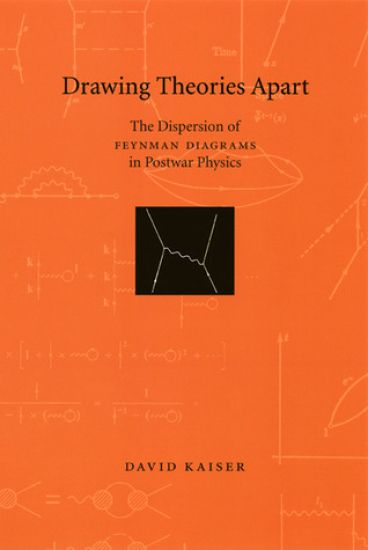
Feynman diagrams have revolutionized nearly every aspect of theoretical physics since the middle of the twentieth century. Introduced by the American physicist Richard Feynman (1918-88) soon after World War II as a means of simplifying lengthy calculations in quantum electrodynamics, they soon gained adherents in many branches of the discipline. Yet as new physicists adopted the tiny line drawings, they also adapted the diagrams and introduced their own interpretations. Drawing Theories Apart traces how generations of young theorists learned to frame their research in terms of the diagrams - and how both the diagrams and their users were molded in the process. Drawing on rich archival materials, interviews, and more than five hundred scientific articles from the period, Drawing Theories Apart uses the Feynman diagrams as a means to explore the development of American postwar physics. By focusing on the ways young physicists learned new calculational skills, David Kaiser frames his story around the crafting and stabilizing of the basic tools in the physicist's kit - thus offering the first book to follow the diagrams once they left Feynman's hands and entered the physics vernacular.