Kirjailija
David Kaufmann
Kirjat ja teokset yhdessä paikassa: 32 kirjaa, julkaisuja vuosilta 2005–2026, suosituimpiin kuuluu George Eliot and Judaism. Vertaile teosten hintoja ja tarkista saatavuus suomalaisista kirjakaupoista.
32 kirjaa
Kirjojen julkaisuvuodet: 2005–2026.

Geschichte der Attributenlehre in der jüdischen Religionsphilosophie des Mittelalters von Saadja bis Maimûni
David Kaufmann
Hansebooks
2021
pokkari


The political and symbolic centrality of capital cities has been challenged by increasing economic globalization. This is especially true of secondary capital cities; capital cities which, while being the seat of national political power, are not the primary economic city of their nation state. David Kaufmann examines the unique challenges that these cities face entering globalised, inter-urban competition while not possessing a competitive political economy. Varieties of Capital Cities offers empirically rich case studies of four secondary capital cities: Bern, Ottawa, The Hague, and Washington, D. C. Analysed with an innovative research framework, this book shows through its clearly structured analysis, that while the pressures facing these cities are the same, the mechanisms they employ to cope with them are very different. They have formulated a wide variety of policies to supplement their capital function with economically promising profiles, even though they cannot escape their destinies as government cities. This book is an impressive contribution to an area of study largely neglected by urban studies, political science, and economic geography. With vital lessons for urban policy makers, the interested practitioner will find a pool of inspiration for their urban strategies. Students and scholars of these subjects will find this book interesting, and will also find it invaluable as a lesson for how to develop and execute comparative case studies.
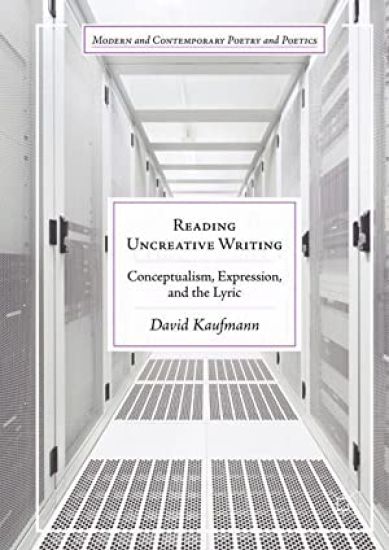
This book examines Uncreative Writing—the catch-all term to describe Neo-Conceptualism, Flarf and related avant-garde movements in contemporary North American poetry—against a decade of controversy. David Kaufman analyzes texts by Kenneth Goldsmith, Vanessa Place, Robert Fitterman, Ara Shirinyan, Craig Dworkin, Dan Farrell and Katie Degentesh to demonstrate that Uncreative Writing is not a revolutionary break from lyric tradition as its proponents claim. Nor is it a racist, reactionary capitulation to neo-liberalism as its detractors argue. Rather, this monograph shows that Uncreative Writing’s real innovations and weaknesses become clearest when read in the context of the very lyric that it claims to have left behind.
This book examines Uncreative Writing—the catch-all term to describe Neo-Conceptualism, Flarf and related avant-garde movements in contemporary North American poetry—against a decade of controversy. David Kaufman analyzes texts by Kenneth Goldsmith, Vanessa Place, Robert Fitterman, Ara Shirinyan, Craig Dworkin, Dan Farrell and Katie Degentesh to demonstrate that Uncreative Writing is not a revolutionary break from lyric tradition as its proponents claim. Nor is it a racist, reactionary capitulation to neo-liberalism as its detractors argue. Rather, this monograph shows that Uncreative Writing’s real innovations and weaknesses become clearest when read in the context of the very lyric that it claims to have left behind.

Gemeindebesteuerung und Massenkonsum in den sieben grössten Städten des rechtsrheinischen Bayern
David Kaufmann
Hansebooks
2016
pokkari


George Eliot and Judaism: An Attempt to Appreciate Daniel Deronda
David Kaufmann
Literary Licensing, LLC
2014
nidottu



Kaufmann, D: Attributenlehre Des Saadja Alfajjumi (1875)
David Kaufmann
KESSINGER PUBLISHING, LLC
2010
nidottu
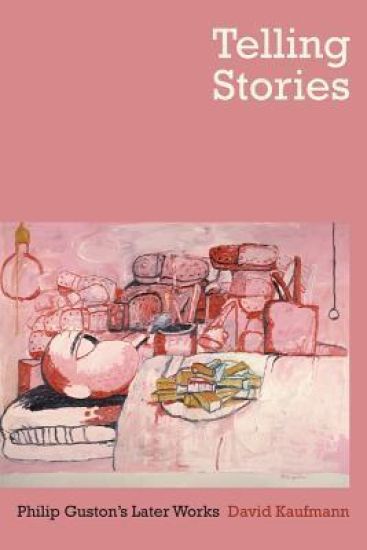
In "Telling Stories", David Kaufmann focuses on Philip Guston's controversial figurative paintings of the late 1960s and 1970s. He looks at the early critical reception of these works to see what the artist was actually doing and, at another level, to investigate the odd alchemy of artists and their audiences. Grounding his historical approach in careful readings of the paintings, Kaufmann pays close attention to Guston's intense and complicated relationship to Judaism. At the same time, by situating Guston in the context of the fashions of the New York art world, Kaufmann provides unique insight into the workings of that world at the moment when the strictures of artistic modernism began to fade.

Kaufmann, D: Chronik Des Achimaaz Von Oria, 850-1054 (1896)
David Kaufmann
KESSINGER PUBLISHING, LLC
2010
nidottu

A Zsidok Utolso Kiuzese Becsbol Es Also-Ausztriabol
David Kaufmann
KESSINGER PUBLISHING, LLC
2010
pokkari

Die Letzte Vertreibung Der Juden Aus Wien Und Niederosterreich
David Kaufmann
Nabu Press
2010
pokkari

Kaufmann, D: Theologie Des Bachja Ibn Pakuda (1874)
David Kaufmann
KESSINGER PUBLISHING, LLC
2009
nidottu

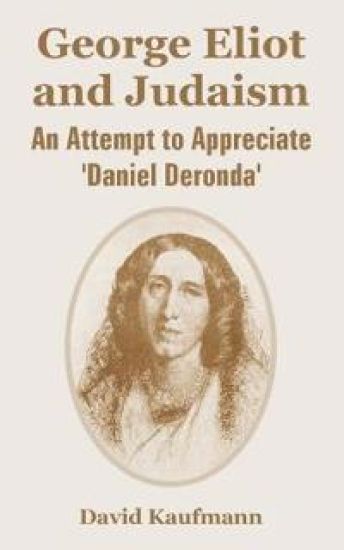
Subtitled "An Attempt to Appreciate Daniel Deronda" this 1888 study, published in Germany by a Jewish scholar, praised Eliot's sympathetic understanding of Judaism in her novel.