Kirjojen hintavertailu – 12 903 725 kirjaa ja 27 kauppaa
Kirjailija
David Kauzlarich
Kirjat ja teokset yhdessä paikassa: 7 kirjaa, julkaisuja vuosilta 2009–2026, suosituimpiin kuuluu Theorizing Resistance. Vertaile teosten hintoja ja tarkista saatavuus suomalaisista kirjakaupoista.
Theorizing Resistance examines the extent to which music constructions provide windows for opposition and resistance to forms of state crime and violence such as war, human rights abuses, oppression, and corruption. The analysis is based on rich ethnographic, documentary, and participant observation research with politically active independent punk rock musicians. Drawing on the work of Michel Maffesoli, the Birmingham Centre for Contemporary Cultural Studies and more recently Jeff Ferrell, this book makes a unique and original contribution to ongoing academic debates about power, alienation and resistance and will be fascinating reading for courses in cultural and critical criminology, state crime, human rights and the sociology of popular music.
Theorizing Resistance examines the extent to which music constructions provide windows for opposition and resistance to forms of state crime and violence such as war, human rights abuses, oppression, and corruption. The analysis is based on rich ethnographic, documentary, and participant observation research with politically active independent punk rock musicians. Drawing on the work of Michel Maffesoli, the Birmingham Centre for Contemporary Cultural Studies and more recently Jeff Ferrell, this book makes a unique and original contribution to ongoing academic debates about power, alienation and resistance and will be fascinating reading for courses in cultural and critical criminology, state crime, human rights and the sociology of popular music.
As politicians and the media perpetuate the stereotype of the "common criminal," crimes committed by the powerful remain for the most part invisible or are reframed as a "bad decision" or a "rare mistake." This is a topic that remains marginalized within the field of criminology and criminal justice, yet crimes of the powerful cause more harm, perpetuate more inequalities, and result in more victimization than street crimes. Crimes of the Powerful: White-Collar Crime and Beyond is the first textbook to bring together and show the symbiotic relationships between the related fields of state crime, white- collar crime, corporate crime, financial crime and organized crime, and environmental crime. Dawn L. Rothe and David Kauzlarich introduce the many types of crimes, their theoretical relevance, and issues surrounding regulations and social controls for crimes of the powerful. Themes covered include:• media, culture, and the Hollywoodization of crimes of the powerful; • theoretical understanding and the study of the crimes of the powerful; • typology of crimes of the powerful with examples and case studies; • victims of the crimes of the powerful; • the regulation and resistance of elite crime. Fully updated and revised, the new edition includes new chapters on occupational crime, crimes against the environment, and further coverage of representations of resistance to crimes of the powerful in popular culture. An ideal introductory text for both undergraduate and postgraduate students taking modules on the crimes of the powerful, white- collar crime, state crime, and green criminology, this text includes chapter summaries, activities and discussion questions, and lists of additional resources including films, websites, regulatory agencies, and additional readings.
As politicians and the media perpetuate the stereotype of the "common criminal," crimes committed by the powerful remain for the most part invisible or are reframed as a "bad decision" or a "rare mistake." This is a topic that remains marginalized within the field of criminology and criminal justice, yet crimes of the powerful cause more harm, perpetuate more inequalities, and result in more victimization than street crimes. Crimes of the Powerful: White-Collar Crime and Beyond is the first textbook to bring together and show the symbiotic relationships between the related fields of state crime, white- collar crime, corporate crime, financial crime and organized crime, and environmental crime. Dawn L. Rothe and David Kauzlarich introduce the many types of crimes, their theoretical relevance, and issues surrounding regulations and social controls for crimes of the powerful. Themes covered include:• media, culture, and the Hollywoodization of crimes of the powerful; • theoretical understanding and the study of the crimes of the powerful; • typology of crimes of the powerful with examples and case studies; • victims of the crimes of the powerful; • the regulation and resistance of elite crime. Fully updated and revised, the new edition includes new chapters on occupational crime, crimes against the environment, and further coverage of representations of resistance to crimes of the powerful in popular culture. An ideal introductory text for both undergraduate and postgraduate students taking modules on the crimes of the powerful, white- collar crime, state crime, and green criminology, this text includes chapter summaries, activities and discussion questions, and lists of additional resources including films, websites, regulatory agencies, and additional readings.
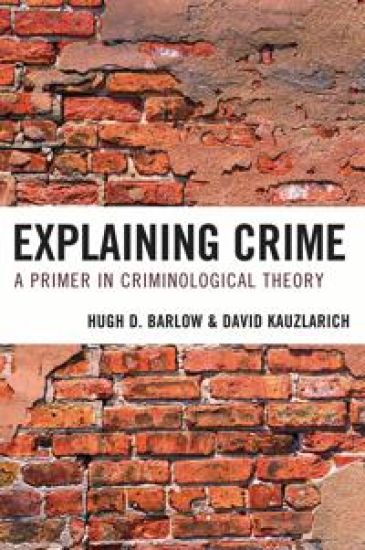
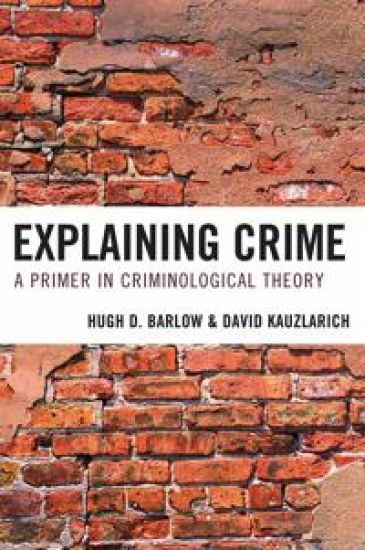
This book provides a concise but comprehensive review of the full range of classic and contemporary theories of crime. With separate chapters on the nature and use of criminological theory as well as theoretical application, the authors render the difficult task of explaining crime more understandable to the introductory student. All of the main theories in criminology are reviewed including classical and rational choice, biological, psychological, and evolutionary, social structural, social process, critical, general, and integrated approaches. Copious examples of the spirit of the theories are supplied, many with a popular culture (e.g., film and music) connection. The highly original final chapter, titled 'Putting Criminological Theory to Work,' provides readers with an integrated theoretical model that students can apply to virtually any type of crime. The book is well suited for use in undergraduate and graduate courses in criminology, criminal justice, and deviance.
This book provides a concise but comprehensive review of the full range of classic and contemporary theories of crime. With separate chapters on the nature and use of criminological theory as well as theoretical application, the authors render the difficult task of explaining crime more understandable to the introductory student. All of the main theories in criminology are reviewed including classical and rational choice, biological, psychological, and evolutionary, social structural, social process, critical, general, and integrated approaches. Copious examples of the spirit of the theories are supplied, many with a popular culture (e.g., film and music) connection. The highly original final chapter, titled 'Putting Criminological Theory to Work,' provides readers with an integrated theoretical model that students can apply to virtually any type of crime. The book is well suited for use in undergraduate and graduate courses in criminology, criminal justice, and deviance.
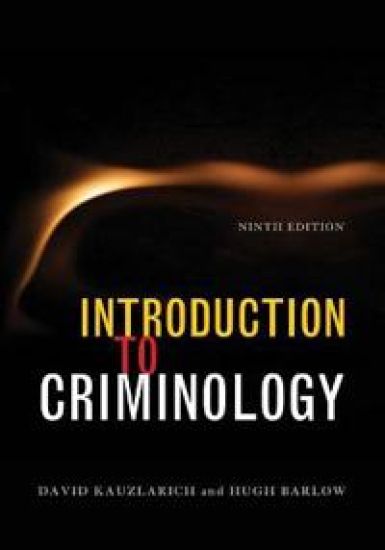
The ninth edition of Introduction to Criminology provides a comprehensive introduction to the study of lawmaking, lawbreaking, and reactions to crime. Both classic and contemporary theories of the causes of crime are discussed and critiqued. Special attention is given to critical theories of crime and to general theories. The latest crime statistics, research, and theorizing are fully integrated throughout the text and the innovative epilogue provides students with the tools to actually apply criminological theory to real life events. New to this edition: —Thoroughly updated throughout including statistics, studies, and theories in criminology. —The discussions of drugs, prostitution, and organized crime are now together in one chapter (chapter 7). —New chapters have been added on critical theories (chapter 14) and biological, psychological, and evolutionary explanations of crime (chapter 11). —More illustrations and examples of crime from popular culture have been added throughout the text in an effort to help students make stronger intellectual connections to the material. —A new epilogue has been added that will help students think through common criminological issues and questions they are likely to encounter in everyday conversation.