Kirjailija
David Kennedy
Kirjat ja teokset yhdessä paikassa: 87 kirjaa, julkaisuja vuosilta 2003–2026, suosituimpiin kuuluu The Rights of Spring. Vertaile teosten hintoja ja tarkista saatavuus suomalaisista kirjakaupoista.
87 kirjaa
Kirjojen julkaisuvuodet: 2003–2026.
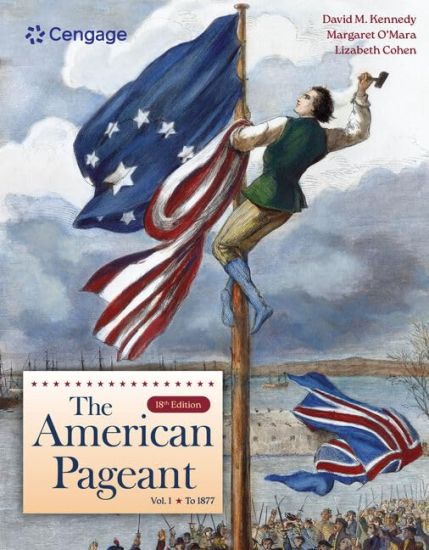
You may not think that a history book could make you laugh, but Kennedy/O'Mara's THE AMERICAN PAGEANT, Volume I, 18th Edition, just might. It's known for being one of the most popular, effective and entertaining texts on American history. Colorful anecdotes, first-person quotations and the authors' trademark wit bring history to life. Learning aids make the book as accessible as it is enjoyable. Part openers and chapter-ending chronologies provide a context for the major periods in American history, while primary sources and introductions to key historical figures give you a front row seat to the nation's past and place today’s debates in historical context.
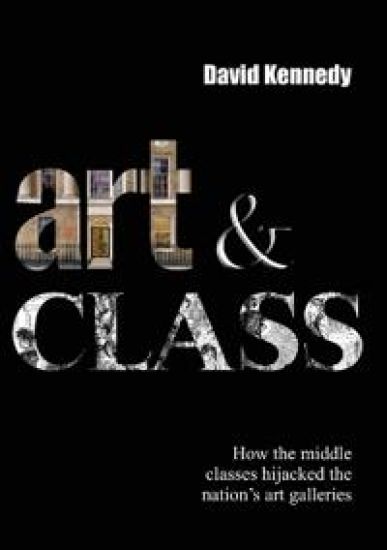
On a bright autumn day in 1857, the workers from Salts Mill in Yorkshire were waiting for special trains to take them on a day trip. But they were not going to Blackpool: they were going to The Manchester Art Exhibition which attracted 1.3 million visitors in less than six months the majority of whom were mill hands, factory workers and domestic servants. Today less than 8% of visitors to our great galleries are from the working class. When and why did the working classes stop visiting art galleries and why does this matter? Art & Class describes the advent of public art in the 18th Century, the development of national galleries in London and the explosion of regional galleries, all of which were crowded with working-class visitors. All this came to a halt in 1946 when Keynes and the Bloomsbury Group seized control of the art world by establishing the Arts Council, slashing the countrywide Art for the People budget and pouring money into opera and ballet. The same metropolitan elite, who established the Arts Council in 1946, still dominate our national galleries. Despite free opening, a range of charging and taxation policies mean that the working classes are not only being denied access to cultural capital but are subsidising the middle classes. Art is a key aspect of cultural capital which middle-class children absorb through visits to galleries and concerts, but which are beyond the reach of working-class parents. This precious commodity opens the door to the elite universities and then on to high-paying jobs but working-class graduates entering the elite professions earn 16% less than their middle-class peers. If the boards of today's galleries were more diverse and had inclusive charging and curatorial policies then, as in the Victorian era, they would attract visitors from all classes.
Of Law and the World
David Kennedy; Martti Koskenniemi
HARVARD UNIVERSITY PRESS
2023
sidottu
Halvin toimitettuna 46,40 €
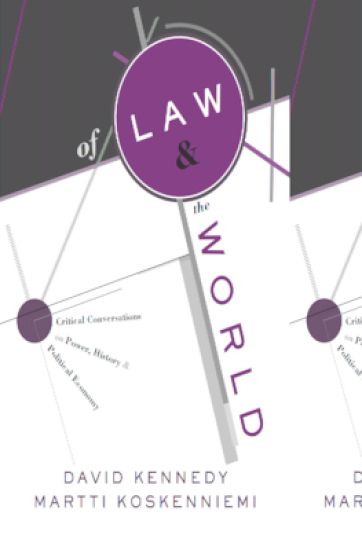
A searching dialogue between two leading legal scholars exploring the place of law in global affairs. The modern world is legalized: legal language, institutions, and professionals are everywhere. But what is law’s power in global life? What does all this legality have to do with hegemony, with hierarchy and inequality, and with the diversity of human experience? What is its history and how does that history matter in world affairs? Above all, what does it mean to think “critically” about law and global affairs? In this poignant and iconoclastic book, two leading scholars take us to the heart of the matter, examining law’s relationship with history, power, and political economy. David Kennedy and Martti Koskenniemi have often inspired each other and are both considered “critical” voices in international law, but they have never explored their similarities and differences as deeply as they do here. Of Law and the World takes the form of a conversation, as the authors reflect on the study of international law, the motivations underlying their research, and the payoffs and limitations of their investigations into law’s role in global affairs. They revisit and renew debates about the past and future of the many legalities that shape our world. Erudite, open-minded, and informed by decades of experience and observation, Of Law and the World is an unflinchingly honest confrontation with humanity’s struggle to live together.
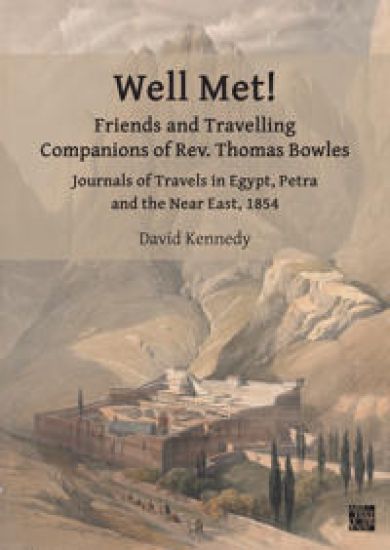
Well Met! Friends and Travelling Companions of Rev. Thomas Bowles
David Kennedy
Archaeopress
2023
pokkari
Throughout the two years of a grand tour as far as Australia and New Zealand (1852-4), Rev Thomas Bowles kept a daily journal, ultimately filling over 1000 pages in 3 volumes. Transcribed here is the part of the journals which took Bowles from Sri Lanka to Egypt and the Levant then on home. The end of the Napoleonic Wars in 1815 saw a burgeoning interest by westerners in Egypt and the ‘Holy Land’. Egypt offered astonishing ancient remains but also the attractions of its healthy winter climate, and exploration in the Levant drew attention to the immense ruins of Graeco-Roman civilization. Then came Burckhardt’s re-discovery of Petra in 1812. Within a few years a pattern of travel emerged for westerners which included one or more of several months sailing down the Nile, undertaking the c. 40 days of the Long Desert Route from Cairo to Petra and Jerusalem, exploration of the Decapolis cities beyond the Jordan and a bold lunge across the desert to Palmyra. Any one of these was demanding and a large minority of these travellers – who included some women – became ill or suffered injuries; a few died. Many travellers kept notes or extensive journals, and some sent letters home. Some off these were later published but invariably sanitised. In recent years dozens of unpublished accounts have emerged, including two Travel Journals of the Rev. Thomas Bowles. Bowles undertook the demanding Long Desert Route in 1854. He records places seen and the experiences of often harsh travel conditions. More than that he met and travelled with many people along the way, representing a wonderful cross-section of often fascinating people: travellers, tourists, soldiers, businessmen, administrators, and many clergymen; mainly British and American; largely young – Bowles was 32; and a handful of courageous women. Complementing the journals are chapters explaining and amplifying what Bowles often took for granted and illustrating what he saw. Within them are biographical notes on many of his companions, not least the fifteen other westerners with whom he explored Petra in March 1854.
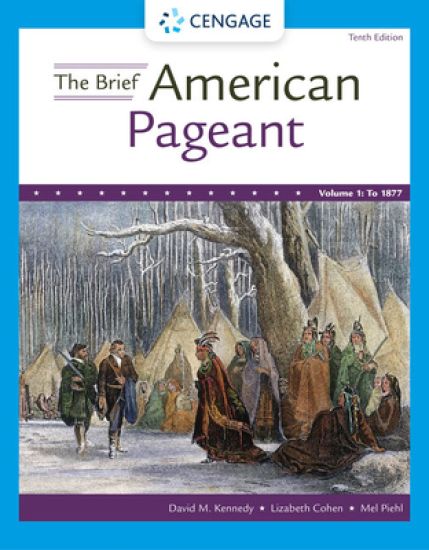
The Brief American Pageant: A History of the Republic, Volume I: To 1877
David Kennedy; Lizabeth Cohen; Mel Piehl
CENGAGE LEARNING, INC
2022
nidottu
Say goodbye to boring history readings. Through colorful anecdotes, first-person quotations and the authors' signature wit, Kennedy/Cohen/O'Mara/Piehl's THE BRIEF AMERICAN PAGEANT: A HISTORY OF THE REPUBLIC has earned the reputation as one of the most popular, effective and entertaining U. S. history texts. Its concise and vivid chronological narrative focuses on the central themes and great public debates that have dominated American history. The 10th edition provides expanded emphasis on the international context of numerous developments in U. S. history, Native American history, Black historical figures, the Roaring '20s, post-World War II movements for racial justice, privacy issues in the digital age and more. In addition, a variety of study tools help maximize your success -- including MindTap's anywhere, anytime digital learning solutions.
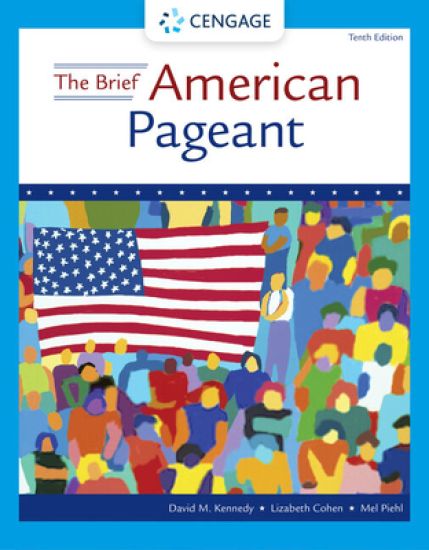
The Brief American Pageant
David Kennedy; Lizabeth Cohen; Mel Piehl
CENGAGE LEARNING, INC
2022
nidottu
Say goodbye to boring history readings. Through colorful anecdotes, first-person quotations and the authors' signature wit, Kennedy/Cohen/O'Mara/Piehl's THE BRIEF AMERICAN PAGEANT: A HISTORY OF THE REPUBLIC has earned the reputation as one of the most popular, effective and entertaining U. S. history texts. Its concise and vivid chronological narrative focuses on the central themes and great public debates that have dominated American history. The 10th edition provides expanded emphasis on the international context of numerous developments in U. S. history, Native American history, Black historical figures, the Roaring '20s, post-World War II movements for racial justice, privacy issues in the digital age and more. In addition, a variety of study tools help maximize your success -- including MindTap's anywhere, anytime digital learning solutions.
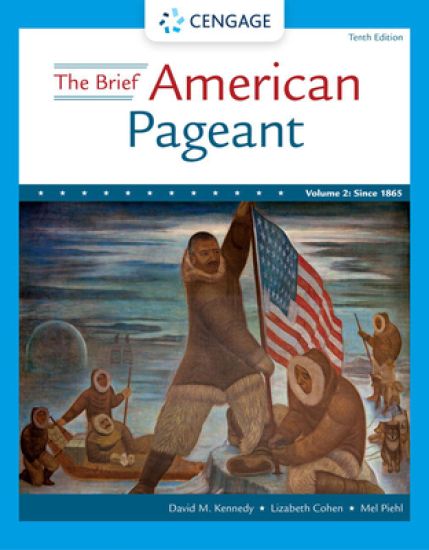
The Brief American Pageant: A History of the Republic, Volume II: Since 1865
David Kennedy; Lizabeth Cohen; Mel Piehl
CENGAGE LEARNING, INC
2022
nidottu
Say goodbye to boring history readings. Through colorful anecdotes, first-person quotations and the authors' signature wit, Kennedy/Cohen/O'Mara/Piehl's THE BRIEF AMERICAN PAGEANT: A HISTORY OF THE REPUBLIC has earned the reputation as one of the most popular, effective and entertaining U. S. history texts. Its concise and vivid chronological narrative focuses on the central themes and great public debates that have dominated American history. The 10th edition provides expanded emphasis on the international context of numerous developments in U. S. history, Native American history, Black historical figures, the Roaring '20s, post-World War II movements for racial justice, privacy issues in the digital age and more. In addition, a variety of study tools help maximize your success -- including MindTap's anywhere, anytime digital learning solutions.
Mommy, I Have a Friend Who Once Walked on Water is a book that describes situations a little girl in elementary school faces. She must make decisions on what to do to handle these situations. She must listen to her heart and always try to do the right thing.
You may not think that a history book could make you laugh, but THE AMERICAN PAGEANT just might. It's known for being one of the most popular, effective and entertaining texts on American history. Colorful anecdotes, first-person quotations and the authors' trademark wit bring history to life. Learning aids make the book as accessible as it is enjoyable: part openers and chapter-ending chronologies provide a context for the major periods in American history, while primary sources and introductions to key historical figures give you a front row seat to the nation's past.
This is a fascinating history of Charles Washing, his family and furniture business. It's fiction based on fact. It traces the plight of his parents, a full blood Chinaman and English Jewess mother in the 1850's, escaping their respective homelands and settling in Ararat, Victoria. They raised 10 kids against the odds, moving to Creswick and Melbourne before settling in Perth and establishing Washing Brothers Furniture Factory. The Factories Act was a desperate attempt by the Government to eradicate Asiatic businesses pressured by Unions and European businessmen. Being part Chinese and successful at their trade they were a prime target. To survive meant risking everything, by breaking the law, dodging government inspectors and even beating the Supreme Court. It was the birth of Racist Furniture.
A comprehensive look into early professional football, this biography of Everton and Liverpool’s founding father John Houlding breaks new ground by addressing the important role of football club ownership in the early history of the game. Football supporters the world over are aware of the great rivalry that exists between the two giants of Merseyside football, Everton and Liverpool. This rivalry was created out of a split within Everton FC that gave rise, in 1892, to Liverpool FC. The two clubs subsequently went on to dominate the English game, amassing twenty-seven English top flight titles between them, more than any other city in the country. What isn’t as well known is that one man was responsible for the rise of both clubs: former Lord Mayor of Liverpool, John Houlding. In The Man Who Created Merseyside Football: John Houlding, Founding Father of Liverpool and Everton, David Kennedy recounts the sporting legacy of Houlding. A brewer and Conservative politician, Houlding was a polarising yet fascinating figure. His financial input, first at Everton Football Club and then at Liverpool Football Club, provided the launch pad for the establishment of two nationally and internationally known sporting organizations. By the time of his death in 1902, both clubs had reached the pinnacle of the English game and Houlding’s place as the founding father of professional football in Merseyside was assured. More than just a football biography, The Man Who Created Merseyside Football also details the many other aspects of Houlding’s life—a family man, businessman, and local politician with parliamentary aspirations. His business and political life, in fact, became entangled in dramatic fashion with the Liverpool football scene on more than one occasion. The complete story of this captivating and influential individual is finally told for the first time in this book, in full and wonderful detail.

When Hillsborough County Sheriff's Deputy Lance Knott's wife, Tampa Police Officer Kasey Knotts, dies in the line of duty, he loses not only the love of his life but also the mother to their two-year-old son Jacob. But like all law enforcement officers, Kasey wrote her, "Open When" letter. The last words of love that a fallen officer leaves behind, for their grieving loved ones. But instead of one heartfelt letter, Kasey wrote seven. Knowing how hard Lance will take her death, Kasey plans ahead. Beginning the day before her funeral, she leaves a series of letters to her husband, designed to ease his grief over the first seven days following her funeral. As each day passes, each new message fills him with heart-wrenching memories and of smiles and laughter from years gone by. With Kasey's words to comfort him, Lance slowly learns the true meaning of the words, "True love never dies." And through their journey, we will discover why, the three words "I love you" are words that are meant to be shared, experienced, and felt, before it is our time to say our final goodbye.
Meet Uncle Champ. Many people may consider his situation to be uncomfortable. However, Uncle Champ knows that to put faith in God, all things become worthwhile. He finds happiness by counting his blessings instead of his troubles. Uncle Champ shows that his faith in God helps him tolerate his troubles and focus on his blessings.
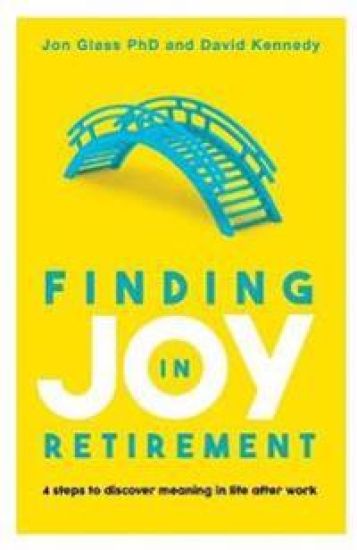
Do you ever feel like you're walking blindfolded towards retirement? Do you wonder if there is a better way to prepare? It can be jarring going from working flat out one week to being newly retired the next. We've all heard stories of people who retire only to return to work six months later. While this can be for financial reasons, if you haven't given enough thought to your purpose in this new chapter of your life, there is every chance you will find the early stages of retirement mentally and emotionally hard. In Finding Joy in Retirement, Jon Glass and David Kennedy share their unique perspectives on exactly what it takes to thrive when your career comes to an end, based on Jon's unique retirement coaching conversations and David's interviews with inspiring older Australians from all walks of life. Jon shares the ideas, tools, and methods he uses in his successful retirement coaching practice, 64 PLUS, to shift your thinking and open your eyes to the infinite possibilities of life after work. David then provides a window into the priceless experiences of others, with inspiring stories that shed light on the challenges and triumphs of successful retirement transitions. You'll discover: The 4 essential questions you must answer to discover new meaning in life after work. Why traditional approaches to retirement planning need to change. Valuable advice from recent retirees and colourful stories of unique retirement journeys. You get one chance to make retirement extraordinary. This uplifting book will inspire you to plan for, and work towards, the life that YOU wish to lead beyond the nine to five. Retirement: You won't know what it's like until you get there.
Jack Madison was a young mentally handicapped man in Colonial America in the 1690's during the infamous Salem Witch Trials. He was already on the run for a murder that he had committed back in England. Once the hysteria of the Salem Witch hunts started, a young boy came up missing. During the search, Jack's true identity was discovered and his handicap was misunderstood as witchcraft. Also known at the time as, The Devil's Magic. An unsuccessful interrogation by Sheriff Corwin leads to vigilante justice and young Jack being burned alive. The Sheriff believed that Jack's death was justice served. But what he did not know, was that it was just the beginning of the nightmare that would come to be known as, Backward Jack. When Jack shows up in Central Florida in the mid-1970's, two little girls come up missing and Sheriff Justos "John" Cohalla thinks that he has a serial killer on his hands. But soon realizes that what he has is more than just a killer, he has a nightmare. Finally, in early 2002 Jack possesses a young truck driver named Carlos Zuluaga. Jack's intentions are to just kill more innocent victims. But what he doesn't know is that Carlos already has his own list of victims in mind. It's a race against time for Tampa's Police Captain Tanya Leigh Roberts, F. B. I. Special Agents Jason Batchelor and Kc Ermlick to stop Jack before he strikes again. Some call him a vigilante, others call him a murderer. The F. B. I correctly calls him, Backward Jack "There's a legend around Salem... A killer burned, but not dead. A curse on Salem, a death curse, many call it The Backward Jack's curse. They say he died as a young man, but he keeps coming back. Few have seen him and lived. Some have even tried to stop him... However, no one can. People forget he's out there, seeking justice..."