Kirjojen hintavertailu – 12 903 724 kirjaa ja 27 kauppaa
Kirjailija
David Kilcullen
Kirjat ja teokset yhdessä paikassa: 21 kirjaa, julkaisuja vuosilta 2009–2026, suosituimpiin kuuluu The Art of War and Peace. Vertaile teosten hintoja ja tarkista saatavuus suomalaisista kirjakaupoista.
FOREWORD BY SIR NICK CARTER, FORMER UK CHIEF OF DEFENCE STAFF The world is becoming a more dangerous place. Since the fall of Kabul and Russia's invasion of Ukraine, the US-led liberal international order is giving way to a more chaotic and contested world system. Western credibility and deterrence are diminishing in the face of wars in Europe and the Middle East, tensions across the Taiwan Strait, and rising populism and terrorism around the world. Can peace, mutual respect and democracy survive, or are we destined to a permanent chaos in which authoritarians and populists thrive? Using decades of experience as policy advisors in conflicts in Iraq and across Africa, and on recent fieldwork in Israel and Taiwan, the authors analyse the nature of modern war, considering state-on-state and intra-state conflicts. They investigate how technology can be a leveller for small powers against larger aggressors and the role of leadership, diplomacy and economic assistance. The Art of War and Peace explores how wars can be won on the battlefield and how that success can be translated into a stable and enduring peace.
'A deeply thought-provoking book full of wisdom, insight and common sense, by two of our foremost strategists' James Holland, bestselling author of The War in the WestFOREWORD BY SIR NICK CARTER, FORMER UK CHIEF OF DEFENCE STAFF How have the character and technology of war changed in recent times? Why does battlefield victory often fail to result in a sustainable peace? What is the best way to prevent, fight and resolve future conflict? The world is becoming a more dangerous place. Since the fall of Kabul and Russia's invasion of Ukraine, the US-led liberal international order is giving way to a more chaotic and contested world system. Western credibility and deterrence are diminishing in the face of wars in Europe and the Middle East, tensions across the Taiwan Strait, and rising populism and terrorism around the world. Can peace, mutual respect and democracy survive, or are we destined to a permanent chaos in which authoritarians and populists thrive? Using decades of experience as policy advisors in conflicts in Iraq and across Africa, and on recent fieldwork in Israel and Taiwan, the authors analyse the nature of modern war, considering state-on-state and intra-state conflicts. They investigate how technology can be a leveller for small powers against larger aggressors and the role of leadership, diplomacy and economic assistance. Weighing up past lessons, present observations and predictions about the future, The Art of War and Peace explores how wars can be won on the battlefield and how that success can be translated into a stable and enduring peace.
In 1993, a newly-appointed CIA director warned that Western powers might have ‘slain a large dragon’ with the fall of the USSR, but now faced a ‘bewildering variety of poisonous snakes’. Since then, both dragons (state enemies like Russia and China) and snakes (terrorist and guerrilla organisations) have watched the US struggle in Iraq and Afghanistan, and mastered new methods in response: hybrid and urban warfare, political manipulation, and harnessing digital technology. Leading soldier-scholar David Kilcullen reveals everything the West’s opponents have learned from twenty-first-century conflict and explains how their cutting-edge tactics and adaptability pose a serious threat to America and its allies, disabling the West’s military advantage. The Dragons and the Snakes is a compelling, counterintuitive look at the new, vastly complex global arena. Kilcullen reshapes our understanding of the West’s foes, and shows how it can respond.
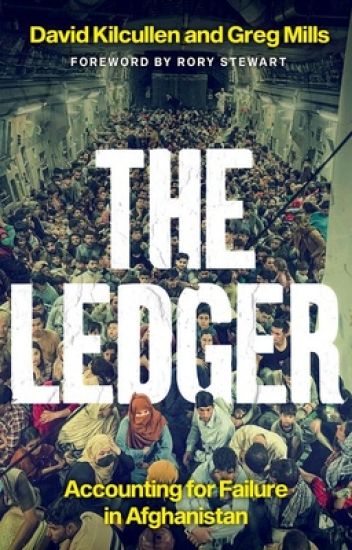
'These things happened. They were glorious and they changed the world,' said Charlie Wilson, of America's role backing the anti-Soviet mujahideen. 'And then we fucked up the endgame.' With no support for Afghanistan after that war, the vacuum was filled by the Taliban and bin Laden. 'The Ledger' assesses the West's similarly failed approach to Afghanistan after 9/11--in military, diplomatic, political and developmental terms. Dr David Kilcullen and Dr Greg Mills are uniquely placed to reflect backwards and forwards on the Afghan conflict: they worked with the international mission both as advisers and within the Arg, and they have considerable experience of counterinsurgency and stabilisation operations elsewhere in the world. Here these two experts show that there is plenty of blame to go around when explaining the failure to bring peace to Afghanistan after 9/11. The signs of collapse were conveniently ignored, in favour of political narratives of progress and success. Yet for Afghans, the war and its geopolitical effects are not over because NATO is gone--Afghanistan remains globally connected through digital communications and networks. This vital book explains why and where failings in Afghanistan happened, warning against exceptionalist approaches to future peacebuilding missions around the globe.
In 1993, a newly-appointed CIA director warned that Western powers might have ‘slain a large dragon’ with the fall of the USSR, but now faced a ‘bewildering variety of poisonous snakes’. Since then, both dragons (state enemies like Russia and China) and snakes (terrorist and guerrilla organisations) have watched the US struggle in Iraq and Afghanistan, and mastered new methods in response: hybrid and urban warfare, political manipulation, and harnessing digital technology. Leading soldier-scholar David Kilcullen reveals everything the West’s opponents have learned from twenty-first-century conflict and explains how their cutting-edge tactics and adaptability pose a serious threat to America and its allies, disabling the West’s military advantage. The Dragons and the Snakes is a compelling, counterintuitive look at the new, vastly complex global arena. Kilcullen reshapes our understanding of the West’s foes, and shows how it can respond.
A counterintuitive examination into how, and what, opponents of the West have learned during the last quarter-century of conflict. Just two decades ago, observers spoke of the US as a "hyperpower"--a nation with more relative power than any empire in history. Yet as early as 1993, CIA director James Woolsey pointed out that although Western powers had "slain a large dragon" by defeating the Soviet Union, they now faced a "bewildering variety of poisonous snakes." In The Dragons and the Snakes, the eminent soldier-scholar David Kilcullen asks how, and what, opponents of the West have learned during the last quarter-century of conflict. Applying a combination of evolutionary theory and detailed field observation, he explains what happened to the "snakes"--non-state threats including terrorists and guerrillas--and the "dragons"--state-based competitors such as Russia and China. He explores how enemies learn under conditions of conflict, and examines how Western dominance over a very particular, narrowly-defined form of warfare since the Cold War has created a fitness landscape that forces adversaries to adapt in ways that present serious new challenges to America and its allies. Within the world's contemporary conflict zones, state and non-state threats have increasingly come to resemble each other, with states adopting non-state techniques and non-state actors now able to access lethal weapon systems once only available to governments. A counterintuitive look at a vastly more complex conflict environment, this book both reshapes our understanding of the West's adversaries and shows how we can respond given the increasing limits on US power.
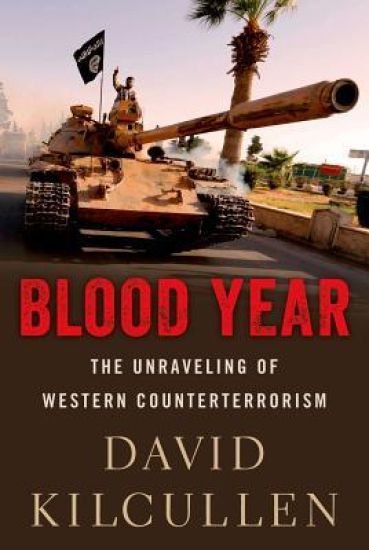
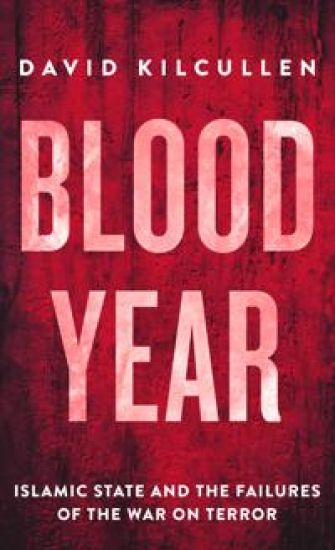
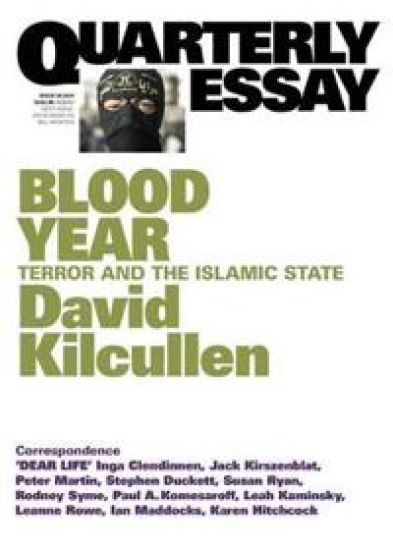
In 2014, a resurgent and bellicose Russia took over Crimea and fueled a civil war in Eastern Ukraine; post-Saddam Iraq lost a third of its territory to an army of hyper-violent millennialists; and the peace process in Israel seemed to completely collapse. In short, the post-Cold War security order that the US had constructed after 1991 seemed to be coming apart at the seams. David Kilcullen was one of the architects of America's strategy in the late phases of the second Gulf War, and he has also spent time in Afghanistan and other hotspots. In Blood Year, he provides a wide-angle view of the current situation in the Middle East and analyzes how America and the West ended up in such dire circumstances. Kilcullen lays much of the blame on Bush's initial decision to invade Iraq (which had negative secondary effects in Afghanistan), but also takes Obama to task for simply withdrawing and adopting a leading from behind strategy. As events have proven, Kilcullen contends, withdrawal was a fundamentally misguided plan. The U. S. had uncorked the genie, and it had a responsibility to at least attempt to keep it under control. Instead, the U. S. is at a point where administration officials state that the losses of Ramadi and Palmyra are manageable setbacks. Kilcullen argues that the U. S. needs to re-engage in the region, whether it wants to or not, because it is largely responsible for the situation that is now unfolding. Blood Year is an essential read for anyone interested in understanding not only why the region that the U. S. invaded a dozen years ago has collapsed into utter chaos, but also what the U. S. can do to alleviate the grim situation.
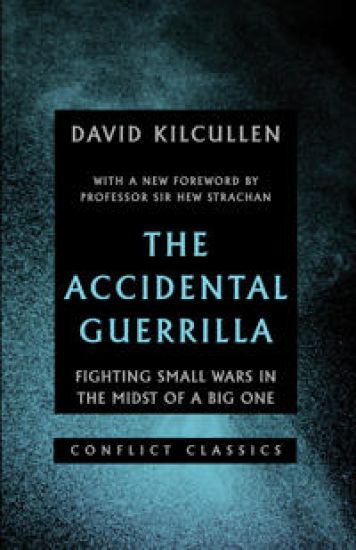
War in the post-9/11 world is far different from what we expected it be. Counterinsurgency and protracted guerrilla warfare, not shock and awe, are the order of the day. David Kilcullen is the world's foremost expert on this way of war, and in The Accidental Guerrilla, the Senior Counterinsurgency Advisor to General David Petraeus in Iraq surveys war as it is actually fought in the contemporary world. Colouring his account with gripping battlefield experiences that range from the jungles and highlands of South and Southeast Asia to the mountains of the Afghanistan-Pakistan border to the dusty towns of the Middle East and the horn of Africa, The Accidental Guerrilla will, quite simply, change the way we think about war. While conventional warfare has obvious limits, Kilcullen also stresses that neither counterterrorism nor traditional counterinsurgency is the appropriate framework to fight the enemy we now face. Certainly, traditional counterinsurgency is more effective than counterterrorism when it comes to entities like Al Qaeda, but as Kilcullen contends, our current focus is far too narrow, for it tends to emphasize one geographical region and one state. The current war presents a much different situation: stateless insurgents and terrorists operating across large number of countries and only loosely affiliated with each other.
Blood Year is an unsparingly honest, self-critical analysis of the collapse of western counterterrorism strategy and the subsequent rise of Islamic State. As a soldier, counterterrorism official, and Chief Strategist in the US State Department's Bureau of Counterterrorism, David Kilcullen was one of the original architects of US and allied counterterrorism policy. Kilcullen's frank assessment - that the strategy he helped design has failed, that it has not made us safer, and has contributed to new threats, including Islamic State - makes this short book mandatory reading for anyone interested in how terrorism is confronted. The most startling part of his analysis is that there may be worse dangers than ISIS incubating in various parts of the world.
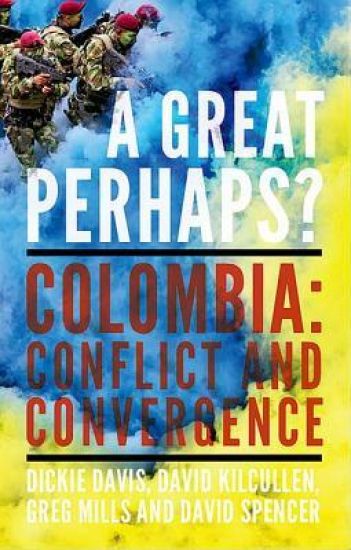
No country has managed as rapid and positive a turnaround in governance and security conditions this century than Colombia. In 1999, rebels of the FARC and ELN were, literally, at the gates of Bogota, Colombian known more for rapacious corruption, weak government, drug smuggling and criminality, a country synonymous with the antics of Pablo Escobar. Fifteen years later the guerrillas and the government are at the peace table in Havana, the economy has been a top performer in Latin America, and drugs are no longer the pervasive scourge they once were. To date, however, there has been no comprehensive examination of the different elements employed by government to combat the guerrillas, to win local and international political and military support, extend government authority to the 75 percent of the countryside where it was seldom felt, and to turn the Colombian economy into a success resembling the high-growth examples of Southeast Asia. How the Colombians did all of this is the subject of this book by four international specialists with untrammelled policy and practical expertise in counter-insurgency campaigns in Colombia and elsewhere, bringing a unique comparative perspective. Based on field-work in Colombia's regions, the study provides a history to the conflict, compares it to other historical and contemporary case-studies, examines the war from the perspective of the government and the guerrilla, delves into the development of special Colombian capabilities notably in intelligence and the use of airpower and special forces, and explains the economic dimension in terms both of historical exclusion and ongoing attempts at growth and inclusion. Finally, it concludes with an assessment on the country's prospects: can the combination of improved security, a flourishing economy and the peace process offer an opportunity to finally translate Colombia from, in Gabriel Garcia Marquez's words, 'a great perhaps' into something more permanent?
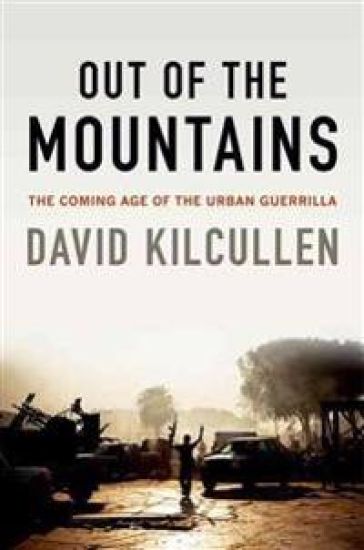
When Americans think of modern warfare, what comes to mind is the US army skirmishing with terrorists and insurgents in the mountains of Afghanistan. But the face of global conflict is ever-changing. In Out of the Mountains, David Kilcullen, one of the world's leading experts on current and future conflict, offers a groundbreaking look at what may happen after today's wars end. This is a book about future conflicts and future cities, and about the challenges and opportunities that four powerful megatrends--population, urbanization, coastal settlement, and connectedness--are creating across the planet. And it is about what cities, communities and businesses can do to prepare for a future in which all aspects of human society--including, but not limited to, conflict, crime and violence--are changing at an unprecedented pace. Kilcullen argues that conflict is increasingly likely to occur in sprawling coastal cities, in peri-urban slum settlements that are enveloping many regions of the Middle East, Africa, Latin America and Asia, and in highly connected, electronically networked settings. He suggests that cities, rather than countries, are the critical unit of analysis for future conflict and that resiliency, not stability, will be the key objective. Ranging across the globe--from Kingston to Mogadishu to Lagos to Benghazi to Mumbai--he offers a unified theory of "competitive control" that explains how non-state armed groups such as drug cartels, street gangs, and warlords draw their strength from local populations, providing useful ideas for dealing with these groups and with diffuse social conflicts in general. His extensive fieldwork on the ground in a series of urban conflicts suggests that there will be no military solution for many of the struggles we will face in the future. We will need to involve local people deeply to address problems that neither outsiders nor locals alone can solve, drawing on the insight only locals can bring, together with outsider knowledge from fields like urban planning, systems engineering, renewable energy, conflict resolution and mediation. This deeply researched and compellingly argued book provides an invaluable roadmap to a future that will increasingly be crowded, urban, coastal, connected--and dangerous.
Last year was a 'blood year' in the Middle East - massacres and beheadings, fallen cities, collapsed and collapsing states, the unravelling of a decade of Western strategy. We saw the rise of ISIS, the splintering of government in Iraq, and foreign fighters - many from Europe, Australia and Africa - flowing into Syria at a rate ten times that during the height of the Iraq War. What went wrong? In Blood Year, David Kilcullen calls on twenty-five years' experience to answer that question. This is a vivid, urgent account of the War on Terror by someone who helped shape its strategy, as well as witnessing its evolution on the ground. Kilcullen looks to strategy and history to make sense of the crisis. What are the roots and causes of the global jihad movement? What is ISIS? What threats does it pose to Australia? What does its rise say about the effectiveness of the War on Terror since 9/11, and what does a coherent strategy look like after a disastrous year? 'As things stand in mid-2015, Western countries ...face a larger, more unified, capable, experienced and savage enemy, in a less stable, more fragmented region. It isn't just ISIS - al-Qaeda has emerged from its eclipse and is back in the game in Afghanistan, Pakistan, India, Syria and Yemen. We're dealing with not one, but two global terrorist organisations, each with its own regional branches, plus a vastly larger radicalised population at home and a massive flow of foreign fighters.' - David Kilcullen, Blood Year
In his third book, David Kilcullen takes us out of the mountains: away from the remote, rural guerrilla warfare of Afghanistan, and into the marginalised slums and complex security threats of the world's coastal cities, where almost 75 per cent of us will be living by mid-century. Scrutinising major environmental trends - population growth, coastal urbanisation - and increasing digital connectivity he projects a future of feral cities, urban systems under stress, and increasing overlaps between crime and war, internal and external threats, and the real and virtual worlds. Informed by Kilcullen's own fieldwork in the Caribbean, Somalia, the Middle East and Afghanistan, and that of his field research teams in cities in Central America and Africa, Out of the Mountains presents detailed, on-the-ground accounts of the new faces of modern conflict - - from the 2008 Mumbai terrorist attacks, to transnational drug networks, local street gangs, and the uprisings of the Arab Spring.
When Americans think of modern warfare, what comes to mind is the US army skirmishing with terrorists and insurgents in the mountains of Afghanistan. But the face of global conflict is ever-changing. In Out of the Mountains, David Kilcullen, one of the world's leading experts on current and future conflict, offers a groundbreaking look at what may happen after today's wars end. This is a book about future conflicts and future cities, and about the challenges and opportunities that four powerful megatrends--population, urbanization, coastal settlement, and connectedness--are creating across the planet. And it is about what cities, communities and businesses can do to prepare for a future in which all aspects of human society--including, but not limited to, conflict, crime and violence--are changing at an unprecedented pace. Kilcullen argues that conflict is increasingly likely to occur in sprawling coastal cities, in peri-urban slum settlements that are enveloping many regions of the Middle East, Africa, Latin America and Asia, and in highly connected, electronically networked settings. He suggests that cities, rather than countries, are the critical unit of analysis for future conflict and that resiliency, not stability, will be the key objective. Ranging across the globe--from Kingston to Mogadishu to Lagos to Benghazi to Mumbai--he offers a unified theory of "competitive control" that explains how non-state armed groups such as drug cartels, street gangs, and warlords draw their strength from local populations, providing useful ideas for dealing with these groups and with diffuse social conflicts in general. His extensive fieldwork on the ground in a series of urban conflicts suggests that there will be no military solution for many of the struggles we will face in the future. We will need to involve local people deeply to address problems that neither outsiders nor locals alone can solve, drawing on the insight only locals can bring, together with outsider knowledge from fields like urban planning, systems engineering, renewable energy, conflict resolution and mediation. This deeply researched and compellingly argued book provides an invaluable roadmap to a future that will increasingly be crowded, urban, coastal, connected--and dangerous.
David Kilcullen is one of the world's most influential experts on counterinsurgency and modern warfare, a ground-breaking theorist whose ideas "are revolutionizing military thinking throughout the west" (Washington Post). Indeed, his vision of modern warfare powerfully influenced America's decision to rethink its military strategy in Iraq and implement "the Surge," now recognized as a dramatic success. In The Accidental Guerrilla, Kilcullen provides a remarkably fresh perspective on the War on Terror. Kilcullen takes us "on the ground" to uncover the face of modern warfare, illuminating both the big global war (the "War on Terrorism") and its relation to the associated "small wars" across the globe: Iraq, Afghanistan, Indonesia, Thailand, the Pakistani tribal zones, East Timor and the horn of Africa. Kilcullen sees today's conflicts as a complex interweaving of contrasting trends--local insurgencies seeking autonomy caught up in a broader pan-Islamic campaign--small wars in the midst of a big one. He warns that America's actions in the war on terrorism have tended to conflate these trends, blurring the distinction between local and global struggles and thus enormously complicating our challenges. Indeed, the US had done a poor job of applying different tactics to these very different situations, continually misidentifying insurgents with limited aims and legitimate grievances--whom he calls "accidental guerrillas"--as part of a coordinated worldwide terror network. We must learn how to disentangle these strands, develop strategies that deal with global threats, avoid local conflicts where possible, and win them where necessary. Colored with gripping battlefield experiences that range from the jungles and highlands of Southeast Asia to the mountains of the Afghanistan-Pakistan border to the dusty towns of the Middle East, The Accidental Guerrilla will, quite simply, change the way we think about war. This book is a must read for everyone concerned about the war on terror.
David Kilcullen is one of the world's foremost experts on guerrilla warfare. His vision of war has been enormously influential, through his service as senior counterinsurgency adviser to General David Petraeus during the Surge in Iraq, as special adviser to the United States Secretary of State, and as a current adviser to the United States, British, Australian and other allied governments. This brief book distills that vision in an easily readable and practical format, through a completely revised and updated edition of his 2006 cult classic "The Twenty-Eight Articles", a field practitioner's guide to the fundamentals of counterinsurgency, which has become the essential handbook for generations of allied military officers and civilian officials in Iraq and Afghanistan, has become part of the course of instruction at military academies and counterinsurgency schools worldwide, and has been translated into Arabic and Spanish. This edition presents a fully updated and expanded version, including a new introduction, annotated tactical case studies, and an appendix on the key principles of the hugely successful Surge campaign of 2007 in Iraq. Issued as a rugged, pocket-sized field handbook, this modern classic will be an indispensable aid to a new generation of field officers, as well as a concise and accessible primer for students and the general reader.
David Kilcullen is one of the world's most influential experts on counterinsurgency and modern warfare, a ground-breaking theorist whose ideas "are revolutionizing military thinking throughout the west" (Washington Post). Indeed, his vision of modern warfare powerfully influenced the United States' decision to rethink its military strategy in Iraq and implement "the Surge," now recognized as a dramatic success. In Counterinsurgency, Kilcullen brings together his most salient writings on this vitally important topic. Here is a picture of modern warfare by someone who has had his boots on the ground in some of today's worst trouble spots-including Iraq and Afghanistan-and who has been studying counterinsurgency since 1985. Filled with down-to-earth, common-sense insights, this book is the definitive account of counterinsurgency, indispensable for all those interested in making sense of our world in an age of terror.
War today is far different from what we expected it to be. Counter-insurgency and protracted guerrilla warfare, not shock and awe, are the order of the day. The Australian David Kilcullen is the world's foremost expert on this way of war, and in "The Accidental Guerrilla", the Senior Counterinsurgency Advisor to the Pentagon and architect of 'the Surge', surveys war as it is actually fought in the contemporary world. Colouring his account with gripping battlefield experiences that range from the highlands of Southeast Asia to the mountains of the Afghanistan-Pakistan border to the dusty towns of the Middle East and the Horn of Africa, "The Accidental Guerrilla" will, quite simply, change the way we think about war. While conventional warfare has obvious limits, Kilcullen stresses that neither counterterrorism nor traditional counterinsurgency is the appropriate framework to fight the enemy we now face. Traditional counterinsurgency is more effective than counterterrorism when it comes to entities like AlQaeda, but, as Kilcullen contends, our current focus is far too narrow, for it tends to emphasize one geographical region and one state. The current war presents a much different situation: stateless insurgents and terrorists operating across large number of countries and only loosely affiliated with each other. Just as importantly, Western armies have done a poor job of applying different tactics to different situations, continually misidentifying insurgents with limited aims and legitimate grievances as part of a coordinated worldwide network. Given the incremental-yet remarkable-success of Kilcullen's strategy in Iraq, what Kilcullen has to say will be widely anticipated. His vision of war has changed Western policy in Iraq, Afghanistan and elsewhere, and this eagerly awaited comprehensive account will help shape policy for years to come.