Kirjojen hintavertailu – 12 903 735 kirjaa ja 27 kauppaa

Kirjailija

David Kinley

Kirjat ja teokset yhdessä paikassa: 11 kirjaa, julkaisuja vuosilta 2007–2025, suosituimpiin kuuluu The International Covenant on Economic, Social and Cultural Rights. Vertaile teosten hintoja ja tarkista saatavuus suomalaisista kirjakaupoista.

11 kirjaa

Kirjojen julkaisuvuodet: 2007–2025.

In a Rain of Dust

In a Rain of Dust

David Kinley

Johns Hopkins University Press
2025
sidottu
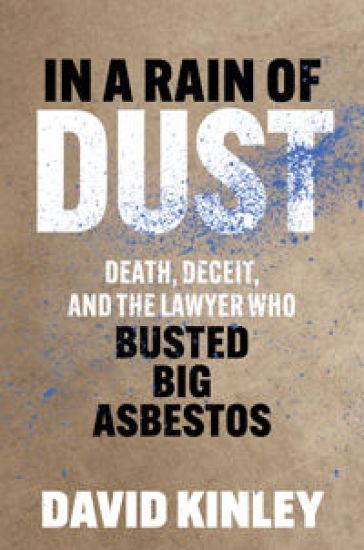
An inside story of asbestos, death, and the fight for justice by thousands of South Africans against a multinational mining corporation intent on denying responsibility. For nearly 90 years, a British company called Cape used local labor to mine and mill asbestos in South Africa. Poor and mostly black men, women, and children—some as young as seven—worked every day in clouds of asbestos dust that they carried home to their families, caked onto their skin, hair, and clothes. The appalling levels of disease and death in these communities caused by asbestos exposure were heartbreaking. In 1995, Richard Meeran, a young British lawyer with Indian and African roots, driven by his own experiences of racism in England, embarked on a David and Goliath battle against the company and its top-tier legal team to hold them accountable. David Kinley's In a Rain of Dust tells the harrowing story of this international legal drama. Facing deep-pocketed opponents and a century of established legal precedent, Meeran's case before the UK courts seemed hopeless. But after nine years of painstaking investigation, agonizing setbacks, vaudevillian escapades, and unlikely champions, Meeran prevailed. Drawing on dozens of interviews with key players and countless hours poring over thousands of documents across three continents, Kinley reveals an epic tale of triumph and justice against all odds. Marking a significant moment in both legal and human rights history, the book also highlights the profound political implications that victims faced in the newly post-Apartheid South Africa, where the case was widely seen as a test of racial as well as economic redemption. Asbestos mining in South Africa left a legacy of callous neglect, suffering, and corporate coverups. Working conditions in the country's asbestos mines and mills—described as a never-ending "rain of dust"—persisted for two decades after they had been outlawed in the United Kingdom and the United States. Meeran's case against Cape represented a turning point in making corporations pay for their human rights abuses overseas, and its impact helped launch the global corporate social responsibility movement that continues today.
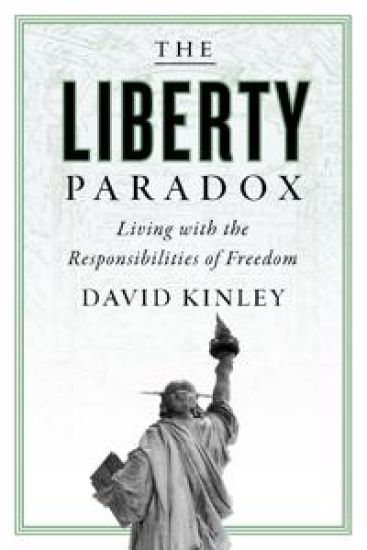
The Liberty Paradox

The Liberty Paradox

David Kinley

Johns Hopkins University Press
2024
sidottu
How do we balance freedom with the responsibilities we owe each other as members of society? Are we free to do whatever we want? This idea challenges us throughout our daily lives, from how to tackle pandemic restrictions and vaccine mandates to how to respond to technological innovations and climate change warnings. In The Liberty Paradox, David Kinley argues that we must rehabilitate the notion of liberty by rescuing it from the myopic demands of freedom without limit and reinstating the essential ingredient of social responsibility. Combining political, philosophical, and personal reflections as a global human rights lawyer, Kinley examines the implications of this liberty reset for how we negotiate freedom's boundaries in the realms of wealth, work, health, happiness, security, voice, love, and death. With chapters dedicated to each of these life-defining domains and written in a style both engaging and insightful, The Liberty Paradox explores how we try—and often fail—to balance personal desires and public interests. Kinley concludes that preserving liberty and protecting it from radical individualism requires new ways of respecting each other and rebuilding trust in the institutions and people that govern us.
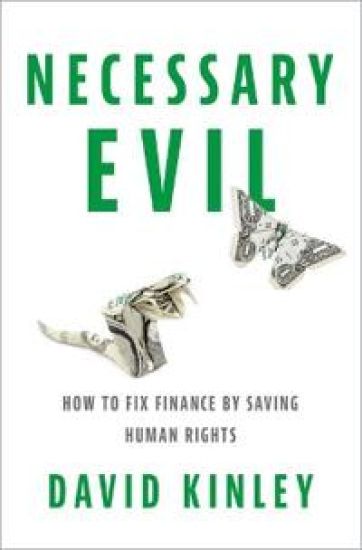
Necessary Evil

Necessary Evil

David Kinley

Oxford University Press Inc
2018
sidottu
Finance is the evil we cannot live without. It governs almost every aspect of our lives and has the power to liberate as well as enslave. With the worldâs total financial assetsâvalued at a staggering $300 trillionâbeing four times larger than the combined output of all the worldâs economies, there is, apparently, plenty to go around. Yet, while proponents of finance-driven capitalism point to the trickle-down effect as its contribution to wealth redistribution, there are still nearly a billion people across the globe existing on less than $2 a day; 14 percent of Americans are living below the official poverty line; and disparities in wealth equality everywhere have reached unprecedented levels. Evidently a trickle is not enough. How can this be when so much wealth abounds, and when finance is supposedly chastened and reformed after its latest global crisis? How, especially, can it be in an age when human rights are more loudly proclaimed than ever before? Can the financial sector be made to shoulder more of the burden of spreading wealth, reducing poverty, and protecting rights? And if so, what role can human rights play in making it happen? In answering these questions, David Kinley draws on a vast array of material from bankers, economists, lawyers, and politicians, as well as human rights activists, philosophers, historians and anthropologists, alongside his own experiences working in the field. Necessary Evil shows how finance can shed its conceit, return to its role as the economyâs servant not its master, and regain the public trust and credibility it has so spectacularly lost over the past decadeâall by helping human rights, not harming them.
The International Covenant on Economic, Social and Cultural Rights

The International Covenant on Economic, Social and Cultural Rights

Ben Saul; David Kinley; Jacqueline Mowbray

Oxford University Press
2016
nidottu
Economic, social, and cultural rights are finally coming of age. This book brings together all essential documents, materials, and case law relating to the International Covenant on Economic, Social and Cultural Rights (ICESCR) - one of the most important human rights instruments in international law - and its Optional Protocol. This book presents extracts from primary materials alongside critical commentary and analysis, placing the documents in their wider context and situating economic, social, and cultural rights within the broader human rights framework. There is increasing interest internationally, regionally, and in domestic legal systems in the protection of economic, social, and cultural rights. The Optional Protocol of 2008 allows for individual communications to be made to the UN Committee on Economic, Social and Cultural Rights after its entry into force in 2013. At the regional level, socio-economic rights are well embedded in human rights systems in Europe, Africa and the Americas. At the national level, constitutions and courts have increasingly regarded socio-economic rights as justiciable, narrowing the traditional divide with civil and political rights. This book contextualises these developments in the context of the ICESCR. It provides detailed analysis of the ICESCR structured around its articles, drawing on national as well as international case law and materials, and containing all of the key primary materials in its extensive appendices. New in paperback, this book is an indispensable resource for students of international human rights law.
The International Covenant on Economic, Social and Cultural Rights

The International Covenant on Economic, Social and Cultural Rights

Ben Saul; David Kinley; Jacqueline Mowbray

Oxford University Press
2014
sidottu
Economic, social and cultural rights are finally coming of age. This book brings together all essential documents, materials, and case law relating to the International Covenant on Economic, Social and Cultural Rights (ICESCR) - one of the most important human rights instruments in international law - and its Optional Protocol. This book presents extracts from primary materials alongside critical commentary and analysis, placing the documents in their wider context and situating economic, social, and cultural rights within the broader human rights framework. There is increasing interest internationally, regionally, and in domestic legal systems in the protection of economic, social, and cultural rights. The Optional Protocol of 2008 allows for individual communications to be made to the UN Committee on Economic, Social and Cultural Rights after its entry into force in 2013. At the regional level, socio-economic rights are well embedded in human rights systems in Europe, Africa and the Americas. At the national level, constitutions and courts have increasingly regarded socio-economic rights as justiciable, narrowing the traditional divide with civil and political rights. This book contextualises these developments in the context of the ICESCR. It provides detailed analysis of the ICESCR structured around its articles, drawing on national as well as international case law and materials, and containing all of the key primary materials in its extensive appendices. This book is indispensible for the judiciary, human rights practitioners, government legal advisers and agencies, national human rights institutions, international organisations, regional human rights bodies, NGOs and human rights activists, academics, and students alike.
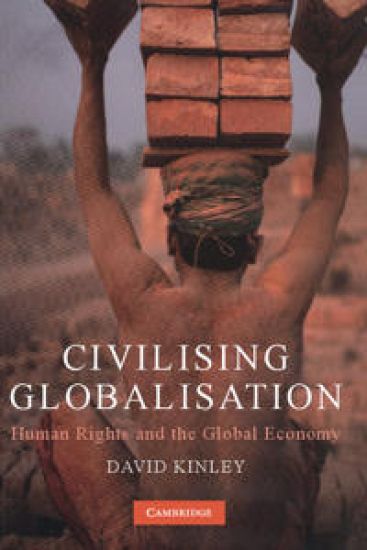
Civilising Globalisation

Civilising Globalisation

David Kinley

Cambridge University Press
2009
sidottu
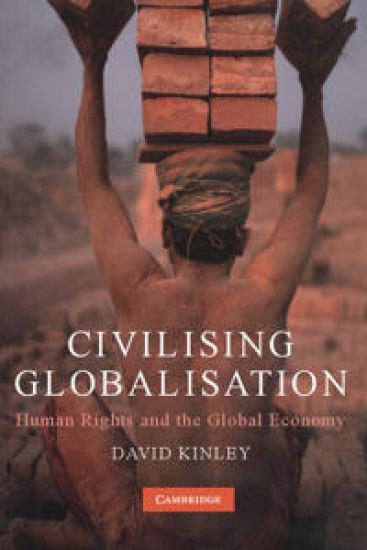
Economic globalisation and universal human rights both have the aspiration and power to improve and enrich individuals and communities. However, their respective institutions, methods, practices and goals differ, leading to both detrimental clashes and beneficial synergies. In this book, David Kinley analyses how human rights intersect with the trade, aid and commercial dimensions of global economic relations, taking the view that, while the global economy is a vitally important civilising instrument, it itself requires civilising according to human rights standards. Combining meticulous research with highly informed views and experiences, he outlines the intellectual, policy and practical frameworks for ensuring that the global economy advances the ends of human rights, argues for better exploitation of the global economy's capacity to distribute as well as create wealth, and proposes mechanisms by which to minimise and manage the socially debilitating effects of its market failures and financial meltdowns.
Civilising Globalisation

Civilising Globalisation

David Kinley

Cambridge University Press
2009
pokkari
Economic globalisation and universal human rights both have the aspiration and power to improve and enrich individuals and communities. However, their respective institutions, methods, practices and goals differ, leading to both detrimental clashes and beneficial synergies. In this book, David Kinley analyses how human rights intersect with the trade, aid and commercial dimensions of global economic relations, taking the view that, while the global economy is a vitally important civilising instrument, it itself requires civilising according to human rights standards. Combining meticulous research with highly informed views and experiences, he outlines the intellectual, policy and practical frameworks for ensuring that the global economy advances the ends of human rights, argues for better exploitation of the global economy's capacity to distribute as well as create wealth, and proposes mechanisms by which to minimise and manage the socially debilitating effects of its market failures and financial meltdowns.