Kirjojen hintavertailu – 12 903 727 kirjaa ja 27 kauppaa

Kirjailija

David Kirby

Kirjat ja teokset yhdessä paikassa: 43 kirjaa, julkaisuja vuosilta 1987–2026, suosituimpiin kuuluu A Wilderness of Monkeys. Vertaile teosten hintoja ja tarkista saatavuus suomalaisista kirjakaupoista.

43 kirjaa

Kirjojen julkaisuvuodet: 1987–2026.

The Baltic and the North Seas

The Baltic and the North Seas

Merja-Liisa Hinkkanen; Geoffrey Scammell; David Kirby

Routledge
2014
nidottu
Exploring the themes of the human relationship with the marine environment and the ways in which the peoples of Northern Europe have experienced and exploited their seas, this book reveals how human perception of the northern seas has changed over time. Drawing on a wide variety of sources, from Denmark and Britain to Norway, Finland and Germany, The Baltic and the North Seas is an insightful and colourful history of the politics, economy and culture of this intriguing region.
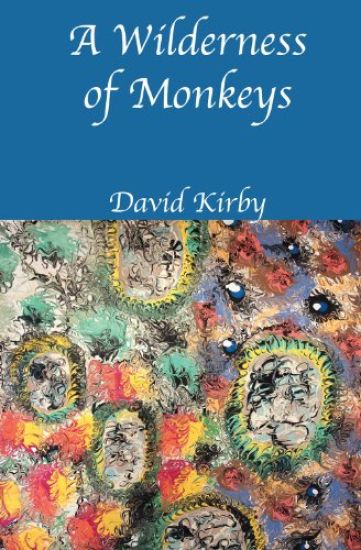
A Wilderness of Monkeys

A Wilderness of Monkeys

David Kirby

Hanging Loose Press
2014
nidottu
Poetry. David Kirby's] poetry embraces subjects, words and readers of all types in a blaze of ebullience and humility.--Harvard Review These poems are carefully crafted in their exuberance ... and inspire laughter from a deep place.--Library Journal
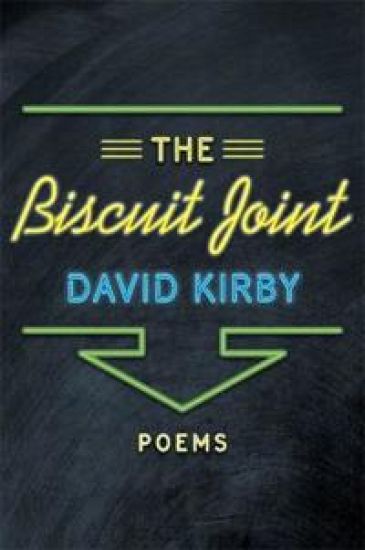
The Biscuit Joint

The Biscuit Joint

David Kirby

Louisiana State University Press
2013
sidottu
Praise for David Kirby ""Kirby is exuberant, irrepressible, maniacal and remarkably entertaining.... Okay, let me just say it: he is a wonderful poet."" -- Steve Kowit, San Diego Union-Tribune""Kirby's voice and matter (teaching, literature, traveling, rock 'n' roll, everyday bozohood) are utterly personal and, despite all the laughter, ultimately moving."" -- Ray Olson, Booklist""[Kirby] is a poet who peels away the layers of our skin to show us who we are: our weaknesses, our strengths, and our hilarious obsessions."" -- Micah Zevin, New Pages""The world that Kirby takes into his imagination and the one that arises from it merge to become a creation like no other, something like the world we inhabit but funnier and more full of wonder and terror."" -- Philip Levine, Ploughshares""These poems may be too cool for words."" -- Carol Muske-Dukes, New York Times Book ReviewInspired by the carpenter's biscuit joint -- a seamless, undetectable fit between pieces of wood -- David Kirby's latest collection dramatizes the artistic mind as a hidden connection that links the mundane with the remarkable. Even in our most ordinary actions, Kirby shows, there lies a wealth of creative inspiration: ""the poem that is written every day if we're there / to read it.""Well known for his garrulous and comic musings, Kirby follows a wandering yet calculated path. In ""What's the Plan, Artists?"" a girl's yawning in a picture gallery leads him to meditations on subjects as diverse as musical composition, the less-than-beautiful human figure, and ""the simple pleasures / of living."" The Biscuit Joint traverses seemingly random thoughts so methodically that the journey from beginning to end always proves satisfying and surprising.
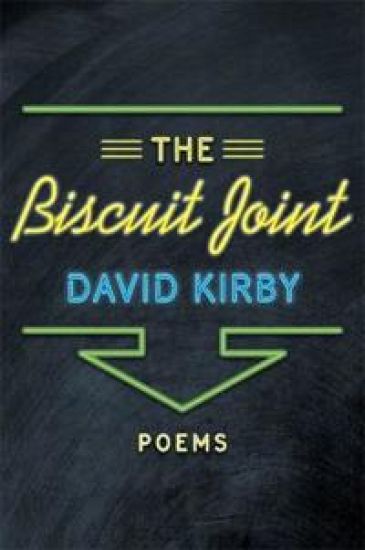
The Biscuit Joint

The Biscuit Joint

David Kirby

Louisiana State University Press
2013
nidottu
Praise for David Kirby ""Kirby is exuberant, irrepressible, maniacal and remarkably entertaining.... Okay, let me just say it: he is a wonderful poet."" -- Steve Kowit, San Diego Union-Tribune""Kirby's voice and matter (teaching, literature, traveling, rock 'n' roll, everyday bozohood) are utterly personal and, despite all the laughter, ultimately moving."" -- Ray Olson, Booklist""[Kirby] is a poet who peels away the layers of our skin to show us who we are: our weaknesses, our strengths, and our hilarious obsessions."" -- Micah Zevin, New Pages""The world that Kirby takes into his imagination and the one that arises from it merge to become a creation like no other, something like the world we inhabit but funnier and more full of wonder and terror."" -- Philip Levine, Ploughshares""These poems may be too cool for words."" -- Carol Muske-Dukes, New York Times Book ReviewInspired by the carpenter's biscuit joint -- a seamless, undetectable fit between pieces of wood -- David Kirby's latest collection dramatizes the artistic mind as a hidden connection that links the mundane with the remarkable. Even in our most ordinary actions, Kirby shows, there lies a wealth of creative inspiration: ""the poem that is written every day if we're there / to read it.""Well known for his garrulous and comic musings, Kirby follows a wandering yet calculated path. In ""What's the Plan, Artists?"" a girl's yawning in a picture gallery leads him to meditations on subjects as diverse as musical composition, the less-than-beautiful human figure, and ""the simple pleasures / of living."" The Biscuit Joint traverses seemingly random thoughts so methodically that the journey from beginning to end always proves satisfying and surprising.
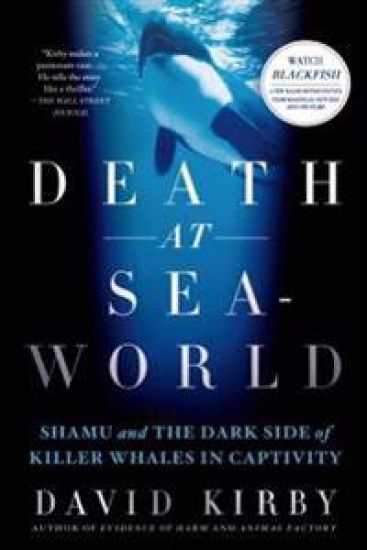
Death at Seaworld

Death at Seaworld

David Kirby

Saint Martin's Griffin,U.S.
2013
nidottu

Halvin toimitettuna 26,30 €

Death at SeaWorld centres on the battle with the multimillion-dollar marine park industry over the controversial and even lethal ramifications of keeping killer whales in captivity. Following the story of Naomi Rose, a marine biologist and animal advocate at the Humane Society of the U. S., Kirby tells the gripping story of the two-decade fight against PR-savvy SeaWorld, which came to a head with the tragic death of trainer Dawn Brancheau in 2010. Kirby puts that horrific animal-on-human attack in context. Brancheau's death was the most publicised among several brutal attacks that have occurred at Sea World and other marine mammal theme parks.
Little Richard

Little Richard

David Kirby

Continuum Publishing Corporation
2011
nidottu
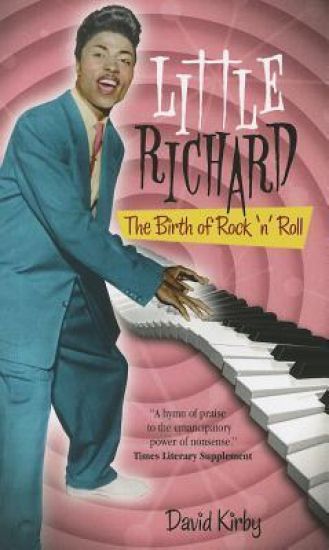
This book is a concise, evocative, and thoroughly researched study of one of the great rock'n'roll pioneers. After "Tutti Frutti," Little Richard began garnering fans from both sides of the civil rights divide. He brought black and white youngsters together on the dance floor and even helped to transform race relations. In June, 2007, Little Richard's 1955 Specialty Records single, "Tutti Frutti," topped Mojo magazine's list of "100 Records That Changed the World." But back in the early 1950s, nobody gave Little Richard a second glance, unless you count staring at a "gay black cripple (one of Richard's legs is shorter than the other) from the wrong side of the tracks" as a second glance. It was a time in America where the black and white worlds had co-existed separately for nearly two centuries. After "Tutti Frutti," Little Richard began garnering fans from both sides of the civil rights divide. He brought black and white youngsters together on the dance floor and even helped to transform race relations. "Little Richard: The Birth of Rock 'n' Roll" begins by grounding the reader in the fertile soil from which Little Richard's music sprang. In Macon, Georgia, David Kirby interviews local characters, who knew Little Richard way back when, citing church and family as his true inspiration. His antics began as early as grade school, performing for his classmates every time the teacher would leave the room, connecting to an age-old American show biz tradition of charade and flummery. On the road, Little Richard faced competition from his peers, honing his stage show and making it, too, an act that could not be counterfeited. Kirby sees Little Richard as a foxy warrior, one fighting with skill and cunning to take his place among the greats. In the words of Keith Richards (on hearing "Tutti Frutti" for the first time), "it was as though the world changed suddenly from monochrome to Technicolor." Those sentiments have consistently been echoed by the music-listening world, and the time is ripe for a reassessment of Little Richard's genius and legacy.
Talking about Movies with Jesus

Talking about Movies with Jesus

David Kirby

Louisiana State University Press
2011
nidottu
Celebrated poet David Kirby says that when he was a boy he wanted to run away and join the circus but never found one he liked, so he invented his own. Many of the poems in his dazzling new collection, Talking about Movies with Jesus, suggest his personal carnival is still a work in progress. Much like a traveling circus, Kirby's poems are defined equally by their transient nature and by their destination. The poem ""The Phantom Empire"", which features Gene Autry repeatedly having to escape from a fictional city 20,000 feet underground in order to make it back home in time to voice his afternoon radio show, suggests that Kirby has discovered the journey to what one is after is often more entertaining than getting it. Yet, in frenetic musings on Bo Diddley, a certain First Lady (""Skinny-Dipping with Pat Nixon""), Kirk Douglas, and Gerald Stern, Kirby notes the importance of arrival. Earnest conversations with cultural icons from Little Richard to Jesus reveal to the poet, as a character in his own story, that art, whether a song or poem or scripture, is all we here on earth know of heaven and all we need to know. Kirby's latest work is at once the caravan, the carnival, and the crowd merging together to form a wondrous collection.
Talking about Movies with Jesus

Talking about Movies with Jesus

David Kirby

Louisiana State University Press
2011
sidottu
Celebrated poet David Kirby says that when he was a boy he wanted to run away and join the circus but never found one he liked, so he invented his own. Many of the poems in his dazzling new collection, Talking about Movies with Jesus, suggest his personal carnival is still a work in progress. Much like a traveling circus, Kirby's poems are defined equally by their transient nature and by their destination. The poem ""The Phantom Empire"", which features Gene Autry repeatedly having to escape from a fictional city 20,000 feet underground in order to make it back home in time to voice his afternoon radio show, suggests that Kirby has discovered the journey to what one is after is often more entertaining than getting it. Yet, in frenetic musings on Bo Diddley, a certain First Lady (""Skinny-Dipping with Pat Nixon""), Kirk Douglas, and Gerald Stern, Kirby notes the importance of arrival. Earnest conversations with cultural icons from Little Richard to Jesus reveal to the poet, as a character in his own story, that art, whether a song or poem or scripture, is all we here on earth know of heaven and all we need to know. Kirby's latest work is at once the caravan, the carnival, and the crowd merging together to form a wondrous collection.
Little Richard

Little Richard

David Kirby

Continuum International Publishing Group Ltd.
2010
sidottu
This book is a concise, evocative, and thoroughly researched study of one of the great rock'n'roll pioneers. After "Tutti Frutti," Little Richard began garnering fans from both sides of the civil rights divide. He brought black and white youngsters together on the dance floor and even helped to transform race relations. In June, 2007, Little Richard's 1955 Specialty Records single, "Tutti Frutti" topped "Mojo" magazine's list of '100 Records That Changed the World'. But back in the early 1950s, nobody gave Little Richard a second glance. It was a time in America where the black and white worlds had co-existed separately for nearly two centuries. After "Tutti Frutti" Little Richard began garnering fans from both sides of the civil rights divide. He brought black and white youngsters together on the dance floor and even helped to transform race relations. "Little Richard: The Birth of Rock 'n' Roll" begins by grounding the reader in the fertile soil from which his music sprang. In Macon, Georgia, David Kirby interviews local characters, who knew Little Richard way back when, citing church and family as his true inspiration. Kirby sees Little Richard as a warrior, one fighting with skill and cunning to take his place among the greats. In the words of Keith Richards (on hearing "Tutti Frutti" for the first time), 'it was as though the world changed suddenly from monochrome to Technicolor'. Those sentiments have consistently been echoed by the music-listening world, and the time is ripe for a reassessment of Little Richard's genius and legacy.
The House on Boulevard St.

The House on Boulevard St.

David Kirby

Louisiana State University Press
2007
nidottu
The poems in The House on Boulevard St. were written within earshot of David Kirby's Old World masters, Shakespeare and Dante. From the former, Kirby takes the compositional method of organizing not only the whole book but also each separate section as a dream; from the latter, a three-part scheme that gives the book rough symmetry. Long-lined and often laugh-out-loud funny, Kirby's poems are ample steamer trunks into which the poet seems to be able to put just about anything, the heated restlessness of youth, the mixed blessings of self-imposed exile, the settled pleasures of home. As the poet Philip Levine says, ""The world that Kirby takes into his imagination and the one that arises from it merge to become a creation like no other, something like the world we inhabit but funnier and more full of wonder and terror. He has evolved a poetic vision that seems able to include anything, and when he lets it sweep him across the face of Europe and America, the results are astonishing.
Ultra-Talk

Ultra-Talk

David Kirby

University of Georgia Press
2007
pokkari
In Ultra-Talk, David Kirby poses a simple question: What makes a cultural phenomenon truly great? Exploring a wide variety of "king-sized cultural monuments," Kirby argues that one qualification for greatness is that a phenomenon be embraced by both the elite and the general public. Further, he argues, it must be embraced repeatedly over time. Kirby turns his critical eye to subjects that have been studied and written about, sought after avidly, discussed passionately, and even resisted vigorously around the world. Auto racing, Dante, folk music, food, Leonardo da Vinci, films, poetry, religion, striptease, television, and the internet are just some of the topics he examines. In Rome, heads of state kneel before Bernini's statue of Saint Teresa in ecstasy, says Kirby, and so do people who can't read. And everyone watches TV. Ultra-Talk pays homage to the work of two towering writers and critics. Johann Wolfgang von Goethe and Giacomo Leopardi both stated that a book was valid only if it had been accepted by both an intellectual elite and a vast public. Kirby would have added a second requirement: that the book's—or cultural monument's—popularity must have traction over time. By standing on the shoulders of Goethe and Leopardi, Kirby offers a way to read, see, and savor a post-theoretical worldview that everybody can share.
A Concise History of Finland

A Concise History of Finland

David Kirby

Cambridge University Press
2006
sidottu
Few countries in Europe have undergone such rapid social, political and economic changes as Finland has during the last fifty years. David Kirby here sets out the fascinating history of this northern country, for centuries on the east-west divide of Europe, a country not blessed by nature, most of whose inhabitants still earned a living from farming fifty years ago, but which today is one of the most prosperous members of the European Union. He shows how this small country was able not only to survive in peace and war but also to preserve and develop its own highly distinctive identity, neither Scandinavian nor Eastern European. He traces the evolution of the idea of a Finnish national state, from the long centuries as part of the Swedish realm, through self-government within the Russian Empire, and into the stormy and tragic birth of the independent state in the twentieth century.
A Concise History of Finland

A Concise History of Finland

David Kirby

Cambridge University Press
2006
pokkari
Few countries in Europe have undergone such rapid social, political and economic changes as Finland has during the last fifty years. David Kirby here sets out the fascinating history of this northern country, for centuries on the east-west divide of Europe, a country not blessed by nature, most of whose inhabitants still earned a living from farming fifty years ago, but which today is one of the most prosperous members of the European Union. He shows how this small country was able not only to survive in peace and war but also to preserve and develop its own highly distinctive identity, neither Scandinavian nor Eastern European. He traces the evolution of the idea of a Finnish national state, from the long centuries as part of the Swedish realm, through self-government within the Russian Empire, and into the stormy and tragic birth of the independent state in the twentieth century.
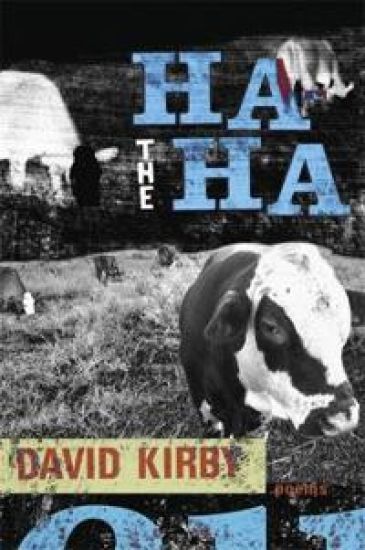
The Ha-ha

The Ha-ha

David Kirby

Louisiana State University Press
2003
nidottu
A feature of English landscape architecture, a ha-ha is a wall at the bottom of a ditch; its purpose is to allow the presence of cows and sheep on one's lawn, but at an agreeable distance and with none of the malodorous unsightliness that proximity would bring. Similarly, The Ha-Ha, the latest offering from poet David Kirby, is both an exploration of the ways in which the mind invites chaos yet keeps it at a distance and an apologia for humor, reflecting Irish poet Patrick Kavanagh's observation that tragedy is merely underdeveloped comedy. Embracing wit, wide-ranging scholarship, and an equal love of travel as well as the pleasures of home, The Ha-Ha depicts comedy as a radical form of intelligence, a way of thinking that just happens to be noisy and rumbustious. We are staying with Barbara's parents on Oahu, and the first night we're there, I notice an angry-looking man is staring at meout of the neighbor's upstairs window and mumbling something, but the second night I realise that it's that poster of Bo Diddleyfrom the famous Port Arthur concert, and there's a phone wirein front of his face that bobs up and down when the trade winds blow,which they do constantly, making it seem as though Mr. Diddley is saying something to me. From ""The Ha-Ha, Part I: The Tao of Bo Diddley"" published in The Ha-Ha: Poems by David Kirby. Copyright © 2003 by David Kirby. All rights reserved. - See more at: http://lsupress.org/books/detail/the-ha-ha/#sthash.g8vUSeuN.dpuf
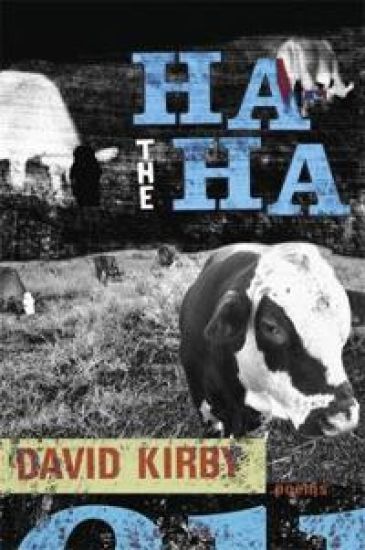
The Ha-ha

The Ha-ha

David Kirby

Louisiana State University Press
2003
sidottu
A feature of English landscape architecture, a ha-ha is a wall at the bottom of a ditch; its purpose is to allow the presence of cows and sheep on one's lawn, but at an agreeable distance and with none of the malodorous unsightliness that proximity would bring. Similarly, The Ha-Ha, the latest offering from poet David Kirby, is both an exploration of the ways in which the mind invites chaos yet keeps it at a distance and an apologia for humor, reflecting Irish poet Patrick Kavanagh's observation that tragedy is merely underdeveloped comedy. Embracing wit, wide-ranging scholarship, and an equal love of travel as well as the pleasures of home, The Ha-Ha depicts comedy as a radical form of intelligence, a way of thinking that just happens to be noisy and rumbustious. We are staying with Barbara's parents on Oahu, and the first night we're there, I notice an angry-looking man is staring at meout of the neighbor's upstairs window and mumbling something, but the second night I realise that it's that poster of Bo Diddleyfrom the famous Port Arthur concert, and there's a phone wirein front of his face that bobs up and down when the trade winds blow,which they do constantly, making it seem as though Mr. Diddley is saying something to me. From ""The Ha-Ha, Part I: The Tao of Bo Diddley"" published in The Ha-Ha: Poems by David Kirby. Copyright © 2003 by David Kirby. All rights reserved. - See more at: http://lsupress.org/books/detail/the-ha-ha/#sthash.g8vUSeuN.dpuf
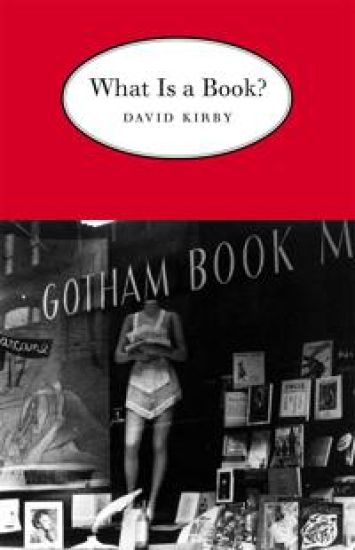
What Is a Book?

What Is a Book?

David Kirby

University of Georgia Press
2002
pokkari
In What Is a Book? David Kirby addresses the making and consuming of literature by redefining the four components of the act of reading: writer, reader, critic, and book. He discusses his students, his work, and his practice as a teacher, writer, critic, and reader, and positions his theories and opinions as products of "real" life as much as academic exercise. Among the ideas animating the book are Kirby's beliefs that "devotion is more important than dissection" and "practice is more important than theory." Covering an impressive range of writers—from Emerson, Poe, and Melville to James Dickey, Charles Wright, Richard Howard, Susan Montez, and others—Kirby considers the evolution of critical theory from the nineteenth century to the late twentieth and explores the role of criticism in contemporary culture. Drawing from his experience writing poetry and reading to children at a local housing project, he answers two of his four central questions: "What is a reader?" and "What is a writer?" In the largest section of the book, "What Is a Critic?," Kirby demonstrates his passionate engagement with the function of the critic in literary culture and offers both overviews and close examinations of literary theory, book reviewing, and the historical background of criticism from its earliest beginnings. In the final section of the book, he addresses the question "What is a book?" with an examination of the reading preferences of older readers. Kirby's analysis of those responses, along with his own notions of the literary canon, is an insightful excursion into how books are valued. Deeply learned and wonderfully entertaining, What Is a Book? is a lucid look at the whole of literary culture. Kirby makes us think about the books we love and why we love them.
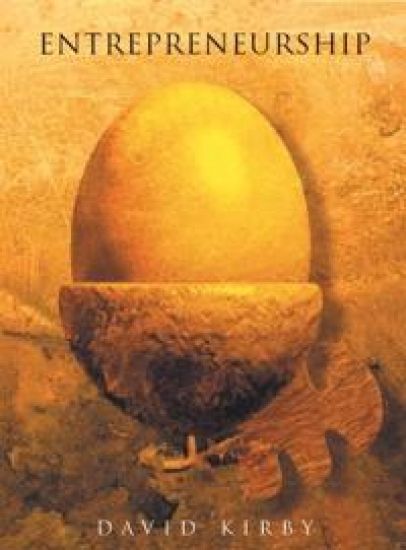
Entrepreneurship

Entrepreneurship

David Kirby

McGraw Hill Higher Education
2002
nidottu
This text offers an approach in tune with developments in the growing area of entrepreneurship. It allows the reader to develop a clear understanding of the topic and its role in society, while developing the necessary skills to launch ventures and become a successful entrepreneur.
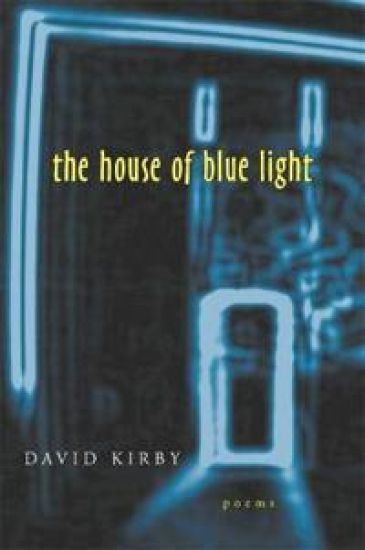
The House of Blue Light

The House of Blue Light

David Kirby

Louisiana State University Press
2000
nidottu
The House of Blue Light is the second collection of autobiographical ""memory poems"" by Catholic-school-boy-gone-bad-turned-poet-made-good David Kirby, a stand-up comic of verse if ever there was one: ""in Stardust Memories . . . these wise space aliens who visit Earth . . . tell [Woody Allen] that if he really wants to serve humanity, / he should tell funnier jokes, wait, that's my duty, / I think, that's my public duty! Because sooner or later, / we all turn upside down.""Wearing both heart and wit on his sleeve, Kirby confides in longish narrative poems events he actually or vicariously experienced, as a child, a teen, a young man, and now, as well as some future scenes he imagines. Literary theorists Jacques Derrida and Roland Barthes; Little Richard and Muhammad Ali; Herman Melville, James Dickey, and Henry James; friends, family, personal heroes, and acquaintances, including the Ah Oui Girl of Paris and Tige Watley's Whoah of Baton Rouge, are all equally alive in Kirby's poems. As Walt Whitman did, Kirby offers a first-person speaker as a proxy for everyone else (""Who, including ourselves, / knows what we know and when we know it?""), achieving a unity and accessible authenticity rare in poetry. A fun house, ""a mishmash for sure,"" The House of Blue Light is a delightfully entertaining, irreverent, erudite collection of commentary piling upon commentary that brings us ""that one element so largely absent / from our quotidian existence, i.e., surprise.