
Kirjojen hintavertailu – 12 903 725 kirjaa ja 27 kauppaa

Kirjailija

David Klanderman

Kirjat ja teokset yhdessä paikassa: 3 kirjaa, julkaisuja vuosilta 2016–2023, suosituimpiin kuuluu Using Graphic Novels in the Science, Technology, Engineering, and Mathematics (STEM) Classroom. Vertaile teosten hintoja ja tarkista saatavuus suomalaisista kirjakaupoista.

3 kirjaa

Kirjojen julkaisuvuodet: 2016–2023.

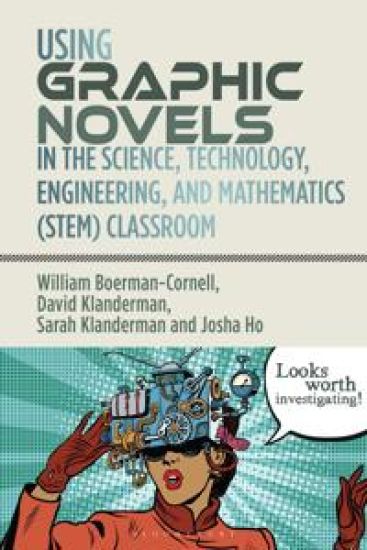
Using Graphic Novels in the Science, Technology, Engineering, and Mathematics (STEM) Classroom

Using Graphic Novels in the Science, Technology, Engineering, and Mathematics (STEM) Classroom

William Boerman-Cornell; Josha Ho; David Klanderman; Sarah Klanderman

BLOOMSBURY PUBLISHING PLC
2023
sidottu
This book provides everything STEM teachers need to use graphic novels in order to engage students, explain difficult concepts, and enrich learning. Drawing upon the latest educational research and over 60 years of combined teaching experience, the authors describe the multimodal affordances and constraints of each element of the STEM curriculum. Useful for new and seasoned teachers alike, the chapters provide practical guidance for teaching with graphic novels, with a section each for Science, Technology, Engineering, and Mathematics. An appendix provides nearly 100 short reviews of graphic novels arranged by topic, such as cryptography, evolution, computer coding, skyscraper design, nuclear physics, auto repair, meteorology, and human physiology, allowing the teacher to find multiple graphic novels to enhance almost any unit. These include graphic novel biographies of Stephen Hawking, Jane Goodall, Alan Turing, Rosalind Franklin, as well as popular titles such as T-Minus by Jim Ottaviani, Brooke Gladstone’s The Influencing Machine, Theodoris Andropoulos’s Who Killed Professor X, and Gene Yang’s Secret Coders series.
Using Graphic Novels in the Science, Technology, Engineering, and Mathematics (STEM) Classroom

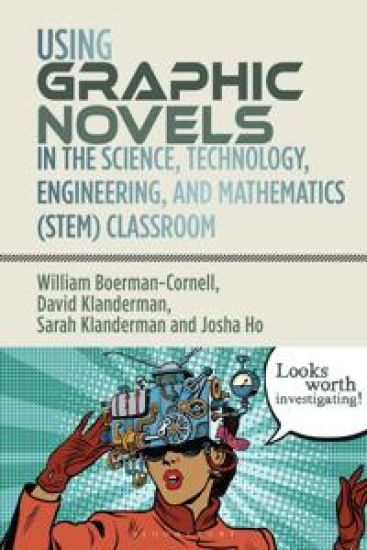
Using Graphic Novels in the Science, Technology, Engineering, and Mathematics (STEM) Classroom

William Boerman-Cornell; Josha Ho; David Klanderman; Sarah Klanderman

BLOOMSBURY PUBLISHING PLC
2023
nidottu
This book provides everything STEM teachers need to use graphic novels in order to engage students, explain difficult concepts, and enrich learning. Drawing upon the latest educational research and over 60 years of combined teaching experience, the authors describe the multimodal affordances and constraints of each element of the STEM curriculum. Useful for new and seasoned teachers alike, the chapters provide practical guidance for teaching with graphic novels, with a section each for Science, Technology, Engineering, and Mathematics. An appendix provides nearly 100 short reviews of graphic novels arranged by topic, such as cryptography, evolution, computer coding, skyscraper design, nuclear physics, auto repair, meteorology, and human physiology, allowing the teacher to find multiple graphic novels to enhance almost any unit. These include graphic novel biographies of Stephen Hawking, Jane Goodall, Alan Turing, Rosalind Franklin, as well as popular titles such as T-Minus by Jim Ottaviani, Brooke Gladstone’s The Influencing Machine, Theodoris Andropoulos’s Who Killed Professor X, and Gene Yang’s Secret Coders series.
A Pleasure to Measure!

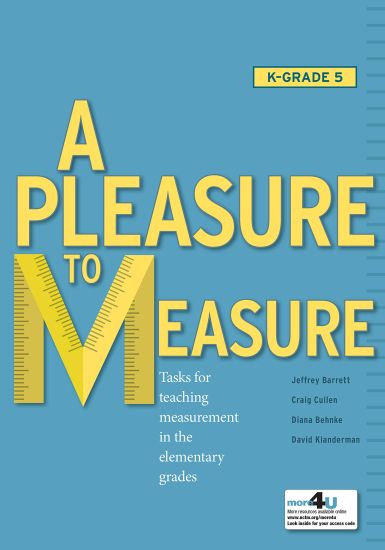
A Pleasure to Measure!

Jeffrey Barrett; Craig Cullen; Diana Behnke; David Klanderman

National Council of Teachers of Mathematics,U.S.
2016
nidottu
Measurement is paired with data as a fundamental domain of K–grade 5 mathematics in the Common Core State Standards, and it is one of five core content areas in NCTM’s Principles and Standards for School Mathematics. This book presents lively activities that dovetail with standards and research-based stages of development to support students’ steady growth of understanding of measurement. With individual chapters for kindergarten through grade 5, A Pleasure to Measure includes 65 classroom-ready activities on measurement, along with a summary of learning goals, connections to children’s literature, and ideas for extending beyond the activities. In each chapter, the authors provide—a collection of activities for a single level—kindergarten–grade 5;a summary of level-specific measurement goals and learning trajectory stages; anda table that matches activities with standards and learning stages. A Pleasure to Measure will enable you to select activities quickly, easily, and confidently to target the content that your students are ready to learn. You’ll find everything that you need in the six E’s that the authors detail for each activity—Essentials, Engage, Explore, Expect, Extend, and Enrich.