Kirjojen hintavertailu – 12 903 725 kirjaa ja 27 kauppaa
Kirjailija
David L. Smith
Kirjat ja teokset yhdessä paikassa: 31 kirjaa, julkaisuja vuosilta 1991–2026, suosituimpiin kuuluu Indianapolis Television. Vertaile teosten hintoja ja tarkista saatavuus suomalaisista kirjakaupoista.
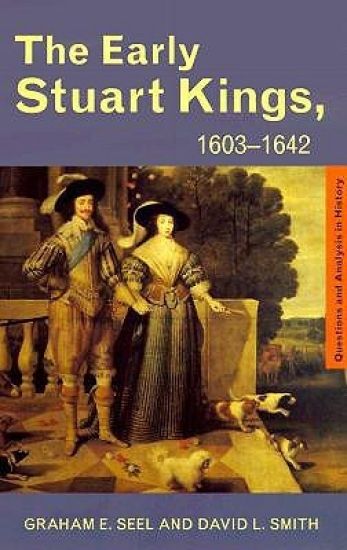
In 1603 King James I ascended the throne to become the first King of a united England and Scotland. There followed a period of increasing religious and political discord, culminating in the English Civil War. The Early Stuart Kings, 1603-1642 explores these complex events and the roles of the key personalities of the time - James I and VI, Charles I, Buckingham, Stratford and Laud.
This volume provides a detailed book-length study of the period of the Protectorate Parliaments from September 1654 to April 1659. The study is very broad in its scope, covering topics as diverse as the British and Irish dimensions of the Protectorate Parliaments, the political and social nature of factions, problems of management, the legal and judicial aspects of Parliament's functions, foreign policy and the nature of the parliamentary franchise and elections in this period. In its wide-ranging analysis of Parliaments and politics throughout the Protectorate the book also examines both Lord Protectors, all three Protectorate Parliaments and the reasons why Oliver and Richard Cromwell were never able to achieve a stable working relationship with any Parliament. Its chronological coverage extends to the demise of the Third Protectorate Parliament in April 1659. This comprehensive account will appeal to historians of early modern British political history.
This volume provides a detailed book-length study of the period of the Protectorate Parliaments from September 1654 to April 1659. The study is very broad in its scope, covering topics as diverse as the British and Irish dimensions of the Protectorate Parliaments, the political and social nature of factions, problems of management, the legal and judicial aspects of Parliament's functions, foreign policy and the nature of the parliamentary franchise and elections in this period. In its wide-ranging analysis of Parliaments and politics throughout the Protectorate the book also examines both Lord Protectors, all three Protectorate Parliaments and the reasons why Oliver and Richard Cromwell were never able to achieve a stable working relationship with any Parliament. Its chronological coverage extends to the demise of the Third Protectorate Parliament in April 1659. This comprehensive account will appeal to historians of early modern British political history.
Our ability to treat common bacterial infections with antibiotics goes back only 65 years. However, the authors of this report make it clear that sustaining a supply of effective and affordable antibiotics cannot be without changes to the incentives facing patients, physicians, hospitals, insurers, and pharmaceutical manufacturers. In fact, increasing resistance to these drugs is already exacting a terrible price. Every day in the United States, approximately 172 men, women, and children die from infections caused by antibiotic-resistant bacteria in hospitals alone. Beyond those deaths, antibiotic resistance is costing billions of dollars through prolonged hospital stays and the need for doctors to resort to ever more costly drugs to use as substitute treatments. Extending the Cure presents the problem of antibiotic resistance as a conflict between individual decision makers and their short-term interest and the interest of society as a whole, in both present and future: The effort that doctors make to please each patient by prescribing a drug when it might not be properly indicated, poor monitoring of discharged patients to ensure that they do not transmit drug-resistant pathogens to other persons, excesses in the marketing of new antibiotics, and the broad overuse of antibiotics all contribute to the development and spread of antibiotic-resistant bacteria. The book explores a range of policy options that would encourage patients, health care providers, and managed care organizations to serve as more responsible stewards of existing antibiotics as well as proposals that would give pharmaceutical firms greater incentives to develop new antibiotics and avoid overselling. If the problem continues unaddressed, antibiotic resistance has the potential to derail the health care system and return us to a world where people of all ages routinely die from simple infections. As a basis for future research and a spur to a critically important dialogue, Extending the Cure is a fundamental first step in addressing this public health crisis. The Extending the Cure project is funded in part by the Robert Wood Johnson Foundation through its Pioneer Portfolio.
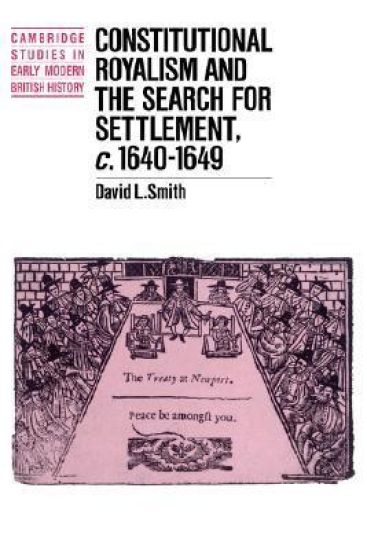
‘Constitutional royalism’ is one of the most familiar yet least often examined of all the political labels found in the historiography of the English Revolution. This book fills a gap by investigating the leading Constitutional royalists who rallied to King Charles I in 1642 while consistently urging him to reach an ‘accommodation’ with Parliament. These royalists’ early careers reveal that a commitment to the rule of law and a relative lack of ‘godly’ zeal were the characteristic predictors of Constitutional royalism in the Civil War. Such attitudes explain why many of them criticised the policies of the King’s personal rule, but also why they joined the King in 1642 and tried to achieve a negotiated settlement thereafter. The final part of the book traces the Constitutional royalists through the Interregnum - during which they consciously withdrew from public life - to the Restoration, when many of them returned to prominence and saw their ideas vindicated.
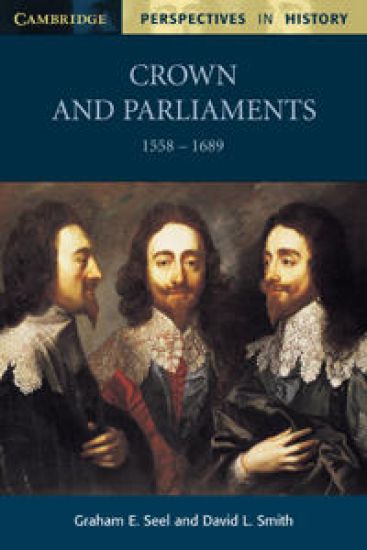
This book is part of the Cambridge Perspectives in History series. It examines relations between Crown and parliament in England between the accession of Elizabeth I in 1558 and the revolution of 1688–1689. In this lively account of the period, the authors analyse the changing nature of royal powers and the limitations that were gradually placed upon them. The reasons for the development of a limited monarchy, and the role that individual monarchs' personalities played in bringing this about, are explored through a series of stimulating case studies and primary sources. Central themes include: changes in the balance of power between Crown and parliament, the growing constraints on royal powers and the evolution of parliament into a permanent institution.
In 1603 King James I ascended the throne to become the first King of a united England and Scotland. There followed a period of increasing religious and political discord, culminating in the English Civil War. The Early Stuart Kings, 1603-1642 explores these complex events and the roles of the key personalities of the time - James I and VI, Charles I, Buckingham, Stratford and Laud.
From Simon & Schuster, The Gods of Golf is David L. Smith and John P. Holms' novel about the imperfect game of golf. Hoping to score points with his boss when he is drafted into a foursome at the Pine Valley Golf Club, Tom Cruickshank plays poorly and fears for his job, until he is assisted by a mysterious player who introduces him to the great golf gods.
‘Constitutional royalism’ is one of the most familiar yet least often examined of all the political labels found in the historiography of the English Revolution. This book fills a gap by investigating the leading Constitutional royalists who rallied to King Charles I in 1642 while consistently urging him to reach an ‘accommodation’ with Parliament. These royalists’ early careers reveal that a commitment to the rule of law and a relative lack of ‘godly’ zeal were the characteristic predictors of Constitutional royalism in the Civil War. Such attitudes explain why many of them criticised the policies of the King’s personal rule, but also why they joined the King in 1642 and tried to achieve a negotiated settlement thereafter. The final part of the book traces the Constitutional royalists through the Interregnum - during which they consciously withdrew from public life - to the Restoration, when many of them returned to prominence and saw their ideas vindicated.