Kirjojen hintavertailu – 12 859 828 kirjaa ja 27 kauppaa

Kirjailija

David Laibman

Kirjat ja teokset yhdessä paikassa: 5 kirjaa, julkaisuja vuosilta 1992–2021, suosituimpiin kuuluu Political Economy After Economics. Vertaile teosten hintoja ja tarkista saatavuus suomalaisista kirjakaupoista.

5 kirjaa

Kirjojen julkaisuvuodet: 1992–2021.

Ten Days That Shook the World

Ten Days That Shook the World

John Reed; David Laibman

INTERNATIONAL PUBLISHERS CO INC.,U.S.
2021
pokkari
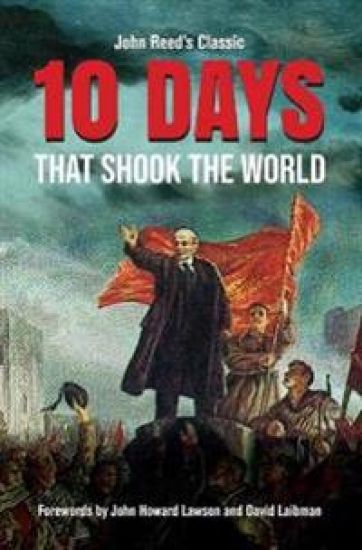
Covering the decisive moment of the Bolshevik revolution, "Ten Days" revealed the author to be among the first Americans to grasp the true significance of the Revolution and to make the U. S. public aware of it. The book remains acclaimed today. It is published in many countries and in a multitude of languages. This edition, a facsimile of the original 1919 printing was prepared by John Howard Lawson, the late noted film writer who himself made history as, member of the famed "Hollywood Ten." His introduction corrects distortions of Reed and his time presented in other edited versions. Included also are biographical sketches of the main participant, contemporary photographs, a map of Petrograd showing where events took place, prefaces by Lenin and his wife Krupskaya, editorial notes and an index.
Political Economy After Economics

Political Economy After Economics

David Laibman

Routledge
2014
nidottu
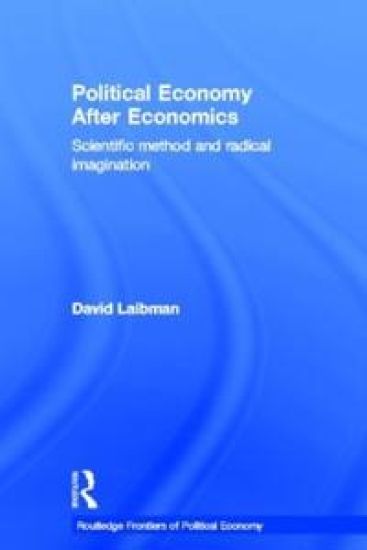
This re-incorporation of economics into political economy is one (small, but not insignificant) element in a larger project: to place all of the resources of present-day social-scientific research at the service of increasing democracy, in an ultimate direction toward socialism in the classic sense. An economics-enriched political economy is, above all, empowering: working people in general can calculate, build models, think theoretically, and contribute to a human-worthy future, rather than leaving all this to their "betters."
Political Economy After Economics

Political Economy After Economics

David Laibman

Routledge
2011
sidottu
This re-incorporation of economics into political economy is one (small, but not insignificant) element in a larger project: to place all of the resources of present-day social-scientific research at the service of increasing democracy, in an ultimate direction toward socialism in the classic sense. An economics-enriched political economy is, above all, empowering: working people in general can calculate, build models, think theoretically, and contribute to a human-worthy future, rather than leaving all this to their "betters."
Value, Technical Change and Crisis

Value, Technical Change and Crisis

David Laibman

M.E. Sharpe
1992
nidottu
This text brings together studies in various aspects of the theory of the capitalist economy. It focuses on major themes of the Marxist tradition that postulate the existence and importance of social relations and structures underlying the esoteric realm of economic categories: prices, profits, wages, etc. The author takes a reappraising, critical look at the concepts of the deep structure - value, explitation, immanent crisis - using the analytical tools of modern economics to improve those concepts. The book is divided into four parts. Part 1 explores the essential nature of capitalism, re-examining problems in the theory of value and exploitation. Part 2 tackles the issue of capitalism-specific paths of growth and technical change, putting forward a rigorous theory of biased technical change and non-steady-state growth. Part 3 examines the cyclical character of capitalist growth and the theory of crises. Finally, Part 4 places capitalism in the wider framework of modes of production, considering the theory of precapitalist formations and aspects of the theory and practical experience of socialism. The guiding theme is the combination, or confrontation, of rigorous, quantitative analytical techniques with equally demanding qualitative and political-economic conceptualization. The book's premise is that this interface is essential to a progressive yet distinctively Marxist social theory.
Value, Technical Change and Crisis

Value, Technical Change and Crisis

David Laibman

M.E. Sharpe
1992
sidottu
This text brings together studies in various aspects of the theory of the capitalist economy. It focuses on major themes of the Marxist tradition that postulate the existence and importance of social relations and structures underlying the esoteric realm of economic categories: prices, profits, wages, etc. The author takes a reappraising, critical look at the concepts of the deep structure - value, explitation, immanent crisis - using the analytical tools of modern economics to improve those concepts. The book is divided into four parts. Part 1 explores the essential nature of capitalism, re-examining problems in the theory of value and exploitation. Part 2 tackles the issue of capitalism-specific paths of growth and technical change, putting forward a rigorous theory of biased technical change and non-steady-state growth. Part 3 examines the cyclical character of capitalist growth and the theory of crises. Finally, Part 4 places capitalism in the wider framework of modes of production, considering the theory of precapitalist formations and aspects of the theory and practical experience of socialism. The guiding theme is the combination, or confrontation, of rigorous, quantitative analytical techniques with equally demanding qualitative and political-economic conceptualization. The book's premise is that this interface is essential to a progressive yet distinctively Marxist social theory.