Kirjojen hintavertailu – 12 903 737 kirjaa ja 27 kauppaa

Kirjailija

David Leatherbarrow

Kirjat ja teokset yhdessä paikassa: 11 kirjaa, julkaisuja vuosilta 1993–2025, suosituimpiin kuuluu Eric Parry. Vertaile teosten hintoja ja tarkista saatavuus suomalaisista kirjakaupoista.

11 kirjaa

Kirjojen julkaisuvuodet: 1993–2025.

Genuine Construction

Genuine Construction

David Leatherbarrow

Park Books
2025
nidottu
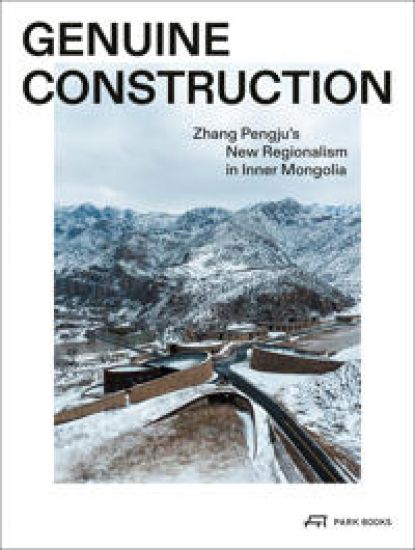
Zhang Pengju’s buildings explore the intersection of architecture and landscape as topographical art. His architectural practice is deeply rooted in the terrain and local history of China’s Inner Mongolia region. Pengju’s New Regionalism is thoroughly informed by the vernacular and at the same time embodies contemporary architecture at its best. He engages in defining and cultivating topographical order and demonstrates how creative thinking can transform the fragments of our living conditions and our lives into images of a unified world. The 17 realised designs featured in Genuine Construction are exemplary for the architect’s approach. Each project is introduced by a concise text and presented through colour photographs, plans, drawings, and sketches showing the use of natural materials, smooth lines, and humble models that skillfully blend these buildings into their surroundings. A foreword by David Leatherbarrow, professor emeritus at University of Pennsylvania’s Stuart Weitzman School of Design, and essays by Chem Zhao, professor at Nanjing University’s School of Architecture and Urban Planning, and Yonggao Shin, associate professor at Southeast University’s School of Architecture in Nanjing, round out this monograph. Genuine Construction showcases outstanding designs that are also manifestations of a new and noteworthy trend in contemporary architecture worldwide.
Eric Parry Architects 5

Eric Parry Architects 5

Dagmar Motycka Weston; David Leatherbarrow

Artifice Press
2023
pokkari
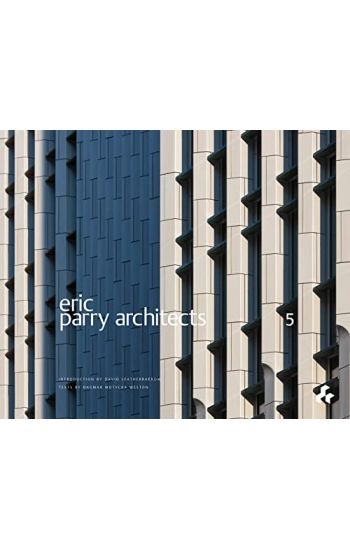
This is the fifth book in a series of publications documenting the recent work of the award-winning, London- and Singapore-based architectural practice Eric Parry Architects. Volume 5 explores cultural, residential and commercial projects, from London’s Fen Court, 30 St James’s Square, Vicarage Gate and Buckingham Palace Road to Cambridge Assessment, One Chamberlain Square in Birmingham, Wilmar Headquarters in Singapore, and many more. With an introduction by the renowned architectural writer and academic David Leatherbarrow and main text by the internationally acclaimed author and academic Dagmar Motycka Weston, volume 5 features striking photography and focuses on the practice’s approach to craft and materials in a variety of contextual interventions.
Projecting Urbanity: Architecture for and against the City

Projecting Urbanity: Architecture for and against the City

David Leatherbarrow; Joseph Rykwert

Artifice Press
2023
sidottu
Existing histories of modern architecture typically give their highest praise to private houses and their most severe condemnation to architect-authored urban plans, often neglecting the built works that are no smaller than a single building and possibly as large as an urban block, the middle or institutional scale, where culturally significant urban transformation actually takes place. Urban architecture is a timely topic as today cities worldwide are suffering accelerated urbanisation, which is often dehumanising and destructive, especially to the unbuilt environment, airs, waters and soils. The middle or institutional scale is shown to activate and actualise latent potentials for cultural experience and environmental intelligence, allowing the city to surprise itself and delight in its discoveries. In Projecting Urbanity, David Leatherbarrow, via author-architect texts by his former doctorate students, lays out the basis for a revision of modern architecture’s contribution to cities and their culture. Presenting a series of texts featuring buildings or their parts of various scales – from the construction detail, to the room or garden, to ensembles within a neighborhood – the contributors introduce concepts for contemporary and future urban architecture, together with richly indicative examples from the past several decades. While architecture cannot “solve” today’s urban problems, it certainly has a role to play in their productive transformation, articulating opportunities for life and culture that are more humane, less wasteful, and more beautiful.
Building Time

Building Time

David Leatherbarrow

Bloomsbury Visual Arts
2020
nidottu
While most books on architecture concentrate on spatial themes, this book explores architecture’s temporal dimensions. Through a series of close readings of buildings, both contemporary and classic, it demonstrates the centrality of time in modern architecture, and shows why an understanding of time is critical to understanding good architecture. All buildings exist in time. Even if designed for permanence, they change, slowly but inevitably. They change use, they accrue history and meaning, they decay – all of these processes are inscribed in time. So too is the path traced by the sun through a building, and the movements of the human body from room to room. Time, this book argues, is the framework for our spatial experience of architecture, and a key dimension of a building’s structure and significance. Building Time presents twelve close readings of buildings and artworks which explore this idea. Examining works by distinctive modern architects – from Eileen Gray to Álvaro Siza and Wang Shu – it takes the reader, in some cases literally step-by-step, through a built work, and provides insightful reflections on the importance of ‘making space for time’ in architectural design. This is a book for both theorists and for architectural designers. Through it, theorists will find a way to rethink the fundamental premises and aims of design work, while designers will rediscover the order and ideas that shape the world around them—its buildings, interiors, and landscapes.
Building Time

Building Time

David Leatherbarrow

Bloomsbury Visual Arts
2020
sidottu
While most books on architecture concentrate on spatial themes, this book explores architecture’s temporal dimensions. Through a series of close readings of buildings, both contemporary and classic, it demonstrates the centrality of time in modern architecture, and shows why an understanding of time is critical to understanding good architecture. All buildings exist in time. Even if designed for permanence, they change, slowly but inevitably. They change use, they accrue history and meaning, they decay – all of these processes are inscribed in time. So too is the path traced by the sun through a building, and the movements of the human body from room to room. Time, this book argues, is the framework for our spatial experience of architecture, and a key dimension of a building’s structure and significance. Building Time presents twelve close readings of buildings and artworks which explore this idea. Examining works by distinctive modern architects – from Eileen Gray to Álvaro Siza and Wang Shu – it takes the reader, in some cases literally step-by-step, through a built work, and provides insightful reflections on the importance of ‘making space for time’ in architectural design. This is a book for both theorists and for architectural designers. Through it, theorists will find a way to rethink the fundamental premises and aims of design work, while designers will rediscover the order and ideas that shape the world around them—its buildings, interiors, and landscapes.
Three Cultural Ecologies

Three Cultural Ecologies

David Leatherbarrow; Richard Wesley

Routledge
2019
nidottu
Three Cultural Ecologies reverses common conceptions of modern architecture. It reveals how selected works of two modern architects, Le Corbusier and Frank Lloyd Wright, embraced environmental and cultural conditions as reciprocal and complementary. A basic premise of this book’s arguments is that cultural patterns cannot be adequately conceptualized in the terms that typically define ecology today. Instead, studies based on the natural sciences must be complemented by descriptions and interpretations of historical narratives, cultural norms, and individual expressions. Previously unpublished images and new interpretations will allow readers to rediscover works they thought they knew; Villa Savoye, Taliesin, La Tourette, and Ocatilla; as well as projects that are less well known: by Wright, the House on the Mesa and the City Residential Plan, and by Le Corbusier, the Immeuble-villas and Ilôt Insalubre projects. More broadly, this study of cultural ecology at three scales – domestic, monastic, and urban – reconsiders the history of modern architecture. The conditions brought about by societal and technological modernization and confronted by modern architecture have not disappeared in our time, but have intensified, making the task of imagining how some measure of equilibrium between culture and ecology might be achieved even more pressing.
Eric Parry

Eric Parry

Eric Parry; Owen Hopkins; David Leatherbarrow

Sir John Soane's Museum
2019
nidottu
Eric Parry is an architect who draws. This book is about the interaction and relationship of those two practices – of drawing as design tool, and as a way of engaging with the world in which buildings exist and which they play a part in shaping The text comprises a dialogue between Parry and Owen Hopkins, Senior Curator at Sir John Soane’s Museum, London, which is the venue for an exhibition of Parry’s drawings in spring 2019. The dialogue is arranged across ten episodes relating to themes and ideas that emerged over a series of conversations during the creation of the exhibition. At once self-contained and part of a broader whole, these episodes meditate on the meaning, medium and culture of architectural drawing. An essay by David Leatherbarrow, Professor of Architecture and Chairman of the Graduate Group in Architecture at the University of Pennsylvania, offers a counterpoint, providing both a detailed analysis of Parry’s drawing practice and context for the preceding dialogue.
Three Cultural Ecologies

Three Cultural Ecologies

David Leatherbarrow; Richard Wesley

Routledge
2017
sidottu
Three Cultural Ecologies reverses common conceptions of modern architecture. It reveals how selected works of two modern architects, Le Corbusier and Frank Lloyd Wright, embraced environmental and cultural conditions as reciprocal and complementary. A basic premise of this book’s arguments is that cultural patterns cannot be adequately conceptualized in the terms that typically define ecology today. Instead, studies based on the natural sciences must be complemented by descriptions and interpretations of historical narratives, cultural norms, and individual expressions. Previously unpublished images and new interpretations will allow readers to rediscover works they thought they knew; Villa Savoye, Taliesin, La Tourette, and Ocatilla; as well as projects that are less well known: by Wright, the House on the Mesa and the City Residential Plan, and by Le Corbusier, the Immeuble-villas and Ilôt Insalubre projects. More broadly, this study of cultural ecology at three scales – domestic, monastic, and urban – reconsiders the history of modern architecture. The conditions brought about by societal and technological modernization and confronted by modern architecture have not disappeared in our time, but have intensified, making the task of imagining how some measure of equilibrium between culture and ecology might be achieved even more pressing.
Topographical Stories

Topographical Stories

David Leatherbarrow

University of Pennsylvania Press
2015
pokkari
Landscape architecture and architecture are two fields that exist in close proximity to one another. Some have argued that the two are, in fact, one field. Others maintain that the disciplines are distinct. These designations are a subject of continual debate by theorists and practitioners alike. Here, David Leatherbarrow offers an entirely new way of thinking of architecture and landscape architecture. Moving beyond partisan arguments, he shows how the two disciplines rely upon one another to form a single framework of cultural meaning. Leatherbarrow redefines landscape architecture and architecture as topographical arts, the shared task of which is to accommodate and express the patterns of our lives. Topography, in his view, incorporates terrain, built and unbuilt, but also traces of practical affairs, by means of which culture preserves and renews its typical situations and institutions. This rigorous argument is supported by nearly 100 illustrations, as well as examples of topography from the sixteenth, eighteenth, and nineteenth centuries, through the heroic period of early modernism, to more recent offerings. A number of these studies revise existing accounts of decisive moments in the history of these disciplines, particularly the birth of the informal garden, the emergence of continuous space in the landscapes and architecture of the modern period, and the new significance of landform or earthwork in contemporary architecture. For readers not directly involved with either of these professions, this book shows how over the centuries our lives have been shaped and enriched by landscape and architecture. Topographical Stories provides a new paradigm for theorizing and practicing landscape and architecture.
Surface Architecture

Surface Architecture

David Leatherbarrow; Mohsen Mostafavi

MIT Press
2005
pokkari
A study of the building surface, architecture's primary instrument of identity and engagement with its surroundings. Visually, many contemporary buildings either reflect their systems of production or recollect earlier styles and motifs. This division between production and representation is in some ways an extension of that between modernity and tradition. In this book, David Leatherbarrow and Mohsen Mostafavi explore ways that design can take advantage of production methods such that architecture is neither independent of nor dominated by technology. Leatherbarrow and Mostafavi begin with the theoretical and practical isolation of the building surface as the subject of architectural design. The autonomy of the surface, the "free facade," presumes a distinction between the structural and nonstructural elements of the building, between the frame and the cladding. Once the skin of the building became independent of its structure, it could just as well hang like a curtain, or like clothing. The focus of the relationship between structure and skin is the architectural surface. In tracing the handling of this surface, the authors examine both contemporary buildings and those of the recent past. Architects discussed include Albert Kahn, Ludwig Mies van der Rohe, Alison and Peter Smithson, Alejandro de la Sota, Robert Venturi, Jacques Herzog, and Pierre de Meuron. The properties of a building's surface-whether it is made of concrete, metal, glass, or other materials-are not merely superficial; they construct the spatial effects by which architecture communicates. Through its surfaces a building declares both its autonomy and its participation in its surroundings.
On Weathering

On Weathering

Mohsen Mostafavi; David Leatherbarrow

MIT Press
1993
pokkari
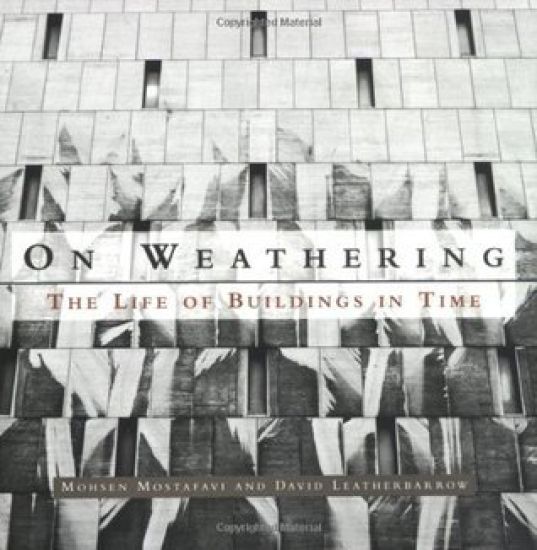
On Weathering illustrates the complex nature of the architectural project by taking into account its temporality, linking technical problems of maintenance and decay with a focused consideration of their philosophical and ethical implications. In a clear and direct account supplemented by many photographs commissioned for this book, Mostafavi and Leatherbarrow examine buildings and other projects from Alberti to Le Corbusier to show that the continual refinishing of the building by natural forces adds to, rather than detracts from, architectural meaning. Their central discovery, that weathering makes the "final" state of the construction necessarily indefinite, challenges the conventional notion of a building's completeness. By recognizing the inherent uncertainty and inevitability of weathering and by viewing the concept of weathering as a continuation of the building process rather than as a force antagonistic to it, the authors offer alternative readings of historical constructions and potential beginnings for new architectural projects.