Kirjojen hintavertailu – 12 874 715 kirjaa ja 26 kauppaa

Kirjailija

David Leigh

Kirjat ja teokset yhdessä paikassa: 10 kirjaa, julkaisuja vuosilta 2006–2022, suosituimpiin kuuluu WikiLeaks. Vertaile teosten hintoja ja tarkista saatavuus suomalaisista kirjakaupoista.

10 kirjaa

Kirjojen julkaisuvuodet: 2006–2022.

Apocalyptic Patterns in Twentieth-Century Fiction

Apocalyptic Patterns in Twentieth-Century Fiction

David Leigh

UNIVERSITY OF NOTRE DAME PRESS
2022
sidottu
David J. Leigh explores the innovative influences of the Book of Revelation and ideas of an end time on fiction of the twentieth century, and probes philosophical, political, and theological issues raised by apocalyptic writers from Walker Percy, C. S. Lewis, and Charles Williams to Doris Lessing, Thomas Pynchon, Don DeLillo. Leigh tackles head on a fundamental question about Christian-inspired eschatology: Does it sanction, as theologically sacred or philosophically ultimate, the kind of "last battles" between good and evil that provoke human beings to demonize and destroy the other? Against the backdrop of this question, Leigh examines twenty modern and postmodern apocalyptic novels, juxtaposing them in ways that expose a new understanding of each. The novels are clustered for analysis in chapters that follow seven basic eschatological patterns—the last days imagined as an ultimate journey, a cosmic battle, a transformed self, an ultimate challenge, the organic union of human and divine, the new heaven and new earth, and the ultimate way of religious pluralism. For religious novelists, these patterns point toward spiritual possibilities in the final days of human life or of the universe. For more political novelists—Ralph Ellison, Russell Hoban, and Salman Rushdie among them—the patterns are used to critique political or social movements of self-destruction. Beyond the twenty novels closely analyzed, Leigh makes pertinent reference to many more as well as to reflections from theologians Jürgen Moltmann, Zachary Hayes, Wolfhart Pannenberg, and Paul Ricoeur. Both a guidebook and a critical assessment, Leigh's work brings theological concepts to bear on end-of-the-world fiction in an admirably clear and accessible manner.

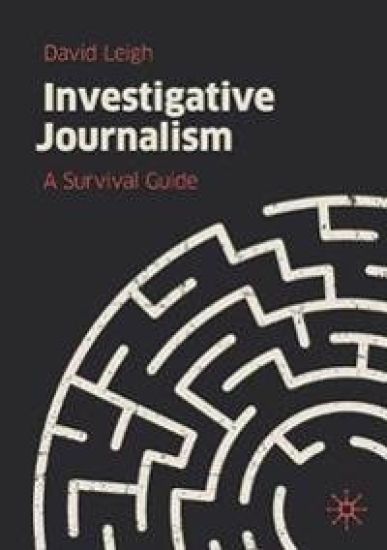
Investigative Journalism

Investigative Journalism

David Leigh

Springer Nature Switzerland AG
2019
nidottu
At a time of hyper-partisanship, media fragmentation and "fake news", the work of investigative journalism has never been more important. This book explores the history and art of investigative journalism, and explains how to deal with legal bullies, crooked politicians, media bosses, big business and intelligence agencies; how to withstand conspiracy theories; and how to work collaboratively across borders in the new age of data journalism. It also provides a fascinating first-hand account of the work that went into breaking major news stories including WikiLeaks and the Edward Snowden affair. Drawing on over 40 years of experience with world-leading investigative teams at newspapers including the Guardian and The Washington Post, award-winning journalist David Leigh provides an illuminating insight into some of the biggest news events of the 20th and 21st centuries. This book is essential reading for anyone interested in the behind-the-scenes work of journalists and news organizations. It also acts as an essential practical toolkit for both aspiring and established investigative journalists.
WikiLeaks

WikiLeaks

David Leigh; Luke Harding

Guardian Faber Publishing
2013
pokkari
*New and Updated edition*It was the biggest leak in history. WikiLeaks infuriated the world's greatest superpower, embarrassed the British royal family and helped cause a revolution in North Africa. The man behind it was Julian Assange, one of the strangest figures ever to become a worldwide celebrity. Internet messiah or cyber-terrorist? Information freedom fighter or sex criminal? In this newly updated edition, award-winning Guardian journalists David Leigh and Luke Harding follow the story as it takes on ever-weirder twists and turns. In London, Assange went to ground in the back bedroom of the Ecuadorian embassy. Meanwhile, in a courtroom near Washington, the fate of the US army whistleblower Bradley Manning hung in the balance. And in Hawaii, a young man named Edward Snowden, working as a contractor for the National Security Agency, was about to take WikiLeaks into even darker territory.'A rip-roaring narrative of secrets, tantrums, technological wizardry, personal betrayal and vengeance.' Irish Independent'Excellent.' Sunday Times'Enjoyable... The WikiLeaks founder comes across as a shadowy, manipulative character with the habits of a tramp and the brain of a chess grandmaster.' Spectator'Superbly narrated...unputdownable.' Observer
WikiLeaks

WikiLeaks

David Leigh; Luke Harding

PublicAffairs,U.S.
2011
nidottu
A team of journalists with unparalleled inside access provides the first full, in-depth account of WikiLeaks, its founder Julian Assange, and the ethical, legal, and political controversies it has both uncovered and provoked.
WikiLeaks

WikiLeaks

The Guardian; David Leigh; Luke Harding

Random House UK
2011
nidottu
It was the biggest leak in history. WikiLeaks infuriated the world's greatest superpower, embarrassed the British royal family and helped cause a revolution in Africa. The man behind it was Julian Assange, one of the strangest figures ever to become a worldwide celebrity.
Apocalyptic Patterns in Twentieth-Century Fiction

Apocalyptic Patterns in Twentieth-Century Fiction

David Leigh

University of Notre Dame Press
2008
nidottu
David J. Leigh explores the innovative influences of the Book of Revelation and ideas of an end time on fiction of the twentieth century, and probes philosophical, political, and theological issues raised by apocalyptic writers from Walker Percy, C. S. Lewis, and Charles Williams to Doris Lessing, Thomas Pynchon, Don DeLillo. Leigh tackles head on a fundamental question about Christian-inspired eschatology: Does it sanction, as theologically sacred or philosophically ultimate, the kind of "last battles" between good and evil that provoke human beings to demonize and destroy the other? Against the backdrop of this question, Leigh examines twenty modern and postmodern apocalyptic novels, juxtaposing them in ways that expose a new understanding of each. The novels are clustered for analysis in chapters that follow seven basic eschatological patterns—the last days imagined as an ultimate journey, a cosmic battle, a transformed self, an ultimate challenge, the organic union of human and divine, the new heaven and new earth, and the ultimate way of religious pluralism. For religious novelists, these patterns point toward spiritual possibilities in the final days of human life or of the universe. For more political novelists—Ralph Ellison, Russell Hoban, and Salman Rushdie among them—the patterns are used to critique political or social movements of self-destruction. Beyond the twenty novels closely analyzed, Leigh makes pertinent reference to many more as well as to reflections from theologians Jürgen Moltmann, Zachary Hayes, Wolfhart Pannenberg, and Paul Ricoeur. Both a guidebook and a critical assessment, Leigh's work brings theological concepts to bear on end-of-the-world fiction in an admirably clear and accessible manner.
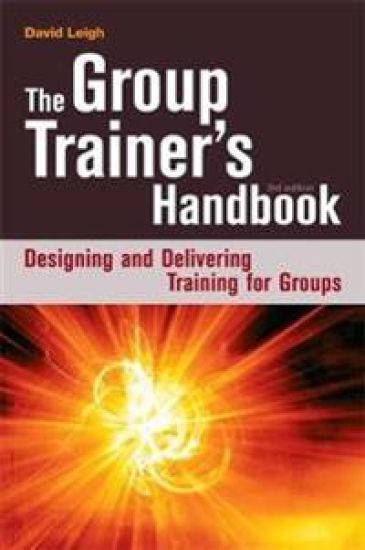
The Group Trainer's Handbook

The Group Trainer's Handbook

David Leigh

Kogan Page Ltd
2006
nidottu
Organizations succeed when staff are doing their jobs effectively. For this to occur, employees must be well-trained. Group training, involving two or more people, enables a collaborative approach to working and problem-solving, and ensures that participants share best practice and a consistent learning experience. Now in its third edition, The Group Trainer's Handbook is a condensed source of practical advice for anyone involved in group training. Updated with the latest thinking in group training methods, it is particularly useful for managers who are responsible for a team's professional development. It breaks down the stages of designing and developing a successful training course and all the key skills needed to deliver effective group training. Formerly published as Designing and Delivering Training for Groups .