Kirjojen hintavertailu – 12 867 412 kirjaa ja 27 kauppaa

Kirjailija

David Levering Lewis

Kirjat ja teokset yhdessä paikassa: 13 kirjaa, julkaisuja vuosilta 1997–2025, suosituimpiin kuuluu Emmett J. Scott. Vertaile teosten hintoja ja tarkista saatavuus suomalaisista kirjakaupoista.

13 kirjaa

Kirjojen julkaisuvuodet: 1997–2025.

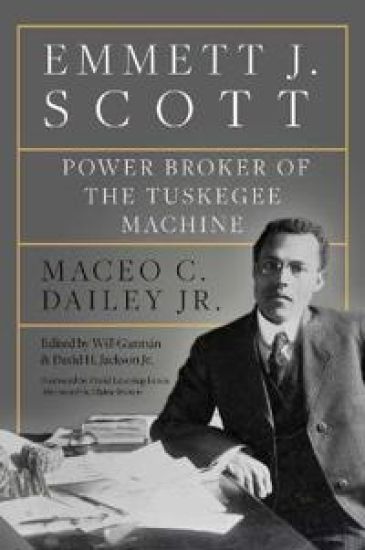
Emmett J. Scott

Emmett J. Scott

Maceo C. Dailey Jr.; David Levering Lewis; Elaine Brown

Texas Tech Press,U.S.
2023
sidottu
Reared in Freedmen's Town, Texas, Emmett J. Scott was a journalist, newspaper editor, government official, author, and chief of staff, adviser, and ghostwriter to Booker T. Washington. He was frequently called "the power broker of the Tuskegee Machine": he was a Renaissance man, scholar, and political fixer. However, his life has not received a full examination until now. Built upon fifty years of research, Maceo C. Dailey's Emmett J. Scott offers fascinating detail by describing Scott's role in promoting the Tuskegee Institute. Before his death, Dailey had nearly singular access to the Scott papers at Morgan State University, which have been officially closed for decades. Readers will finally be exposed to Scott's behind-the-scenes contributions to racial uplift and will see Scott's influential role in advancing not only the Tuskegee Institute but also the Booker T. Washington agenda. Editors Will Guzmán and David H. Jackson lend their own expertise in bringing Dailey's lifetime project to fruition. Two-time Pulitzer Prize-winning historian David Levering Lewis, a close friend of Maceo Dailey, provides a timely foreword. Former Black Panther Party chairwoman Elaine Brown, granddaughter of Emmett J. Scott, reflects on her relationship with Scott and his impact in the afterword. Taken together, this work of biography is an impressive reference and an essential endeavor of recovery, one that restores to prominence the life and legacy of Emmett J. Scott.
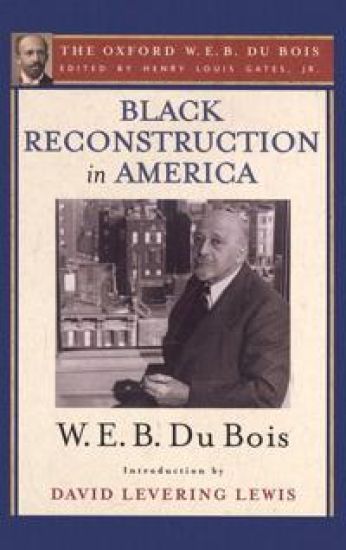
Black Reconstruction in America (The Oxford W. E. B. Du Bois)

Black Reconstruction in America (The Oxford W. E. B. Du Bois)

W. E. B. Du Bois; David Levering Lewis

Oxford University Press Inc
2014
nidottu
W. E. B. Du Bois was a public intellectual, sociologist, and activist on behalf of the African American community. He profoundly shaped black political culture in the United States through his founding role in the NAACP, as well as internationally through the Pan-African movement. Du Bois's sociological and historical research on African-American communities and culture broke ground in many areas, including the history of the post-Civil War Reconstruction period. Du Bois was also a prolific author of novels, autobiographical accounts, innumerable editorials and journalistic pieces, and several works of history. Black Reconstruction in America tells and interprets the story of the twenty years of Reconstruction from the point of view of newly liberated African Americans. Though lambasted by critics at the time of its publication in 1935, Black Reconstruction has only grown in historical and literary importance. In the 1960s it joined the canon of the most influential revisionist historical works. Its greatest achievement is weaving a credible, lyrical historical narrative of the hostile and politically fraught years of 1860-1880 with a powerful critical analysis of the harmful effects of democracy, including Jim Crow laws and other injustices. With a series introduction by editor Henry Louis Gates, Jr., and an introduction by David Levering Lewis, this edition is essential for anyone interested in African American history.
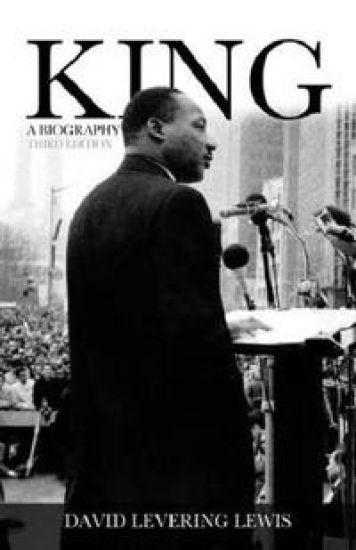
King

King

David Levering Lewis

University of Illinois Press
2012
nidottu
Acclaimed by leading historians and critics when it appeared shortly after the death of Dr. Martin Luther King Jr., this foundational biography wends through the corridors in which King held court, posing the right questions and providing a keen measure of the man whose career and mission enthrall scholars and general readers to this day. Updated with a new preface and more than a dozen photographs of King and his contemporaries, this edition presents the unforgettable story of King's life and death for a new generation.
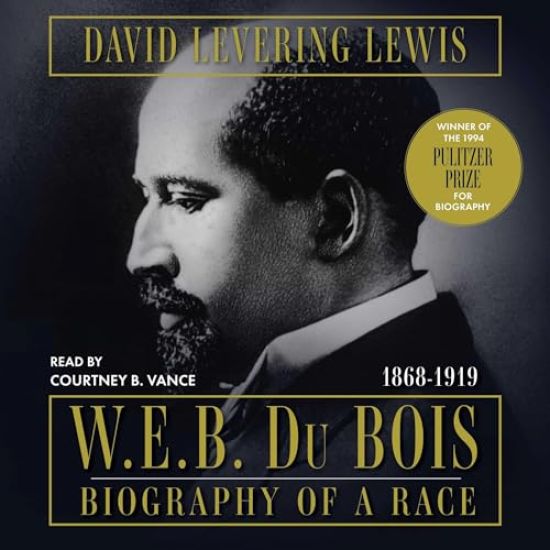
W.E.B. Du Bois, 1868-1919: Biography of a Race

W.E.B. Du Bois, 1868-1919: Biography of a Race

David Levering Lewis

Simon Schuster Audio
2025
cd
First time on audio The timeless Pulitzer Prize winner, the first in an epic two-volume biography that set the standard for historical scholarship on this era, narrated by Emmy and Tony Award winner Courtney B. Vance. This monumental biography by David Levering Lewis--eight years in the research and writing--treats the early and middle phases of a long and intense career: a crucial fifty-year period that demonstrates how W. E. B. Du Bois changed forever the way Americans think about themselves. William Edward Burghardt Du Bois?the premier architect of the civil rights movement in America?was a towering and controversial personality, a fiercely proud individual blessed with the language of the poet and the impatience of the agitator. In the first of his superlative two-volume biography, renowned scholar David Levering Lewis chronicles the first five decades of Du Bois's long and storied life, detailing in magisterial prose the momentous contributions to our national character that still echo today.
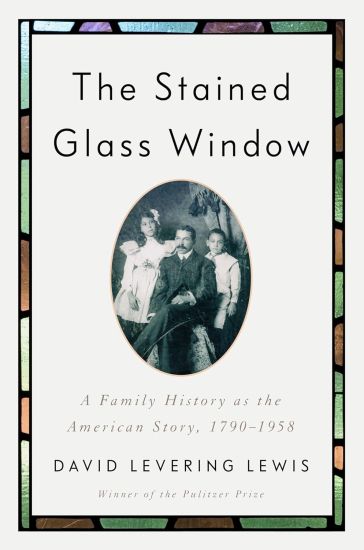
The Stained Glass Window: A Family History as the American Story, 1790-1958
"At once narrative history, family chronicle and personal memoir... a] luminous work of investigation and introspection." -Wall Street Journal National Humanities Medal recipient and two-time recipient of the Pulitzer Prize David Levering Lewis's own family history that shifts our understanding of the larger American story Sitting beneath a stained glass window dedicated to his grandmother in the Atlanta church where his family had prayed for generations, preeminent American historian David Levering Lewis was struck by the great lacunae in what he could know about his own ancestors. He vowed to excavate their past and tell their story. There is no singular American story. Yet the Lewis family contains many defining ones. David Levering Lewis's lineage leads him to the Kings and Belvinses, two white slaveholding families in Georgia; to the Bells, a free persons of color slaveholding family in South Carolina; and to the Lewises, an up-from-slavery black family in Georgia. Lewis's father, John Henry Lewis Sr., set Lewis on the path he pursues, introducing him to W. E. B. Du Bois and living by example as Thurgood Marshall's collaborator in a key civil rights case in Little Rock. In The Stained Glass Window, Lewis reckons with his legacy in full, facing his ancestors and all that was lost, all the doors that were closed to them. In this country, the bonds of kinship and the horrific fetters of slavery are bound up together. The fight for equity, the loud echoes of the antebellum period in our present, and narratives of exceptionalism are ever with us; in these pages, so, too, are the voices of Clarissa, Isaac, Hattie, Alice, and John. They shaped this nation, and their heir David Levering Lewis's chronicle of the antebellum project and the subsequent era of marginalization and resistance will transform our understanding of it.
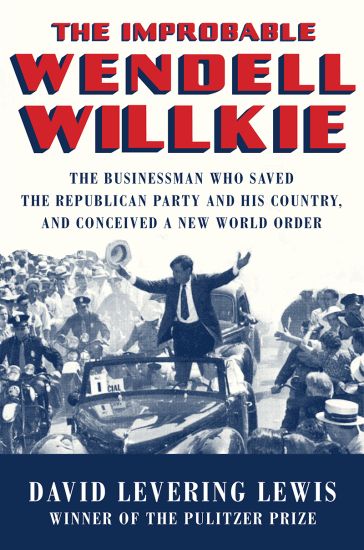
The Improbable Wendell Willkie

The Improbable Wendell Willkie

David Levering Lewis

Liveright Publishing Corporation
2020
nidottu
Hailed as “the definitive biography of Wendell Willkie” (Irwin F. Gellman), The Improbable Wendell Willkie offers an “engrossing and enlightening appraisal” (Ira Katznelson) of a prominent businessman and Wall Street attorney presidential candidate who could have saved America’s sclerotic political system. Although Willkie lost to FDR in 1940, acclaimed historian David Levering Lewis demonstrates that the story of this Hoosier- born corporate chairman’s life is “a powerful reminder of practical bipartisanship, visionary internationalism, and committed civil liberties and civil rights” (Katrina vanden Heuvel). Popular for his downhome mid-western charm and unaffected candor, Willkie possessed a supple intellect and a concealed disdain for political opportunism that, had he not died prematurely, would have revolutionized American politics with its advocacy of bipartisanship and social responsibility. “Meticulously researched and brilliantly written” (Douglas Brinkley), The Improbable Wendell Willkie “brings the now largely unknown Willkie to a new generation” (The New Yorker), reclaiming the legacy of an American icon.
The Improbable Wendell Willkie

The Improbable Wendell Willkie

David Levering Lewis

Liveright Publishing Corporation
2018
sidottu
In the wake of one of the most tumultuous Republican conventions ever, the party of Lincoln nominated in 1940 a prominent businessman and former Democrat who could have saved America’s sclerotic political system. Although Wendell Lewis Willkie would lose to FDR, acclaimed biographer David Levering Lewis demonstrates that the corporate chairman–turned–presidential candidate must be regarded as one of the most exciting, intellectually able, and authentically transformational figures to stride the twentieth-century American political landscape. Born in Elwood, Indiana, in 1892, Willkie was certainly one of the most unexpected, if not unlikely, candidates for the presidency, only somewhat less unlikely than Barack Hussein Obama. Although previously marginalized by journalists like Theodore H. White and David Halberstam as a political invention of rich newspaper publishers, the Willkie who emerges here is a man governed by principles who seldom allowed rigid categories to stand in his way. Even as a young man, he quickly distinguished himself as a reform-minded lawyer, whose farm-boy haircut, hayseed manners, and sartorial indifference bespoke common-man straightforwardness but concealed an ambition that propelled him at forty to chairman of Commonwealth and Southern, the country’s third-largest private utility holding company. It was Willkie’s vehement opposition to government regulation of the free-market economy and his success in wrenching a fabulous monetary settlement from the Tennessee Valley Authority that attracted the attention of Republican leaders, who, like Willkie, felt that FDR was turning the office into an imperial presidency. Successful at outwitting the isolationist wing of his own party, Willkie took on Roosevelt during one of the nation’s darkest periods, creating an unlikely alliance of supporters, including anti-big-government business leaders and black voters, who rightly felt excluded from New Deal benefits. Despite receiving the largest percentage of Republican votes in a generation, Willkie lost but, in the process, proposed sweeping civil rights reform a full generation before the civil rights era and a progressive “new conception of the world” that remains inspirational at a time when our own national belief system has become alarmingly immoral and rudderless. Rather than continue a political battle that could have weakened the nation during its darkest hour, a defeated Willkie reconciled with the president and embraced the war effort, while writing One World, a visionary credo that hoped to instigate an international movement for the betterment of the world’s people. In rejecting America’s penchant for exceptionalism, Willkie championed this internationalism more passionately than any American politician before him, creating a sovereign philosophy of liberalism that balanced free enterprise with social responsibility. His untimely death at fifty-two in 1944 left this prophetic vision tragically stillborn.
God's Crucible

God's Crucible

David Levering Lewis

Liveright Publishing Corporation
2018
nidottu
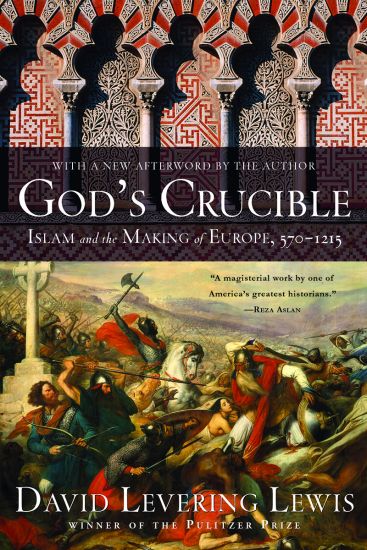
Resonating as profoundly today as when it was first published to widespread critical acclaim a decade ago, God’s Crucible is a bold portrait of Islamic Spain and the birth of modern Europe from one of our greatest historians. David Levering Lewis’s narrative, filled with accounts of some of the most epic battles in world history, reveals how cosmopolitan, Muslim al-Andalus flourished—a beacon of cooperation and tolerance—while proto-Europe floundered in opposition to Islam, making virtues out of hereditary aristocracy, religious intolerance, perpetual war and slavery. This masterful history begins with the fall of the Persian and Roman empires, followed by the rise of the prophet Muhammad and five centuries of engagement between the Muslim imperium and an emerging Europe. Essential and urgent, God’s Crucible underscores the importance of these early, world-altering events whose influence remains as current as today’s headlines.
God's Crucible

God's Crucible

David Levering Lewis

WW Norton Co
2009
nidottu
At the beginning of the eighth century, the Arabs brought a momentous revolution in power, religion, and culture to Dark Ages Europe. David Levering Lewis's masterful history begins with the fall of the Persian and Roman empires, followed by the rise of the prophet Muhammad and the creation of Muslim Spain. Five centuries of engagement between the Muslim imperium and an emerging Europe followed, from the Muslim conquest of Visigoth Hispania in 711 to Latin Christendom's declaration of unconditional warfare on the Caliphate in 1215. Lewis's narrative, filled with accounts of some of the greatest battles in world history, reveals how cosmopolitan, Muslim al-Andalus flourished--a beacon of cooperation and tolerance between Islam, Judaism, and Christianity--while proto-Europe, defining itself in opposition to Islam, made virtues out of hereditary aristocracy, religious intolerance, perpetual war, and slavery. A cautionary tale, God's Crucible provides a new interpretation of world-altering events whose influence remains as current as today's headlines.
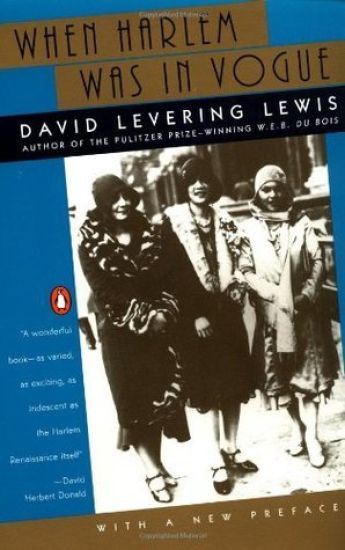
When Harlem Was in Vogue

When Harlem Was in Vogue

David Levering Lewis

PENGUIN BOOKS AUSTRALIA
1997
pokkari
A major study...one that thorougly interweaves the philosophies and fads, the people and movements that combined to give a small segment of Afro America a brief place in the sun.--The New York Times Book Review.