

Kirjailija
David Levinson
Kirjat ja teokset yhdessä paikassa: 8 kirjaa, julkaisuja vuosilta 1989–2025, suosituimpiin kuuluu Jewish Germany. Vertaile teosten hintoja ja tarkista saatavuus suomalaisista kirjakaupoista.
8 kirjaa
Kirjojen julkaisuvuodet: 1989–2025.
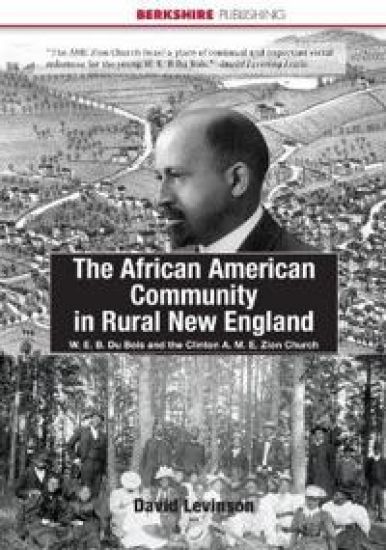
The African-American Community in Rural New England
David Levinson
Berkshire Publishing Group
2018
sidottu
The African American Community in Rural New England is the often heroic tale of a small group of African Americans who founded and have maintained their church in a small New England town for nearly 140 years. The church is the Clinton African Methodist Episcopal Zion Church and the town is Great Barrington, Massachusetts - the hometown of the leading African American scholar and activist W. E. B. Du Bois. Du Bois attended the church as a youth and wrote about it; these writings are one source for this history. The book gives readers a broad view of the details of the church's history and recounts the story of its growth. Du Bois plays a crucial role in the national fight for social justice, of which the church was and remains an important part.

In Jewish Germany, cultural anthropologist David Levinson draws out and explores for us the expanse of the Jewish experience in Germany from the fourth century CE to the present. With the extensive use of primary sources, among others, the carefully researched narrative takes us smoothly and chronologically through the complete history of Jews in Germany. Details about all aspects of Jewish life are placed within their political and economic contexts to enhance our understanding of the variety and complexity of the Jewish experience in Germany and the adaptive requirements of Jewish communities in changing circumstances. Moving back and forth between the general and the particular, Jewish Germany gives us a layered appreciation of the Jewish experience, enriched with details about Jewish life in the eighteenth century, a period when German communities re-formed after the end of the Thirty Years' War, and nineteenth, when Jews in Germany moved toward emancipation. Levinson also calls upon his own family history as the entry point for exploration of Jewish life in several Jewish communities, most important among them the town of Uehlfeld in Middle Franconia and the city of Frankfurt am Main. Jewish Germany is essential for anyone interested in possessing a greater understanding of and more information about this history--from the budding genealogist tracing her family history, to the general reader looking for a broad overview, to scholars who might wish for further knowledge and explanatory material on the history and diverse experiences of Jewish communities in Germany before the Holocaust.

In Jewish Germany, cultural anthropologist David Levinson draws out and explores for us the expanse of the Jewish experience in Germany from the fourth century CE to the present. With the extensive use of primary sources, among others, the carefully researched narrative takes us smoothly and chronologically through the complete history of Jews in Germany. Details about all aspects of Jewish life are placed within their political and economic contexts to enhance our understanding of the variety and complexity of the Jewish experience in Germany and the adaptive requirements of Jewish communities in changing circumstances. Moving back and forth between the general and the particular, Jewish Germany gives us a layered appreciation of the Jewish experience, enriched with details about Jewish life in the eighteenth century, a period when German communities re-formed after the end of the Thirty Years' War, and nineteenth, when Jews in Germany moved toward emancipation. Levinson also calls upon his own family history as the entry point for exploration of Jewish life in several Jewish communities, most important among them the town of Uehlfeld in Middle Franconia and the city of Frankfurt am Main. Jewish Germany is essential for anyone interested in possessing a greater understanding of and more information about this history-from the budding genealogist tracing her family history, to the general reader looking for a broad overview, to scholars who might wish for further knowledge and explanatory material on the history and diverse experiences of Jewish communities in Germany before the Holocaust. [Subject: History, Jewish Studies, Geneaology, Cultural Anthropology]
Evolving Transportation Networks
Feng Xie; David Levinson
Springer-Verlag New York Inc.
2013
nidottu
Over the last two centuries, the development of modern transportation has significantly transformed human life. The main theme of this book is to understand the complexity of transportation development and model the process of network growth including its determining factors, which may be topological, morphological, temporal, technological, economic, managerial, social or political. Using multidimensional concepts and methods, the authors develop a holistic framework to represent network growth as an open and complex process with models that demonstrate in a scientific way how numerous independent decisions made by entities such as travelers, property owners, developers, and public jurisdictions could result in a coherent network of facilities on the ground. Models are proposed from innovative perspectives including self-organization, degeneration, and sequential connection to interpret the evolutionary growth of transportation networks in explicit consideration of independent economic and regulatory initiatives. Employing these models, the authors survey a series of topics ranging from network hierarchy and topology to first mover advantage. The authors demonstrate, with a wide spectrum of empirical and theoretical evidence, that network growth follows a path that is not only logical in retrospect, but also predictable and manageable from a planning perspective. In the larger scheme of innovative transportation planning, this book provides a re-consideration of conventional planning practice and sets the stage for further development on the theory and practice of the next-generation, evolutionary planning approach in transportation, making it of interest to scholars and practitioners alike in the field of transportation .
Evolving Transportation Networks
Feng Xie; David Levinson
Springer-Verlag New York Inc.
2011
sidottu
Over the last two centuries, the development of modern transportation has significantly transformed human life. The main theme of this book is to understand the complexity of transportation development and model the process of network growth including its determining factors, which may be topological, morphological, temporal, technological, economic, managerial, social or political. Using multidimensional concepts and methods, the authors develop a holistic framework to represent network growth as an open and complex process with models that demonstrate in a scientific way how numerous independent decisions made by entities such as travelers, property owners, developers, and public jurisdictions could result in a coherent network of facilities on the ground. Models are proposed from innovative perspectives including self-organization, degeneration, and sequential connection to interpret the evolutionary growth of transportation networks in explicit consideration of independent economic and regulatory initiatives. Employing these models, the authors survey a series of topics ranging from network hierarchy and topology to first mover advantage. The authors demonstrate, with a wide spectrum of empirical and theoretical evidence, that network growth follows a path that is not only logical in retrospect, but also predictable and manageable from a planning perspective. In the larger scheme of innovative transportation planning, this book provides a re-consideration of conventional planning practice and sets the stage for further development on the theory and practice of the next-generation, evolutionary planning approach in transportation, making it of interest to scholars and practitioners alike in the field of transportation .
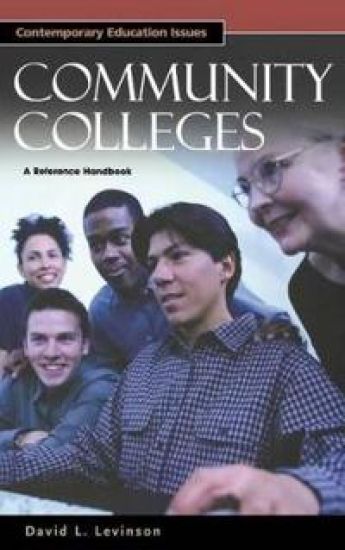
The only overview of research on the uniquely American community college system, which is increasingly becoming the site of entry for students seeking a higher education. This new volume shows why America's community colleges increasingly find themselves at the epicenter of social conflict, surrounded by unresolved questions such as: In a country based on the notion of equal opportunity, shouldn't all high school graduates have access to higher education? Are access and excellence really compatible? What is the real work of community colleges? Is it to provide transfer programs for students going on to baccalaureate colleges or training workers for careers in business and industry? In this comprehensive guide, readers will find not only a solid grounding in the latest research on these difficult questions but also a thoughtful analysis of the social forces that gave rise to American community colleges and still shape them today. Five narrative chapters address the history, evolution, and current issues facing community collegesThree additional chapters include a chronology; a listing of organizations, associations, and agencies; and an annotated listing of print and nonprint resources
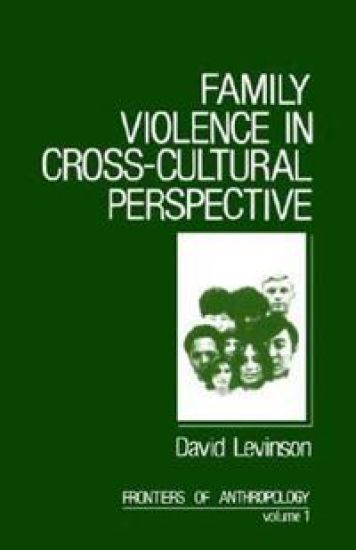
How prevalent is family violence outside the United States? Can policies and programs designed to prevent family violence in one culture be adapted to other cultures? Does a relationship exist between general violence and family violence in a given society? These are but a few of the questions addressed in this compelling, well-written volume. The author uses ethnographic data culled from 90 different societies to develop a global picture of the incidence, causes, and correlates of family violence. Through the use of both quantitative analysis and ethnographic description, Levinson tests the explanation/power of various current theories against worldwide family violence data. For anyone working in the area of family violence, this volume is a must. "I found the work to be exceptional. . . . I surely will want to adopt it for my graduate course in the Sociology of Deviance." --Bob Regoli, University of Colorado at Boulder "The book would be extremely useful. I know of no comparative work of this type now available. . . . The author writes well and is an accomplished scholar." --Mary Riege Laner, Arizona State University "This book can provide much illumination on world-wide family violence. The accounts given by ethnographers add life to the statistics given. . . . Anyone interested in broadening his or her knowledge of family violence would do well with this book." --Family Violence Bulletin "[Levinson] has made extensive use of the collection of cultural materials from the Human Relations Area files, to examine the question of how common family violence is in different societies, and what factors tend to make such violence more or less common in those societies. . . . He has reached a number of very important conclusions, [which] provide a solid basis for further research. . . . Useful in developing an understanding an of the way in which family violence occurs and may be helpful in programs to prevent the occurrence of such violence." --New Jersey Family Lawyer "Provides thought-provoking material about family violence, which will be of interest to many audiences. . . . This comparative study should help fill a critical gap." --Journal of Marriage and the Family "The author gives examples of societies where family violence is virtually unknown to disprove the view that it is somehow natural and inevitable. Because of this wider perspective on a common problem, this book is worthwhile reading for anyone dealing professionally with couples of families where violence is likely to occur." --Sexual and Marital Therapy "An important addition to the anthropological study of deviance; important to students interested in deviant behavior, family, and gender issues, and the social construction of violence." --NEXUS: The Canadian Journal of Anthropology "Those interested in examining family violence from a broader, cross-cultural perspective that will suggest hypotheses for understanding and preventing family violence at the societal level in our own culture will find Family Violence in Cross-Cultural Perspective to be most interesting reading." --Review and Expositor, Inc.