Kirjojen hintavertailu – 12 903 725 kirjaa ja 27 kauppaa

Kirjailija

David Lindenmayer

Kirjat ja teokset yhdessä paikassa: 8 kirjaa, julkaisuja vuosilta 2010–2018, suosituimpiin kuuluu Mountain Ash. Vertaile teosten hintoja ja tarkista saatavuus suomalaisista kirjakaupoista.

8 kirjaa

Kirjojen julkaisuvuodet: 2010–2018.

Restoring Farm Woodlands for Wildlife

Restoring Farm Woodlands for Wildlife

David Lindenmayer; Damian Michael; Mason Crane; Daniel Florance; Emma Burns

CSIRO Publishing
2018
nidottu
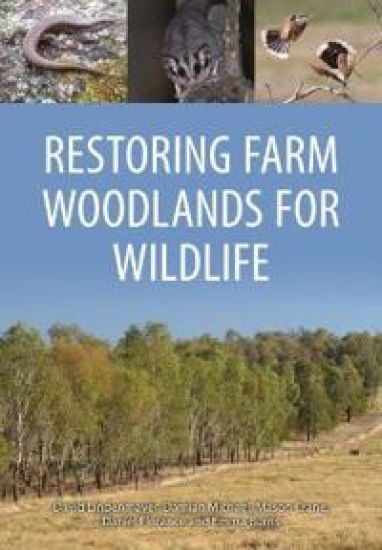
Millions of hectares of temperate woodland and billions of trees have been cleared from Australia’s agricultural landscapes. This has allowed land to be developed for cropping and grazing livestock but has also had significant environmental impacts, including erosion, salinity and loss of native plant and animal species. Restoring Farm Woodlands for Wildlife focuses on why restoration is important and describes best practice approaches to restore farm woodlands for birds, mammals and reptiles. Based on 19 years of long-term research in temperate agricultural south-eastern Australia, this book addresses practical questions such as what, where and how much to plant, ways to manage plantings and how plantings change over time. It will be a key reference for farmers, natural resource management professionals and policy-makers concerned with revegetation and conservation.
Effective Ecological Monitoring

Effective Ecological Monitoring

David Lindenmayer; Gene Likens

CSIRO Publishing
2018
nidottu
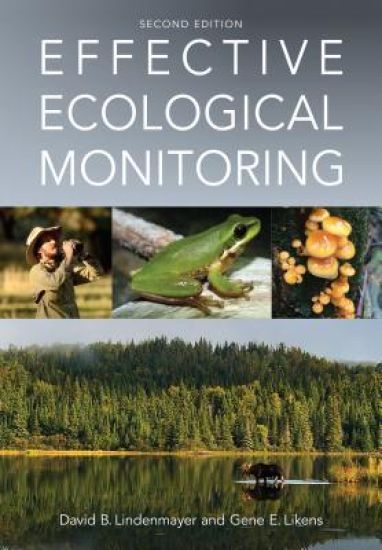
The fully revised second edition of the highly acclaimed book. Long-term monitoring programs are fundamental to understanding the natural environment and managing major environmental problems. Yet they are often done very poorly and ineffectively. This second edition of the highly acclaimed Effective Ecological Monitoring describes what makes monitoring programs successful and how to ensure that long-term monitoring studies persist. The book has been fully revised and updated but remains concise, illustrating key aspects of effective monitoring with case studies and examples. It includes new sections comparing surveillance-based and question-based monitoring, analysing environmental observation networks, and provides examples of adaptive monitoring. Based on the authors’ 80 years of collective experience in running long-term research and monitoring programs, Effective Ecological Monitoring is a valuable resource for the natural resource management, ecological and environmental science and policy communities.
Rocky Outcrops in Australia

Rocky Outcrops in Australia

Damian Michael; David Lindenmayer

CSIRO Publishing
2018
nidottu
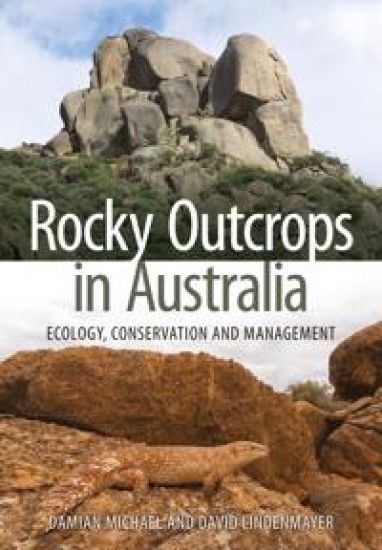
Rocky outcrops are landscape features with disproportionately high biodiversity values relative to their size. They support specialised plants and animals, and a wide variety of endemic species. To Indigenous Australians, they are sacred places and provide valuable resources. Despite their ecological and cultural importance, many rocky outcrops and associated biota are threatened by agricultural and recreational activities, forestry and mining operations, invasive weeds, altered fire regimes and climate change. Rocky Outcrops in Australia: Ecology, Conservation and Management contains chapters on why this habitat is important, the animals that live and depend on these formations, key threatening processes and how rocky outcrops can be managed to improve biodiversity conservation in agricultural landscapes, state forests and protected areas. This book will be an important reference for landholders, Landcare groups, naturalists interested in Australian wildlife and natural resource managers.
Mountain Ash

Mountain Ash

David Lindenmayer; David Blair; Lachlan McBurney; Sam Banks

CSIRO Publishing
2015
nidottu
Mountain Ash draws together exciting new findings on the effects of fire and on post-fire ecological dynamics following the 2009 wildfires in the Mountain Ash forests of the Central Highlands of Victoria. The book integrates data on forests, carbon, fire dynamics and other factors, building on 6 years of high-quality, multi-faceted research coupled with 25 years of pre-fire insights. Topics include: the unexpected effects of fires of varying severity on populations of large old trees and their implications for the dynamics of forest ecosystems; relationships between forest structure, condition and age and their impacts on fire severity; relationships between logging and fire severity; the unexpectedly low level of carbon stock losses from burned forests, including those burned at very high severity; impacts of fire at the site and landscape levels on arboreal marsupials; persistence of small mammals and birds on burned sites, including areas subject to high-severity fire, and its implications for understanding how species in this group exhibit post-fire recovery patterns. With spectacular images of the post-fire environment, Mountain Ash will be an important reference for scientists and students with interests in biodiversity, forests and fire.
Melbourne's Water Catchments

Melbourne's Water Catchments

James Viggers; Haylee Weaver; David Lindenmayer

CSIRO Publishing
2013
nidottu
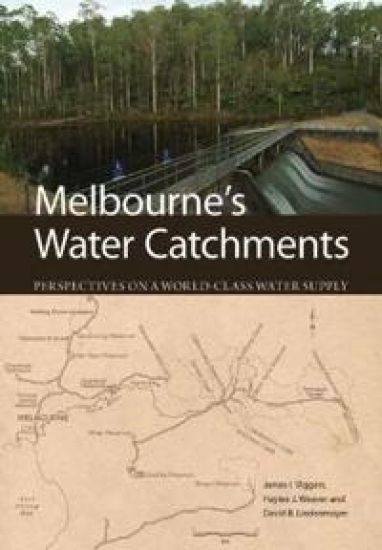
This book charts the history of the water catchments and water supply for the city of Melbourne, which has many unique aspects that are a critical part of the history of Melbourne, Victoria and Australia. Much of the development of the water supply system was many decades ahead of its time and helped buffer the city of Melbourne from major diseases, droughts and water shortages.
What Makes a Good Farm for Wildlife?

What Makes a Good Farm for Wildlife?

David Lindenmayer

CSIRO Publishing
2011
nidottu
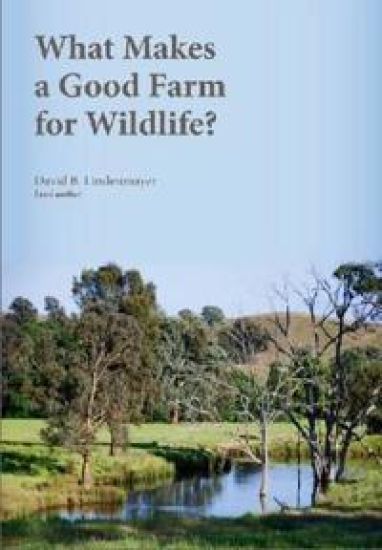
Based on thirteen years of intensive research, the book breaks the discussion into chapters on key environmental and vegetation assets and then discusses how to make these assets better for biodiversity. The work encompasses information on vertebrates and invertebrates on farms and their relationships with significant vegetation and environmental assets: woodland remnants, plantings, paddocks, rocky outcrops and waterways. A chapter is dedicated to each asset and how it can be managed.
Effective Ecological Monitoring

Effective Ecological Monitoring

David Lindenmayer; Gene E. Likens

Earthscan Ltd
2010
sidottu
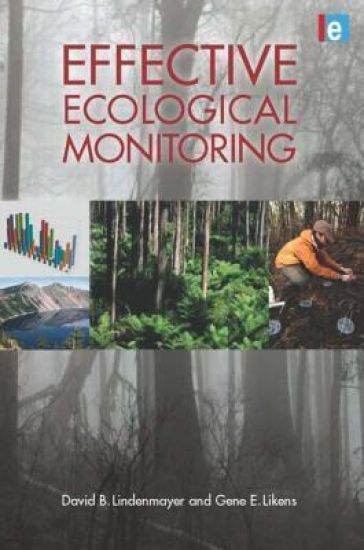
Ecologists and managers of natural resources readily acknowledge the importance of long-term studies and monitoring for improved understanding and management of complex environmental systems. Long-term data are crucially important for providing baselines for evaluating environmental change. They are also fundamental for detecting and evaluating changes in ecosystem structure and function, and for evaluating response to disturbances such as climate change or pollution. Countless scientific articles, books, management plans and other documents have been written about the need to conduct long-term studies and monitoring. However, although there have undoubtedly been some highly successful long-term ecological studies and monitoring programs, there is a history of poorly planned and unfocused efforts that are either ineffective or fail completely. In this book, the authors outline some of the key pitfalls and deficiencies in ecological monitoring programs and long-term studies. They then describe some the features of monitoring programs and long-term studies that are essential to make them viable, using case studies such as those of Rothamsted (UK) and the Hubbard Brook Ecosystem Study (USA). Based upon their collective experience spanning 70 years in establishing long-term studies and natural resource monitoring programs, the authors propose a new approach, which they call Adaptive Monitoring, to resolve some of these problems underlying poorly planned and unfocused monitoring programs.
Effective Ecological Monitoring

Effective Ecological Monitoring

David Lindenmayer; Gene E. Likens

Earthscan Ltd
2010
nidottu
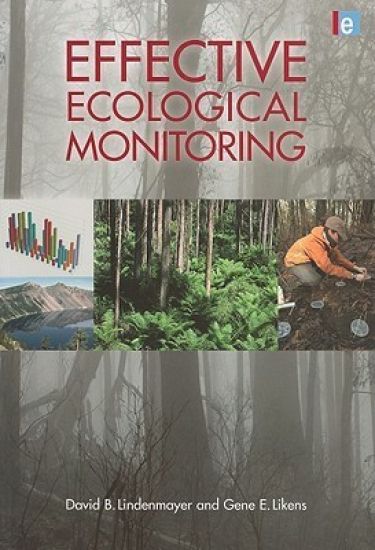
Ecologists and managers of natural resources readily acknowledge the importance of long-term studies and monitoring for improved understanding and management of complex environmental systems. Long-term data are crucially important for providing baselines for evaluating environmental change. They are also fundamental for detecting and evaluating changes in ecosystem structure and function, and for evaluating response to disturbances such as climate change or pollution. Countless scientific articles, books, management plans and other documents have been written about the need to conduct long-term studies and monitoring. However, although there have undoubtedly been some highly successful long-term ecological studies and monitoring programs, there is a history of poorly planned and unfocused efforts that are either ineffective or fail completely. In this book, the authors outline some of the key pitfalls and deficiencies in ecological monitoring programs and long-term studies. They then describe some the features of monitoring programs and long-term studies that are essential to make them viable, using case studies such as those of Rothamsted (UK) and the Hubbard Brook Ecosystem Study (USA). Based upon their collective experience spanning 70 years in establishing long-term studies and natural resource monitoring programs, the authors propose a new approach, which they call Adaptive Monitoring, to resolve some of these problems underlying poorly planned and unfocused monitoring programs.