Kirjojen hintavertailu – 12 859 829 kirjaa ja 27 kauppaa

Kirjailija

David Lister

Kirjat ja teokset yhdessä paikassa: 8 kirjaa, julkaisuja vuosilta 2014–2025, suosituimpiin kuuluu European Trend Atlas of Extreme Temperature and Precipitation Records. Vertaile teosten hintoja ja tarkista saatavuus suomalaisista kirjakaupoista.

8 kirjaa

Kirjojen julkaisuvuodet: 2014–2025.

From Bombard to PIAT

From Bombard to PIAT

David Lister

PEN SWORD BOOKS LTD
2025
nidottu
Spigot weapons, a unique British invention during World War II, were different from conventional mortars. Instead of a barrel, these weapons used a steel rod, or 'spigot', on which a bomb was placed before being fired. David Lister explores these weapons, revealing their effectiveness despite their controversial reputations. One such weapon, the PIAT (Projector, Infantry, Anti-Tank), became infamous during the Battle of Arnhem, where British paratroopers struggled with its performance compared to the German alternatives. Contrary to popular belief, the PIAT was a powerful anti-tank weapon, capable of taking down enemy tanks. Similarly, the Blacker Bombard, often mocked as a failure, was a formidable weapon used by the Home Guard, proving more effective than its reputation suggested. At sea, the Hedgehog anti-submarine weapon, another spigot design, was instrumental in sweeping U-boats from the Atlantic, though its potential was underused due to wartime secrecy. Lister examines these overlooked weapons and the genius of Latham Valentine Stewart Blacker, one of Britain’s key weapon inventors, who played a pivotal role in their development. Through these examples, the book uncovers the true power of spigot weapons and their vital contribution to the war effort. Previously published as Defeating the Panzer-Stuka Menace.

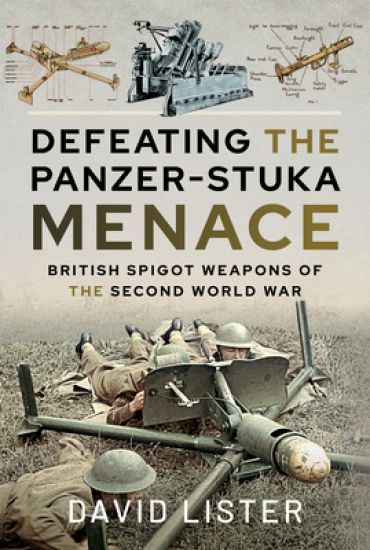
Defeating the Panzer-Stuka Menace

Defeating the Panzer-Stuka Menace

David Lister

Frontline Books
2021
sidottu
Weapons of myth and scandal, that is the best way to describe the spigot weapons deployed by the British in the Second World War. Unlike conventional mortars, a spigot mortar does not have a barrel through with the round is fired. Instead, the general concept involves a steel rod - the 'spigot' - onto which the bomb is placed before it is fired. This design was, as David Lister reveals, the basis of a number of successful weapons used during the Second World War. The myth of the PIAT man-portable anti-tank weapon is, for example, tied closely to British paratroopers struggling in the ruins of Arnhem with an inadequate design, one inferior to the German equivalent. Similarly, the myth of the Blacker Bombard is of a useless weapon, one of dubious quality, that was dumped on the unsuspecting Home Guard. In reality, neither scenario is the case. Both weapons were devastating creations of war, often superior to any other nation's counterpart. At sea, the Hedgehog anti-submarine weapon was another powerful spigot weapon. It was undoubtedly capable of sweeping the U-boats from the sea and even winning the Battle of the Atlantic before it had really begun. That it did not is one of the great scandals of the Second World War, one hidden by wartime secrecy until now. In _Defeating the Panzer-Stuka Menace_ the author explores a large number of spigot weapons from the Second World War, many of which were created by the fertile mind of one of Britain's great weapon inventors, Latham Valentine Stewart Blacker.
European Trend Atlas of Extreme Temperature and Precipitation Records

European Trend Atlas of Extreme Temperature and Precipitation Records

Deliang Chen; Alexander Walther; Anders Moberg; Phil Jones; Jucundus Jacobeit; David Lister

Springer
2016
nidottu
This Atlas presents records of climatic variability and change in Europe starting before 1901 and focuses especially on trends of extreme temperatures and precipitation. The authors have used software developed within EMULATE (European and North Atlantic daily to MULtidecadal climATE variability) to obtain the extremes indices and temporal trends. The trend atlas provides an easy way to identify spatial patterns for a given time period, region, season, and index. The Atlas clearly shows that climate in Europe has changed over the last 100 to 150 years, such that the occurrence and intensity of warm temperature extremes have increased. Precipitation extremes have also changed, but with a less clear pattern compared to the temperature extremes.
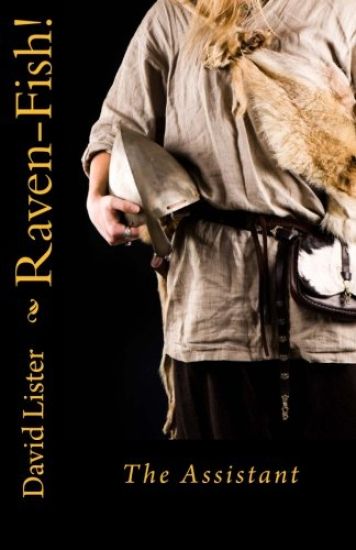
Raven-Fish!

Raven-Fish!

David Lister

Corps Du Chien Books
2016
nidottu
A pair of thousand-year-old skeletons are found. Then, the fragments of an eighth century grave-marker, and an old book entitled 'Raven-Fish 'An archaeologist is presented with pieces of an ancient puzzle, and as he places them, with the uncanny help of his strange assistant, he gains evidence to support a much maligned theory that Dark Ages were dark by design. As he chases down the truth in the present day, so Elmo and Finn (the characters from 'Raven-Fish ') try to avoid capture, torture and assassination. The net tightens on the truth and on Elmo, and both stories converge towards a common, shocking conclusion.
European Trend Atlas of Extreme Temperature and Precipitation Records

European Trend Atlas of Extreme Temperature and Precipitation Records

Deliang Chen; Alexander Walther; Anders Moberg; Phil Jones; Jucundus Jacobeit; David Lister

Springer
2014
sidottu
This Atlas presents records of climatic variability and change in Europe starting before 1901 and focuses especially on trends of extreme temperatures and precipitation. The authors have used software developed within EMULATE (European and North Atlantic daily to MULtidecadal climATE variability) to obtain the extremes indices and temporal trends. The trend atlas provides an easy way to identify spatial patterns for a given time period, region, season, and index. The Atlas clearly shows that climate in Europe has changed over the last 100 to 150 years, such that the occurrence and intensity of warm temperature extremes have increased. Precipitation extremes have also changed, but with a less clear pattern compared to the temperature extremes.