Kirjojen hintavertailu – 12 903 724 kirjaa ja 27 kauppaa

Kirjailija

David Lyon

Kirjat ja teokset yhdessä paikassa: 32 kirjaa, julkaisuja vuosilta 1988–2026, suosituimpiin kuuluu Frommer's Spain. Vertaile teosten hintoja ja tarkista saatavuus suomalaisista kirjakaupoista.

32 kirjaa

Kirjojen julkaisuvuodet: 1988–2026.

God of Me

God of Me

David Lyon

Jewish Lights Publishing
2011
sidottu
The God of AbrahamThe God of IsaacThe God of JacobThe God of SarahThe God of RebeccaThe God of RachelThe God of Leah... the God of MeThere is no easy prescription for how to know God, yet everyone can pursue a personal relationship with God, just as our patriarchs and matriarchs did in their lives. How we come to know God, however, is unique to each of us, influenced by our study of Torah, the insights of the Rabbis of antiquity, as well as our own experiences throughout our lifetime. To open the way for you to find God's presence in your life, Rabbi David Lyon uses the central prayer in Jewish worship, the Amidah, as a starting point, and guides you compellingly through classic Torah texts and midrash. He helps you clear away preconceived images of God from your childhood or dogmas that restrict your experience of God in personal and meaningful ways today. Combining profound teachings from Jewish sources with insights and experiences from real life, he shows how you can enjoy a unique relationship with God--the God of you, your God of me.

Identifying Citizens

Identifying Citizens

David Lyon

Polity Press
2009
nidottu
New ID card systems are proliferating around the world. These may use digitized fingerprints or photos, may be contactless, using a scanner, and above all, may rely on computerized registries of personal information. In this timely new contribution, David Lyon argues that such IDs represent a fresh phase in the long-term attempts of modern states to find stable ways of identifying citizens. New ID systems are “new” because they are high-tech. But their newness is also seen crucially in the ways that they contribute to new means of governance. The rise of e-Government and global mobility along with the aftermath of 9/11 and fears of identity theft are propelling the trend towards new ID systems. This is further lubricated by high technology companies seeking lucrative procurements, giving stakes in identification practices to agencies additional to nation-states, particularly technical and commercial ones. While the claims made for new IDs focus on security, efficiency and convenience, each proposal is also controversial. Fears of privacy-loss, limits to liberty, government control, and even of totalitarian tendencies are expressed by critics. This book takes an historical, comparative and sociological look at citizen-identification, and new ID cards in particular. It concludes that their widespread use is both likely and, without some strong safeguards, troublesome, though not necessarily for the reasons most popularly proposed. Arguing that new IDs demand new approaches to identification practices given their potential for undermining trust and contributing to social exclusion, David Lyon provides the clearest overview of this topical area to date.
Identifying Citizens

Identifying Citizens

David Lyon

Polity Press
2009
sidottu
New ID card systems are proliferating around the world. These may use digitized fingerprints or photos, may be contactless, using a scanner, and above all, may rely on computerized registries of personal information. In this timely new contribution, David Lyon argues that such IDs represent a fresh phase in the long-term attempts of modern states to find stable ways of identifying citizens. New ID systems are “new” because they are high-tech. But their newness is also seen crucially in the ways that they contribute to new means of governance. The rise of e-Government and global mobility along with the aftermath of 9/11 and fears of identity theft are propelling the trend towards new ID systems. This is further lubricated by high technology companies seeking lucrative procurements, giving stakes in identification practices to agencies additional to nation-states, particularly technical and commercial ones. While the claims made for new IDs focus on security, efficiency and convenience, each proposal is also controversial. Fears of privacy-loss, limits to liberty, government control, and even of totalitarian tendencies are expressed by critics. This book takes an historical, comparative and sociological look at citizen-identification, and new ID cards in particular. It concludes that their widespread use is both likely and, without some strong safeguards, troublesome, though not necessarily for the reasons most popularly proposed. Arguing that new IDs demand new approaches to identification practices given their potential for undermining trust and contributing to social exclusion, David Lyon provides the clearest overview of this topical area to date.
Surveillance Studies

Surveillance Studies

David Lyon

Polity Press
2007
nidottu
The study of surveillance is more relevant than ever before. The fast growth of the field of surveillance studies reflects both the urgency of civil liberties and privacy questions in the war on terror era and the classical social science debates over the power of watching and classification, from Bentham to Foucault and beyond. In this overview, David Lyon, one of the pioneers of surveillance studies, fuses with aplomb classical debates and contemporary examples to provide the most accessible and up-to-date introduction to surveillance available. The book takes in surveillance studies in all its breadth, from local face-to-face oversight through technical developments in closed-circuit TV, radio frequency identification and biometrics to global trends that integrate surveillance systems internationally. Surveillance is understood in its ambiguity, from caring to controlling, and the role of visibility of the surveilled is taken as seriously as the powers of observing, classifying and judging. The book draws on international examples and on the insights of several disciplines; sociologists, political scientists and geographers will recognize key issues from their work here, but so will people from media, culture, organization, technology and policy studies. This illustrates the diverse strands of thought and critique available, while at the same time the book makes its own distinct contribution and offers tools for evaluating both surveillance trends and the theories that explain them. This book is the perfect introduction for anyone wanting to understand surveillance as a phenomenon and the tools for analysing it further, and will be essential reading for students and scholars alike.
Surveillance Studies

Surveillance Studies

David Lyon

Polity Press
2007
sidottu
The study of surveillance is more relevant than ever before. The fast growth of the field of surveillance studies reflects both the urgency of civil liberties and privacy questions in the war on terror era and the classical social science debates over the power of watching and classification, from Bentham to Foucault and beyond. In this overview, David Lyon, one of the pioneers of surveillance studies, fuses with aplomb classical debates and contemporary examples to provide the most accessible and up-to-date introduction to surveillance available. The book takes in surveillance studies in all its breadth, from local face-to-face oversight through technical developments in closed-circuit TV, radio frequency identification and biometrics to global trends that integrate surveillance systems internationally. Surveillance is understood in its ambiguity, from caring to controlling, and the role of visibility of the surveilled is taken as seriously as the powers of observing, classifying and judging. The book draws on international examples and on the insights of several disciplines; sociologists, political scientists and geographers will recognize key issues from their work here, but so will people from media, culture, organization, technology and policy studies. This illustrates the diverse strands of thought and critique available, while at the same time the book makes its own distinct contribution and offers tools for evaluating both surveillance trends and the theories that explain them. This book is the perfect introduction for anyone wanting to understand surveillance as a phenomenon and the tools for analysing it further, and will be essential reading for students and scholars alike.
Surveillance After September 11

Surveillance After September 11

David Lyon

Polity Press
2003
nidottu
Prominent among the quests for post-9/11 security are developments in surveillance, especially at national borders. These developments are not new, but many of them have been extended and intensified. The result? More and more people and populations are counted as “suspicious” and, at the same time, surveillance techniques become increasingly opaque and secretive. Lyon argues that in the aftermath of 9/11 there have been qualitative changes in the security climate: diverse databases containing personal information are being integrated; biometric identifiers, such as iris scans, are becoming more popular; consumer data are merged with those obtained for policing and intelligence, both nationally and across borders. This all contributes to the creation of ever-widening webs of surveillance. But these systems also sort people into categories for differential treatment, the most obvious case being that of racial profiling. This book assesses the consequences of these trends. Lyon argues that while extraordinary legal measures and high-tech systems are being adopted, promises made on their behalf - that terrorism can be prevented - are hard to justify. Furthermore, intensifying surveillance will have social consequences whose effects could be far-reaching: the undermining of social trust and of democratic participation.
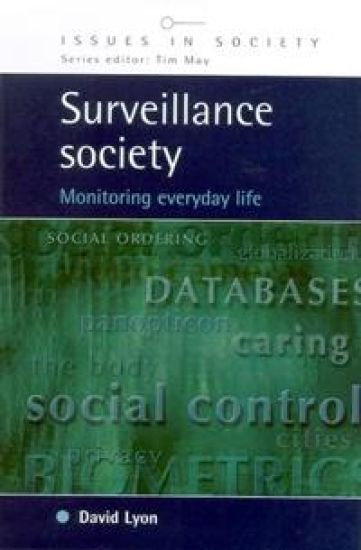
SURVEILLANCE SOCIETY

SURVEILLANCE SOCIETY

David Lyon

Open University Press
2001
nidottu
In what ways does contemporary surveillance reinforce social divisions? How are police and consumer surveillance becoming more similar as they are automated? Are we forced to choose between classical and poststructuralist approaches in explaining surveillance? Why is surveillance both expanding globally and focusing more on the human body? Surveillance Society takes a post-privacy approach to surveillance with a fresh look at the relations between technology and society. Personal data is collected from us all the time, whether we know it or not, through identity numbers, camera images, or increasingly by other means such as fingerprint and retinal scans. This book examines the constant computer-based scrutiny of ordinary daily life for citizens and consumers as they participate in contemporary societies. It argues that to understand what is happening we have to go beyond Orwellian alarms and cries for more privacy to see how such surveillance also reinforces divisions by sorting people into social categories. The issues spill over narrow policy and legal boundaries to generate responses at several levels including local consumer groups, internet activism, and international social movements. In this fascinating study, sociologies of new technology and social theories of surveillance are illustrated with examples from North America, Europe, and Pacific Asia. David Lyon provides an invaluable text for undergraduate and postgraduate sociology courses both in social theory and in science, technology and society. It will also appeal much more widely, for example to those with an interest in politics, social control, human geography and public administration.
Jesus in Disneyland

Jesus in Disneyland

David Lyon

Polity Press
2000
nidottu
In this study, the author explores the relationship between religion and postmodernity, through the central metaphor of "Jesus in Disneyland". The author shows how this metaphor reveals highly innovative and potentially enduring features of contemporary spiritual quests.
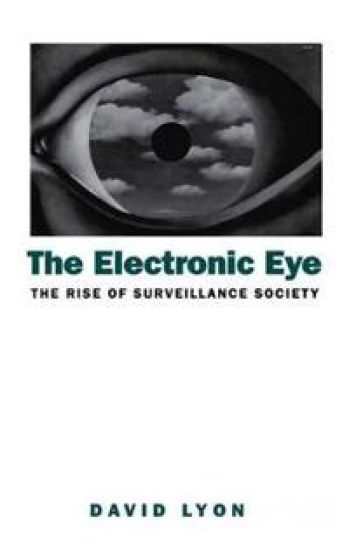
The Electronic Eye

The Electronic Eye

David Lyon

Polity Press
1994
nidottu
In this book David Lyon analyses the various contexts of surveillance activity and offers a balanced account of the influence electronic information systems have on the social order today.
The Information Society

The Information Society

David Lyon

Polity Press
1988
nidottu
There has been a great deal of speculation about the possible consequences of new technology. This book provides an overview of the available evidence about whether we are entering a phase of social existence without precedent - the "information society".