Kirjojen hintavertailu – 12 903 733 kirjaa ja 27 kauppaa

Kirjailija

David M. Boje

Kirjat ja teokset yhdessä paikassa: 11 kirjaa, julkaisuja vuosilta 2014–2025, suosituimpiin kuuluu True Storytelling. Vertaile teosten hintoja ja tarkista saatavuus suomalaisista kirjakaupoista.

Nimi esiintyy myös muodoissa: David M Boje

11 kirjaa

Kirjojen julkaisuvuodet: 2014–2025.

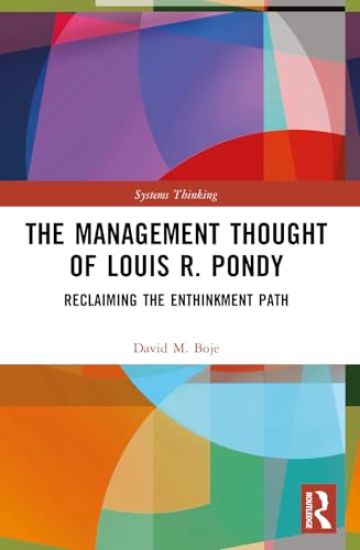
The Management Thought of Louis R. Pondy

The Management Thought of Louis R. Pondy

David M. Boje

TAYLOR FRANCIS LTD
2025
nidottu
Louis R. Pondy was a leading management and organizational studies scholar whose work on open systems helped launch and define the future of the field. This book offers an assessment of Pondy’s contribution, through critical reflection on what happened to the relationship between conflict theory and “beyond open systems.” Exploring the ways in which Louis R. Pondy theorizes conflict and systems, and how he challenged the status quo paradigms, this book offers a historical analysis on Pondy’s work and the relation to contemporary management theory. The author develops a Triple Loop framework, building on Pondy’s theories as well as the work of Gregory Batesom, to demonstrate a beyond-open-systems approach and existing single- or double-loop systems. Demonstrating the value and legacy of Louis R. Pondy, this book will have international appeal to researchers, academics and students across management disciplines and organizational studies, including systems thinking and conflict resolution.
The Management Thought of Louis R. Pondy

The Management Thought of Louis R. Pondy

David M. Boje

TAYLOR FRANCIS LTD
2023
sidottu
Louis R. Pondy was a leading management and organizational studies scholar whose work on open systems helped launch and define the future of the field. This book offers an assessment of Pondy’s contribution, through critical reflection on what happened to the relationship between conflict theory and “beyond open systems.” Exploring the ways in which Louis R. Pondy theorizes conflict and systems, and how he challenged the status quo paradigms, this book offers a historical analysis on Pondy’s work and the relation to contemporary management theory. The author develops a Triple Loop framework, building on Pondy’s theories as well as the work of Gregory Batesom, to demonstrate a beyond-open-systems approach and existing single- or double-loop systems. Demonstrating the value and legacy of Louis R. Pondy, this book will have international appeal to researchers, academics and students across management disciplines and organizational studies, including systems thinking and conflict resolution.
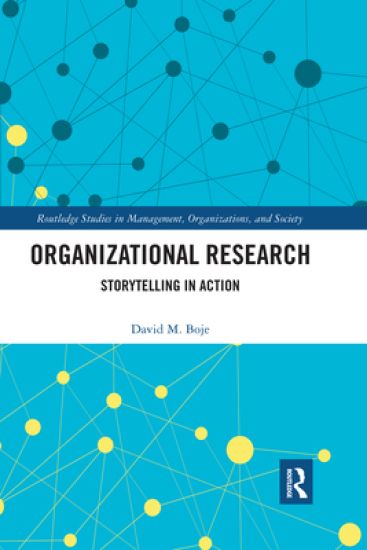
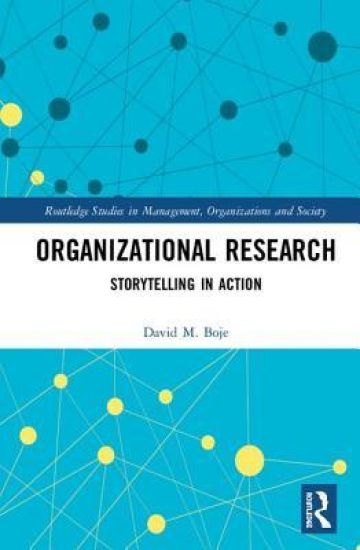
Organizational Research

Organizational Research

David M. Boje

Routledge
2020
nidottu
‘Organizational research methods’ (ORM) are making an ontological turn by studying the nature of Being, becoming, and the meaning of existence in the world. For example, without ontology, there is no ‘ground’ and no ‘theory’ in Grounded Theory (GT). This book explores ten ways to develop fourth wave GT that is grounded and theory. 1st wave GT commits inductive fallacy inference, 2nd wave GT bandaids it with positivistic content coding. 3rd wave GT turns to social constructivism, but this leaves out the materiality and ecology of existence. The first three waves do not address falsification or verification. There is another theme. Qualitative research methods is a discipline craft, not mere science or something that automated text analysis software can displace. Quantiative narrative analysis (QDA) is one more way to colonize and marginalize indigenous ways of knowing (IWOK). Without an ontological turn, its the death of storytelling predicted by Walter Benjamin and Gertrude Stein predicted. The good news is Western Empirical Science is beginning to listen to IWOK-Native Science experiential living story method of relations not only to other humans but to other animals, plants, to living air, water, and earth in living ecosystem of an enchanted world There is a gap in the qualitative research methodology practices and comprehensive advanced approaches causing a split between practice and theory. So called Grounded Theory (inductive positivism) . Organizational Research: Storytelling in Action is about how to conduct ten kinds of ontological Research Methods and conduct their interpretative analyses, for organization studies, in an ethically answerable way. It is aimed at people who want a more ‘advanced’ treatment than available in so-called Grounded Theory or automated narrative analysis books.
True Storytelling

True Storytelling

Jens Larsen; David M. Boje; Lena Bruun

Routledge
2020
nidottu

Halvin toimitettuna 52,20 €

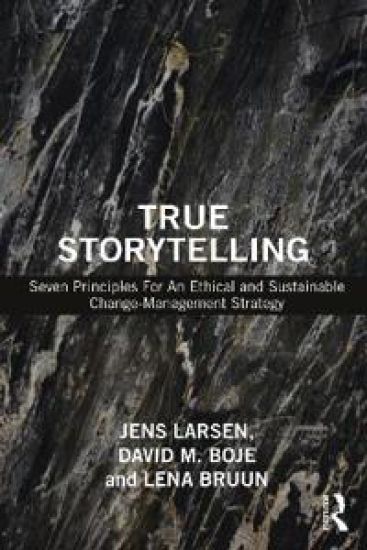
True Storytelling is a new method of studying, planning, facilitating, ensuring, implementing and evaluating ethical and sustainable changes in companies, organizations and societies. True Storytelling is both a method with seven principles and a mindset to help managers and researchers to work with change. True Storytelling stresses that we need to balance the resources of the Earth, our wellbeing and the economy when we are dealing with change. It is not only a book about how to prevent climate change, it is also a book about how we can navigate through crisis, create less stress and achieve better life in organizations and in society as a whole. You will learn how to create innovative start-ups with a purpose and fund money for sustainable projects and good ideas. The book combines practical cases, interviews with managers and CEOs, theory and philosophy to define the method and to teach the Seven True Storytelling Principles:1 You yourself must be true and prepare the energy and effort for a sustainable future2 True storytelling makes spaces that respect the stories already there3 You must create stories with a clear plot, creating direction and helping people prioritize4 You must have timing5 You must be able to help stories on their way and be open to experiment6 You must consider staging, including scenography and artefacts7 You must reflect on the stories and how they create value This book is a guide to implementing these core principles to boost leadership practices, create a storytelling culture and staff buy-in. The method is also useful as an analytical tool for organizations, managers and consultants in order to prepare, plan and execute the implementation of strategies. It is valuable reading for researchers and students at master level as well as leaders and consultants in charge of ethical and sustainable changes.
True Storytelling

True Storytelling

Jens Larsen; David M. Boje; Lena Bruun

Routledge
2020
sidottu
True Storytelling is a new method of studying, planning, facilitating, ensuring, implementing and evaluating ethical and sustainable changes in companies, organizations and societies. True Storytelling is both a method with seven principles and a mindset to help managers and researchers to work with change. True Storytelling stresses that we need to balance the resources of the Earth, our wellbeing and the economy when we are dealing with change. It is not only a book about how to prevent climate change, it is also a book about how we can navigate through crisis, create less stress and achieve better life in organizations and in society as a whole. You will learn how to create innovative start-ups with a purpose and fund money for sustainable projects and good ideas. The book combines practical cases, interviews with managers and CEOs, theory and philosophy to define the method and to teach the Seven True Storytelling Principles:1 You yourself must be true and prepare the energy and effort for a sustainable future2 True storytelling makes spaces that respect the stories already there3 You must create stories with a clear plot, creating direction and helping people prioritize4 You must have timing5 You must be able to help stories on their way and be open to experiment6 You must consider staging, including scenography and artefacts7 You must reflect on the stories and how they create value This book is a guide to implementing these core principles to boost leadership practices, create a storytelling culture and staff buy-in. The method is also useful as an analytical tool for organizations, managers and consultants in order to prepare, plan and execute the implementation of strategies. It is valuable reading for researchers and students at master level as well as leaders and consultants in charge of ethical and sustainable changes.
Storytelling In The Global Age: There Is No Planet B

Storytelling In The Global Age: There Is No Planet B

David M Boje

World Scientific Europe Ltd
2019
sidottu
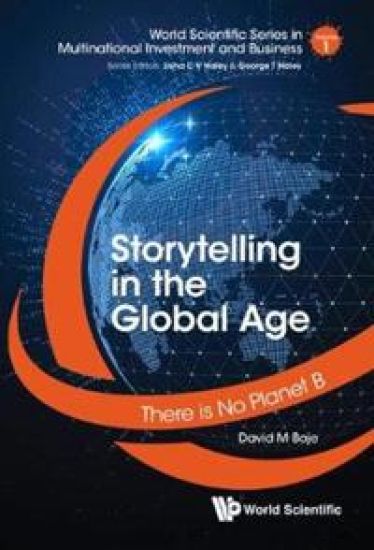
Can the fall of globalization told through true storytelling save humanity from its own extinction? The Sixth Extinction has begun and there is no Planet B. To prevent further damage to the earth's ecosystem, this book proposes a new 'Globalization Praxis' that focuses on nine planetary boundaries. This praxis is called 'true storytelling'. True storytelling is an ethical praxis, a methodology, and an antenarrative process of strategy. Storytelling in the Global Age provides a new approach while uncovering ten myths of globalization. Each myth explores three storytelling layers, which are: narrative-counternarrative, Indigenous Ways of Knowing (IWOK) living story, and antenarrative layers beneath. This book is useful for professionals and students within this field.
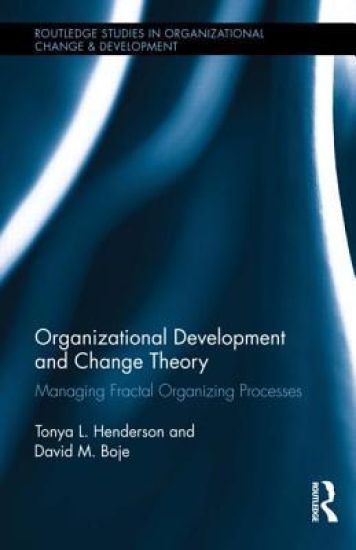
Organizational Development and Change Theory

Organizational Development and Change Theory

Tonya Henderson; David M. Boje

Routledge
2018
nidottu
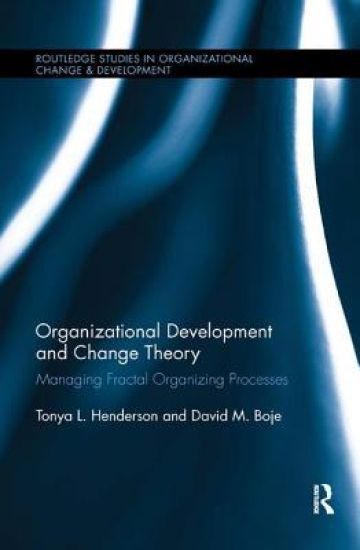
This book offers a fresh perspective on organizational development and change theory and practice. Building on their recent work in quantum storytelling theory and complexity theory, Henderson and Boje consider the implications of fractal patterns in human behavior with a view toward ethics in organization development for the modern world. Building on Gilles Deleuze and Felix Guattari’s (1987) ontology of multiple moving and intersecting fractal processes, the authors offer readers an understanding of how managing and organizing can be adapted to cope with the turbulence and complexity of different organizational situations and environments. They advocate a sustainable, co-creative brand of agency and introduce appropriate, simple tools to support organizational development practitioners. This book offers theory and research methods to management and organization scholars, along with praxis advice to practicing managers.
Organizational Research

Organizational Research

David M. Boje

Routledge
2018
sidottu
‘Organizational research methods’ (ORM) are making an ontological turn by studying the nature of Being, becoming, and the meaning of existence in the world. For example, without ontology, there is no ‘ground’ and no ‘theory’ in Grounded Theory (GT). This book explores ten ways to develop fourth wave GT that is grounded and theory. 1st wave GT commits inductive fallacy inference, 2nd wave GT bandaids it with positivistic content coding. 3rd wave GT turns to social constructivism, but this leaves out the materiality and ecology of existence. The first three waves do not address falsification or verification. There is another theme. Qualitative research methods is a discipline craft, not mere science or something that automated text analysis software can displace. Quantiative narrative analysis (QDA) is one more way to colonize and marginalize indigenous ways of knowing (IWOK). Without an ontological turn, its the death of storytelling predicted by Walter Benjamin and Gertrude Stein predicted. The good news is Western Empirical Science is beginning to listen to IWOK-Native Science experiential living story method of relations not only to other humans but to other animals, plants, to living air, water, and earth in living ecosystem of an enchanted world There is a gap in the qualitative research methodology practices and comprehensive advanced approaches causing a split between practice and theory. So called Grounded Theory (inductive positivism) . Organizational Research: Storytelling in Action is about how to conduct ten kinds of ontological Research Methods and conduct their interpretative analyses, for organization studies, in an ethically answerable way. It is aimed at people who want a more ‘advanced’ treatment than available in so-called Grounded Theory or automated narrative analysis books.
Organizational Development and Change Theory

Organizational Development and Change Theory

Tonya Henderson; David M. Boje

Routledge
2015
sidottu
This book offers a fresh perspective on organizational development and change theory and practice. Building on their recent work in quantum storytelling theory and complexity theory, Henderson and Boje consider the implications of fractal patterns in human behavior with a view toward ethics in organization development for the modern world. Building on Gilles Deleuze and Felix Guattari’s (1987) ontology of multiple moving and intersecting fractal processes, the authors offer readers an understanding of how managing and organizing can be adapted to cope with the turbulence and complexity of different organizational situations and environments. They advocate a sustainable, co-creative brand of agency and introduce appropriate, simple tools to support organizational development practitioners. This book offers theory and research methods to management and organization scholars, along with praxis advice to practicing managers.
Storytelling Organizational Practices
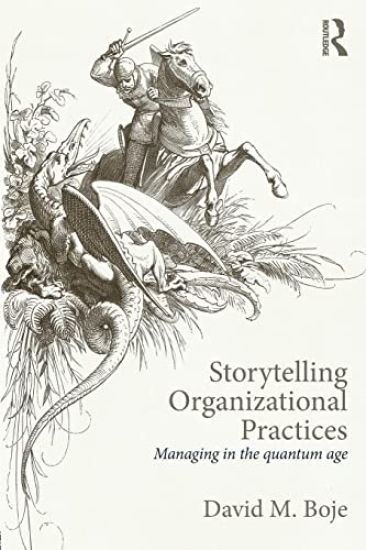
Once upon a time the practice of storytelling was about collecting interesting stories about the past, and converting them into soundbite pitches. Now it is more about foretelling the ways the future is approaching the present, prompting a re-storying of the past. Storytelling has progressed and is about a diversity of voices, not just one teller of one past; it is how a group or organization of people negotiates the telling of history and the telling of what future is arriving in the present. With the changes in storytelling practices and theory there is a growing need to look at new and different methodologies. Within this exciting new book, David M. Boje develops new ways to ask questions in interviews and make observations of practice that are about storytelling the future. This, after all, is where management practice concentrates its storytelling, while much of the theory and method work is all about how the past might recur in the future. Storytelling Organizational Practices takes the reader on a journey: from looking at narratives of past experience through looking at living stories of emergence in the present to looking at how the future is arriving in ways that prompts a re-storying of the past.
Storytelling Organizational Practices
Once upon a time the practice of storytelling was about collecting interesting stories about the past, and converting them into soundbite pitches. Now it is more about foretelling the ways the future is approaching the present, prompting a re-storying of the past. Storytelling has progressed and is about a diversity of voices, not just one teller of one past; it is how a group or organization of people negotiates the telling of history and the telling of what future is arriving in the present. With the changes in storytelling practices and theory there is a growing need to look at new and different methodologies. Within this exciting new book, David M. Boje develops new ways to ask questions in interviews and make observations of practice that are about storytelling the future. This, after all, is where management practice concentrates its storytelling, while much of the theory and method work is all about how the past might recur in the future. Storytelling Organizational Practices takes the reader on a journey: from looking at narratives of past experience through looking at living stories of emergence in the present to looking at how the future is arriving in ways that prompts a re-storying of the past.