Kirjojen hintavertailu – 12 903 729 kirjaa ja 27 kauppaa

Kirjailija

David M. Kennedy

Kirjat ja teokset yhdessä paikassa: 14 kirjaa, julkaisuja vuosilta 1899–2021, suosituimpiin kuuluu Theodore Roosevelt. Vertaile teosten hintoja ja tarkista saatavuus suomalaisista kirjakaupoista.

Nimi esiintyy myös muodoissa: David M Kennedy

14 kirjaa

Kirjojen julkaisuvuodet: 1899–2021.

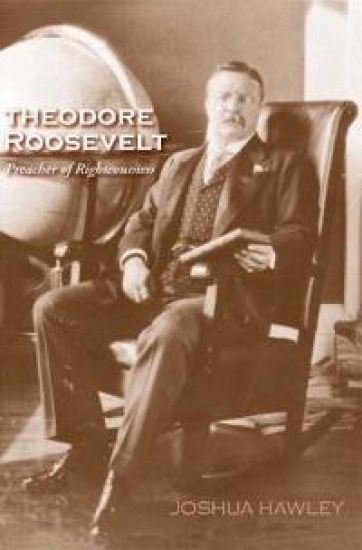
Theodore Roosevelt

Theodore Roosevelt

Joshua David Hawley; David M. Kennedy

Yale University Press
2015
pokkari
An exploration of Roosevelt’s political thought and the impact of his legacy on modern America"Hawley has pieced together an interesting interpretation of Theodore Roosevelt"—Choice Often dismissed by scholars as an opportunistic politician whose ideas lacked historical import, Theodore Roosevelt has been underestimated as a thinker. But to disdain Roosevelt’s politics is to overlook his important and lasting contributions to the shape of modern America, says the author of this compelling study of the 26th president of the United States. Senator Joshua Hawley examines Roosevelt’s political thought more deeply than ever before to arrive at a fully revised understanding of his legacy: Roosevelt galvanized a twenty-year period of national reform that permanently altered American politics and Americans’ expectations for government, social progress, and presidents. The book explores the historical context of Theodore Roosevelt’s politics, its intellectual sources, its practice, and its effect on his era and our own. Hawley finds that Roosevelt developed a coherent political science centered on the theme of righteousness, and this “warrior republicanism” was what made the progressive era possible. The debates of Roosevelt’s era were driven largely by his ideas, and from those debates emerged the grammar of our contemporary politics. Casting new light on the fertility and breadth of Roosevelt’s thought, Hawley reveals the full extent of his achievement in twentieth-century intellectual history.

A Framework for Addressing Violence and Serious Crime

A Framework for Addressing Violence and Serious Crime

Anthony A. Braga; David M. Kennedy

Cambridge University Press
2021
pokkari

Halvin toimitettuna 30,00 €

This Element examines an increasingly important community crime prevention strategy - focused deterrence. This strategy seeks to change offender behavior by understanding underlying crime-producing dynamics and conditions that sustain recurring crime problems, and implementing a blended set of law enforcement, community mobilization, and social service actions. The approach builds on recent theorizing on optimizing deterrence, mobilizing informal social control, enhancing police legitimacy, and reducing crime opportunities through situational crime prevention. There are three main types of focused deterrence strategies: group violence intervention programs, drug market intervention programs, and individual offender programs. A growing number of rigorous program evaluations find focused deterrence to be an effective crime prevention strategy. However, a number of steps need to be taken to ensure focused deterrence strategies are implemented properly. These steps include creating a network of capacity through partnering agencies, conducting upfront and ongoing problem analysis, and developing accountability structures and sustainability plans.
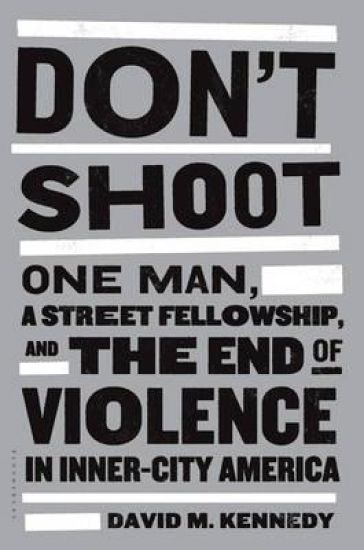
Don't Shoot

Don't Shoot

David M. Kennedy

Bloomsbury Publishing PLC
2011
pokkari
The remarkable story of David Kennedy's crusade to combat America's plague of gang- and drug-related violence - with methods that have been astonishingly effective across the country.'If you want to read a book on urban gangs and find out why they exist and why they kill each other, read this ... this is a sociology book, but it's like immersing yourself in The Wire ... When Kennedy says something, you believe him' ScotsmanGang- and drug-related inner-city violence, with its attendant epidemic of incarceration, is the defining crime problem in our country. In some neighborhoods in America, one out of every two hundred young black men is shot to death every year, and few initiatives of government and law enforcement have made much difference. But when David Kennedy, a self-taught and then-unknown criminologist, engineered the "Boston Miracle" in the mid-1990s, he pointed the way toward what few had imagined: a solution. Don't Shoot tells the story of Kennedy's long journey. Riding with beat cops, hanging with gang members, and stoop-sitting with grandmothers, Kennedy found that all parties misunderstood each other, caught in a spiral of racialized anger and distrust. He envisioned an approach in which everyone-gang members, cops, and community members-comes together in what is essentially a huge intervention. Offenders are told that the violence must stop, that even the cops want them to stay alive and out of prison, and that even their families support swift law enforcement if the violence continues. In city after city, the same miracle has followed: violence plummets, drug markets dry up, and the relationship between the police and the community is reset. This is a landmark book, chronicling a paradigm shift in how we address one of America's most shameful social problems. A riveting, page-turning read, it combines the street vérité of The Wire, the social science of Gang Leader for a Day, and the moral urgency and personal journey of Fist Stick Knife Gun. But unlike anybody else, Kennedy shows that there could be an end in sight.
Deterrence and Crime Prevention

Deterrence and Crime Prevention

David M. Kennedy

Routledge
2010
nidottu
Deterrence is at the heart of the preventive aspiration of criminal justice. Deterrence, whether through preventive patrol by police officers or stiff prison sentences for violent offenders, is the principal mechanism through which the central feature of criminal justice, the exercise of state authority, works – it is hoped -- to diminish offending and enhance public safety. And however well we think deterrence works, it clearly often does not work nearly as well as we would like – and often at very great cost. Drawing on a wide range of scholarly literatures and real-world experience, Kennedy argues that we should reframe the ways in which we think about and produce deterrence. He argues that many of the ways in which we seek to deter crime in fact facilitate offending; that simple steps such as providing clear information to offenders could transform deterrence; that communities may be far more effective than legal authorities in deterring crime; that apparently minor sanctions can deter more effectively than draconian ones; that groups, rather than individual offenders, should often be the focus of deterrence; that existing legal tools can be used in unusual but greatly more effective ways; that even serious offenders can be reached through deliberate moral engagement; and that authorities, communities, and offenders – no matter how divided – share and can occupy hidden common ground. The result is a sophisticated but ultimately common-sense and profoundly hopeful case that we can and should use new deterrence strategies to address some of our most important crime problems. Drawing on and expanding on the lessons of groundbreaking real-world work like Boston’s Operation Ceasefire – credited with the "Boston Miracle" of the 1990s – "Deterrence and Crime Prevention" is required reading for scholars, law enforcement practitioners, and all with an interest in public safety and the health of communities.
Deterrence and Crime Prevention

Deterrence and Crime Prevention

David M. Kennedy

Routledge
2008
sidottu
Deterrence is at the heart of the preventive aspiration of criminal justice. Deterrence, whether through preventive patrol by police officers or stiff prison sentences for violent offenders, is the principal mechanism through which the central feature of criminal justice, the exercise of state authority, works – it is hoped -- to diminish offending and enhance public safety. And however well we think deterrence works, it clearly often does not work nearly as well as we would like – and often at very great cost. Drawing on a wide range of scholarly literatures and real-world experience, Kennedy argues that we should reframe the ways in which we think about and produce deterrence. He argues that many of the ways in which we seek to deter crime in fact facilitate offending; that simple steps such as providing clear information to offenders could transform deterrence; that communities may be far more effective than legal authorities in deterring crime; that apparently minor sanctions can deter more effectively than draconian ones; that groups, rather than individual offenders, should often be the focus of deterrence; that existing legal tools can be used in unusual but greatly more effective ways; that even serious offenders can be reached through deliberate moral engagement; and that authorities, communities, and offenders – no matter how divided – share and can occupy hidden common ground. The result is a sophisticated but ultimately common-sense and profoundly hopeful case that we can and should use new deterrence strategies to address some of our most important crime problems. Drawing on and expanding on the lessons of groundbreaking real-world work like Boston’s Operation Ceasefire – credited with the "Boston Miracle" of the 1990s – "Deterrence and Crime Prevention" is required reading for scholars, law enforcement practitioners, and all with an interest in public safety and the health of communities.
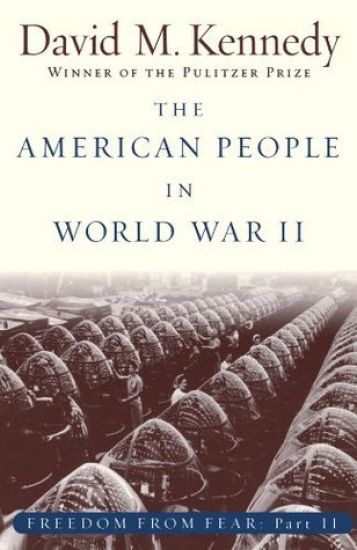
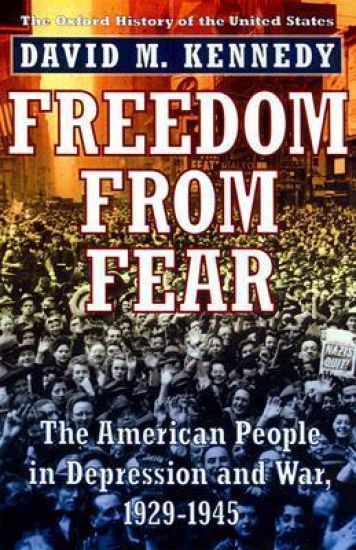
Freedom From Fear: Part 2: The American People in World War II

Freedom From Fear: Part 2: The American People in World War II

David M. Kennedy

Oxford University Press Inc
2004
nidottu
Even as the New Deal was coping with the Depression, a new menace was developing abroad. Exploiting Germany's own economic burdens, Hitler reached out to the disaffected, turning their aimless discontent into loyal support for his Nazi Party. In Asia, Japan harbored imperial ambitions of its own. The same generation of Americans who battled the Depression eventually had to shoulder arms in another conflict that wreaked worldwide destruction, ushered in the nuclear age, and forever changed their way of life and their country's relationship to the rest of the world. The American People in World War II--the second installment of Kennedy's Pulitzer Prize-winning Freedom from Fear--explains how the nation agonized over its role in the conflict, how it fought the war, why the United States emerged victorious, and why the consequences of victory were sometimes sweet, sometimes ironic. In a compelling narrative, Kennedy analyzes the determinants of American strategy, the painful choices faced by commanders and statesmen, and the agonies inflicted on the millions of ordinary Americans who were compelled to swallow their fears and face battle as best they could. The American People in World War II is a gripping narrative and an invaluable analysis of the trials and victories through which modern America was formed.
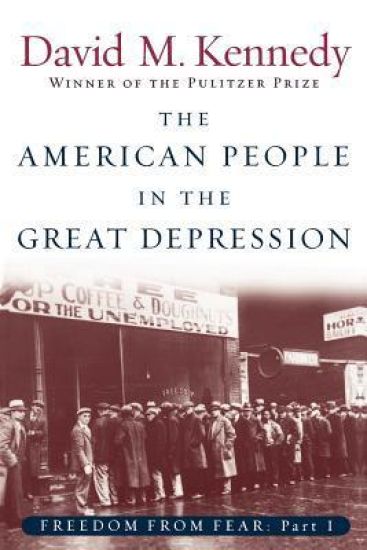
Freedom From Fear: Part 1: The American People in the Great Depression
On October 24, 1929, America met the greatest economic devastation it had ever known. In this first instalment of his Pulitzer Prize-winning Freedom from Fear, Kennedy tells how America endured, and eventually prevailed, in the face of that unprecedented calamity. Kennedy vividly demonstrates that the economic crisis of the 1930s was more than a reaction to the excesses of the 1920s. For more than a century before the Crash, America's unbridled industrial revolution had gyrated through repeated boom and bust cycles, consuming capital and inflicting misery on city and countryside alike. Nor was the alleged prosperity of the 1920s as uniformly shared as legend portrays. Countless Americans eked out threadbare lives on the margins of national life. Roosevelt's New Deal wrenched opportunity from the trauma of the 1930s and created a lasting legacy of economic and social reform, but it was afflicted with shortcomings and contradictions as well. With an even hand Kennedy details the New Deal's problems and defeats, as well as its achievements. He also sheds fresh light on its incandescent but enigmatic author, Franklin D. Roosevelt. Marshalling unforgettable narratives that feature prominent leaders as well as lesser-known citizens, The American People in the Great Depression tells the story of a resilient nation finding courage in an unrelenting storm.
Freedom from Fear

Freedom from Fear

David M. Kennedy

Oxford University Press Inc
2001
nidottu

Halvin toimitettuna 30,30 €

Between 1929 and 1945, two great travails were visited upon the American people: the Great Depression and World War II. Freedom from Fear tells the story of how Americans endured, and eventually prevailed, in the face of those unprecedented calamities. The Depression was both a disaster and an opportunity. As David Kennedy vividly demonstrates, the economic crisis of the 1930s was far more than a simple reaction to the alleged excesses of the 1920s. For more than a century before 1929, America's unbridled industrial revolution had gyrated through repeated boom and bust cycles, wastefullly consuming capital and inflicting untold misery on city and countryside alike. Nor was the fabled prosperity of the 1920s as uniformly shared ag legend portrays. Countless Americans, especially if they were farmers, African Americans, or recent immigrants, eked out thread bare lives on the margins of national life. For them the Depression was but another of the ordeals of fear and insecurity with which they were sadly familiar. Franklin Roosevelt's New Deal wrung from the trauma of the 1930s a lasting legacy of economic and social reform, in cluding the Social Security Act, new banking and financial laws, regulatory legistlation, and new opportunities for organized labour. Taken together, those reforms gave a measure of security to millons of Americans who had never had much of it, and with a fresh sense of having a stake in their country. Freedom from Fear tells the story of the New Deal's achievments, without slighting its shortcomings, contraditions and failures. It is a story rinch in drama and peopled with unforgettable personalities, including the incandescent but enigmatic figure of Roosevelt himself. Even as the New Deal was coping with the Depression, a still more fearsome menace was developing abroad--Hitler's thirst for war in Europe, coupled with the imperial ambitions of Japan in Asia. The same generation of Americans who battled the Depression evenutally had to shoulder the arms in another conflict that wreaked world wide destruction, ushered in the nuclear age and forever changed their own way of life and their country's relationship to the rest of the world. Freedom from Fear explains how the nation agonized over its role in World War II, how it fought the war, why the United States won, and why the consequences of victory were sometimes sweet, sometimes ironic. In a compelling narrative, Kenney analyses the determinants of American strategy, the painful choices faced by commanders and statesmen, and the agonies inflicted on the millions of ordinary Americans who were compelled to swallow their fears and face battle as best they could. Freedom from Fear is a comprehensive and colourful account of the most convulsive period in American history, excepting only the Civil War - a period that formed the crucible in which modern America was formed.
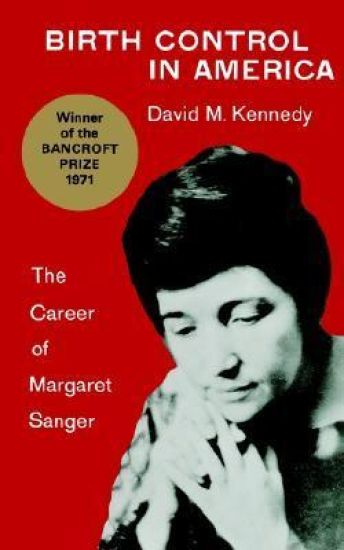
Birth Control in America

Birth Control in America

David M. Kennedy

Yale University Press
1977
pokkari
A history of the birth control movement in the United States must necessarily be in part a biography of the movement’s leader – Margaret Sanger. In this volume Mr. Kennedy describes Mrs. Sanger’s great personal influence on the course of the birth control movement and examines those elements of her thought and character which shed light on the nature of twentieth-century feminism and reform. He shows that Mrs. Sanger contributed as much to women’s continuing subordination as she did to their liberation. Similarly, he describes how she took the birth control issue with her as she moved from a commitment to radical anarchism to middle-class respectability, thereby transforming what she had conceived as a proletarian weapon in the class struggle into a conservative instrument of social control. Mr. Kennedy also explores the heritage of nineteenth-century attitudes about the family, women, and sex which influenced the reception given to Mrs. Sanger’s proposed reform. He discusses the impact of the birth control movement upon organized religion, the medical profession, and the law where, in each instance, initial antipathy slowly gave way to qualified acceptance. Even the federal government, which had prosecuted Mrs. Sanger in 1914, was itself promoting birth control by the time of the Second World War. Margaret Sanger died a heroine in 1966. Yet, as the author points out, however valuable her legacy to us today, her cause was often one of ambiguous implications whose complexities even she did not always understand.