Kirjailija
David M. Smith
Kirjat ja teokset yhdessä paikassa: 15 kirjaa, julkaisuja vuosilta 1994–2026, suosituimpiin kuuluu Devolution and Localism in England. Vertaile teosten hintoja ja tarkista saatavuus suomalaisista kirjakaupoista.
Nimi esiintyy myös muodoissa: David M Smith
15 kirjaa
Kirjojen julkaisuvuodet: 1994–2026.
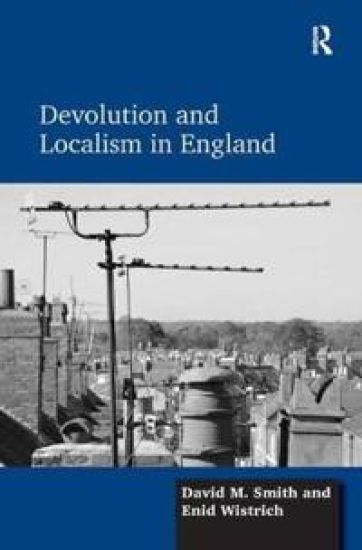
Combining historical and policy study with empirical research from a qualitative study of regional elites this book offers an original and timely insight into the progress of devolution of governance in England. With particular interest in how governments have tried and continue to engage English people in sub-national democratic processes while dealing with the realities of governance it uses in-depth interviews with key figures from three English regions to get the ’inside view’ of how these processes are seen by the regional and local political, administrative, business and voluntary sector elites who have to make policies work in practice. Tracing the development of decentralisation policies through regional policies up to and including the general election in 2010 and the radical shift away from regionalism to localism by the new Coalition Government thereafter the authors look in detail at some of the key policies of the incumbent Coalition Government such as City Regions and Localism and their implementation. Finally they consider the implications of the existing situation and speculate on possible issues for the future.
Essentials of Pharmacology for Health Professions
Ruth Woodrow; Bruce Colbert; David M. Smith
Delmar Cengage Learning
2014
nidottu
Now in its 7th Edition, ESSENTIALS OF PHARMACOLOGY FOR HEALTH PROFESSIONS is the best-selling resource for those preparing for licensed practical nursing, medical assisting, and other allied health careers. Clear, concise writing focused on "need to know" drug information gives readers the confidence to master pharmacology. Learn calculations quickly through a simplified step-by-step process. Part I chapters center on basic pharmacologic principles. Medication preparation, supplies, and specific information on each route of administration is covered. Administration checklists allow the learner to put the knowledge into practice. . Part II chapters organize drugs by classifications, and includes purpose, side effects, cautions, interactions, and contraindications. Patient education is highlighted for each category. Reference tables with each classification list the most commonly prescribed drugs according to generic and trade names, with dosage and available forms. The complete pharmacology resource for allied health professionals at every experience level, ESSENTIALS OF PHARMACOLOGY FOR HEALTH PROFESSIONS, 7th Edition also makes a great refresher and on-the-job reference.
Oxford Resources for IB DP History: The Americas Course Book
Alexis Mamaux; David M Smith; Matt Borgmann; Yvonne Berliner; Mark Rogers; Shannon Leggett
Oxford University Press
2026
nidottu
Please note this title is suitable for any student studying: Exam Board: International Baccalaureate Level and subject: Diploma Programme History (HL) First teaching: 2026 First exams: 2028 Comprehensively updated for the DP History first teaching 2026 subject guide, and developed in cooperation with the IB, this resource supports Higher Level (HL) learners in building evaluative thinking and deep historical insight through comprehensive regional content, ATL skill development, and exam-style practice.
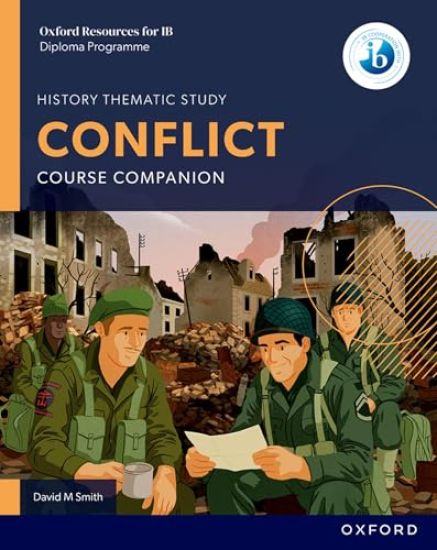
Oxford Resources for IB DP History: Conflict Course Book
David M Smith
Oxford University Press
2026
nidottu
Please note this title is suitable for any student studying: Exam Board: International Baccalaureate Level and subject: Diploma Programme History First teaching: 2026 First exams: 2028 Developed in cooperation with the IB, Oxford's DP History resources are fully aligned with the latest syllabus for first teaching in 2026, offering comprehensive support for Paper 2. Engage learners with in-depth coverage of relevant historical examples, helping students build a strong foundation of contextual knowledge and analytical insight across their thematic study.
The Journey of LIVING DIVIDED Volume II is the continuance of the Trilogy Series Welcome to the beginning meeting of restoration for relationships. This is a meeting in which you could not avoid if you are holding this book in your hand "God Ordained" Time like this; every person at one point in time will need a total restoration in their relationships. If this restoration is with a spouse, or partner to be; it is not just a question of whether but also of when. Now is your time Now is the place Only people who seek and desire truth, experience this restoration sooner rather than later. Come and journey with God and David as we use life experiences through the LIVING DIVIDED to enlighten, empower, and encourage you through the complexity of relationships and marriages. No matter if you are a woman or a man. LIVING DIVIDED will cause you to discover the inward battles of men and husbands, as they expose and come face to face with their frailties, sins, and faults
The Journey of LIVING DIVIDED Volume I Welcome to the beginning meeting of restoration for relationships. This is a meeting in which you could not avoid if you are holding this book in your hand "God Ordained" Time like this; every person at one point in time will need a total restoration in their relationships. If this restoration is with a spouse, or partner to be; it is not just a question of whether but also of when. Now is your time Now is the place Only people who seek and desire truth, experience this restoration sooner rather than later. Come and journey with God and David as we use life experiences through the LIVING DIVIDED to enlighten, empower, and encourage you through the complexity of relationships and marriages. No matter if you are a woman or a man. LIVING DIVIDED will cause you to discover the inward battles of men and husbands, as they expose and come face to face with their frailties, sins, and faults.
Welcome to the beginning meeting of restoration for relationships. This is a meeting which you could not avoid if you are holding this book in your hand. "God Ordained" Time like these; every person at one point in time will need a total restoration in their relationships. If this restoration is with a spouse, or partner to be; it is not just a question of whether but also of when. Now is your time! Now is the place! Only people who seek and desire truth, experience this restoration sooner rather than later. Come and journey with God and David as we use life experiences to empower and encourage you through the complexity of relationships and marriages. No matter if you are a woman or a man. The Journey will cause you to discover the inward battles of men and husbands, as they expose and come face to face with their frailties, sins, and faults.
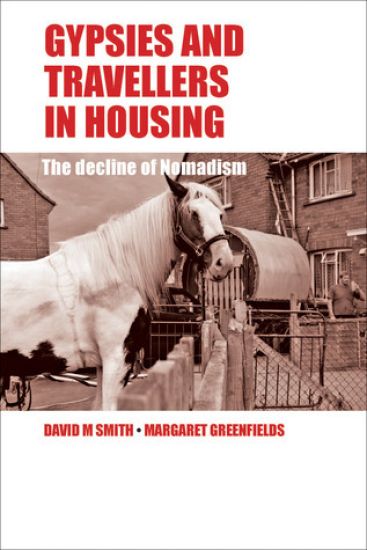
This original and timely text is the first published research from the UK to address the neglected topic of the increasing (and largely enforced) settlement of Gypsies and Travellers in conventional housing. It highlights the complex and emergent tensions and dynamics inherent when policy and popular discourse combine to frame ethnic populations within a narrative of movement. The authors have extensive knowledge of the communities and experience as policy practitioners and researchers and consider the changing culture and dynamics experienced by ethnic Gypsies and Travellers. They explore the gendered social, health and economic impacts of settlement and demonstrate the tenacity of cultural formations and their adaptability in the face of policy-driven constraints that are antithetical to traditional lifestyles. The groundbreaking book is essential reading for policy makers; professionals and practitioners working with housed Gypsies and Travellers. It will also be of interest to sociologists, anthropologists, social policy and housing specialists and anybody interested in the experiences and responses of marginalized communities in urban and rural settings. Royalties for this book are to be divided equally between the Gypsy Council and Travellers Aid Trust.
Regional Identity and Diversity in Europe
David M. Smith; Enid Wistrich
Federal Trust for Education Research
2007
nidottu
How can a single European government incorporate the needs of many distinct regional European cultures? This book draws together leading researchers from throughout Europe to examine a selection of regional identities in three European nation states. The three regions studied are Wales in the UK, Flanders in Belgium, and Silesia in Poland. The authors find that each of the three regions display a lively sense of regional identity as well as national identity and they go on to explore the implications of these robust regional identities for the governance of European nation states and for the governance of the European Union. The book also considers the implications of continuing regional identities for the growth of a European "demos," a growth which many analysts believe is an indispensable precondition for further political integration within the European Union.
On the margins of inclusion explores the notion of 'social exclusion' from the perspective of those deemed to be 'socially excluded' and provides a compelling and vivid portrait of lives at the insecure, low-paid end of the labour market. The ethnography is used to illuminate key issues in sociology and social policy and to tackle debates and controversies that are central to current discussions on the appropriate role and function of state welfare. A thorough discussion of current policies to address social exclusion and area regeneration is woven into the fieldwork analysis. On the margins of inclusion is essential reading for researchers, academics and higher-level students in sociology and social policy, and will also be of interest to policy makers in the field.
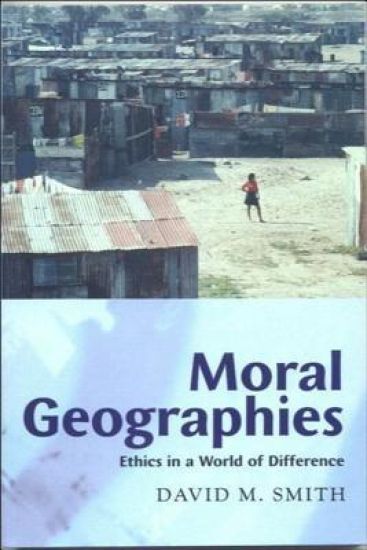
This book explores the interface between geography, ethics and morality. It considers questions that have haunted the past, are subjects of controversy in the present, and which affect the future. Does distance diminish responsibility? Should we interfere with the lives of those we do not know? Is there a distinction between private and public space? Which values and morals, if any, are absolute, and which cultural, communal or personal? And are universal rights consistent with respect for difference? David Smith shows how these questions play themselves out in politics, planning, development, social and personal relations, the exploitation of resources, and competition for territory. After introducing the essential elements of moral philosophy from Plato to postmodernism, he examines the moral significance of concepts of landscape, location and place, proximity, distance and community, space and territory, justice, and nature. He is concerned above all with the morality people practice, to see how this varies according to geographical context, and to assess the inevitability of its outcomes. His argument is seamlessly interwoven with everyday observation and vividly described case studies: the latter include genocide and rescue during the Holocaust, the conflicts over space between Israeland Palestine and within Israel itself, and the social tensions and aspirations in post-apartheid South Africa. The meaning, possibility and limits of social justice lie at the heart of the book. That geographical context is vital to the understanding of moral practice and ethical theory is its central proposition. The book is clearly and engagingly written. The author has a student readership in mind, but his book will appeal widely to geographers and others involved in planning, development, politics, social theory, and the analysis of the contemporary world.
Qualitative Methods in Human Geography
John Eyles; David M Smith
Barnes Noble Books-Imports, Div of Rowman Littlefield Pubs., Inc
1994
sidottu
This book breaks new ground in the exploration of research methods in human geography. In recent years, there has been a reorientation away from established methods, with a heavy emphasis on quantitative analysis, toward more qualitative approaches. This is the first book to present the breadth and flavor of these changes along with a consideration of their significance.
Human geography - cultural, economic, political, and social - is inherently concerned with social justice and injustice. So also are the associated fields of urban and regional analysis and planning: being born in one country, region or one part of a particular city many, for example, be the single most important factor in an individual's health, education, and longevity. It is clear that in every nation, including present and former socialist societies, wealth and privilege are unevenly divided. But would an equal division of resources really be preferable from a moral point of view? Is it even possible to propound universal prescriptions of what is socially just? or to talk about universal rights in a world in which different kinds of people (according to class, gender, race, and religion) are treated so differently in different places? Such questions are far from simple. In this book David Smith, one of the world's leading geographical thinkers, throws incisive light upon them. He proceeds first by providing a critical and accessible review of relevant issues in social and moral philosophy, in particular the contrasting claims of different theories of social justice, and the nature of rights and needs. He examines John Rawls's proposition that inequality can be justified to the extent that it benefits the worst-off; and he considers how far justice may or should be seen as a process for equalization or of returning to equality, in the face of persistent and widespread inequality. The author then applied theoretical perspectives to case studies. These are based on his own first-hand research, and cover racial injustice in the American South, inequality under socialism and its aftermath in eastern Europe, and the porspects for social justice in post-apartheid South Africa. David Smith examines the plight of those peoples who have no secure place or defined territory, focussing on the conflicting claims of the Palestinians and the Israelis. Finally he draws together elements of theory and experience to present trenchantly argued conclusions on the justice of market-led society, the ends of egalitarianism, and the universality of just principles. By both precept and example he shows the central contribution that geographers can make to the understanding of social justice in a complex and rapidly changing world.