Kirjojen hintavertailu – 12 859 819 kirjaa ja 27 kauppaa

Kirjailija

David Metz

Kirjat ja teokset yhdessä paikassa: 14 kirjaa, julkaisuja vuosilta 2008–2024, suosituimpiin kuuluu Risk-Informed Analysis of Transportation Worker Identification Credential Reader Requirements. Vertaile teosten hintoja ja tarkista saatavuus suomalaisista kirjakaupoista.

14 kirjaa

Kirjojen julkaisuvuodet: 2008–2024.

Risk-Informed Analysis of Transportation Worker Identification Credential Reader Requirements

Risk-Informed Analysis of Transportation Worker Identification Credential Reader Requirements

Joseph C Chang; James V Marrone; David Metz; Sean Colbert-Kelly; Matthew A DeNardo; Keith Gierlack; Chelsea Kolb; Ryan Bauer; Devon Hill; Kristin J Leuschner

RAND Corporation
2023
pokkari
The U. S. Coast Guard is determining how many facilities handle certain dangerous cargoes and whether, according to a risk analysis, requiring those facilities to biometrically verify the Transportation Worker Identification Credential of every person accessing a secure area of such a facility would be cost-effective. This report answers those questions.
The Risk-Mitigation Value of the Transportation Worker Identification Credential

The Risk-Mitigation Value of the Transportation Worker Identification Credential

Heather J Williams; Kristin Van Abel; David Metz; James V Marrone; Edward W Chan; Katherine Costello; Ryan Michael Bauer; Devon Hill; Simon Véronneau; Joseph C Chang; Ian Mitch; Joshua Lawrence Traub; Sarah Soliman; Zachary Haldeman; Kelly Klima; Douglas C Ligor

RAND
2021
nidottu
The Transportation Worker Identification Credential (TWIC) is designed to enhance security at U. S. ports. It demonstrates that the holder has passed a Transportation Security Administration security threat assessment and is required of anyone with unescorted access to a secure area at a regulated facility. This report provides the findings from an assessment of the TWIC program, along with the assessors' recommendations.
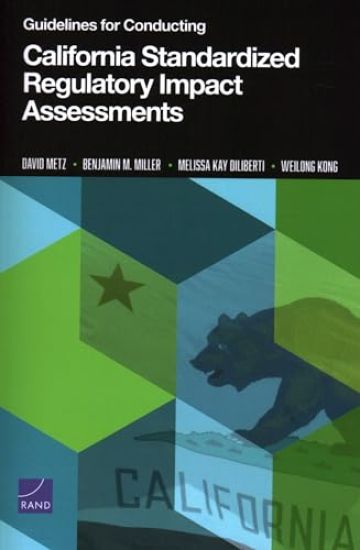
Guidelines for Conducting California Standardized Regulatory Impact Assessments

Guidelines for Conducting California Standardized Regulatory Impact Assessments

David Metz; Benjamin M Miller; Melissa Kay Diliberti; Weilong Kong

RAND Corporation
2024
pokkari
The authors provide an overview of California's rulemaking process for executive branch agencies and guidelines for conducting standardized regulatory impact assessments for major regulations. They also provide guidance on economic impact assessment methodologies and technical approaches for assessing the impacts of future proposed regulations.
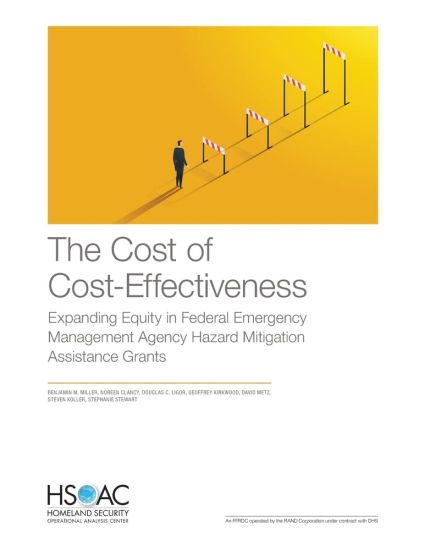
The Cost of Cost-Effectiveness

The Cost of Cost-Effectiveness

Benjamin M Miller; Noreen Clancy; Douglas C Ligor; Geoffrey Kirkwood; David Metz; Steven Koller; Stephanie Stewart

RAND Corporation
2023
pokkari
The Federal Emergency Management Agency could simplify or amend the required benefit-cost analysis process in applications for hazard mitigation assistance to be more inclusive of lower-resourced communities. Homeland Security Operational Analysis Center researchers explore how the process could be simplified to be more inclusive of lower-resourced communities.
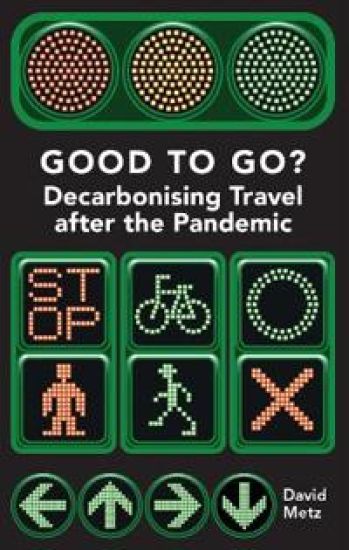
Good To Go?

Good To Go?

David Metz

London Publishing Partnership
2022
nidottu
Travel is central to our lives, and the transport system brings us the goods and services that we need and allows us to access the experiences and opportunities that we seek. Yet our transport system has many problems: congestion and overcrowding, noise, air pollution and carbon emissions, deaths and injuries, and the intrusion of vehicles into unsuitable locations. Much effort and money has been devoted to tackling these problems, over many years, but progress is slow. Recognition of the urgent need to respond to climate change is prompting major transport developments - particularly a switch to electric vehicles - and it is also argued that the amount of travel we undertake will need to be reduced. The coronavirus pandemic caused a great shock to our travel patterns, showing us that we could manage with much less movement if we had to. But as the pandemic recedes, our travel behaviour is largely reverting to what it was before, albeit with less commuting to work and less shopping in person. This book offers a comprehensive overview of the transport system. It looks at how it has developed, at how it will need to evolve to meet our need for travel - sustainably and economically - and at what our options are for meeting those needs.
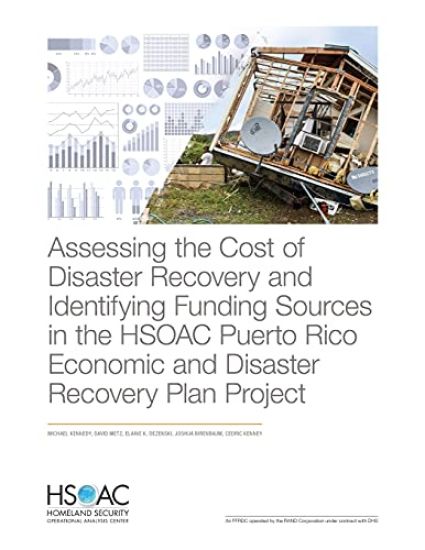
Assessing the Cost of Disaster Recovery and Identifying Funding Sources in the HSOAC Puerto Rico Economic and Disaster Recovery Plan Project
This report describes the work done on estimating the costs of, and identifying potential funding sources for, Puerto Rico's economic and disaster recovery plan. Total estimated cost is $139 billion. Up to $94 billion of funding from the federal government and private insurance claims is estimated to be available. Sources to fill the gap include the Puerto Rico government, the private sector, public-private partnerships, and philanthropies.
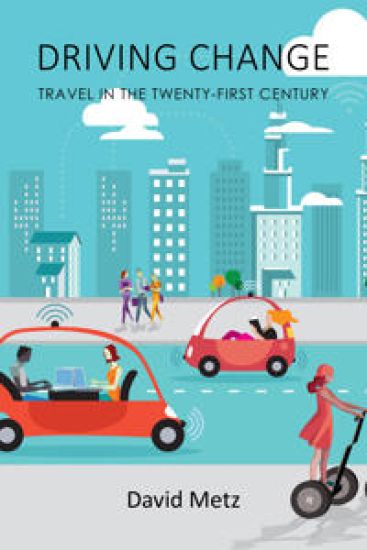
Driving Change

Driving Change

David Metz

Agenda Publishing
2019
sidottu
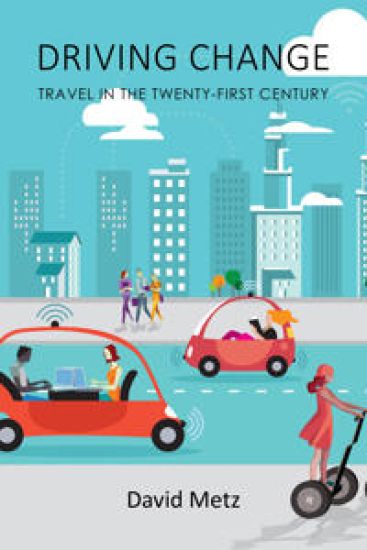
Drawing on comparative detail from Europe, North America, and the rest of the world, Driving Change provides a nuanced overview of the UK’s modern transport system and the role of business models and policy choices in its evolution. The common features of mobility and travel in developed economies are highlighted in order to provide a balanced appraisal of possible future developments. The book offers a detailed consideration of the potential of new technologies – electric propulsion, digital platforms and autonomous vehicles – to offer solutions to the intractable challenges that accompany high levels of car ownership, as well as their likely impact on business and transport policy. Driving Change is a rich analysis of the modern state of transportation and will be welcomed by students of transport studies and policy professionals tasked with developing infrastructure and the growth of the transportation industry.
Driving Change

Driving Change

David Metz

Agenda Publishing
2019
nidottu
Drawing on comparative detail from Europe, North America, and the rest of the world, Driving Change provides a nuanced overview of the UK’s modern transport system and the role of business models and policy choices in its evolution. The common features of mobility and travel in developed economies are highlighted in order to provide a balanced appraisal of possible future developments. The book offers a detailed consideration of the potential of new technologies – electric propulsion, digital platforms and autonomous vehicles – to offer solutions to the intractable challenges that accompany high levels of car ownership, as well as their likely impact on business and transport policy. Driving Change is a rich analysis of the modern state of transportation and will be welcomed by students of transport studies and policy professionals tasked with developing infrastructure and the growth of the transportation industry.
Travel Fast or Smart?

Travel Fast or Smart?

David Metz

London Publishing Partnership
2016
nidottu
Britain does not have a coherent transport policy, and conventional transport economics has reached a dead end. A transport policy should incorporate systematic thinking about the travel needs of society. However, in Britain, public investment in the transport system has been extraordinarily volatile. We closed under-used railways and then experienced a doubling of passenger numbers that has prompted huge new investment. We gave up making substantial investment in motorways, but now have chosen to revive the road construction effort in a big way. We vacillate on road pricing, introducing congestion charging successfully in London, but backing off because of local opposition elsewhere. We have delayed for decades the decision about whether and where to build additional airport capacity. The environmental impacts of transport infrastructure - global and local - have been a key focus, but now are not. This mess has come about because policy has focused on big construction projects and time-saving, instead of on the part people and places play in economic development. This book sets out the principles that could underpin a strategic policy for transport. Instead of focusing piecemeal on trying (and failing) to get from place to place ever faster, we need to think about how and where we want the economy to develop, and about how new the digital technologies can help achieve this.
The Limits to Travel

The Limits to Travel

David Metz

Routledge
2016
nidottu
As affluence grows, it gets easier to travel faster and further. But research shows that, despite this, the average travel time in all societies remains steady at roughly an hour a day. The implication is that people are choosing to increase the distance they regularly travel, rather than opting for shorter journey times. While this clearly offers advantages in terms of reaching more desirable locations, the disadvantages are numerous - not least that of anthropogenic climate change, to which transport is the fastest growing contributor. However, the stability of travel time does not form part of the present conceptual framework of transport policy makers and professionals - consequently, misconceived decisions lead to unintended outcomes. In this intriguing book, David Metz examines the inadequacies inherent in the current thinking, along with the resulting problems, such as pollution, congestion and noise. He highlights the impact of the rapid increase in car use in China and India, and explores the general travel experience, public vs. private transport, and transport technology. In considering to what extent travel could be avoided, he arrives at a new paradigm to underpin sustainable transport policies, based on the fundamental characteristics of human mobility and focusing on quality, not quantity, of travel. Visit the Limits to Travel website at: http://www.limitstotravel.org.uk/
The Limits to Travel

The Limits to Travel

David Metz

Earthscan Ltd
2008
sidottu
As affluence grows, it gets easier to travel faster and further. But research shows that, despite this, the average travel time in all societies remains steady at roughly an hour a day. The implication is that people are choosing to increase the distance they regularly travel, rather than opting for shorter journey times. While this clearly offers advantages in terms of reaching more desirable locations, the disadvantages are numerous - not least that of anthropogenic climate change, to which transport is the fastest growing contributor. However, the stability of travel time does not form part of the present conceptual framework of transport policy makers and professionals - consequently, misconceived decisions lead to unintended outcomes. In this intriguing book, David Metz examines the inadequacies inherent in the current thinking, along with the resulting problems, such as pollution, congestion and noise. He highlights the impact of the rapid increase in car use in China and India, and explores the general travel experience, public vs. private transport, and transport technology. In considering to what extent travel could be avoided, he arrives at a new paradigm to underpin sustainable transport policies, based on the fundamental characteristics of human mobility and focusing on quality, not quantity, of travel. Visit the Limits to Travel website at: http://www.limitstotravel.org.uk/